

DMAIC Methodology
In today’s competitive business landscape, organizations are under constant pressure to enhance quality, reduce operational costs, and deliver faster results.
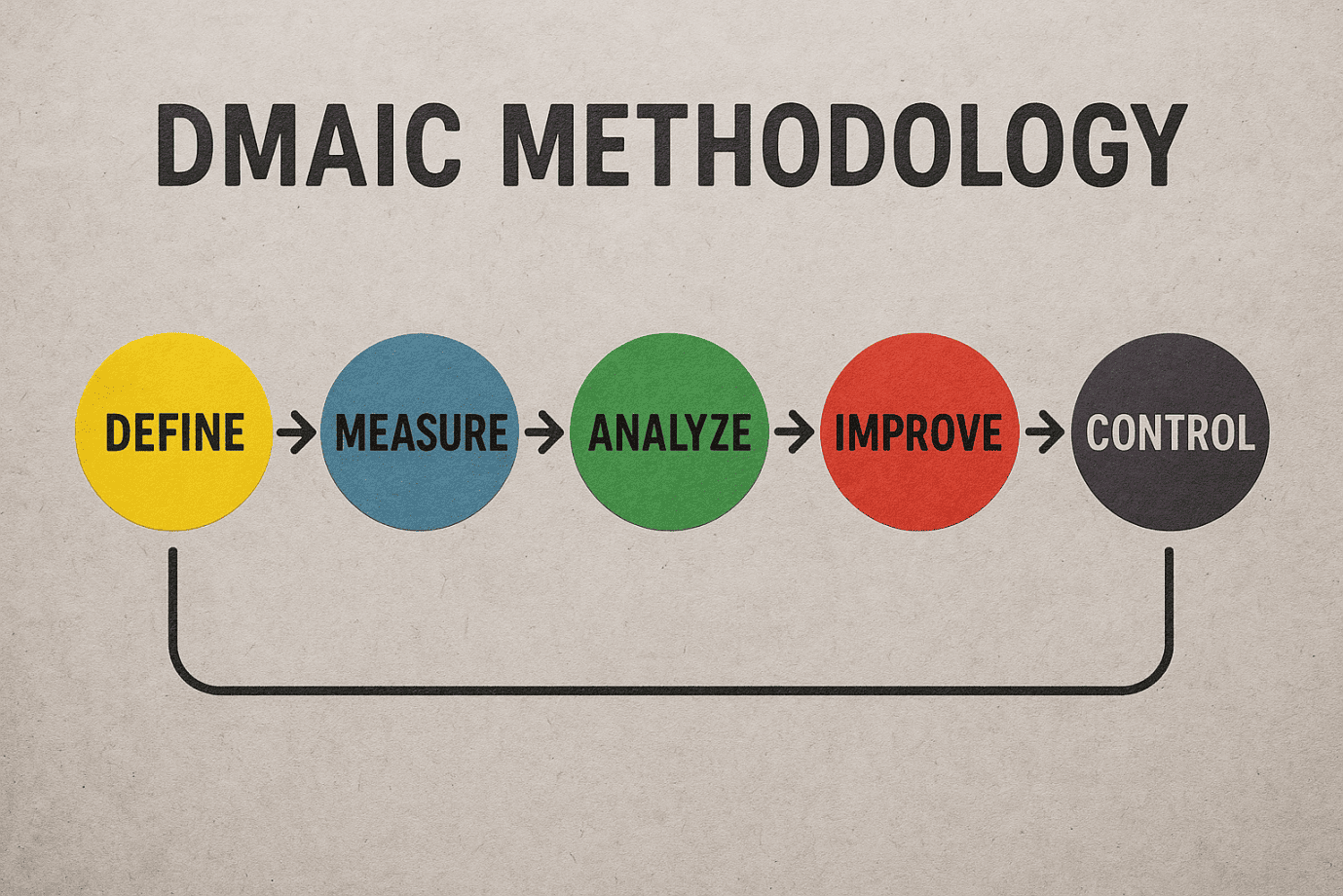
This is where the DMAIC philosophy becomes indispensable. Standing for Define, Measure, Analyze, Improve and Control, the DMAIC methodology is regarded as the backbone of Six Sigma because it brings structure, discipline, and data-driven decision-making into every improvement initiative. Unlike traditional trial-and-error methods, the DMAIC process provides a clear, repeatable pathway to identify problems, uncover root causes, implement solutions, and sustain long-term results.
The demand for a structured problem-solving model has grown rapidly across manufacturing, supply chain, services, and technology-driven industries. As processes become more complex and customer expectations continue to rise, businesses need a robust DMAIC approach to eliminate defects, improve cycle time, and optimize resources. Whether it’s reducing downtime on a factory floor, enhancing logistics efficiency, or improving digital service delivery, the DMAIC framework offers a universal model that adapts to every sector.
For Indian industries, especially those aligned with national movements like Make in India, adopting a data-centric methodology is no longer optional. To compete globally, organizations require predictable, efficient, and scalable processes—and this is exactly what the phases of DMAIC enable. The DMAIC methodology is used to strengthen operational capability, boost productivity, and cultivate a culture of continuous improvement across the value chain.
This blog will walk you through each phase of the methodology—starting from the define phase, moving into the measure phase, diving deep into the analyze phase, shaping solutions in the improve phase and sustaining gains through the control phase in DMAIC. Whether you’re new to Six Sigma or exploring DMAIC in project management, this blog will help you understand how DMAIC methodology can transform your organizational performance.
Benefits of Using DMAIC in Modern Businesses
Implementing the DMAIC methodology offers a wide range of strategic and operational advantages. Below are the key benefits, explained in simple and structured points:
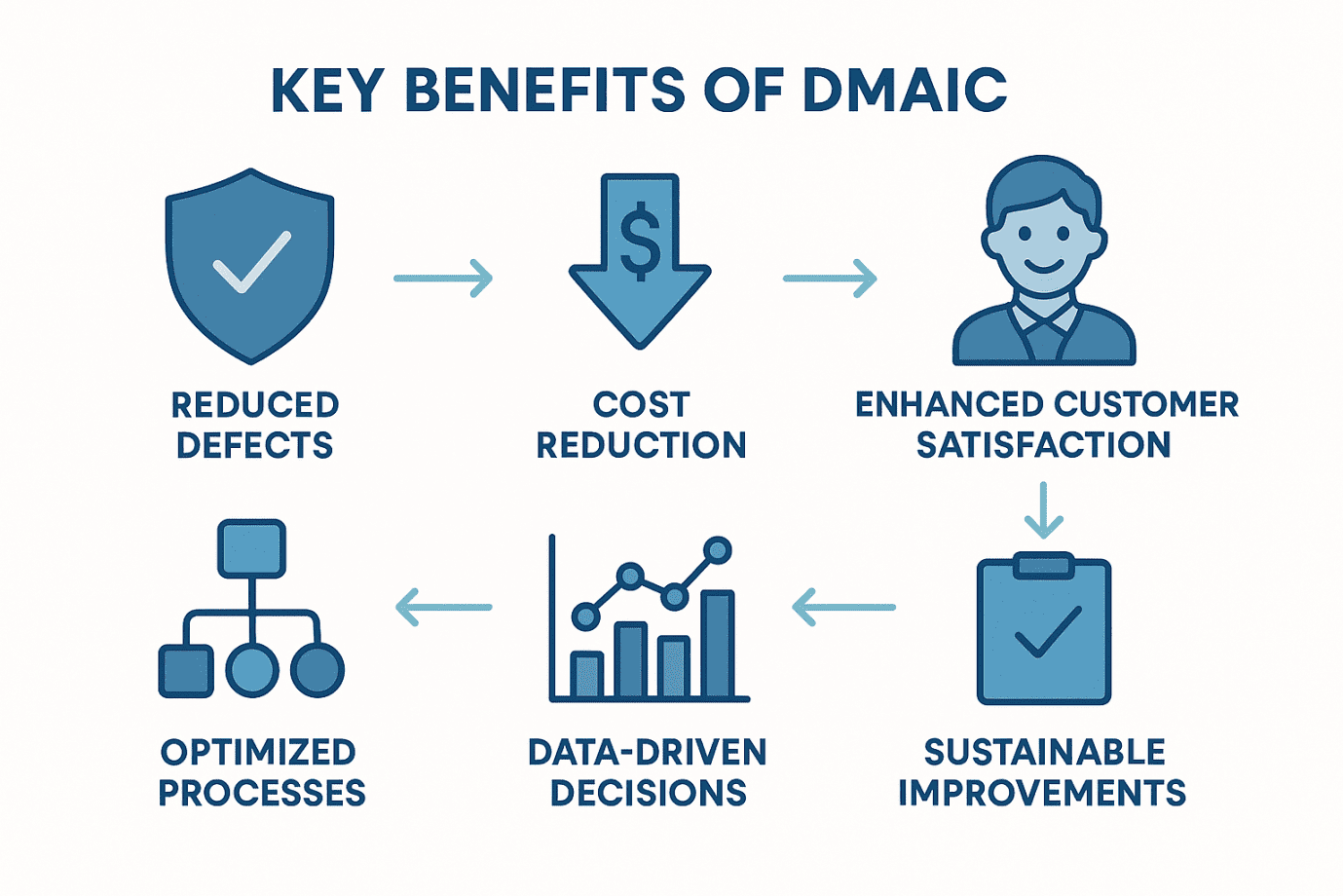
1. Reduced Defects & Improved Product Quality
- The DMAIC process focuses on data accuracy and root-cause analysis.
- By identifying real problem sources, businesses can permanently eliminate recurring defects.
- This leads to higher product reliability and fewer customer complaints.
2. Cost Reduction & Waste Elimination
- The DMAIC approach helps uncover inefficiencies in manpower, machines, materials, and workflow.
- Organizations can reduce rework, scrap, downtime, and unnecessary expenses.
- As a result, overall operational costs decrease while profitability increases.
3. Enhanced Customer Satisfaction
- Consistent quality and timely delivery improve the customer experience.
- Fewer defects and faster resolutions build long-term trust.
- The DMAIC methodology is used to align internal processes with customer expectations, boosting loyalty.
4. Optimized Processes & Faster Cycle Times
- By analyzing bottlenecks, redundancies, and delays, businesses streamline their entire workflow.
- The structured phases of DMAIC help reduce lead times and accelerate output.
- This improves efficiency across manufacturing, services, supply chain, and technology functions.
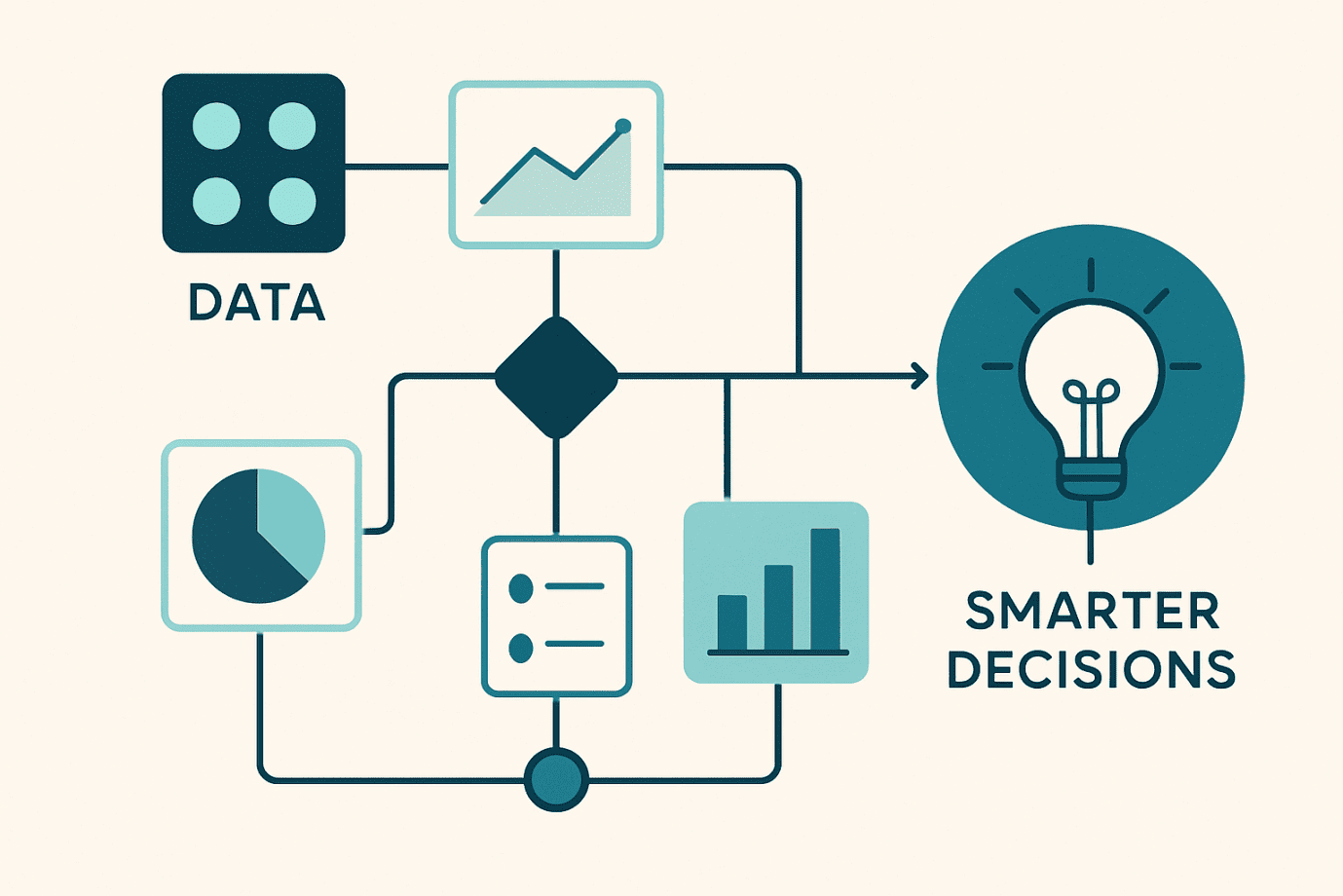
5. Better Decision-Making Through Data
- Every improvement is backed by facts, statistics, and validated observations.
- Leaders using DMAIC in project management make more accurate, informed decisions.
- This minimizes risks and enhances project success rates.
6. Sustainable Long-Term Improvements
- The DMAIC framework includes a dedicated Control phase to maintain gains.
- Organizations establish SOPs, monitoring dashboards, and periodic reviews.
- Improvements become part of the culture rather than one-time changes.
The Five Phases of DMAIC
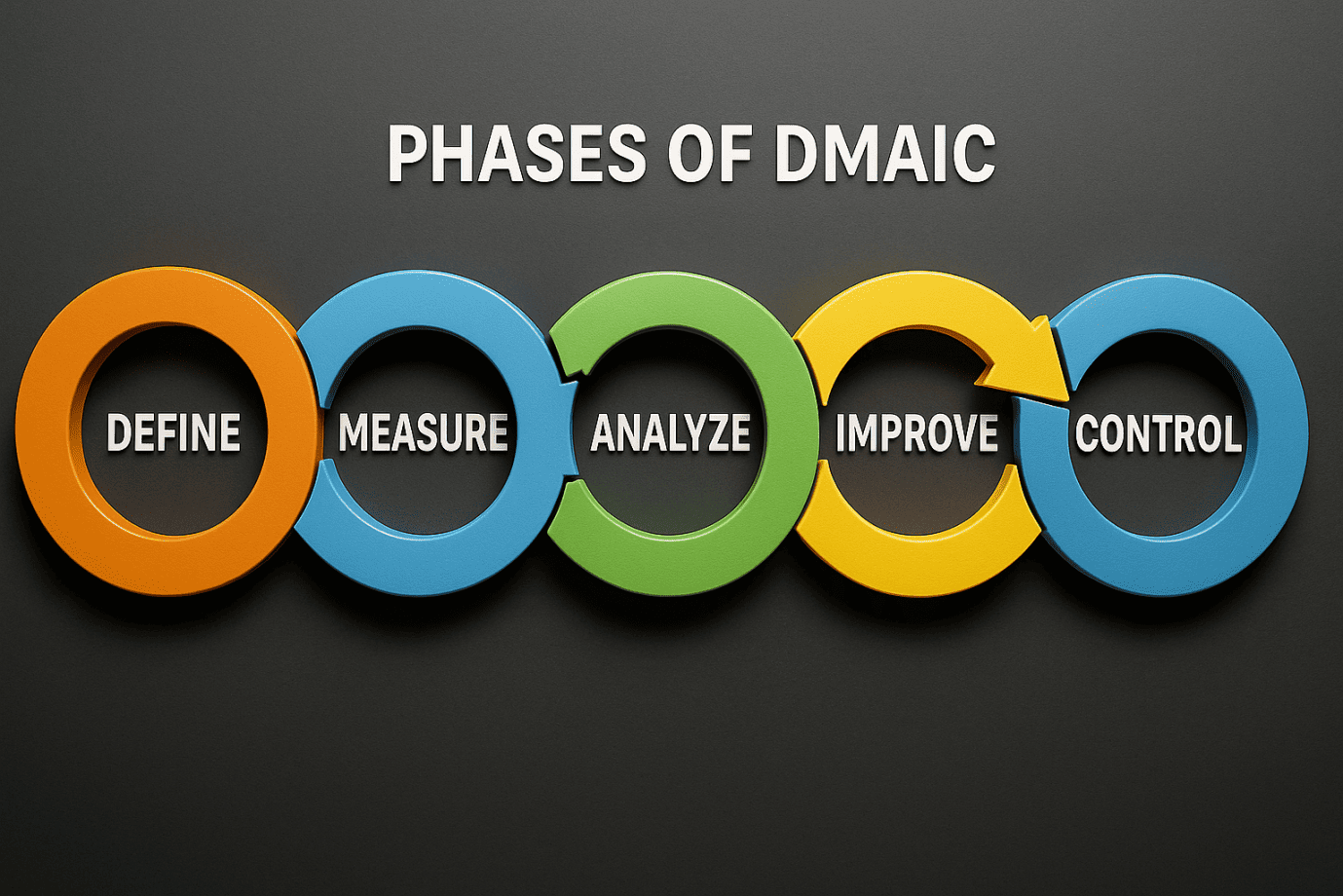
The DMAIC methodology is a powerful, structured, and data-driven model used across industries to eliminate defects, optimize performance, and build long-term operational excellence. Each of the phases of DMAIC—Define, Measure, Analyze, Improve, and Control—plays a critical role in transforming an underperforming process into a stable, predictable, high-quality workflow. Whether applied in manufacturing, services, technology, supply chain, or in project management, DMAIC methodology ensures that organizations make accurate decisions and sustain improvements.
1. D – Define Phase in DMAIC
The define phase in DMAIC establishes clarity, direction, and alignment across the project team. This is the stage where the problem is described, customer expectations are captured, and the goals of the DMAIC approach are formally documented. Without a strong Define phase, the remaining phases of DMAIC may lack direction and fail to produce measurable impact.
Purpose of the Define Phase: The purpose of this phase is to clearly define:
- What problem the team is solving
- Why the issue matters to the business
- Who is affected
- What success looks like
A strong Define phase ensures that the DMAIC methodology is used to solve meaningful business problems backed by real customer needs.
Key Activities
- Understanding customer expectations
- Identifying the current pain points
- Defining scope, boundaries, and timeline
- Identifying stakeholders and process owners
- Setting measurable objectives that align with the DMAIC process
Creating a Project Charter: The project charter is essential for aligning leadership and teams. It includes:
- Problem & goal statement
- Financial impact
- Timeline
- Expected deliverables
- Roles and responsibilities
It serves as the formal contract that anchors the DMAIC framework.
Conducting VOC (Voice of Customer): Through surveys, interviews, and customer feedback, VOC helps translate customer expectations into measurable indicators.
High-Level Process Mapping (SIPOC Diagram): SIPOC gives a bird’s-eye view of the process by identifying:
- Suppliers
- Inputs
- Process steps
- Outputs
- Customers
This ensures the define phase in DMAIC starts with a complete understanding of the end-to-end workflow.
Tools Used
- SIPOC diagrams
- VOC analysis techniques (surveys, interviews, observations)
- CTQ (Critical-to-Quality) tree, which converts customer needs into measurable quality parameters
Common Mistakes & Fixes
- Mistake: Vague problem statements
Fix: Use measurable data and clear boundaries. - Mistake: Scope too large
Fix: Narrow focus using VOC and CTQ inputs. - Mistake: Ignoring customer impact
Fix: Prioritize customer pain points using the DMAIC methodology. - Example (Manufacturing Scenario): A metal fabrication company faces rising rejection rates. Using the define phase in DMAIC, the team creates the SIPOC, captures VOC from clients, builds a CTQ tree, and prepares the project charter. This sets the foundation for uncovering the real root causes in later stages of the DMAIC process.
2. M – Measure Phase in DMAIC
The measure phase in DMAIC is focused on collecting reliable data, understanding current performance, and establishing baselines. This phase eliminates assumptions and provides the factual foundation for decision-making.
Purpose of Measurement: This phase answers the critical question:
“How is the process performing today?”
This ensures that the DMAIC methodology is grounded in factual analysis rather than subjective opinions.
Establishing Baselines: Baselines define the current level of:
- Defects
- Lead time
- Cycle time
- Productivity
- Cost impact
These become the reference points for all future comparisons across the phases of DMAIC.
Selecting the Right KPIs: Choosing KPIs aligned with CTQs ensures relevance.
Examples:
- First-pass yield
- DPMO
- Response time
- Downtime
- Error rate
These KPIs help track performance as improvements are made using the DMAIC framework.
Measurement System Analysis (MSA): MSA checks whether the measurement system is consistent and reliable.
This ensures that the DMAIC process is fueled by accurate data.
Tools Used in Measure Phase
- Data Collection Plan
- Process Flowcharts
- Control Charts
- Gage R&R (Repeatability & Reproducibility)
Why Accurate Data Matters in Indian Manufacturing: In India’s diverse manufacturing environment—characterized by varied raw materials, manual processes, and high operational variability—accurate data becomes critical.
The DMAIC methodology is used to eliminate errors caused by poor measurement systems, ensuring world-class performance.
Example Scenario: A casting unit experiences inconsistent hardness levels. During the measure phase in DMAIC, a Gage R&R study shows that operator variation is responsible for measurement errors. After fixing this, the baseline becomes accurate, enabling the team to identify true root causes in the next phase.
3. A – Analyze Phase in DMAIC
The analyze phase in DMAIC breaks down the problem and identifies its true root causes. This is where the data collected earlier becomes the foundation of deep insight.
Purpose of the Analyze Phase: This phase answers the question:
“Why is the problem happening?”
By distinguishing symptoms from real causes, the DMAIC methodology ensures targeted improvements.
Tools Used in Analyze Phase
Fishbone / Ishikawa Diagram: It categorizes causes into:
- Man
- Machine
- Method
- Material
- Measurement
- Environment
This is a classic tool in the DMAIC approach.
5 Why Analysis: A simple but powerful tool to dig into deeper reasons behind a problem.
Pareto Charts: Helps identify the vital few contributors to a majority of problems.
- Hypothesis Testing: Statistical validation of assumptions ensures that solutions in later phases of the DMAIC framework are based on evidence.
- Regression Analysis: Shows relationship between variables such as machine speed vs defect rate.
- Validating Root Cause vs Symptoms: A critical strength of the DMAIC methodology is its emphasis on validation using:
- Data patterns
- Statistical evidence
- Logical reasoning
This ensures only true root causes move into the improve phase in DMAIC.
- Example Scenario: Production Bottleneck: A textile factory experiences delayed order fulfillment. By applying the analyze phase in DMAIC, time studies and Pareto charts reveal that a single stitching workstation is slower due to needle vibration issues. Regression shows that machine age influences output speed.
This validated root cause helps teams craft precise solutions in the Improve phase.
4. I – Improve Phase in DMAIC
The improve phase in DMAIC is where solutions are designed, tested, and implemented. It is the transformational stage of the DMAIC process.
Purpose of the Improve Phase: This phase answers the key question:
“What changes will eliminate the problem effectively?”
Tools Used in Improve Phase in DMAIC
- Brainstorming & Creative Problem-Solving: Teams generate multiple solutions using mind maps, group discussions, and innovation frameworks.
- Poka-Yoke (Error-Proofing): Eliminates human errors through design-based preventive mechanisms.
- Kaizen Events” Rapid, small-scale improvements that create quick wins.
- Simulation Tools: Used for layout redesign, workflow optimization, and load balancing.
Piloting, Testing & Refining Solutions: Before full-scale rollout:
- Pilot runs verify performance
- Data validates improvement
- Adjustments are made for optimal results
This ensures successful transition from the improve phase to the control phase in DMAIC.
Example: Reducing Cycle Time: A fabrication plant has excessive cycle times. Using the DMAIC methodology, simulations help design a new workflow. Poka-yoke ensures correct assembly every time. Kaizen rearranges workstations.
Outcome:
- 30% reduction in cycle time
- Higher throughput
- Better operator efficiency
This demonstrates how the DMAIC framework drives tangible improvements.
5. C – Control Phase in DMAIC
The control phase in DMAIC ensures that improvements become long-term standards rather than temporary fixes. This final phase protects the investment made across earlier phases of DMAIC.
Purpose of Control Phase: This phase answers: “How do we sustain the improved performance?”
Tools Used in Control Phase
- Control Plans: Document everything needed to keep the process consistent.
- Standard Operating Procedures (SOPs): Ensure that every operator follows the improved process correctly.
- Process Monitoring Dashboards: Digital dashboards track KPIs such as:
- Defect rate
- Throughput
- Line efficiency
- Cycle time
- Audits & Review Mechanisms: Monthly/weekly audits maintain discipline and detect deviations early.
Leadership & Culture: Sustaining the gains of the DMAIC methodology requires:
- Consistent reinforcement from leadership
- Training and re-skilling
- A culture of continuous improvement
Example: Long-Term Monitoring: A packaging line improves sealing accuracy through the DMAIC approach. During the control phase in DMAIC, dashboards monitor sealing pressure, new SOPs are implemented, and audits ensure compliance.
This ensures improvements remain stable—even as production volume grows.
DMAIC in Manufacturing & Industry 4.0
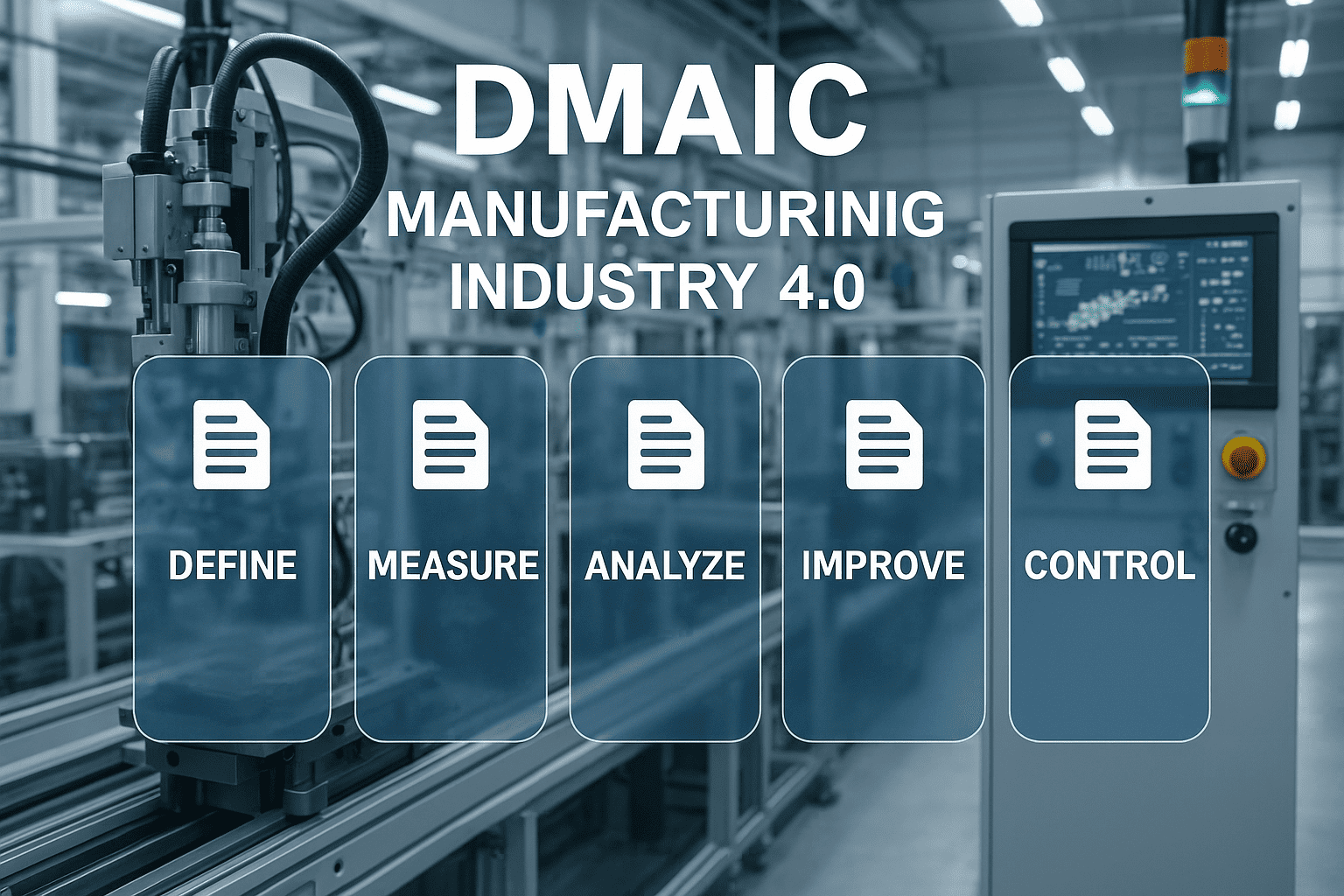
The rise of Industry 4.0 is transforming global manufacturing, and organizations are increasingly relying on the DMAIC methodology to complement advanced digital technologies. As factories become smarter and more interconnected, the structured and data-driven nature of the DMAIC process perfectly aligns with modern expectations for precision, automation, and predictive decision-making.
1. How DMAIC Supports Smart Factories
Smart factories rely on real-time data, intelligent automation, and seamless communication between machines. The DMAIC approach enhances these capabilities by offering a systematic framework to identify inefficiencies, analyze data patterns, and implement improvements.
- In the Define and Measure phases, manufacturers use digital dashboards to capture granular production data.
- In the Analyze phase in DMAIC, machine behavior, downtime patterns, and defect trends can be studied using high-volume datasets.
- In the Improve and Control phases, automation-driven solutions ensure long-term stability.
Thus, the DMAIC framework acts as the backbone of continuous improvement in digital manufacturing systems.
2. Integrating DMAIC with IoT, MES & ERP
Industry 4.0 technologies such as IoT sensors, MES (Manufacturing Execution Systems), and ERP platforms enhance the DMAIC methodology by enabling real-time visibility and faster decision-making.
- IoT sensors provide minute-by-minute insights into machine health, energy usage, temperature, vibration, etc.
- MES systems track production flow, resource usage, and operator efficiency.
- ERP solutions integrate data across finance, inventory, and supply chain operations.
When combined with the DMAIC methodology is used to reduce defects, shorten cycle time, or optimize processes, these digital tools magnify the impact.
3. Predictive Analytics & Real-Time Control
With predictive analytics, manufacturers can anticipate machine failures, detect anomalies early, and maintain optimal performance. This strengthens the Improve and Control phases of the DMAIC process, allowing smarter, faster corrective actions.
4. Relevance to Indian Manufacturing Transformation
As India pushes forward with the Make in India initiative, the DMAIC methodology becomes vital for global competitiveness. Indian manufacturers are adopting smart factory practices, and combining them with DMAIC in project management ensures disciplined execution, reduced variability, cost efficiency, and world-class quality.
Also Read: Industry 5.0
Common Challenges in Implementing DMAIC
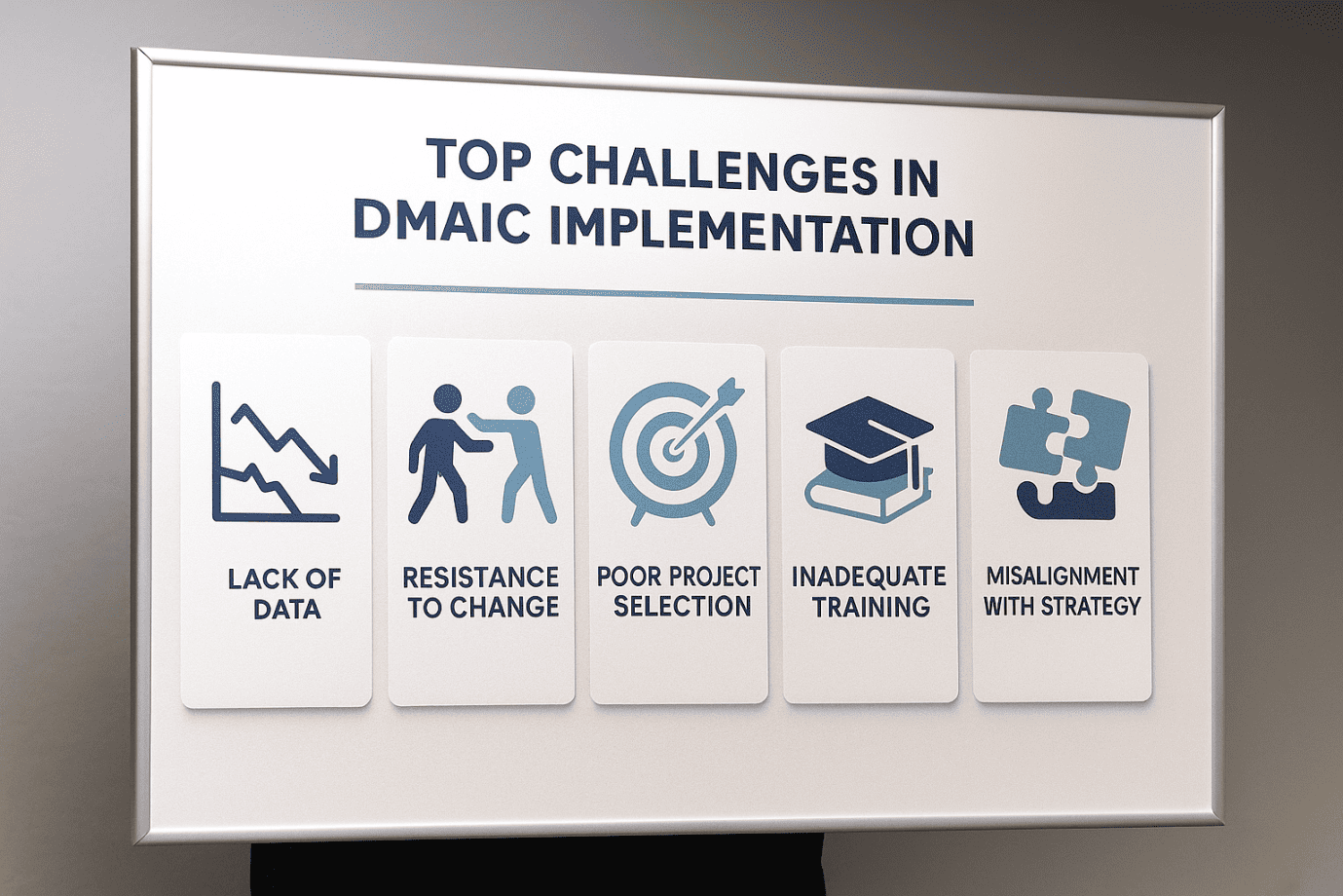
While the DMAIC methodology is one of the most powerful frameworks for problem-solving and process excellence, organizations often face several challenges during implementation. Understanding these hurdles is essential for ensuring that the DMAIC process delivers its intended results and drives long-term transformation.
Lack of Data
A major barrier is insufficient or poor-quality data. The DMAIC approach heavily relies on accurate measurements during the Measure and Analyze phases. When organizations lack historical data, use inconsistent measurement techniques, or depend on manual entries, it becomes difficult to perform root-cause analysis. Since the DMAIC methodology is used to drive decisions based on facts, data gaps can weaken conclusions and delay improvement efforts.
Resistance to Change
People naturally resist modifications to established routines. Employees may feel threatened by new processes or fear that improvements will increase workload or reduce their control. Successful adoption of the DMAIC framework requires strong communication, leadership involvement, and cultural alignment to overcome this resistance.
Poor Project Selection
Choosing the wrong project—either too broad, too small, or lacking strategic impact—can sabotage outcomes. When teams select projects without considering data availability, business priorities, or feasibility, the DMAIC methodology becomes difficult to execute effectively. Proper scoping and alignment with organizational goals are crucial.
Inadequate Training
The DMAIC process involves statistical tools, analytical techniques, and structured templates. Without adequate training, teams may misinterpret data or apply tools incorrectly. This is especially relevant in DMAIC in project management, where leaders need strong knowledge to guide teams successfully.
Misalignment with Business Strategy
Even well-executed DMAIC projects can fail if they don’t align with business goals. Improvements must contribute to cost reduction, quality enhancement, faster delivery, or customer satisfaction. When the DMAIC methodology operates in isolation, it loses strategic impact and organizational momentum.
Steps to Start DMAIC in Your Organization
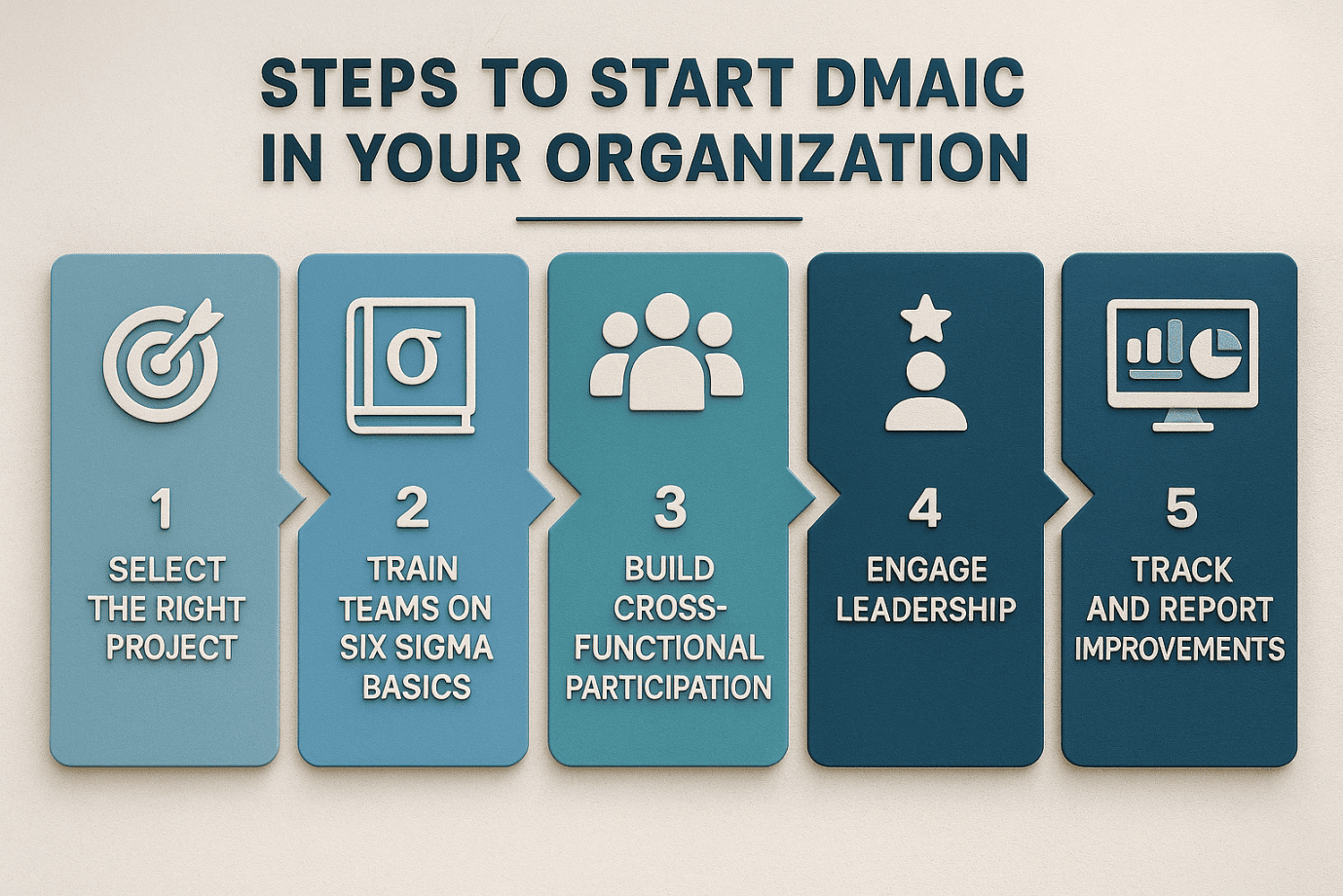
Implementing the DMAIC methodology within an organization can lead to significant improvements in quality, efficiency, and overall performance. However, to maximize success, companies must follow a structured roadmap. Below are the essential steps to kickstart the DMAIC process effectively.
Selecting the Right Project
The journey begins by choosing a problem that is meaningful, measurable, and aligned with business priorities. The DMAIC approach works best when applied to projects with clear performance gaps, reliable data availability, and high potential ROI. Selecting the right scope ensures the DMAIC methodology is used to solve issues that truly impact customer satisfaction and operational efficiency.
Training Teams on Six Sigma Basics
Proper training is crucial. Teams must understand core concepts such as variation, defects, process mapping, and root-cause analysis. This foundational knowledge helps employees apply the DMAIC framework correctly and confidently. Certification programs, workshops, and practical sessions strengthen the ability to work with statistical tools and structured methods.
Building Cross-Functional Participation
Successful DMAIC projects require collaboration across departments—production, quality, maintenance, supply chain, finance, and more. Cross-functional teams bring diverse insights and ensure all process perspectives are addressed. This increases the effectiveness of the DMAIC process and reduces resistance to change during implementation.
Engaging Leadership
Leadership support plays a critical role in creating momentum. When senior management endorses the DMAIC methodology, teams gain the authority, resources, and time needed to carry out improvements. Leaders also help remove roadblocks and reinforce accountability for project success.
Tracking and Reporting Improvements
Continuous tracking ensures that progress remains visible and measurable. Dashboards, KPIs, and regular review meetings help monitor improvements achieved using the DMAIC approach. For organizations applying DMAIC in project management, structured reporting ensures alignment with business goals and long-term sustainability.
You can also go through our dedicated blog on: Six Sigma
FAQs
A. The DMAIC methodology is a structured, data-driven improvement model used to solve process issues and enhance performance. It follows five stages—Define, Measure, Analyze, Improve, and Control—making the DMAIC process effective for eliminating defects and optimizing workflows.
A. The DMAIC approach is popular because it brings consistency, clarity, and data-based decision-making to problem-solving. It helps organizations reduce costs, improve quality, and achieve long-term results through a proven DMAIC framework.
A. The DMAIC methodology is used to integrate data analytics, IoT sensors, MES, and ERP systems into smart factory environments. It helps companies leverage real-time insights to improve quality, speed, and operational reliability.
A. Yes, DMAIC in project management is highly effective. It brings structure, clarity, and measurable outcomes to improvement projects, making project planning and execution more reliable and efficient.
A. The DMAIC framework helps organizations reduce defects, optimize processes, enhance customer satisfaction, and achieve cost savings. When applied correctly, it leads to sustainable, long-term competitive advantage.
A. Teams should understand basic statistics, problem-solving, process mapping, and data analysis. Knowledge of the phases of DMAIC helps individuals perform activities confidently and accurately.
A. The analyze phase in DMAIC identifies root causes using tools like Pareto charts, fishbone diagrams, and statistical tests. This ensures that solutions target the real issues, not just surface-level symptoms.
A. The control phase in DMAIC ensures that all improvements are sustained long-term. It uses SOPs, dashboards, and audits to maintain stability and prevent the process from reverting to old habits.
Conclusion
The DMAIC methodology remains one of the most powerful and proven tools for driving operational excellence across industries. By following the structured phases of DMAIC—from the clarity established in the define phase, to the data-driven insights of the measure phase, the deep diagnostics of the analyze phase, the transformative solutions from the improve phase and the long-term stability ensured in the control phase in DMAIC—organizations gain a complete, end-to-end framework for eliminating inefficiencies and achieving sustainable improvements.
Companies that adopt the DMAIC approach consistently outperform competitors because they rely on facts, data, and structured techniques instead of assumptions or reactive decision-making. Whether used in manufacturing, services, supply chain, technology, or DMAIC in project management, the methodology ensures a disciplined path to problem-solving. The DMAIC process not only resolves current issues but also strengthens the organization’s capability to address future challenges with confidence.
Moreover, the DMAIC framework empowers organizations to reduce defects, optimize processes, shorten cycle times, enhance product quality, and elevate customer satisfaction. This is why the DMAIC methodology is used to build long-term competitive advantage—its impact extends beyond operational efficiency and drives cultural transformation toward continuous improvement.
As global markets evolve and business environments become more demanding, companies cannot afford to rely on informal or inconsistent methods. DMAIC provides the roadmap for achieving excellence, stability, and scalability. By investing in people, data, and structured improvement, organizations position themselves for sustained growth.
Ultimately, the path to excellence is ongoing. Embracing the DMAIC methodology encourages a mindset of continuous learning, continuous improvement, and continuous success—one process at a time.
For more information, go to our Homepage.

