

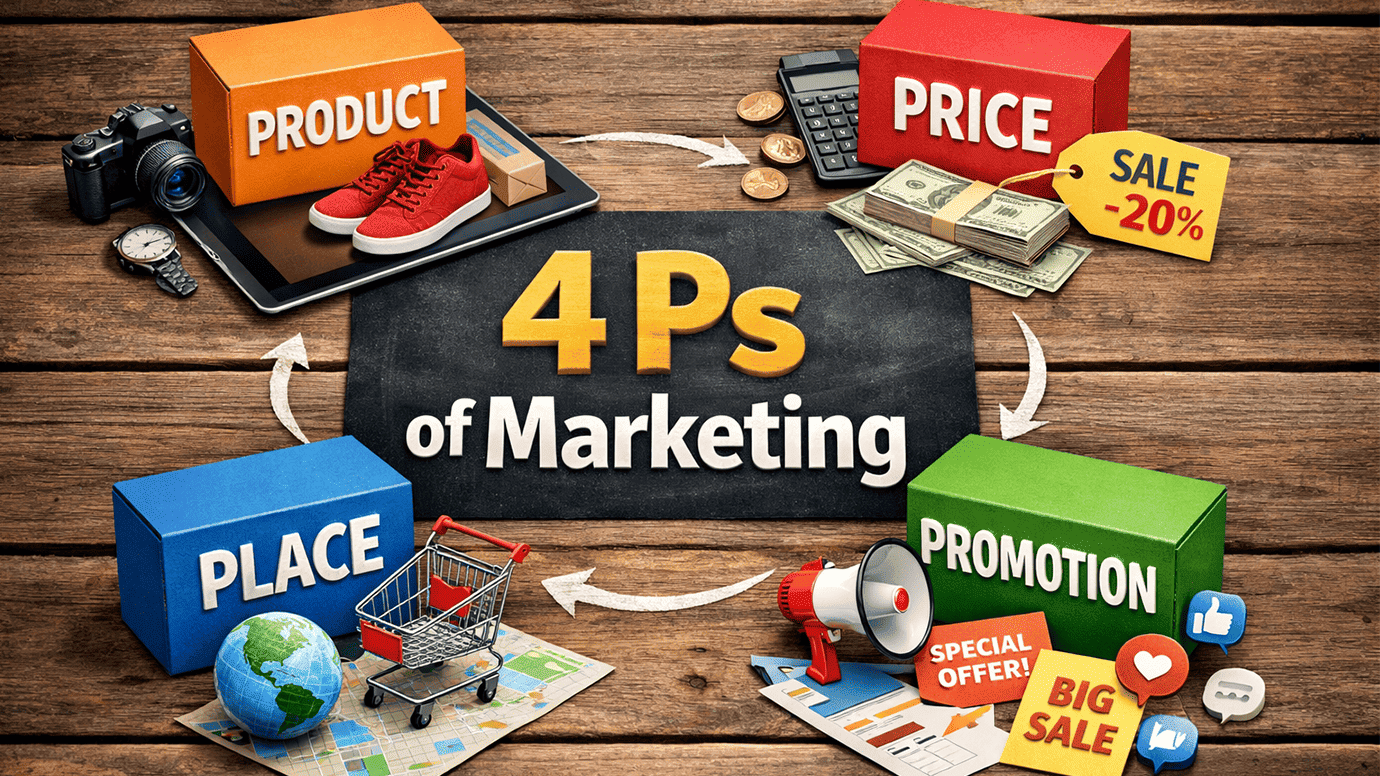
4 Ps of Marketing

The 4 Ps of Marketing remain the backbone of every successful business strategy, even in today’s fast-moving digital and global economy.

Whether a company operates online, in manufacturing, or across international B2B markets, the principles behind the marketing mix continue to define how value is created, delivered, and communicated. At its core, the 4ps framework helps organizations align the product, price, place and promotion in marketing mix into one unified approach that drives business performance.

4 Ps of Marketing

In digital marketing, businesses must still decide what to sell, how much to charge, where customers can find it, and how it should be promoted—making the marketing mix strategy more important than ever. In manufacturing and industrial sectors, decisions around marketing mix distribution, product quality, and pricing directly impact operational efficiency and customer satisfaction. Similarly, in B2B and global markets, the marketing mix for services and complex buying journeys require a well-planned analysis to stay competitive.

When these four elements are properly aligned, the result is a powerful marketing mix that fuels revenue growth, builds long-term customer loyalty, and strengthens competitive positioning. Companies that master the 4 Ps of Marketing are better equipped to respond to changing markets, differentiate themselves, and deliver consistent value across every customer touchpoint.

What Are the 4 Ps of Marketing?

The 4 Ps of Marketing is one of the most widely used frameworks in business and was introduced in the 1960s as a way to simplify how companies design and execute their go-to-market approach. Over time, this model—often called the marketing mix—has evolved to support not only consumer brands but also B2B organizations and the marketing mix for services.

The four elements of the 4ps are:

  • Product – What a company offers to meet customer needs, including features, quality, and value. This is the product in marketing mix.
  • Price – The amount customers pay and how that value is perceived, is known as the pricing in the marketing mix.
  • Place – How and where the product is delivered to customers, is called the place in marketing mix.
  • Promotion – How the product is communicated and sold to the market is known as promotion in marketing mix.

They are called the marketing mix because success depends on how well these elements work together. A strong strategy and regular analysis ensure that businesses stay competitive and customer-focused.

P1- Product in Marketing mix – Creating What Customers Truly Want

In the 4 Ps of Marketing, the product is the foundation on which every successful business is built. Whether a company sells physical goods or delivers services, the marketing mix begins with understanding what customers truly need and how a product can fulfill that need better than competitors. This is why the market mix applies equally to manufacturing firms and the services.

Product in Marketing mix

What Is a Product?

A product is more than just an item—it is a complete value offering. In the 4ps framework, it includes:

Physical Products vs Services

  • Physical products: Machinery, equipment, consumer goods, spare parts, etc.
  • Services: Consulting, maintenance, training, software, or support offerings
    Both are essential parts of the product in marketing mix.

Core Value, Features, and Performance

  • Core benefit the customer receives
  • Functional features and specifications
  • Quality, reliability, and performance

These elements shape how the product fits into the overall marketing mix strategy.

Packaging, Branding, and Support

  • Attractive and functional packaging
  • Strong brand identity
  • Warranty and after-sales support

All these influence customer trust and are important in 4ps analysis.

Product Strategy in B2B and Manufacturing

In industrial and B2B markets, product decisions directly affect long-term relationships.

Key priorities include:

  • Reliability and quality – Ensuring consistent performance
  • Customization – Adapting products to client-specific needs
  • Compliance and safety – Meeting regulatory and industry standards
  • Innovation and lifecycle management – Keeping products updated and competitive

These factors strengthen the product across the entire marketing mix distribution system.

Key Elements of a Strong Product Strategy

To build a winning product within the marketing mix, companies must focus on:

  • Market research – Understanding industry trends and buyer behavior
  • Customer needs analysis – Identifying pain points and expectations
  • Product differentiation – Creating unique value compared to competitors
  • Competitive benchmarking – Measuring performance against market leaders

When aligned properly, these elements ensure the 4 Ps of Marketing work together to create products that attract, satisfy, and retain customers.

P2- Price in Marketing mix – Turning Value Into Revenue

Within the 4 Ps of Marketing, price is the element that directly converts value into revenue. While a great product creates demand, it is the price that determines whether a business remains profitable and competitive. In the marketing mix—pricing plays a critical role because it influences customer perception, purchasing decisions, and long-term brand positioning. This applies not only to physical products but also to the services, where customers often compare value rather than just cost.

Price in Marketing mix

What Does Pricing Mean in Marketing mix?

In the 4ps framework, pricing is the process of deciding how much customers should pay for a product or service. It is a strategic decision within the marketing mix and typically follows three main approaches:

  • Cost-based pricing – Setting prices based on production, operational, and distribution costs plus a margin.
  • Value-based pricing – Pricing according to how much value customers believe the product delivers.
  • Competitive pricing – Adjusting prices based on what competitors charge in the market.

Each of these methods supports a different strategy, depending on business goals and customer expectations.

Pricing Challenges in Competitive Markets

Pricing is one of the most difficult elements of the marketing mix to manage, especially in crowded and fast-changing markets.

Common challenges include:

  • Pressure on margins due to aggressive competition
  • Rising costs of raw materials, labor, and logistics
  • Customer price sensitivity, especially in B2B and global markets

These factors make regular 4ps analysis essential to ensure pricing remains sustainable across the marketing mix distribution network.

Strategic Pricing for Long-Term Profitability

Smart pricing goes beyond covering costs. It focuses on:

  • Perceived value – What customers believe the product or service is worth
  • Total cost of ownership – Long-term operating, maintenance, and usage costs
  • Discounting and negotiations – Managing incentives without damaging brand value
  • Price positioning – Whether the brand is seen as premium, mid-range, or budget

When pricing aligns with the overall marketing mix, it supports stable growth rather than short-term sales.

How Smart Pricing Drives Business Growth

Effective pricing strengthens every part of the 4 Ps of Marketing. It improves profitability by protecting margins, increases market share by staying competitive, and shapes brand perception by signaling quality and value. When aligned with the rest of the market mix, smart pricing becomes a powerful driver of sustainable business success.

P3- Place in Marketing mix– Getting the Product to the Customer

In the 4 Ps of Marketing, place defines how and where a product or service reaches the customer. Even the best product and the right price will fail if customers cannot access it easily. That is why marketing mix distribution is a critical pillar of the market. Whether it is a physical product, a digital solution, or part of the services, place determines availability, convenience, and customer experience.

Place in Marketing mix

What Does “Place” Mean in Marketing?

In the 4ps framework, “place” refers to all the systems that move a product from the producer to the buyer. This includes:

  • Distribution channels – Wholesalers, retailers, dealers, or direct-to-customer models
  • Warehousing – Storage facilities that support product availability
  • Logistics – Transportation, shipping, and delivery management
  • Digital and physical presence – Websites, e-commerce platforms, showrooms, and branch offices

All these elements together form the distribution system that supports the overall marketing strategy.

Place in B2B and Industrial Businesses

In B2B and industrial markets, place is often more complex and strategic.

Key distribution models include:

  • Dealers and distributors who provide local market reach
  • Direct sales models where companies sell straight to customers
  • Global supply chains that support international trade and sourcing

These systems ensure that products are delivered efficiently, reliably, and at the right cost—key inputs in any 4ps analysis.

Designing an Effective Distribution Strategy

An effective marketing mix depends on how well the distribution system is designed.

Important factors include:

  • Market coverage – Making products available in all target regions
  • Speed of delivery – Reducing lead times and improving customer satisfaction
  • Inventory optimization – Balancing stock levels to avoid shortages or excess
  • Cost efficiency – Controlling logistics and storage expenses

When distribution is optimized, the 4 Ps of Marketing work together to create a seamless customer experience and a stronger competitive position.

P4- Promotion in Marketing mix – Communicating Value to the Market

In the 4 Ps of Marketing, promotion is the voice of the brand—it is how a company tells the market what it offers and why it matters. Even with a strong product, the right price, and effective distribution, customers will not buy unless they clearly understand the value being delivered. That is why promotion plays a central role in the marketing mix. For physical products and services, promotion bridges the gap between business offerings and customer awareness.

Promotion in Marketing mix

What Is Promotion?

In the 4ps framework, promotion includes all activities used to communicate with the target audience and influence purchasing decisions, such as:

  • Advertising – Print, TV, radio, and online campaigns
  • Digital marketing – Websites, search engines, email, and social media
  • Sales promotions – Discounts, offers, and limited-time deals
  • Public relations – Media coverage, brand reputation, and credibility
  • Trade shows – Exhibitions and industry events that connect buyers and sellers

All these elements work together to support a strong strategy.

Promotion in B2B and Industrial Marketing

In B2B and industrial markets, promotion in marketing mix focuses more on building trust than just generating quick sales.

Key approaches include:

  • Relationship-based selling – Developing long-term customer partnerships
  • Technical content – Sharing product knowledge, case studies, and insights
  • Lead generation – Attracting and nurturing qualified business prospects
  • Brand building – Creating a strong, reliable industry reputation

These elements are often evaluated through ongoing 4ps analysis to improve effectiveness.

Creating a Strong Promotional Strategy

A successful promotional approach requires:

  • Clear messaging and positioning that highlights unique value
  • Strong sales and marketing alignment to convert leads into customers
  • Focus on long-term customer trust, not just short-term campaigns

When promotion is aligned with the rest of the marketing mix, the 4Ps become a powerful engine for sustainable business growth.

How the 4 Ps Work Together as a Marketing Mix

The real strength of the 4 Ps of Marketing comes from how Product, Price, Place, and Promotion combine to form a single, powerful marketing mix. These elements must be aligned to support one clear business goal. When they work together, they create a balanced and effective strategy.
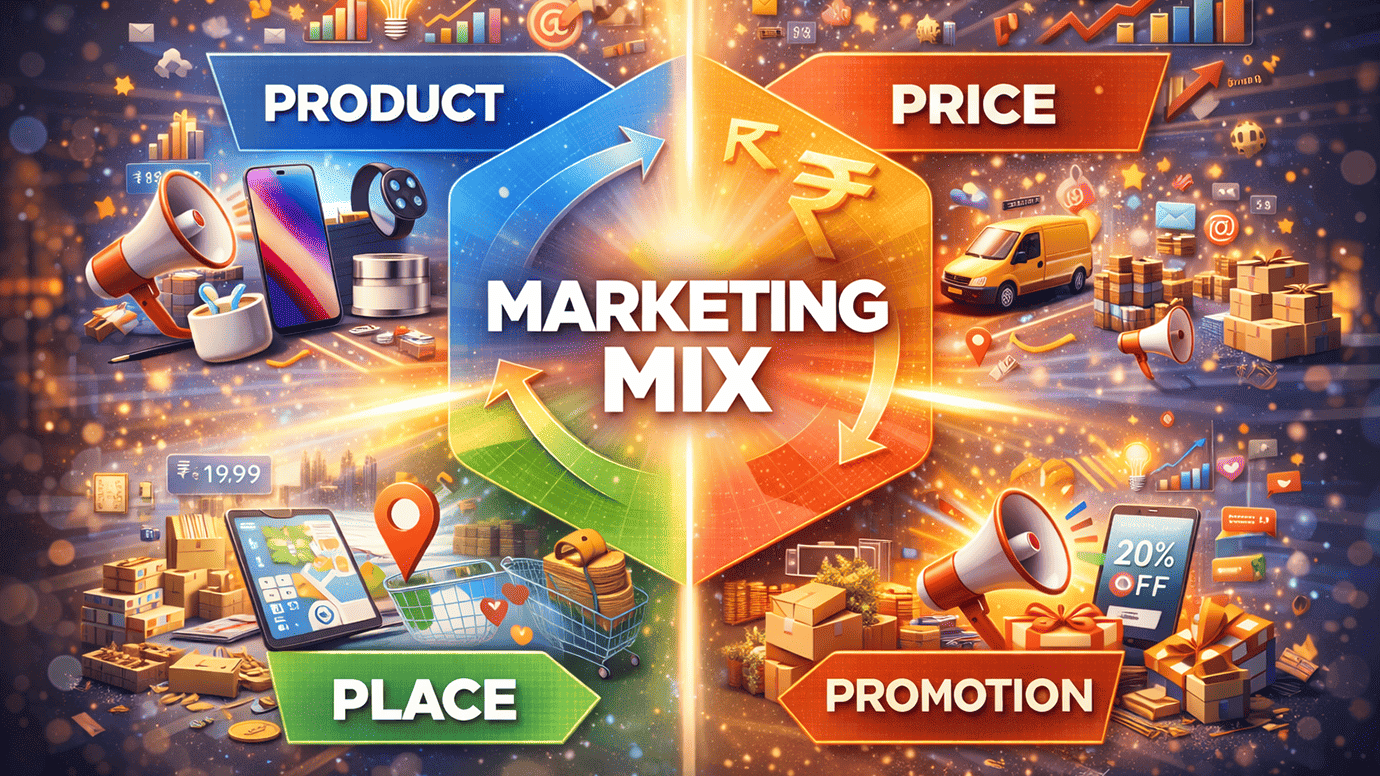
How the 4 Ps Work Together as a Marketing Mix

  • Product in marketing mix defines what value the business offers to customers.
  • Price in 4ps of marketing decides how that value is converted into revenue.
  • Place ensures the product or service reaches customers through the right marketing mix distribution channels.
  • Promotion communicates the product’s value and encourages customers to buy.

Each of these elements supports the others, forming a complete 4ps framework.

Why Balance Is Important

An imbalance in any one area can weaken the entire marketing mix:

  • A great product with weak distribution will not reach the right customers.
  • Strong promotion cannot succeed if pricing in the marketing mix is too high or too low.
  • Competitive pricing will fail if the product does not meet customer expectations.

The Role of 4Ps Analysis

  • Regular 4ps analysis helps ensure all elements remain aligned.
  • This is especially important in the marketing mix for services, where customer experience plays a major role.

When all four elements are aligned, the 4 Ps of Marketing create a strong foundation for sustainable business growth.

Common Mistakes Businesses Make With the 4 Ps

Many businesses struggle to get consistent results from the 4 Ps because their marketing mix is not properly aligned with customer needs and market realities. Below are the most common mistakes that weaken an effective marketing mix strategy.
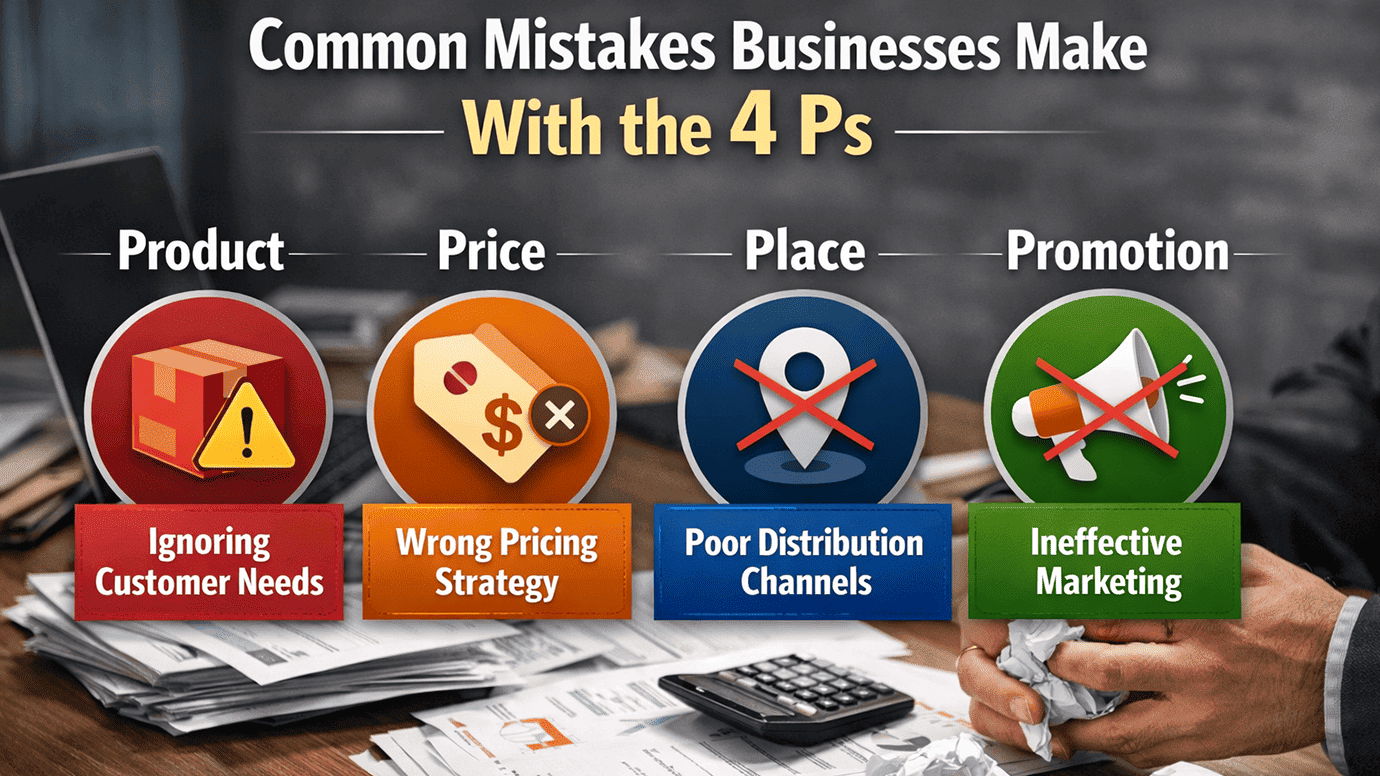
Common Mistakes Businesses Make With the 4 Ps

  • Ignoring Customer Needs: One of the biggest mistakes in the 4ps framework is building the product in marketing mix around internal assumptions rather than real customer problems. When businesses fail to understand what customers truly want, even well-designed products and services can fail. This is especially critical for services, where customer experience and perceived value drive loyalty.
  • Competing Only on Price: Relying too much on the price in 4ps of marketing can be risky. Many companies try to win customers through low pricing, but this often leads to shrinking margins and a weak brand image. When price becomes the only selling point, it becomes harder to compete on quality, innovation, or service.
  • Weak Distribution: A poor place in marketing mix can severely limit market reach. Inefficient distribution means products may not be available when or where customers need them, leading to lost sales and frustrated buyers. Even a strong product and competitive price cannot succeed without effective distribution.
  • Poor Communication: If the promotion in marketing mix is unclear or inconsistent, customers may not understand the value of the offering. Weak messaging reduces brand awareness and makes it difficult to stand out in competitive markets, no matter how good the product is.
  • Lack of Data-Driven Decisions: Without regular 4ps analysis, businesses cannot accurately evaluate or improve their marketing mix. Data-driven insights are essential to adapt to changing customer behavior, market trends, and competitive pressures.

How to Build a Strong Marketing Mix for Long-Term Success

A strong marketing mix is the backbone of sustainable business growth. To make the 4 Ps of Marketing work effectively, companies must build a well-aligned and continuously evolving strategy based on data, collaboration, and customer-focused decisions.

Research and Data as the Foundation

Accurate data and market research are essential to designing a powerful marketing mix. Understanding customer behavior, competitor positioning, and market trends helps strengthen the product, determine the right price, optimize distribution and improve promotion in marketing mix. Regular 4ps analysis allows businesses to identify what is working and where adjustments are needed, making decisions more precise and effective.

Cross-Functional Alignment

For a marketing mix strategy to succeed, all business functions must be aligned. Marketing, sales, operations, and finance teams need to collaborate so that pricing, place and promotional efforts support the same objectives. This alignment ensures that customer promises made through promotion can be fulfilled through production, delivery, and service.

Continuous Improvement

Markets, technologies, and customer expectations change constantly. Continuous review and refinement of the 4ps help keep the marketing mix for services and physical products competitive. By testing new approaches and learning from performance data, businesses can keep their market mix relevant and effective.

Market-Driven Decision-Making

A strong marketing mix is guided by real customer insights rather than assumptions. Market-driven decisions ensure that every element of the 4Ps remains aligned with customer needs, helping businesses build stronger brands and achieve long-term success.

FAQs

A. The 4 Ps of Marketing—Product, Price, Place, and Promotion—form the foundation of the marketing mix. They help businesses design a structured strategy that aligns what they offer, how they price it, where it is sold, and how it is promoted to customers.

A. The price in 4ps of marketing determines how value is converted into revenue. Smart pricing balances customer expectations, competitor pricing, and profitability to support long-term growth.

A. Promotion in marketing mix communicates a product’s value to customers. Without strong promotion, even the best product and pricing may fail to attract buyers in competitive markets.

A. Strong marketing mix distribution ensures products are available at the right time and location. Poor distribution weakens even the best market mix by limiting customer access.

A. When the 4Ps are aligned through a strong strategy, businesses build stronger brands, achieve higher profitability, and maintain long-term growth in both product-based and service-based markets.

A. The place affects how easily customers can find and buy a product. Strong marketing mix distribution improves convenience, delivery speed, and overall satisfaction.

A. Digital companies still rely on the 4 Ps of Marketing. Their strategy includes digital products, online pricing models, virtual distribution, and digital promotion.

Conclusion

The 4 Ps of Marketing remain one of the most powerful frameworks for building successful and resilient businesses. By carefully managing the product, setting the right price in 4ps of marketing, designing effective distribution, and executing impactful promotion, companies can create a strong and balanced market mix. Whether selling physical products or delivering the services, the 4ps provide a clear roadmap for turning customer needs into profitable opportunities.

What truly drives results is strategic alignment. When every element of the marketing mix strategy supports the same business objectives, companies are able to deliver consistent value across all customer touchpoints. Regular 4ps analysis ensures that decisions around pricing, place, product development and promotion remain aligned with changing market conditions and customer expectations.

Businesses that master the 4 Ps of Marketing build stronger brands by delivering clear and consistent value. They achieve higher profitability by balancing costs, pricing, and customer perception more effectively. Most importantly, they create long-term growth by continuously adapting their marketing mix to stay relevant in competitive markets. When used strategically, the 4ps framework becomes not just a marketing tool, but a foundation for sustainable business success. If you need consultation regarding it, you can contact us.

For more information, go to our Homepage.

Leave a Comment

Your email address will not be published. Required fields are marked *

Call Now Button
× Book free consultation