

Green Supply Chain Management

In today’s volatile global economy, green supply chain management is no longer a progressive idea—it is a strategic necessity.

Rising ESG pressures, tightening global supply chain regulations, carbon border taxes such as the EU’s CBAM, and growing investor scrutiny are reshaping how manufacturers operate. The importance of green supply chain management lies in its ability to transform sustainability from a compliance exercise into a competitive advantage. Simply put, sustainability is no longer CSR — it is a competitive strategy.

Climate risks are disrupting traditional sourcing and logistics models, forcing companies to rethink their green supply chain strategy. Regulatory pressure across export markets now demands measurable carbon reduction, ethical sourcing, and transparent reporting. At the same time, customers increasingly prefer brands that demonstrate responsible green procurement, ethical operations, and low-emission green logistics networks. These shifts are accelerating the transition toward a greener supply chain that integrates environmental thinking across procurement, production, and distribution.

 

Green Supply Chain Management

Forward-looking organizations are embedding advanced green SCM practices into their core operations, aligning green manufacturing with digital transformation and operational excellence. The result is not just environmental compliance but tangible business value. The benefits of green supply chain management include improved export competitiveness, stronger investor confidence, reduced operational risk, and long-term cost optimization. In an era defined by sustainability metrics, adopting green supply management is no longer optional—it is essential for survival and growth.

What is Green Supply Chain Management?

It is a strategic approach that integrates environmental responsibility into every stage of the supply chain. From sourcing raw materials to manufacturing, warehousing, transportation, and product disposal, green SCM ensures that business growth aligns with sustainability goals. The growing importance of green supply chain management lies in its ability to combine operational excellence with environmental stewardship, creating long-term value for manufacturers and stakeholders.

Unlike traditional supply chains that prioritize cost and speed alone, a green supply chain considers both economic performance and environmental impact. This shift marks the transition from conventional supply chain models to responsible practices that drive sustainable competitiveness.

Traditional SCM vs Green SCM

  • Traditional supply chain management is largely cost-focused. It operates on a linear “take–make–dispose” model and emphasizes short-term efficiency gains. Environmental impact is often treated as a secondary concern.
  • In contrast, green SCM adopts a broader performance perspective. It balances cost with environmental responsibility, promotes a circular flow of materials, and focuses on long-term sustainability. Instead of short-term gains, it prioritize resilience, compliance, and sustainable value creation.

At its core, green supply chain management practices are built around five pillars. Green procurement ensures responsible sourcing and supplier sustainability compliance. Green manufacturing focuses on energy efficiency, waste reduction, and cleaner production technologies. Green logistics optimizes transportation, warehousing, and packaging to reduce emissions. Reverse logistics enables product returns, recycling, and remanufacturing. Finally, the circular economy approach transforms linear supply chains into a greener supply chain, where materials are reused and regenerated. These core components are explained in detail in section further.

The benefits extend beyond environmental protection—they include cost savings, regulatory compliance, enhanced brand reputation, and improved global competitiveness.

Also Read: Sustainable Supply Chain Management

Why Green Supply Chain Management is Critical for Indian Manufacturers

For Indian manufacturers operating in a globally integrated economy, green supply chain management is rapidly becoming a strategic imperative. It’s importance in India is driven not only by environmental concerns but also by regulatory shifts, export dependencies, and rising investor expectations. As India strengthens its position as a global manufacturing hub, adopting structured green SCM frameworks is essential for long-term competitiveness.
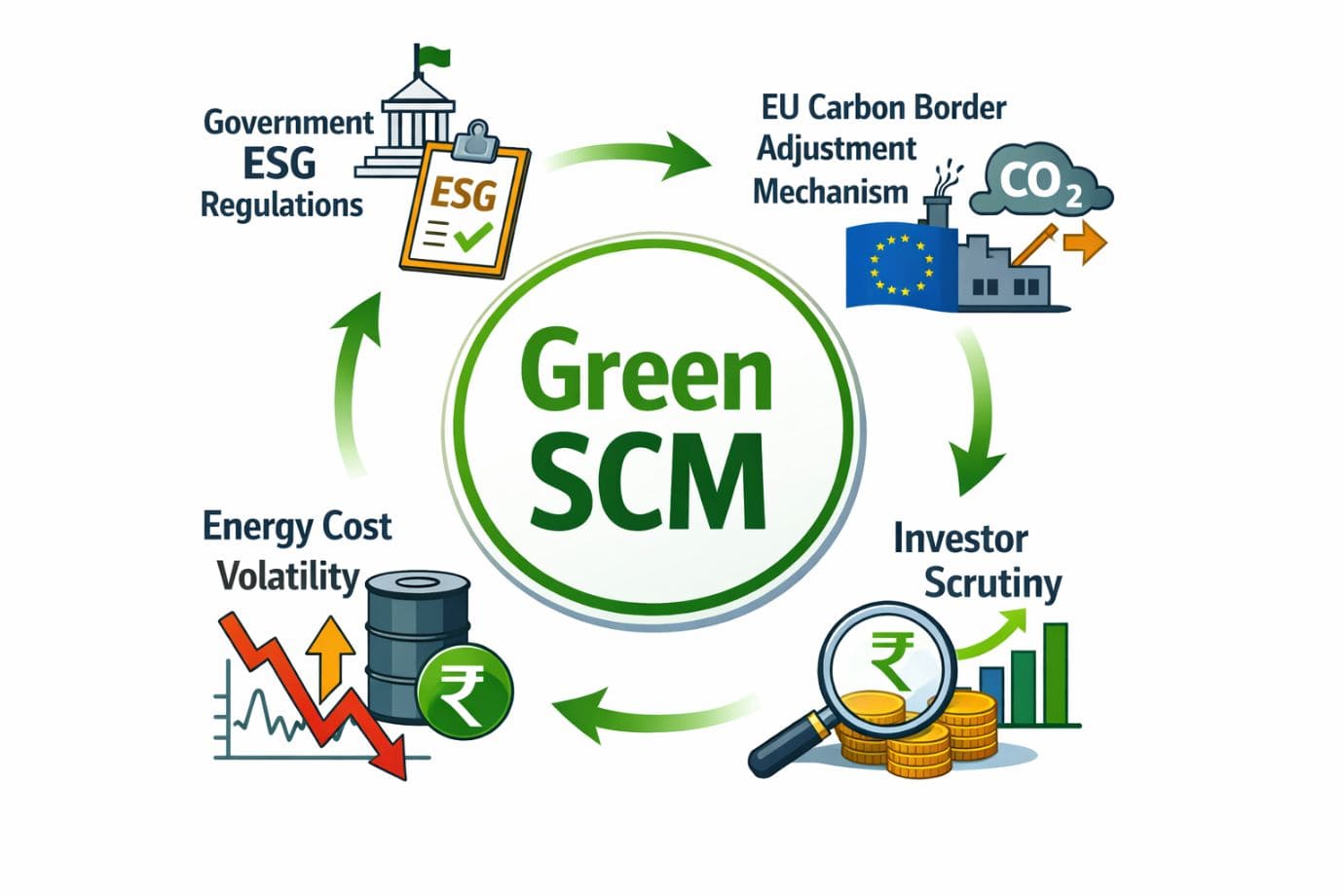
Why Green Supply Chain Management is Critical for Indian Manufacturers

  • Government ESG regulations: One of the primary drivers is tightening government ESG regulations and sustainability disclosure requirements. Indian companies are increasingly required to report environmental performance, pushing them to embed green supply chain management practices across sourcing, production, and distribution.
  • EU Carbon Border Adjustment Mechanism (CBAM): It directly impacts Indian exporters in sectors such as steel, aluminium, cement, and chemicals. Without a well-structured green supply chain, manufacturers risk losing access to critical export markets.
  • Energy cost volatility: It is another major concern. Rising fuel and electricity costs make green manufacturing and optimized logistics not just environmentally responsible choices but financially prudent ones. Implementing efficient procurement and resource optimization strategies reduces operational risks and improves margins.
  • Investor scrutiny: It further reinforces this shift. Global investors increasingly evaluate companies based on ESG performance, carbon footprint transparency, and sustainability metrics. A greener supply chain enhances credibility, strengthens access to capital, and unlocks it’s tangible benefits, including export competitiveness, cost stability, and long-term resilience through structured initiatives.

The 5 Core Components of Green Supply Chain Management

To successfully implement green supply chain management, organizations must adopt a structured approach built around five core pillars. These components form the foundation of effective green SCM and translate sustainability goals into measurable operational outcomes. When integrated strategically, these practices create a resilient, efficient, and greener supply chain that delivers both environmental and financial value.
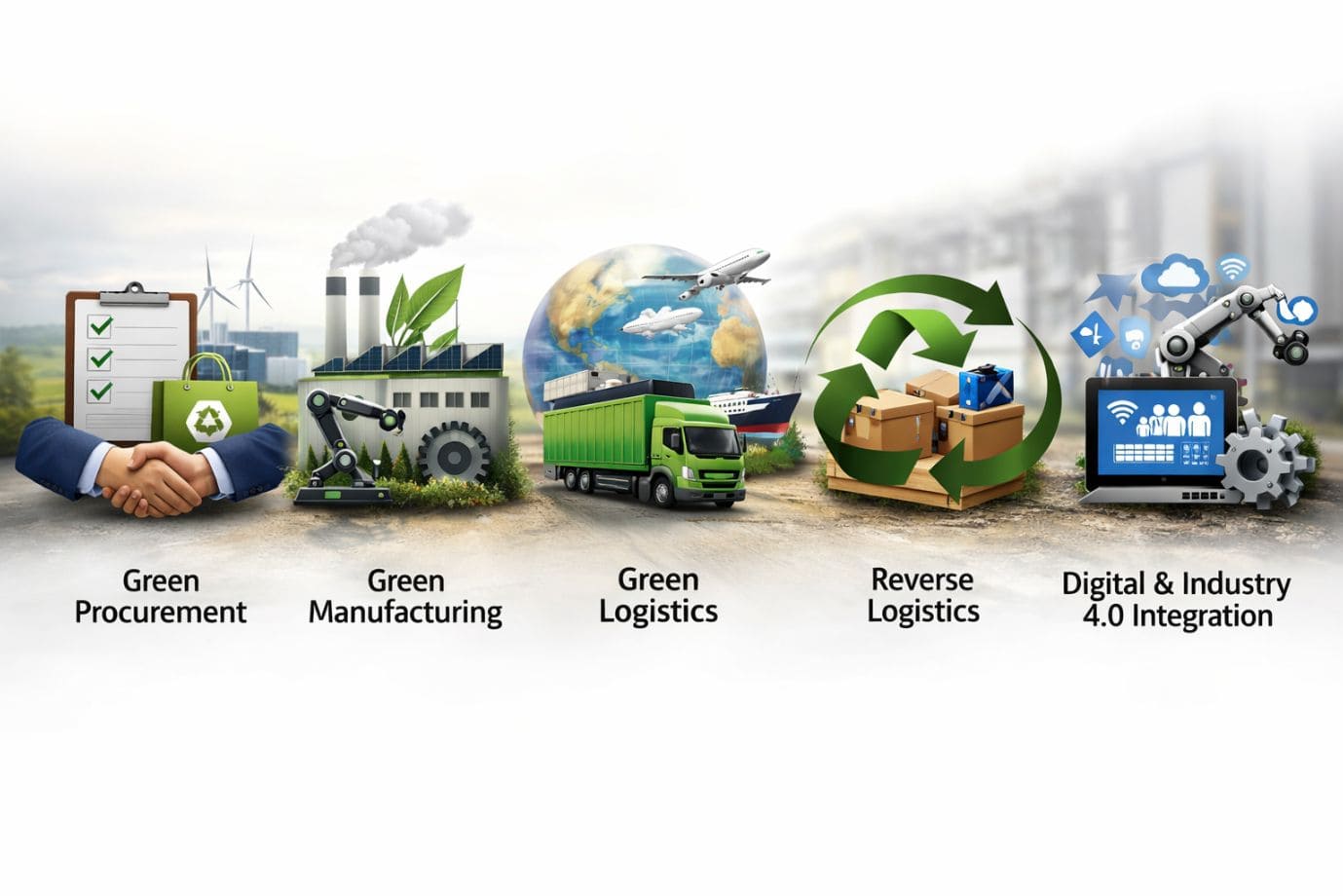
The 5 Core Components of Green Supply Chain Management

⮞ Green Procurement

  • It is the starting point of a sustainable green supply chain. It involves selecting suppliers based not only on cost and quality but also on ESG performance and environmental compliance. Supplier ESG evaluations help assess carbon emissions, waste management practices, ethical sourcing, and regulatory adherence.
  • Sustainable sourcing focuses on renewable, recyclable, or low-impact raw materials. Local sourcing further strengthens green supply management by reducing transportation emissions and improving supply reliability. Regular supplier audits ensure alignment with environmental standards and drive continuous improvement across the value chain. Strong procurement policies significantly enhance the benefits of green SCM by reducing upstream risks and ensuring regulatory compliance.

⮞ Green Manufacturing

  • It transforms production processes to minimize environmental impact while maximizing efficiency. Energy-efficient machinery, process optimization, and smart energy management systems reduce power consumption and operational costs.
  • Waste reduction through lean + green integration is a critical element of green SCM. By combining lean principles with sustainability, companies eliminate non-value-adding activities while lowering resource use. Renewable energy adoption—such as rooftop solar or bioenergy—further strengthens a greener supply chain. Water optimization, including recycling and closed-loop systems, is particularly important for Indian manufacturers facing water stress. These initiatives highlight the importance of green SCM in achieving long-term operational sustainability.

⮞ Green Logistics

  • It transforms production processes to minimize environmental impact while maximizing efficiency. Energy-efficient machinery, process optimization, and smart energy management systems reduce power consumption and operational costs.
  • Waste reduction through lean + green integration is a critical element of green SCM. By combining lean principles with sustainability, companies eliminate non-value-adding activities while lowering resource use. Renewable energy adoption—such as rooftop solar or bioenergy—further strengthens a greener supply chain. Water optimization, including recycling and closed-loop systems, is particularly important for Indian manufacturers facing water stress. These initiatives highlight the importance of green SCM in achieving long-term operational sustainability.

⮞ Reverse Logistics

  • Reverse logistics closes the loop in a green supply chain. Take-back systems allow companies to retrieve used products for reuse or responsible disposal. Remanufacturing extends product lifecycles and reduces raw material consumption.
  • Recycling models ensure materials re-enter production cycles, supporting circular economy goals. Compliance with Extended Producer Responsibility (EPR) regulations reinforces accountability. These reverse flow systems are central to advanced green supply management and amplify it’s long-term benefits.

⮞ Digital & Industry 4.0 Integration

  • Technology accelerates the effectiveness of green SCM. IoT-enabled energy monitoring provides real-time visibility into resource consumption. AI-based demand forecasting reduces overproduction and excess inventory.
  • Smart inventory systems optimize stock levels, minimizing waste and storage emissions. Carbon tracking dashboards enable data-driven decision-making and transparent ESG reporting. Digital enablement strengthens green supply chain management practices, ensuring measurable impact and sustained improvement across the entire value chain.

By integrating these five pillars, organizations can build a truly greener supply chain, demonstrating the strategic importance while unlocking measurable operational, financial, and environmental gains.

Also Read: Types of Supply Chain Management

Benefits of Green Supply Chain Management

Implementing green supply chain management delivers measurable business value beyond environmental responsibility. The true benefits lie in its ability to enhance profitability, strengthen competitiveness, improve operational resilience, and reduce environmental risk. For Indian manufacturers, adopting structured green SCM is not just about sustainability—it is about long-term performance optimization.
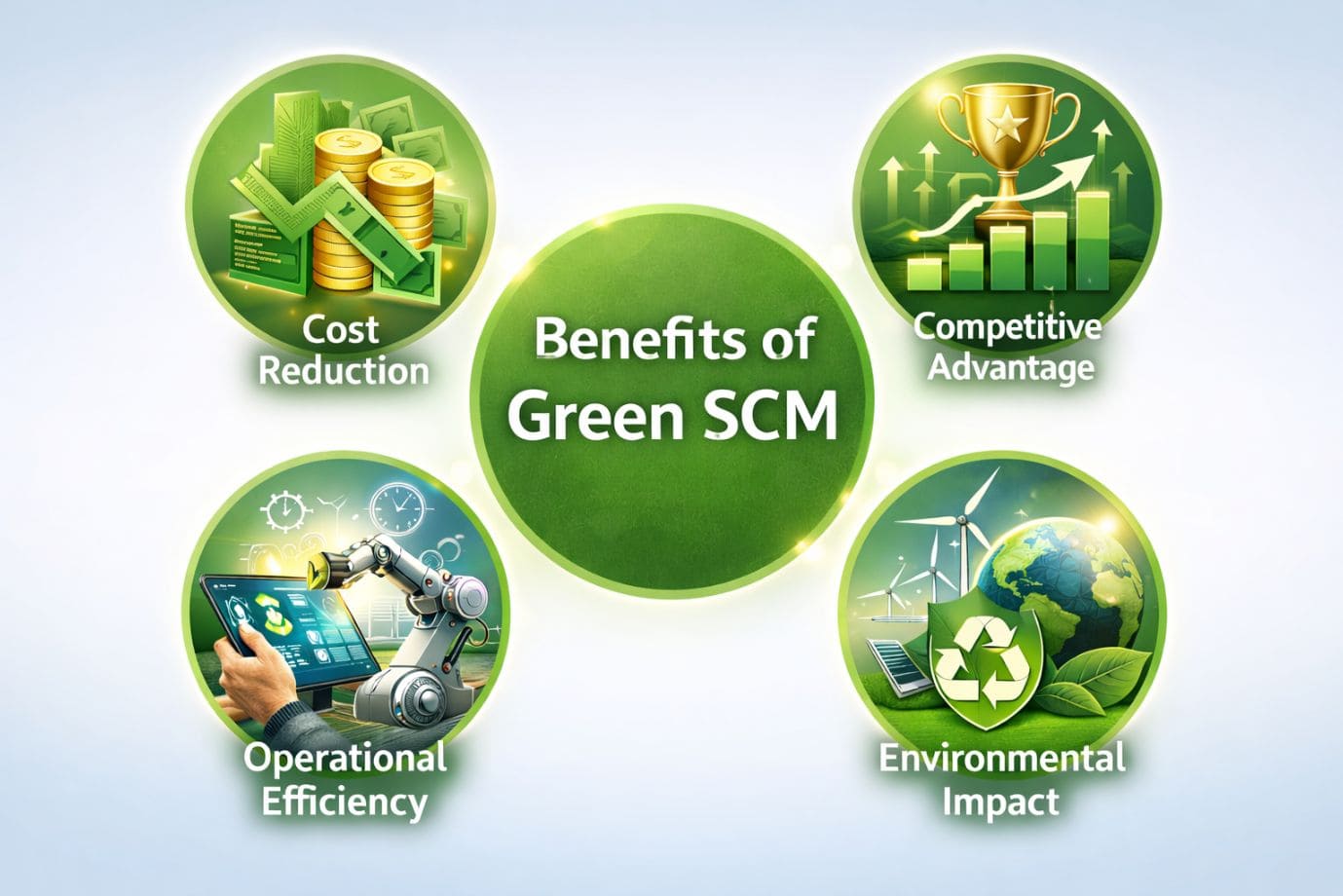
Benefits of Green Supply Chain Management

⮞ Cost Reduction

One of the most immediate advantages is cost savings. Energy-efficient processes under green manufacturing significantly reduce electricity and fuel expenses. Waste minimization initiatives lower raw material consumption and disposal costs, directly improving margins. Optimized green logistics—through route planning, load optimization, and fuel-efficient fleets—reduces transportation expenses. Additionally, strong green procurement practices prevent supply disruptions and costly compliance penalties, reinforcing the financial case for green supply management.

⮞ Competitive Advantage

In global markets, sustainability increasingly influences purchasing decisions. Companies that adopt advanced practices gain better export positioning, especially in regions with strict carbon regulations. A greener supply chain enhances brand value, strengthens stakeholder trust, and improves ESG ratings—factors that attract investors and global buyers. The growing importance of green supply chain management is evident in how sustainability performance now impacts contract awards and long-term partnerships.

⮞ Operational Efficiency

Integrating lean principles with green SCM improves planning accuracy, reduces excess inventory, and enhances resource utilization. Better demand forecasting and risk assessment minimize supply chain disruptions. Structured green supply management frameworks create transparency across operations, enabling proactive decision-making and long-term resilience.

⮞ Environmental Impact

Beyond financial gains, green supply chain management reduces carbon footprints, lowers emissions, and promotes circular material flow. By transforming linear systems into a green supply chain, organizations contribute to sustainable industrial growth while securing durable competitive advantage.

Common Challenges in Implementing Green Supply Chains

While the long-term advantages of green supply chain management are compelling, organizations often face practical barriers when transitioning to a fully integrated green SCM model. Understanding these challenges is critical for designing realistic and sustainable transformation strategies.
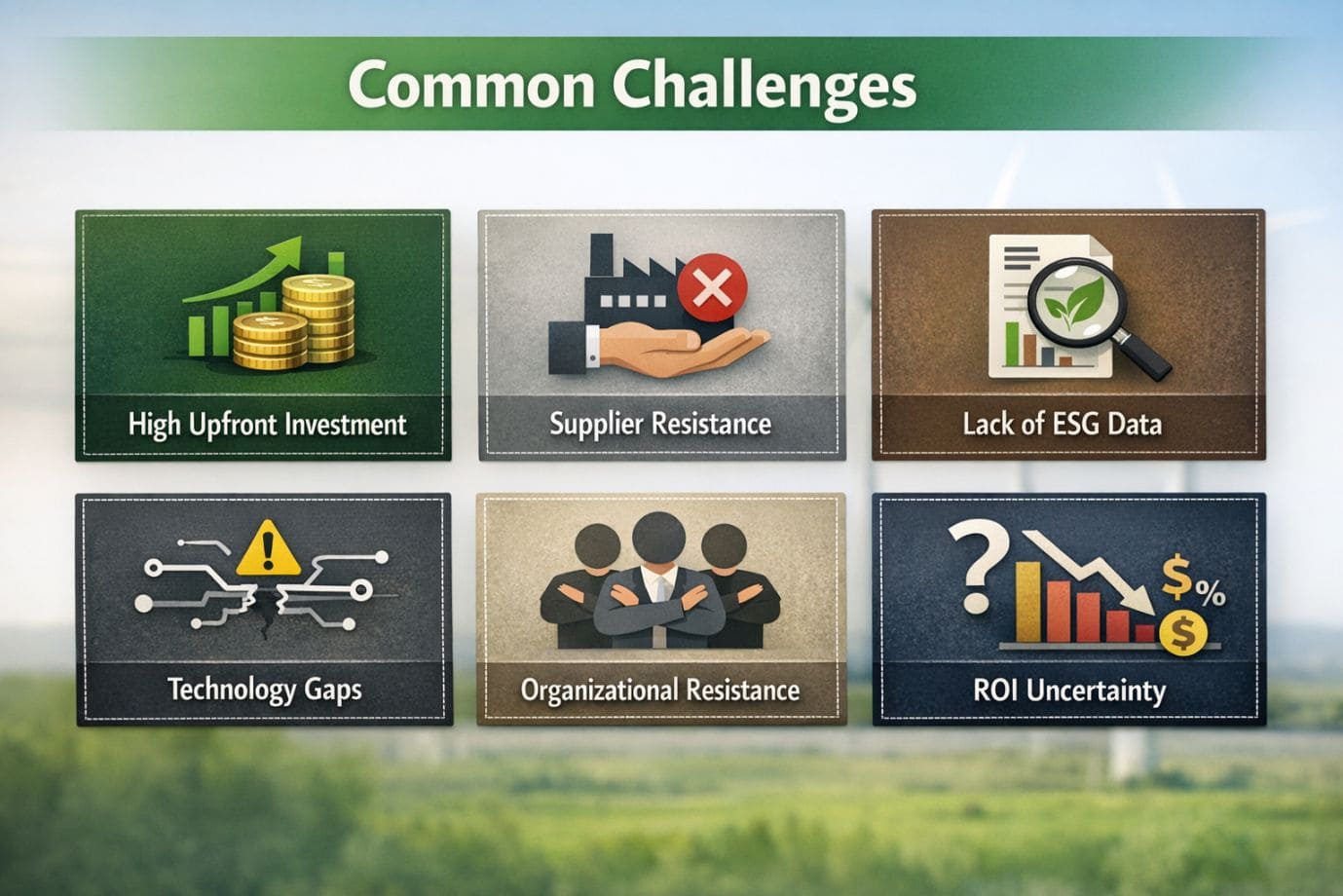
Common Challenges in Implementing Green Supply Chains

⮞ High upfront investment

One of the most significant hurdles is high upfront investment. Upgrading to energy-efficient equipment under green manufacturing, deploying renewable energy systems, or digitizing green logistics operations requires capital expenditure. For many mid-sized manufacturers, these costs can delay adoption of comprehensive green SCM practices.

⮞ Supplier resistance

It is another common obstacle. Shifting toward green procurement often demands stricter environmental compliance, transparency in reporting, and operational adjustments from suppliers. Smaller vendors may lack the financial or technical capability to align with evolving standards, slowing down the development of a fully greener supply chain.

⮞ Lack of ESG Data

Data availability also poses a challenge. Many companies struggle with the lack of reliable ESG metrics across their green supply chain, making carbon tracking and performance benchmarking difficult. Without accurate data, decision-making becomes reactive rather than strategic.

⮞ Technology gaps

It further complicate implementation. Integrating digital tools for emissions monitoring or process optimization requires technical expertise that may not be readily available.

⮞ Organizational resistance

stemming from change fatigue or unclear ownership—can hinder progress.

⮞ ROI Uncertainty

Finally, uncertainty around ROI often makes leadership hesitant, despite the long-term strategic value of structured green SCM adoption.

Future Trends in Green Supply Chain Management

The future of green supply chain management is being shaped by regulatory evolution, digital innovation, and shifting financial priorities. As sustainability becomes embedded in global trade frameworks, the importance of green supply chain management will only intensify for manufacturers aiming to remain competitive and compliant.

⮞ Carbon accounting becoming mandatory

One of the most significant trends is mandatory carbon accounting. Governments and international trade bodies are moving toward stricter disclosure norms, requiring companies to measure and report emissions across their entire green supply chain. This will push organizations to formalize green supply chain management practices and integrate real-time carbon tracking into their operations.

⮞ Digital twins in supply chains

These are also transforming green SCM. By creating virtual replicas of supply chain networks, companies can simulate logistics flows, energy consumption, and risk scenarios. This enhances planning accuracy in green logistics and strengthens predictive decision-making within green supply management frameworks.

⮞ Circular manufacturing models

These are gaining momentum as businesses shift from linear production to regenerative systems. Advanced green manufacturing strategies now prioritize reuse, remanufacturing, and material recovery to create a truly greener supply chain.

⮞ Sustainable packaging innovation

such as biodegradable materials and minimal packaging design—further reduces environmental impact.

⮞ Green financing & ESG-linked loans

Additionally, green financing and ESG-linked loans are incentivizing sustainability adoption. Financial institutions increasingly reward companies demonstrating strong green procurement, emissions reduction, and measurable ESG performance. These financial advantages reinforce the long-term benefits, making sustainability a core driver of growth and capital access.

FAQs

A.Green supply chain management refers to integrating environmental considerations into sourcing, production, logistics, and end-of-life processes. It is important because it helps manufacturers reduce environmental impact while improving efficiency, regulatory compliance, and long-term competitiveness in global markets.

A.Green SCM goes beyond cost and speed optimization by incorporating sustainability metrics such as carbon emissions, waste reduction, and energy efficiency. Unlike traditional models, it focuses on long-term resilience and environmental responsibility alongside profitability.

A.Green procurement enhances sustainability by selecting environmentally responsible suppliers, promoting ethical sourcing, and ensuring raw materials have lower carbon footprints. This reduces upstream risks and strengthens overall supply chain performance.

A.Green manufacturing improves energy efficiency, minimizes waste, and optimizes resource usage. These improvements directly lower electricity consumption, material waste costs, and compliance risks, contributing to higher profitability.

A.Green logistics reduces emissions through route optimization, fuel-efficient fleets, sustainable packaging, and energy-efficient warehouses. These strategies lower transportation costs while minimizing environmental impact.

A.While green supply chain management may require upfront investment in technology, process upgrades, and supplier alignment, it often delivers long-term cost savings through energy efficiency and waste reduction. Over time, the financial and operational gains outweigh the initial costs, making it a strategic investment rather than an expense.

Conclusion

The companies that integrate sustainability into their supply chains today will define the competitive landscape of tomorrow. This statement perfectly captures the evolving role of green supply chain management in modern industry. What was once viewed as an environmental compliance requirement has now become a powerful strategic lever. Organizations that proactively embed green SCM into their operational framework are not only reducing risk but also unlocking measurable growth opportunities.

The true importance of green supply chain management lies in its ability to align profitability with responsibility. By strengthening green procurement, optimizing green manufacturing, and advancing green logistics, companies create a resilient and future-ready green supply chain. These integrated practices enhance transparency, improve efficiency, and reduce exposure to regulatory and market volatility.

Forward-thinking businesses understand that building a greener supply chain improves export competitiveness, investor confidence, and long-term cost stability. The tangible benefits of green supply chain management—from energy savings to stronger ESG ratings—demonstrate that sustainability and profitability are not mutually exclusive.

Ultimately, adopting structured green supply management is about shaping a sustainable growth trajectory. Companies that treat sustainability as strategy rather than obligation will lead their industries, attract global partnerships, and thrive in an increasingly ESG-driven economy.

For more information, you can go to our Homepage.

Leave a Comment

Your email address will not be published. Required fields are marked *

Call Now Button
× Book free consultation