

Sustainable Supply Chain Management
Global supply networks are facing unprecedented challenges as climate change, resource scarcity, and evolving stakeholder expectations reshape the way businesses operate.
Today, organizations must move beyond traditional efficiency-driven models and prioritize supply chain sustainability as a strategic imperative. Companies that integrate sustainable supply chain management into their operations are better positioned to adapt to environmental regulations, shifting consumer preferences, and increasing global competition.
Historically, supply chains were designed primarily to reduce costs and improve speed. However, modern businesses are realizing that long-term success depends on integrating supply chain management and sustainability across procurement, manufacturing, transportation, and distribution. Governments around the world are introducing stricter environmental policies, while investors are demanding stronger ESG commitments. These pressures are pushing organizations to adopt supply chain sustainability management strategies that balance operational performance with environmental responsibility.
Another major driver is the growing number of corporations committing to net-zero emissions. Because a large portion of emissions occurs across supply networks, companies are investing in sustainable logistics and strengthening sustainability in logistics and supply chain management to reduce environmental impact.
In response, businesses are increasingly adopting sustainable supply chain practices that enhance efficiency while reducing waste and carbon emissions. This shift has led to the emergence of Sustainable Supply Chain Management (SSCM) which focuses on improving the sustainability while building more resilient, transparent, and responsible supply networks.
What is Sustainable Supply Chain Management?
It is the strategic integration of environmental, social, and economic considerations into the design, planning, and operation of supply chains. Unlike traditional models that prioritize cost and speed, sustainable SCM focuses on building responsible, resilient, and efficient supply networks. By embedding supply chain sustainability into business operations, organizations can reduce environmental impact, improve transparency, and strengthen long-term competitiveness.
At its core, sustainable supply chain management is guided by the Triple Bottom Line, which ensures that business growth aligns with environmental protection and social responsibility. This approach helps organizations balance profitability with the broader goals of supply chain management and sustainability.
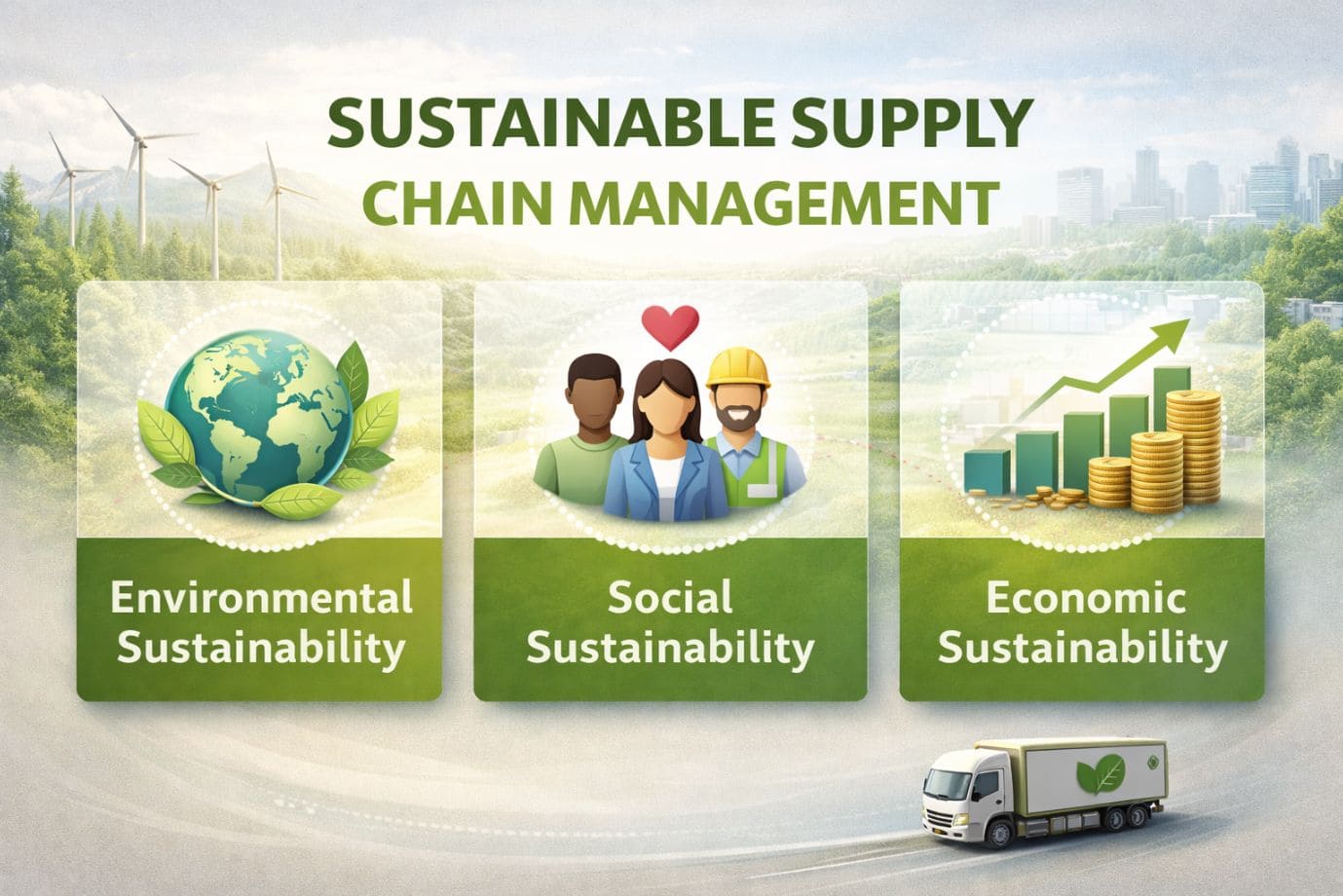
Environmental Sustainability
It is a fundamental pillar of sustainable supply chain management. Companies focus on reducing their ecological footprint through several initiatives:
- Carbon reduction: Minimizing greenhouse gas emissions across manufacturing and transportation networks. For comprehensive information, you can go through our dedicated blog on Carbon Offsets.
- Green and sustainable logistics: Optimizing transportation routes, adopting cleaner fuels, and improving logistics and sustainability practices.
- Sustainable materials: Using recyclable, biodegradable, or responsibly sourced raw materials to support sustainability in logistics and supply chain management.
Social Sustainability
It ensures that supply chains operate ethically and contribute positively to society. Key aspects of sustainable supply chain management include:
- Ethical labor practices: Ensuring fair wages, humane working conditions, and compliance with labor laws.
- Fair trade sourcing: Partnering with suppliers that follow responsible production standards.
- Worker safety: Creating safe and healthy working environments throughout the supply chain.
These initiatives strengthen trust among stakeholders and reinforce sustainable supply chain practices.
Economic Sustainability
It focuses on maintaining profitability while improving efficiency and resilience. Through sustainable supply chain management, companies can achieve:
- Long-term cost optimization through energy-efficient processes.
- Supply chain resilience to manage disruptions and risks.
- Operational efficiency through digitalization and process improvement.
Impact across the Entire Value Chain
The principles of sustainable logistics and supply chain extend across the full value chain, including:
- Sourcing of raw materials
- Production and manufacturing processes
- Logistics and transportation
- Warehousing and inventory management
- Distribution networks
- End-of-life recycling and circular economy practices
By integrating sustainability at every stage, organizations can significantly improve the sustainability of supply chain management while building more transparent, efficient, and future-ready supply chains.
Why Sustainable Supply Chains Matter for Manufacturers
For modern manufacturers, sustainability is no longer just a corporate responsibility initiative—it is a strategic necessity. Integrating sustainable supply chain management into business operations allows organizations to improve efficiency, strengthen resilience, and respond effectively to global environmental and regulatory pressures. As industries become more interconnected, companies are recognizing that supply chain sustainability plays a critical role in ensuring long-term competitiveness and stability.
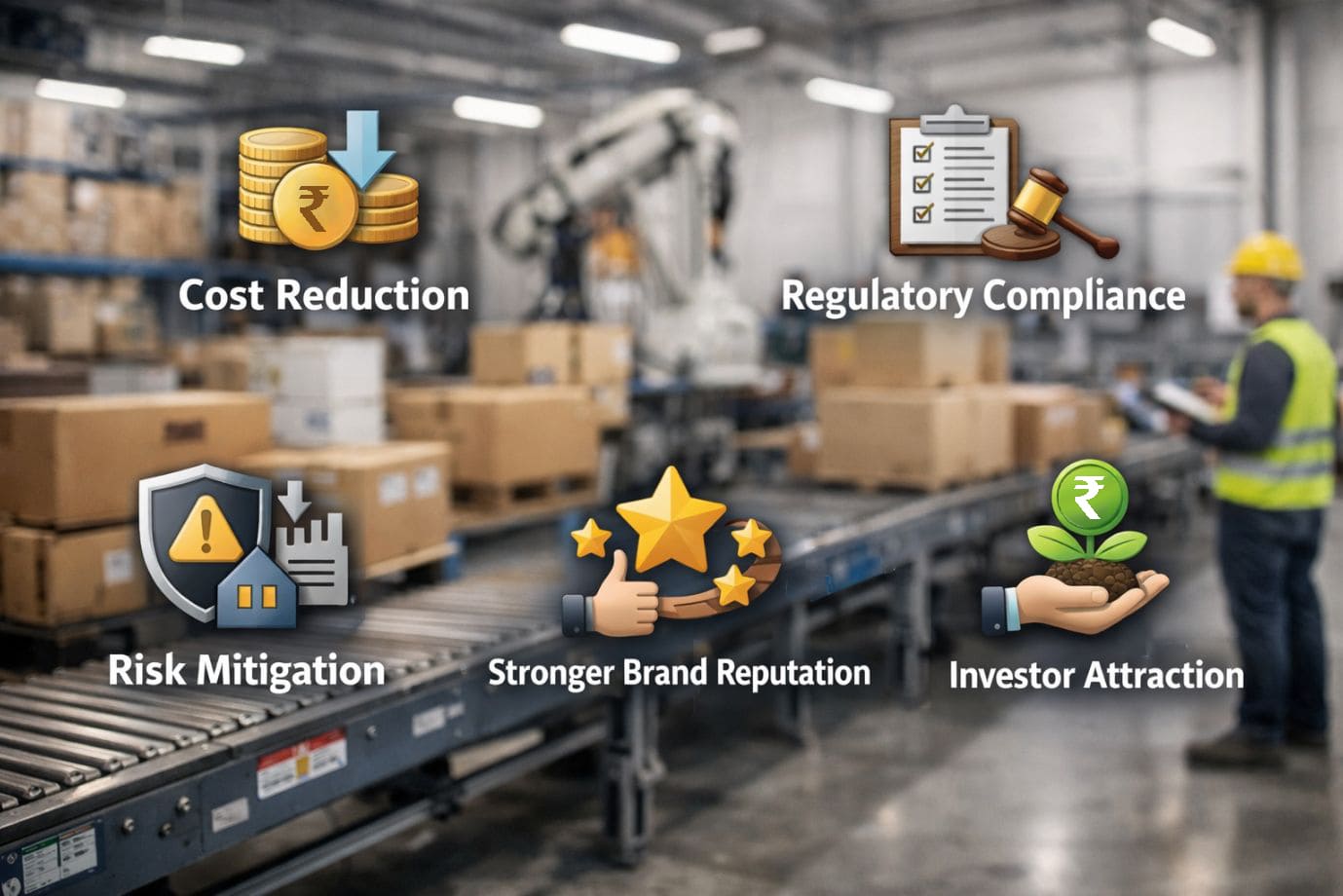
⮞ Cost Reduction
A major advantage of building a sustainable supply chain is the potential for significant cost savings. Manufacturers can reduce operational expenses by improving energy efficiency, minimizing waste, and optimizing resource utilization. Practices such as route optimization, reduced packaging, and energy-efficient transportation systems enhance sustainable logistics and support better alignment between logistics and sustainability goals. These improvements help companies streamline operations while lowering environmental impact.
⮞ Regulatory Compliance
Regulatory requirements around sustainability are increasing worldwide. Governments and international bodies now require companies to meet stricter carbon reporting standards and ESG disclosures. By incorporating sustainability in logistics and supply chain management, organizations can align their operations with global sustainability policies and maintain compliance with evolving regulations.
⮞ Risk Mitigation
Supply chains today face disruptions caused by climate change, geopolitical uncertainties, and resource scarcity. Implementing sustainable supply chain practices helps organizations identify vulnerabilities, diversify sourcing strategies, and strengthen overall supply chain resilience.
⮞ Stronger Brand Reputation
Companies that prioritize supply chain management and sustainability often gain stronger customer trust. Consumers increasingly prefer brands that demonstrate responsible sourcing and environmentally conscious operations.
⮞ Investor Attraction
Investors are also paying closer attention to sustainability performance. Businesses that actively implement SSCM strategies and improve the sustainability of supply chain management are more likely to attract ESG-focused investments and long-term financial support.
Key Pillars of a Sustainable Supply Chain
Developing a sustainable supply chain requires more than isolated environmental initiatives—it demands a comprehensive strategy that integrates responsible sourcing, efficient production, and optimized logistics. Organizations that prioritize sustainable supply chain management focus on key operational pillars that strengthen supply chain sustainability while improving overall business performance. These pillars help align operational efficiency with environmental responsibility, reinforcing the connection between supply chain management and sustainability.
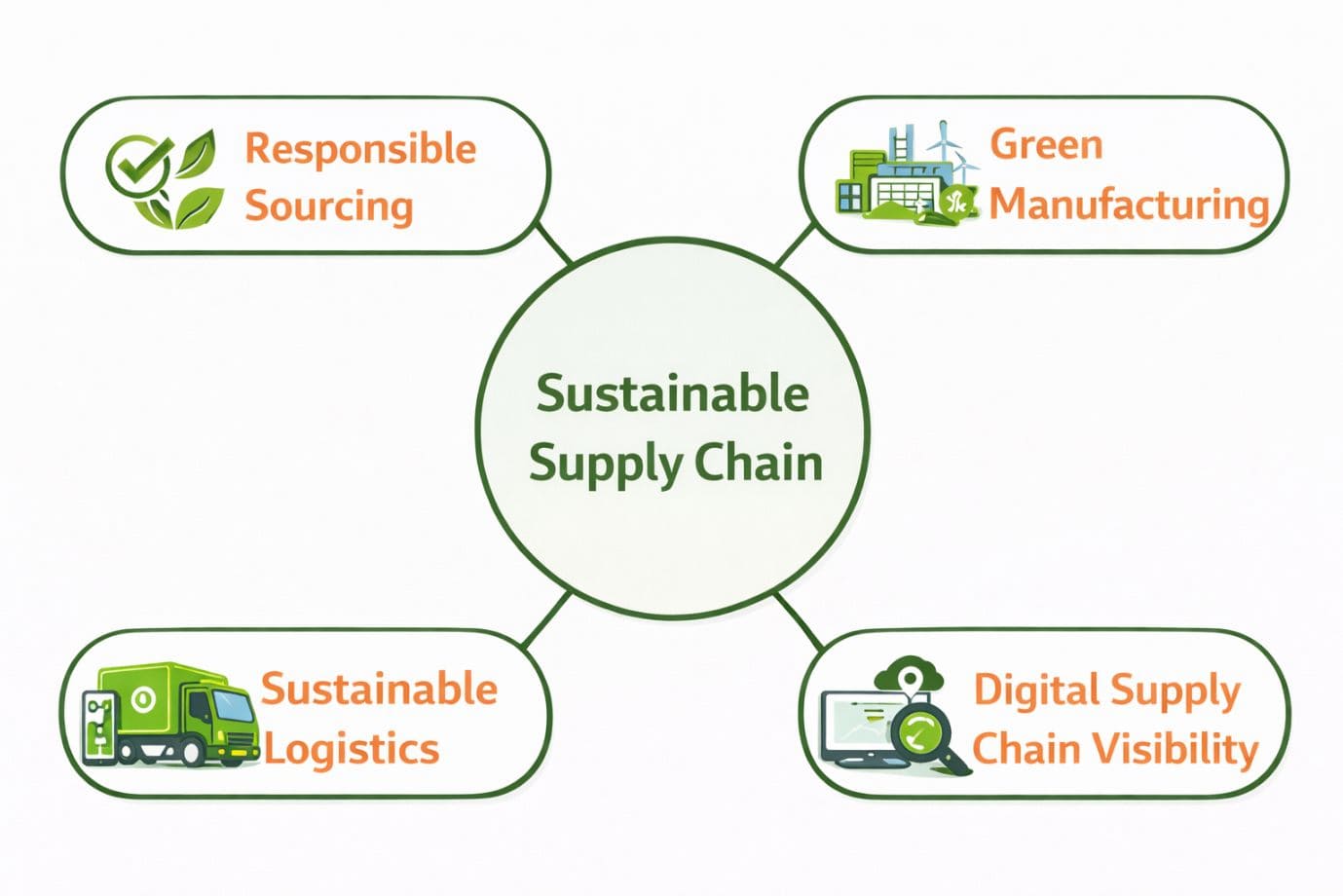
⮞ Responsible Sourcing
It is the foundation of effective sustainable SCM. Companies must select suppliers that follow ethical labor standards and environmentally responsible practices. Transparent procurement processes, supplier audits, and improved traceability systems allow organizations to monitor supplier performance and reduce sustainability risks. By embedding these practices into procurement strategies, businesses can strengthen long-term supply chain sustainability management.
⮞ Green Manufacturing
It focuses on minimizing environmental impact during production. Manufacturers increasingly adopt energy-efficient equipment, renewable energy sources, and waste reduction initiatives to support sustainable supply chain practices. Circular production models—where materials are reused, recycled, or repurposed—also contribute to improving the overall sustainability of supply chain management while enhancing operational efficiency.
Also Read: Green Supply Chain Management
⮞ Sustainable Logistics
Transportation and distribution are major contributors to supply chain emissions. Implementing sustainable logistics strategies such as route optimization, low-emission transportation, packaging reduction, and efficient warehouse operations can significantly reduce environmental impact. These improvements help organizations better align logistics and sustainability goals while strengthening the performance of a sustainable logistics and supply chain network.
⮞ Digital Supply Chain Visibility
Digital technologies play a crucial role in enabling modern SSCM initiatives. Tools such as real-time monitoring systems, AI-based demand forecasting, and supply chain analytics provide greater transparency and operational insights. These technologies help organizations improve decision-making and strengthen sustainability in logistics and supply chain management, allowing businesses to identify inefficiencies and drive continuous improvements in supply chain sustainability.
The Role of Industry 4.0 & Industry 5.0 in Sustainable Supply Chains
Technological innovation is transforming how organizations approach sustainable supply chain management. With the rise of digital technologies, businesses can now integrate sustainability directly into operational decision-making. Industry 4.0 technologies—such as IoT, artificial intelligence, automation, and advanced analytics—are enabling companies to strengthen supply chain sustainability while improving efficiency and transparency across the entire sustainable supply chain.
⮞ Internet of Things (IoT)
The Internet of Things allows companies to monitor operations in real time through connected sensors and smart devices. IoT systems can track energy consumption, emissions, and equipment performance across manufacturing plants and logistics networks. This level of visibility helps organizations optimize processes and improve sustainability in logistics and supply chain management by identifying inefficiencies and reducing resource waste.
⮞ AI and Predictive Analytics
Artificial intelligence and predictive analytics play a critical role in modern SSCM strategies. AI-powered demand forecasting helps businesses accurately predict market demand, preventing overproduction and reducing excess inventory. By aligning production planning with actual demand, organizations can implement more efficient practices and improve overall supply chain sustainability management.
⮞ Automation and Smart Manufacturing
Automation technologies and smart factory systems improve productivity while reducing operational waste. Automated production lines, energy-efficient equipment, and data-driven manufacturing processes enable companies to enhance operational performance while supporting sustainable SCM initiatives. These improvements also strengthen the connection between logistics and sustainability, enabling better coordination across production and distribution networks.
⮞ Industry 5.0: Human-Centric and Sustainable Manufacturing
While Industry 4.0 focuses on digital transformation, Industry 5.0 emphasizes collaboration between humans and advanced technologies to achieve sustainable and socially responsible manufacturing. This approach integrates supply chain management and sustainability by prioritizing worker well-being, environmental stewardship, and resilient operations. By combining smart technologies with human expertise, organizations can significantly enhance the sustainability of supply chain management while building more adaptive and future-ready sustainable logistics and supply chain systems.
You can also read our dedicated blog on How Industry 4.0 differs from Industry 5.0
Key Strategies to Implement Sustainable Supply Chain Management
Implementing sustainable supply chain management requires a structured and strategic approach that integrates environmental responsibility with operational efficiency. Organizations aiming to strengthen supply chain sustainability must adopt practical strategies that improve transparency, reduce environmental impact, and enhance long-term resilience. The following strategies help businesses build a more responsible and efficient sustainable supply chain.
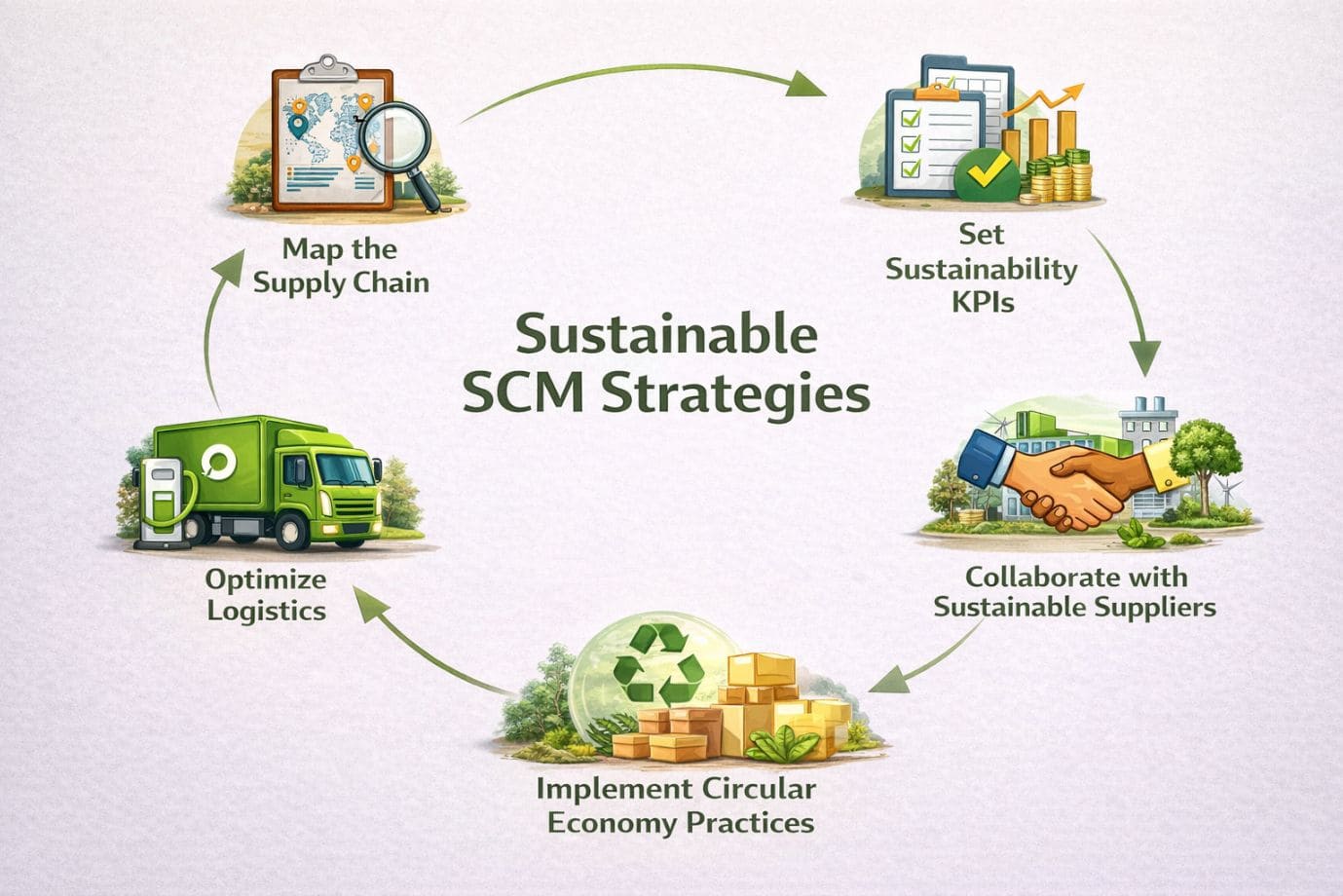
Strategy 1: Map the Supply Chain
The first step in effective supply chain sustainability management is gaining complete visibility across the supply network. Mapping the supply chain helps organizations identify emissions sources, operational inefficiencies, and sustainability risks across sourcing, manufacturing, and logistics. This visibility enables companies to develop targeted actions that strengthen sustainability in logistics and supply chain management.
Strategy 2: Set Sustainability KPIs
Clear performance metrics are essential for successful sustainable SCM implementation. Companies should establish measurable sustainability KPIs such as carbon footprint reduction, energy consumption efficiency, and supplier ESG performance. Tracking these indicators allows organizations to monitor progress and continuously improve the sustainability of supply chain management.
Strategy 3: Collaborate with Sustainable Suppliers
Supplier partnerships play a critical role in building a responsible supply network. Organizations should collaborate with suppliers that share similar sustainability goals and support ethical sourcing practices. Long-term partnerships strengthen trust, improve transparency, and reinforce sustainable supply chain practices across the entire value chain.
Strategy 4: Optimize Logistics
Transportation and distribution activities significantly influence environmental impact. Implementing sustainable logistics strategies—such as route optimization, consolidated shipments, and eco-friendly transportation—helps reduce emissions and operational costs. These improvements also enhance the integration of logistics and sustainability within supply chain systems.
Strategy 5: Implement Circular Economy Practices
Circular economy models are becoming an essential part of modern SSCM strategies. Businesses can reduce resource consumption by implementing recycling programs, remanufacturing processes, and product life extension initiatives. These practices support sustainable supply chain management by minimizing waste while maximizing the value of resources across the sustainable chain management framework.
Common Challenges in Sustainable Supply Chain Implementation
While many organizations recognize the importance of sustainable supply chain management, implementing sustainability initiatives across complex supply networks can be challenging. Companies striving to improve supply chain sustainability often face operational, technological, and organizational barriers when transitioning toward a sustainable supply chain. Understanding these challenges is essential for building effective strategies and strengthening the integration of sustainable supply chain management.
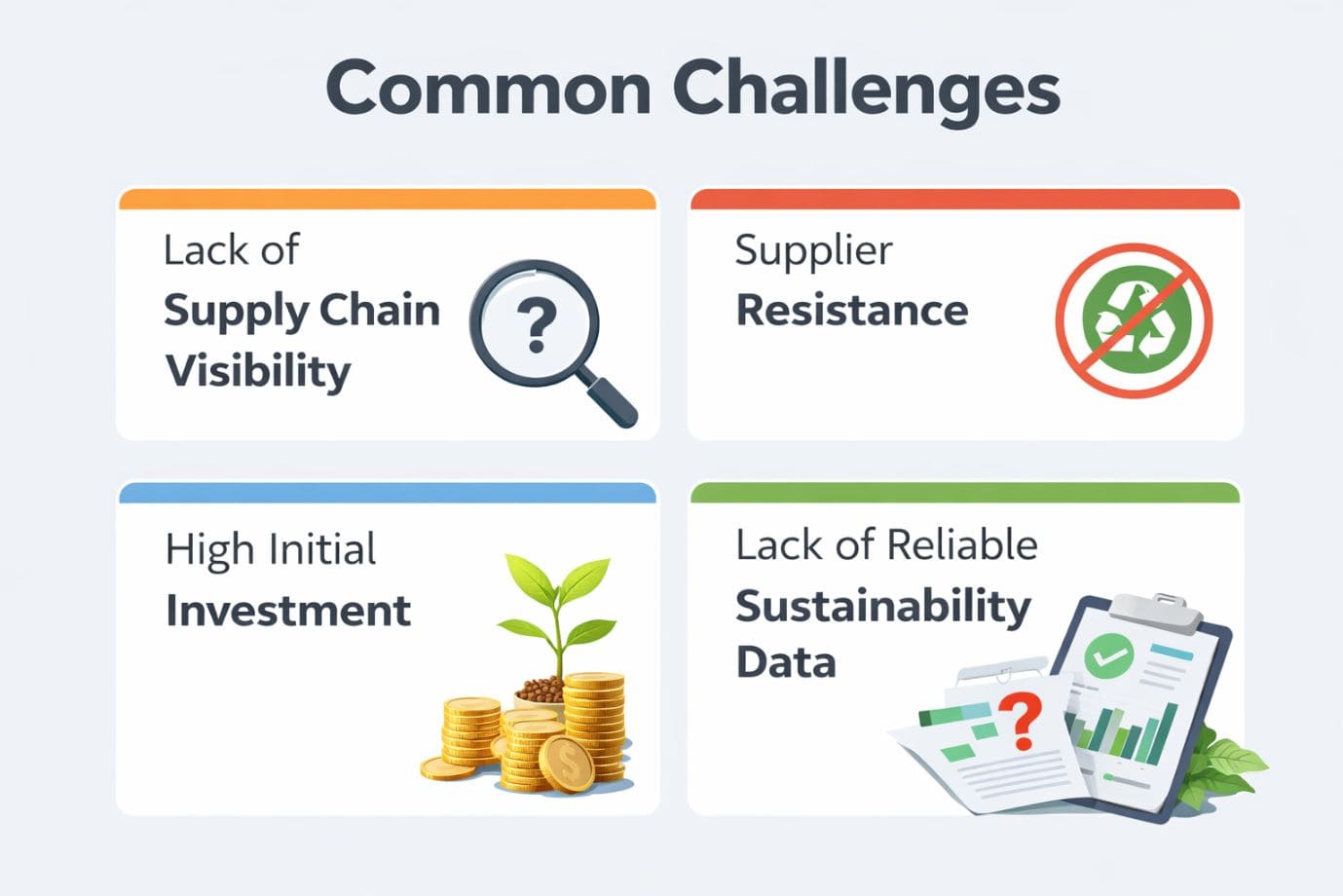
Lack of Supply Chain Visibility
One of the biggest obstacles in implementing sustainable SCM is limited visibility across the entire supply network. Many organizations lack accurate data on supplier operations, logistics activities, and environmental impacts across multiple tiers. Without transparency, it becomes difficult to track emissions, monitor compliance, or measure the effectiveness of sustainable supply chain practices. Digital tools such as IoT-based tracking systems, real-time analytics, and supply chain monitoring platforms can significantly improve sustainability in logistics and supply chain management.
Supplier Resistance
Another common challenge is resistance from suppliers who may be reluctant to adopt sustainability standards. Suppliers may view sustainability initiatives as costly or complex to implement. Overcoming this barrier requires strong collaboration, clear sustainability guidelines, and long-term partnerships that encourage suppliers to participate in responsible sustainable chain management practices.
High Initial Investment
Implementing sustainability initiatives often requires upfront investment in technologies, infrastructure upgrades, and improved sustainable logistics systems. These costs can discourage organizations from pursuing sustainability initiatives. However, strategic planning and phased adoption can help businesses gradually transition toward sustainable logistics and supply chain operations while achieving long-term cost savings.
Lack of Reliable Sustainability Data
Many organizations struggle with insufficient data to measure the sustainability of supply chain management. Without accurate sustainability metrics, companies cannot effectively monitor progress or make informed decisions. Investing in digital reporting systems and data analytics tools can help organizations strengthen their SSCM initiatives and improve overall logistics and sustainability performance.
Future Trends in Sustainable Supply Chains
As global industries move toward responsible and resilient operations, supply chain sustainability is becoming a central priority for businesses. Emerging technologies, regulatory changes, and evolving stakeholder expectations are shaping the future of sustainable supply chain management. Organizations that adapt early to these developments will strengthen their competitive position while advancing supply chain management and sustainability.
- Carbon-Neutral Supply Chains: One of the most significant trends in sustainable SCM is the transition toward carbon-neutral supply chains. Companies are investing in renewable energy, low-emission transportation, and energy-efficient infrastructure to reduce emissions across sourcing, production, and sustainable logistics These initiatives help organizations align environmental goals with operational efficiency while strengthening logistics and sustainability strategies.
- ESG-Driven Procurement: Procurement strategies are increasingly influenced by Environmental, Social, and Governance (ESG) criteria. Businesses are prioritizing suppliers that follow ethical labor practices and environmentally responsible production methods. This shift supports stronger supply chain sustainability management.
- AI-Powered Supply Chain Sustainability: Artificial intelligence and advanced analytics are transforming sustainable chain management. AI-powered demand forecasting and supply chain analytics enable organizations to reduce overproduction, optimize resource usage, and improve decision-making. These technologies play a key role in strengthening sustainability in logistics and supply chain management.
- Circular Manufacturing: Circular economy models are gaining momentum as businesses seek to reduce waste and maximize resource efficiency. Recycling, remanufacturing, and product life extension initiatives are becoming essential sustainable supply chain practices, improving the overall sustainability.
- Blockchain for Supply Chain Traceability: Blockchain technology is enhancing transparency across the sustainable logistics and supply chain By enabling secure and traceable data sharing, blockchain helps companies verify sourcing practices, track product movement, and improve trust throughout the supply network.
Organizations that proactively adopt these trends will strengthen their SSCM initiatives and build more resilient, efficient, and responsible supply chains.
FAQs
A. Sustainable supply chain management refers to integrating environmental, social, and economic considerations into supply chain operations. It focuses on responsible sourcing, efficient production, and optimized logistics to reduce environmental impact while improving long-term operational efficiency and business resilience.
A. Supply chain sustainability helps manufacturers reduce environmental impact, comply with regulations, and improve operational efficiency. It also strengthens brand reputation, attracts responsible investors, and ensures long-term resilience in an increasingly competitive global market.
A. A sustainable supply chain improves cost efficiency by reducing waste, optimizing energy use, and enhancing transportation planning. It also strengthens risk management, improves supplier collaboration, and supports long-term operational stability.
A. SSCM focuses on minimizing environmental impact across the supply network through responsible sourcing, energy-efficient manufacturing, and optimized logistics. By adopting sustainable practices, companies can significantly reduce emissions and resource consumption.
A. Sustainable SCM helps organizations meet evolving environmental regulations, carbon reporting requirements, and ESG standards. Companies that adopt sustainable strategies are better prepared to comply with international sustainability policies and regulatory frameworks.
A. Supply chain sustainability management includes responsible sourcing, green manufacturing, efficient logistics, and digital supply chain visibility. These components help organizations improve transparency, reduce environmental impact, and build resilient supply networks.
A. Sustainable logistics helps reduce transportation emissions, improve fuel efficiency, and optimize route planning. These improvements support environmental goals while lowering operational costs and strengthening overall supply chain performance.
A. Enhancing the sustainability of supply chain management allows companies to reduce risks, improve efficiency, and align with global sustainability expectations. Businesses that adopt sustainable strategies early can strengthen resilience and gain long-term competitive advantage.
Conclusion
In today’s rapidly evolving global economy, supply chain sustainability has become a strategic priority rather than a voluntary initiative. Organizations across industries are recognizing that building a sustainable supply chain is essential for improving resilience, strengthening competitiveness, and ensuring long-term growth. By integrating environmental responsibility with operational efficiency, companies can align supply chain management and sustainability to create more responsible and future-ready supply networks.
Adopting sustainable supply chain management enables businesses to address climate risks, regulatory pressures, and changing stakeholder expectations while improving operational performance. Through effective management, organizations can reduce emissions, optimize resource utilization, and implement responsible sourcing strategies that strengthen the overall sustainability of supply chain management.
For manufacturers beginning their sustainability journey, the first step is conducting a comprehensive supply chain assessment to identify inefficiencies, emissions sources, and potential improvement areas. Establishing clear sustainability goals—such as reducing carbon footprint, improving supplier ESG performance, and implementing sustainable logistics—can provide a strong foundation for long-term transformation. Integrating digital technologies and analytics further supports sustainable SCM by improving transparency, monitoring, and operational decision-making.
Additionally, organizations must focus on improving sustainability in logistics and supply chain management by adopting energy-efficient transportation systems and strengthening sustainable logistics and supply chain practices. These initiatives not only support environmental goals but also enhance cost efficiency and supply chain resilience.
As industries continue to evolve, companies that prioritize sustainable chain management and adopt innovative practices will be better positioned to navigate future disruptions. The path toward SSCM is ultimately the path toward building smarter, more resilient, and truly future-ready manufacturing ecosystems.
For more details about other services, visit our Homepage.

