

Types of Supply Chain Management

In today’s hyper-connected and fast-changing business landscape, supply chains are no longer invisible back-end functions.

They have evolved from being simple cost centers into powerful strategic growth enablers. Within the first few months of recent global disruptions, many organizations realized that understanding the types of supply chain management they operate under can determine whether they survive, stagnate, or scale. From sourcing raw materials to delivering finished products, supply chain decisions now directly influence profitability, customer satisfaction, and long-term resilience.

The impact of large-scale disruptions—such as global pandemics, geopolitical tensions, fluctuating energy prices, and extreme demand volatility—has exposed the fragility of traditional models. Businesses that relied on rigid, forecast-driven systems struggled, while those that adopted adaptive scm types demonstrated greater agility and continuity. These events made one thing clear: a “one-size-fits-all” approach to supply chain design no longer works.
Types of Supply Chain Management

Different industries, markets, and business goals demand different types of supply chain and operating philosophies. A high-volume manufacturer, for example, requires a very different setup than a project-based engineering firm or a fast-moving consumer goods company. This is why organizations must understand the various kinds of supply chain structures available today and align them with their operational realities.

This blog explores the most relevant types of supply chain management systems used in modern businesses—from traditional models to digitally enabled and resilient frameworks. By understanding these scm types, leaders can make informed decisions that turn supply chains into a lasting competitive advantage.

What Is Supply Chain Management?

It is the business discipline that ensures the smooth, efficient, and coordinated movement of goods, information, and value across an organization. Rather than functioning as a back-office activity, SCM acts as a strategic framework that connects planning, execution, and continuous improvement. The choice among different types of supply chain management determines how well a business can control costs, respond to market changes, and deliver consistent customer value.

At a high level, SCM manages the entire journey of a product or service. This journey can be broken down into clear, interconnected stages, each of which plays a critical role in shaping performance across various scm types and operating models.

⮞ End-to-End Flow of the Supply Chain

Supply chain management begins with suppliers, where raw materials or components are sourced based on cost, quality, and reliability. These inputs move into manufacturing, where processes are optimized to balance productivity, quality, and lead times. Finished goods are then positioned in warehouses to support efficient storage and inventory control. From there, distribution channels ensure timely delivery to customers, completing the end-to-end flow that defines modern types of supply chain and operational structures.

⮞ Cost Optimization

One of the primary objectives of SCM is cost optimization. Different kinds of supply chain focus on reducing waste, minimizing excess inventory, and improving resource utilization. When aligned correctly, supply chain management system helps organizations lower operating costs without compromising performance.

⮞ Service Levels

SCM directly influences service levels by ensuring product availability, accurate order fulfillment, and reliable delivery timelines. Well-designed scm types enable businesses to meet customer expectations consistently, even in volatile demand environments.

⮞ Scalability and Sustainability

As businesses grow, scalable supply chains prevent operational bottlenecks and support expansion into new markets. At the same time, modern types of supply chain management increasingly emphasize sustainability—integrating responsible sourcing, energy efficiency, and reduced environmental impact into everyday operations.

Why Understanding Different Types of Supply Chain Management Is Critical

Supply chains are not standalone systems—they are extensions of a company’s business strategy. When the supply chain design does not match how a business operates or competes in the market, inefficiencies quickly surface. This is why gaining clarity on the different types of supply chain management is critical for building operations that are both efficient and resilient. Before examining specific benefits, it is important to understand how misalignment and variability impact supply chain performance across industries.

Why Understanding Different Types of Supply Chain Management Is Critical

⮞ Misalignment Between Supply Chain Type and Business Model

When a business adopts unsuitable scm types, operational friction becomes inevitable. A supply chain built for cost efficiency may struggle to support responsiveness, while a highly flexible system may inflate costs in a volume-driven environment. These mismatches across types of supply chain often result in excess inventory, longer lead times, and inconsistent service levels.

⮞ High-Volume Manufacturing vs Customized Production

High-volume manufacturing environments typically require standardized, repeatable kinds of supply chain that focus on scale and efficiency. In contrast, customized or low-volume production demands adaptive types of supply chain management systems that can handle variation without disruption. Applying the wrong structure can severely impact productivity and delivery performance.

⮞ Stable Demand vs Volatile Demand

Businesses operating with stable demand benefit from forecast-driven planning, while those facing unpredictable markets require responsive and flexible types of SCM. Using rigid models in volatile conditions limits the organization’s ability to react quickly to change.

⮞ Benefits of Choosing the Right Supply Chain Type

Selecting the appropriate types of supply chain management leads to reduced inventory levels, faster response times, and improved returns on technology investments by aligning digital tools with real operational needs.

⮞ Consultant’s Perspective: Diagnose Before You Design

From a consulting standpoint, effective supply chain transformation begins with diagnosis. Understanding demand patterns, business objectives, and constraints ensures the right scm types are designed to support long-term performance rather than short-term fixes.

Traditional Types of Supply Chain Management

Before the rise of digital and highly adaptive networks, organizations relied on foundational models that continue to shape many modern operations. These traditional types of supply chain management form the backbone of several scm types still used across manufacturing and industrial sectors today. Understanding these types of supply chain helps businesses choose structures that align with demand patterns, production scale, and service expectations.
Traditional Types of Supply Chain Management

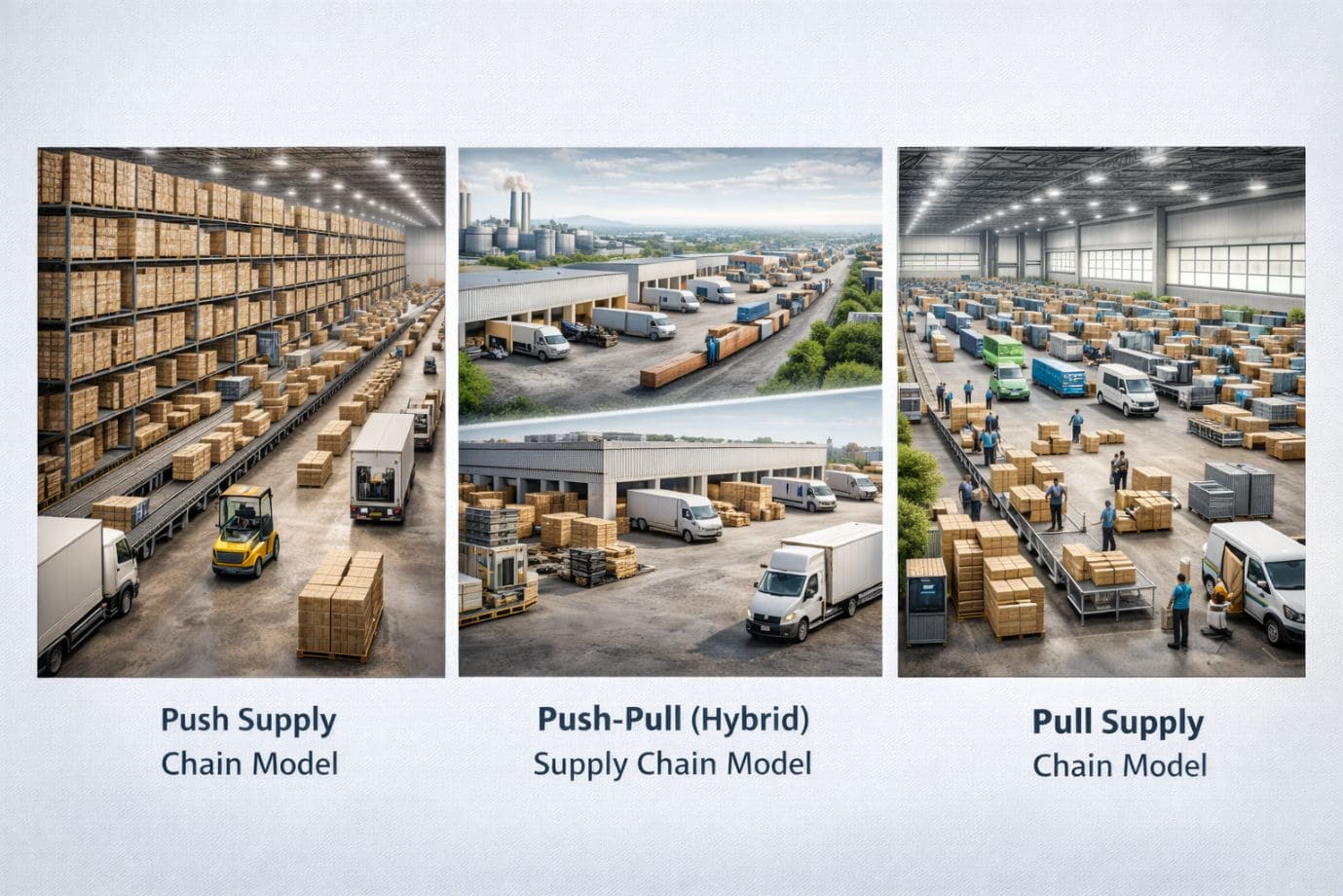
Push Supply Chain Model

  • The Push Supply Chain Model is a forecast-driven approach where production and distribution decisions are made based on anticipated customer demand. In this model, goods are “pushed” through the supply chain—from suppliers to manufacturing, warehousing, and distribution—well before actual customer orders are received. Among traditional kinds of supply chain, this model emphasizes efficiency and economies of scale.
  • The primary advantage of push-based types of supply chain management systems is cost optimization through bulk production and predictable scheduling. However, its reliance on accurate forecasts can become a limitation when demand shifts unexpectedly, often leading to excess inventory or stock obsolescence. Push models are best suited for stable demand industries and high-volume manufacturing environments where variability is minimal and demand patterns are well established.

Pull Supply Chain Model

  • It operates on a demand-driven philosophy. Production and replenishment are triggered by actual customer orders rather than forecasts. Real-time customer signals play a central role in shaping this type of scm, ensuring that goods move through the supply chain only when required.
  • Pull-based types of supply chain management offers greater flexibility and reduced inventory levels, making them ideal for environments with unpredictable demand or high product customization. However, they may struggle to achieve cost efficiencies at scale and often require robust information systems to function effectively. These scm types are commonly used in customized manufacturing and service-oriented industries.
  •  

Push-Pull (Hybrid) Supply Chain Model

  • The Push-Pull or Hybrid Supply Chain Model combines the strengths of both approaches. In this model, the “push” element operates upstream—covering procurement and base production—while the “pull” element begins closer to the customer, such as final assembly or distribution. This balance allows organizations to optimize efficiency without sacrificing responsiveness.
  • Hybrid types of supply chain management are widely adopted in manufacturing and assembly-based industries, where standard components are produced in advance but final configurations respond to actual demand. Among modern types of SCM, this model offers a practical middle ground between stability and adaptability.

Also Read: Inventory Management in Supply Chain Management

Modern Types of Supply Chain Management in Manufacturing & Industry 4.0

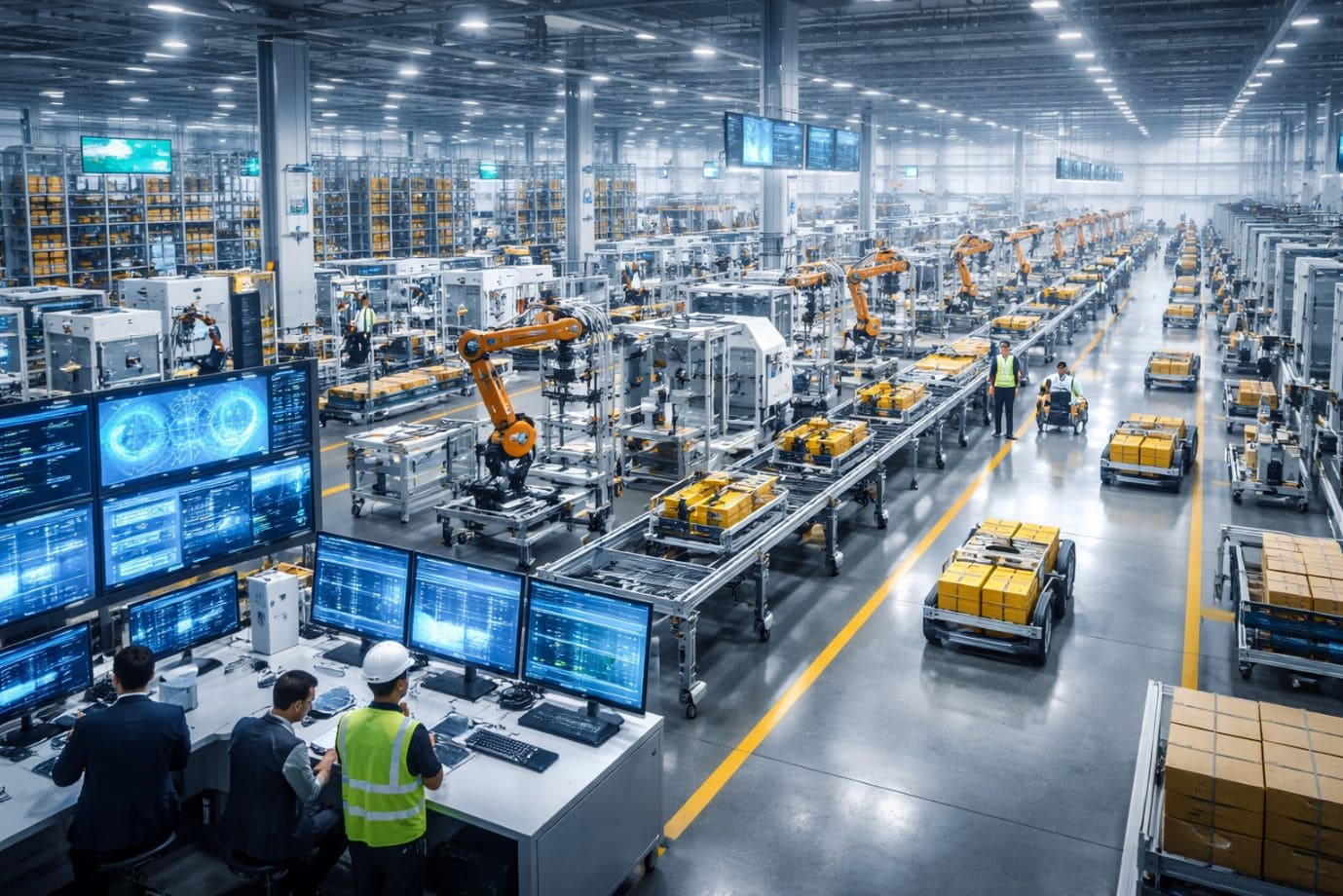
As manufacturing enters the Industry 4.0 era, supply chains are becoming smarter, faster, and more adaptive. Traditional models alone are no longer sufficient to manage complexity, volatility, and sustainability expectations. Modern types of supply chain management integrate technology, process excellence, and risk awareness to support dynamic business environments. These advanced scm types are especially critical for manufacturers seeking operational efficiency alongside resilience and scalability.
Modern Types of Supply Chain Management in Manufacturing & Industry 4.0

⮞ Lean Supply Chain Management

Lean supply chains focus on eliminating non-value-adding activities across the entire value stream. This type of supply chain management emphasizes waste reduction, lower inventory levels, and streamlined material flow. Continuous improvement practices, rooted in industrial engineering, play a central role in enhancing productivity and asset utilization. Among modern types of supply chain, lean models are ideal for efficiency-driven manufacturing environments.

⮞ Agile Supply Chain Management

Agile supply chains are designed for speed and flexibility. This type of SCM enables organizations to respond quickly to demand uncertainty, product variation, and market shifts. These kinds of supply chain prioritize responsiveness over scale, making them suitable for fast-changing and innovation-driven markets.

⮞ Digital Supply Chain Management

Digitalization has transformed traditional types of supply chain management systems into data-driven ecosystems. By leveraging IoT, ERP platforms, AI, and advanced analytics, businesses gain real-time visibility and predictive capabilities. This type of supply chain management shifts operations from reactive decision-making to proactive and predictive supply chain control.

⮞ Resilient Supply Chain Management

Resilient supply chains are built to withstand disruptions. This type of SCM focuses on risk mitigation through supplier diversification, scenario planning, and contingency models. Such types of supply chain help organizations maintain continuity in uncertain global environments.

⮞ Sustainable / Green Supply Chain Management

Sustainable supply chains integrate ESG principles into operations. These types of supply chain management aim to reduce carbon footprints, promote ethical sourcing, and enable responsible logistics, ensuring long-term compliance and business sustainability. For detailed information, you can read our comprehensive blog on Green Supply Chain Management.

Industry-Specific Supply Chain Management Types

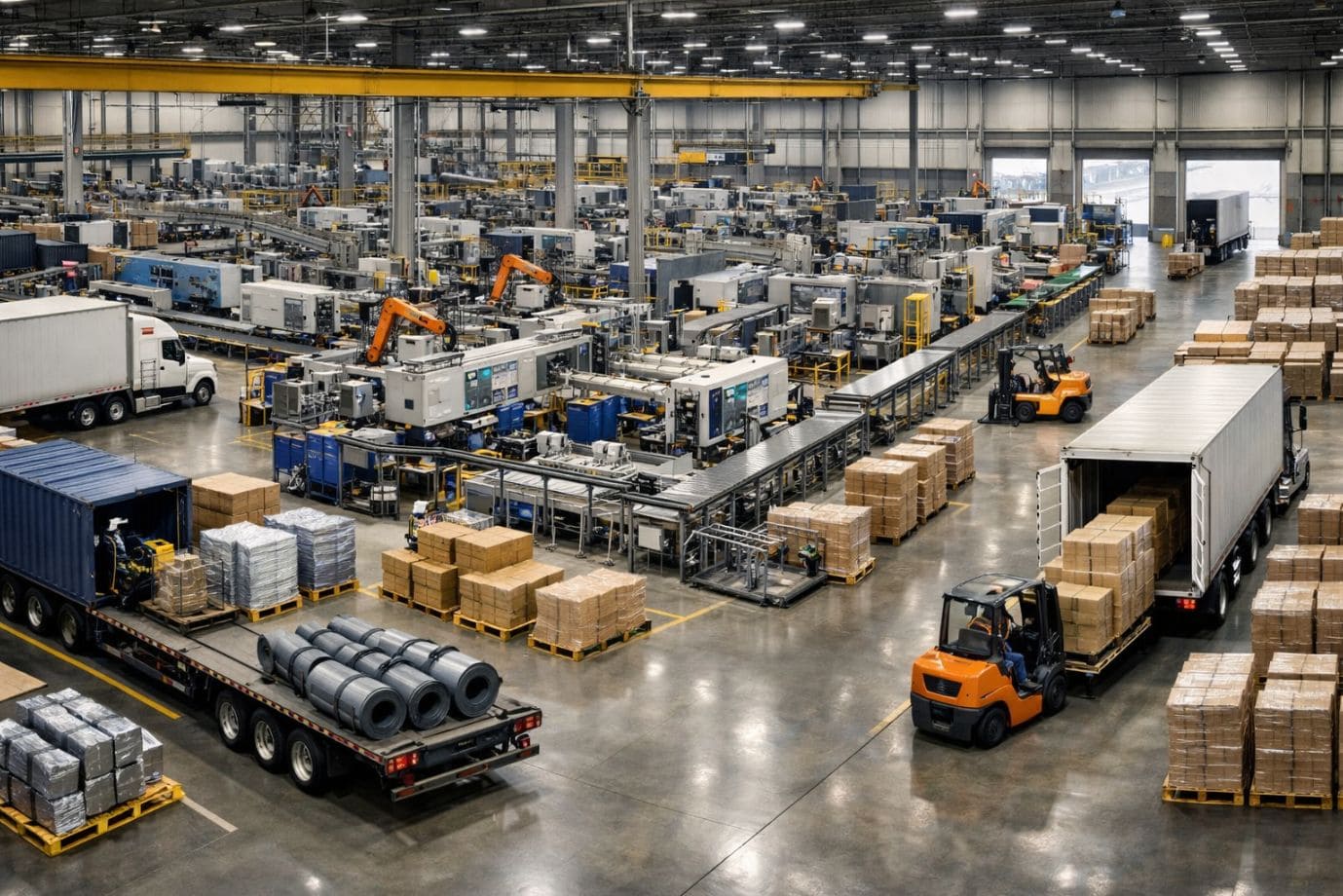
While foundational principles remain consistent, supply chains operate very differently across industries. Business complexity, demand patterns, and execution risks vary significantly, making industry alignment essential. Understanding industry-focused types of supply chain management allows organizations to select the one that supports operational realities rather than forcing generic models. Each type of supply chain management addresses unique challenges across manufacturing, retail, and project-driven environments.
Industry-Specific Supply Chain Management Types

⮞ Manufacturing Supply Chain

Manufacturing environments rely on complex, multi-tier supplier networks that must function in perfect synchronization. This scm type focuses heavily on capacity planning, asset utilization, and production scheduling to maintain throughput and cost efficiency. Facility layout design and optimized material flow are critical elements of these types of supply chain, directly impacting productivity and lead times. Among industrial kinds of supply chain, manufacturing models demand precision, standardization, and continuous improvement.

⮞ Retail & Distribution Supply Chain

Retail supply chains face constant demand forecasting challenges driven by seasonality, promotions, and consumer behavior. This type of supply chain management system emphasizes strategic inventory positioning to balance availability and carrying costs. Omnichannel logistics—integrating physical stores, warehouses, and e-commerce—define modern types of SCM in retail, requiring high visibility and fast fulfillment capabilities.

⮞ Project-Based Supply Chains (Engineering / Infrastructure)

Project-based environments operate under long lead times, high capital intensity, and complex vendor coordination. This type of supply chain management must manage execution risks, schedule dependencies, and material availability to prevent costly delays. These types of supply chain prioritize planning accuracy, supplier alignment, and risk mitigation to ensure successful project delivery.

How to Choose the Right Type of Supply Chain Management for Your Business

Selecting the right supply chain model is a strategic decision that directly impacts cost, service levels, and long-term competitiveness. With multiple types of supply chain management available, businesses must evaluate their operational realities before adopting specific scm types. The most effective type of supply chain management is one that aligns closely with demand behavior, product characteristics, and organizational capabilities.

How to Choose the Right Type of Supply Chain Management for Your Business

⮞ Demand Predictability and Market Requirements

Businesses operating in stable markets can rely on forecast-driven types of supply chain, while those facing fluctuating or uncertain demand require responsive kinds of supply chain designed for agility. Understanding demand patterns is the foundation of choosing suitable types of SCM.

⮞ Product Complexity, Volume, and Variety

High-volume, standardized products benefit from efficiency-focused types of supply chain management systems, whereas complex or customized products require flexible type of SCM structures. Balancing volume with product variety ensures the supply chain supports production without unnecessary cost escalation.

⮞ Responsiveness and Digital Maturity

Markets that demand rapid fulfillment and shorter lead times need digitally enabled types of supply chain management with real-time visibility. A company’s digital maturity determines how effectively it can implement advanced scm types such as predictive or data-driven models.

⮞ Why Expert Assessment Matters

From a consulting perspective, assessment and diagnostics are critical. Expert-led evaluations analyze gaps across processes, technology, and organization to identify the most effective types of supply chain management. This structured approach ensures the chosen type of supply chain deliver sustainable performance rather than short-term gains.

You can also go through: Demand forecasting in Supply chain management

Role of Supply Chain Consulting in Designing the Right Model

Designing an effective supply chain requires more than selecting from different types of supply chain management. Many organizations understand supply chain concepts at a high level but face challenges when applying them in real operating environments. Supply chain consulting plays a critical role in converting strategy into execution by aligning scm types with business objectives, capabilities, and constraints.

⮞ Bridging the Gap Between Theory and Execution

Businesses often adopt popular types of supply chain without fully considering operational realities. This disconnect leads to inefficiencies, poor adoption, and limited results. Consultants help bridge this gap by translating theoretical models into practical, executable type of supply chain management frameworks.

⮞ Diagnosing Inefficiencies

A structured diagnostic assessment is the foundation of effective consulting. By analyzing existing processes, inventory flows, and performance metrics across different kinds of supply chain, consultants identify root causes of inefficiency rather than surface-level issues.

⮞ Redesigning Processes and Implementing Technology

Based on diagnostic insights, processes are redesigned to improve flow, responsiveness, and scalability. Consultants also ensure that digital tools align with appropriate type of supply chain management system, enabling visibility, control, and data-driven decision-making across scm types.

⮞ Managing Change for End-to-End Transformation

Sustainable improvement requires strong change management. Consultants guide organizations through adoption, ensuring people, processes, and technology work together. This end-to-end approach ensures the selected type of SCM delivers lasting value, not isolated improvements.

You can also read: Strategic Supply Chain Management

Future Trends in Supply Chain Management

Supply chains are entering a new phase of transformation driven by technology, sustainability, and risk awareness. As business environments grow more uncertain, organizations must rethink traditional types of supply chain management and prepare for next-generation scm types that are predictive, resilient, and responsible. Understanding these emerging trends helps businesses future-proof their type of supply chain management strategies.

  • AI-Driven Decision Making: Artificial intelligence is redefining how decisions are made across types of supply chain. AI-driven systems analyze large volumes of data to improve forecasting accuracy, optimize inventory, and enhance planning efficiency across modern types of SCM.
  • Autonomous Planning Systems: Autonomous planning reduces manual intervention by continuously adjusting supply plans using real-time data. These advanced types of supply chain management systems enable faster responses to demand and supply changes, improving agility across every type of SCM.
  • Sustainability as a Core Supply Chain Metric: Sustainability is no longer optional. Modern kinds of supply chain integrate environmental responsibility into daily operations by reducing waste, emissions, and energy consumption across types of supply chain management.
  • Regionalization, Localization, and ESG Integration: To reduce risk, businesses are regionalizing supply networks and localizing sourcing. This shift supports resilient scm types while embedding ESG principles directly into core type of supply chain management strategies for long-term growth and compliance.

FAQs

A: The different types of supply chain management include traditional models like push, pull, and hybrid systems, as well as modern approaches such as lean, agile, digital, resilient, and sustainable supply chains, each designed to support specific business goals. If you are facing problems in operations, you can go through our comprehensive blog on Operations Supply Chain Management.

A: Selecting the right scm types ensures alignment between supply chain operations and business strategy, helping organizations reduce costs, improve service levels, and respond effectively to market changes.

A: Each type of supply chain management influences inventory levels, responsiveness, scalability, and risk exposure, directly affecting operational efficiency and competitive advantage.

A: Different types of supply chain management systems integrate technology such as ERP, analytics, and automation to provide real-time visibility, predictive insights, and better decision-making across operations.

A: Advanced types of SCM improve resilience by incorporating risk mitigation strategies, supplier diversification, real-time monitoring, and scenario-based planning.

Conclusion

In an increasingly complex and competitive business environment, supply chains are no longer just operational enablers—they are strategic differentiators. One of the most important insights for business leaders is that there is no single “best” approach among the various types of supply chain management. What works exceptionally well for one organization may create inefficiencies for another if the underlying business goals, demand patterns, and capabilities are different. Selecting the right scm types is therefore a strategic decision, not a tactical one.

The effectiveness of any type of supply chain management depends on how well it aligns with real operational realities. Factors such as demand predictability, product complexity, market responsiveness, and digital readiness all influence which type of supply chain and operating structures are most suitable. Businesses that clearly understand their kinds of supply chain requirements are better positioned to control costs, improve service levels, and scale operations sustainably.

Organizations that successfully align supply chain strategy with execution consistently outperform their peers. By integrating the right type of supply chain management system with people, processes, and technology, these companies achieve faster response times, better asset utilization, and higher returns on investment. However, supply chains are not static. Market conditions, technologies, and customer expectations continue to evolve.

To maintain a competitive edge, businesses must periodically reassess their scm types and refine their strategies. Continuous evaluation and evolution ensure that supply chains remain resilient, agile, and aligned with long-term growth objectives—turning the supply chain into a lasting strategic advantage rather than a limitation.

For more information, go to our Homepage.

Leave a Comment

Your email address will not be published. Required fields are marked *

Call Now Button
× Book free consultation