

Which Logistics Model is Right for Your Business: 2PL, 3PL, 4PL or 5PL?
Rising transportation expenses, delayed shipments, and increasing coordination challenges across multiple warehouses are becoming everyday struggles for growing businesses.
Whether you are managing 2PL logistics internally or relying on basic transport partners under a 2PL model, controlling costs while ensuring timely deliveries is no longer simple. Many companies initially adopt third party logistics services to ease operational pressure, but as supply chains expand, the debate between 3PL and 4PL logistics models becomes unavoidable.
Logistics today is far more than transportation or warehousing — it is a strategic pillar that directly influences profitability, customer satisfaction, and long-term scalability. The choice between 3PL, 4PL or even advanced 5PL logistics can reshape how your entire supply chain performs. From inventory visibility and vendor coordination to data-driven forecasting and digital integration, modern logistics models determine how competitive your business can be in domestic and global markets.
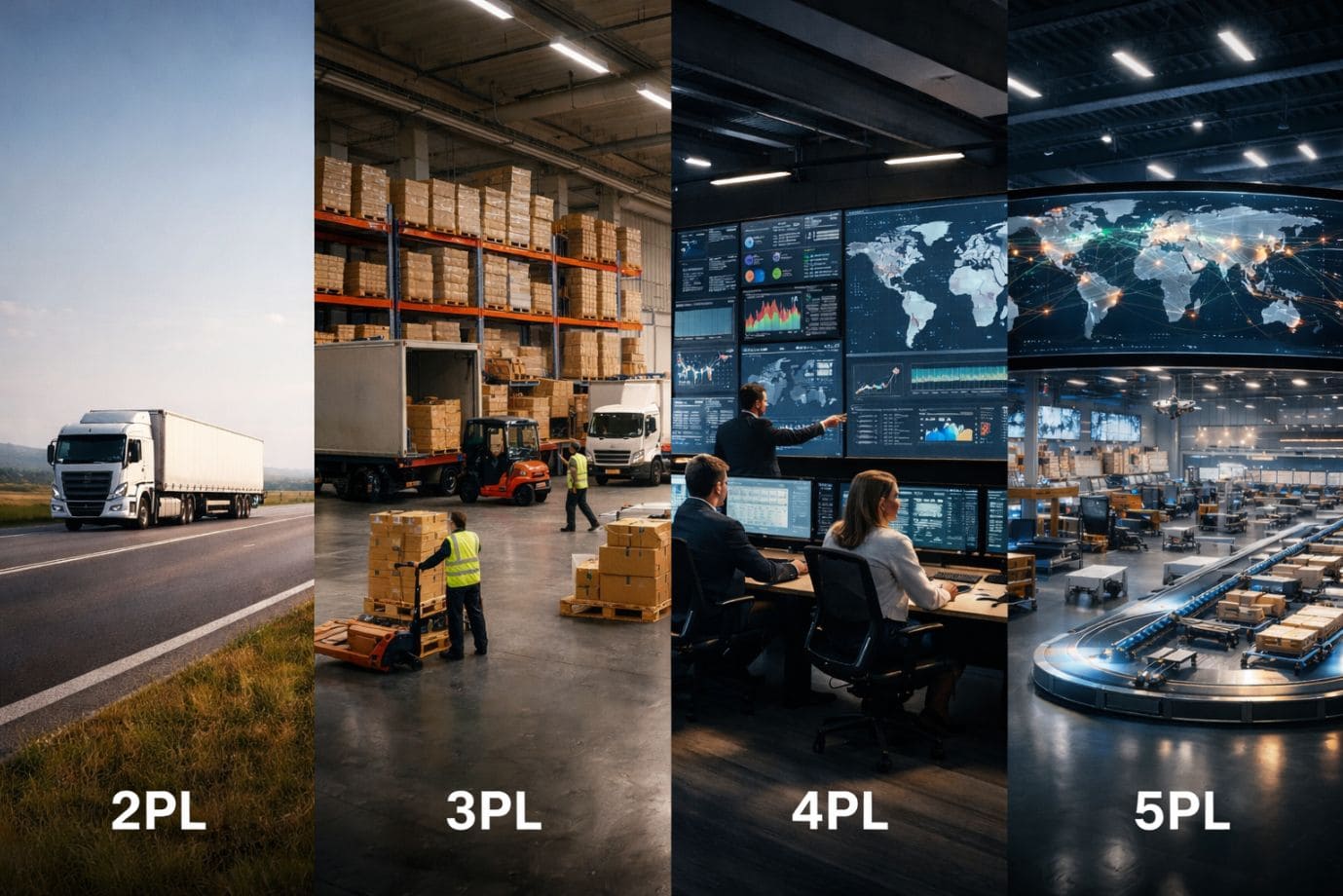
However, many decision-makers remain confused about what truly differentiates 2PL, 3PL, 4PL and emerging 5PL solutions. Is 3PL sufficient for a scaling manufacturer? When does a business require the strategic oversight of a 4PL provider? How does 5PL logistics support highly digital, multi-country operations?
Understanding the structural and strategic differences between these logistics is essential before outsourcing or restructuring your supply chain. In the following sections, we will break down these models clearly to help you determine which logistics framework aligns best with your operational complexity and growth ambitions.
Why Choosing the Right Logistics Model Matters
Choosing the right logistics structure is a strategic decision that influences cost control, service quality, and long-term scalability. Whether a company operates through 2PL or through 3PL and 4PL logistics, the chosen model directly shapes operational efficiency and competitive positioning.
Why Are the 7 QC Tools Important in Manufacturing?
Choosing the right logistics structure is a strategic decision that influences cost control, service quality, and long-term scalability. Whether a company operates through 2PL or through 3PL and 4PL logistics, the chosen model directly shapes operational efficiency and competitive positioning.
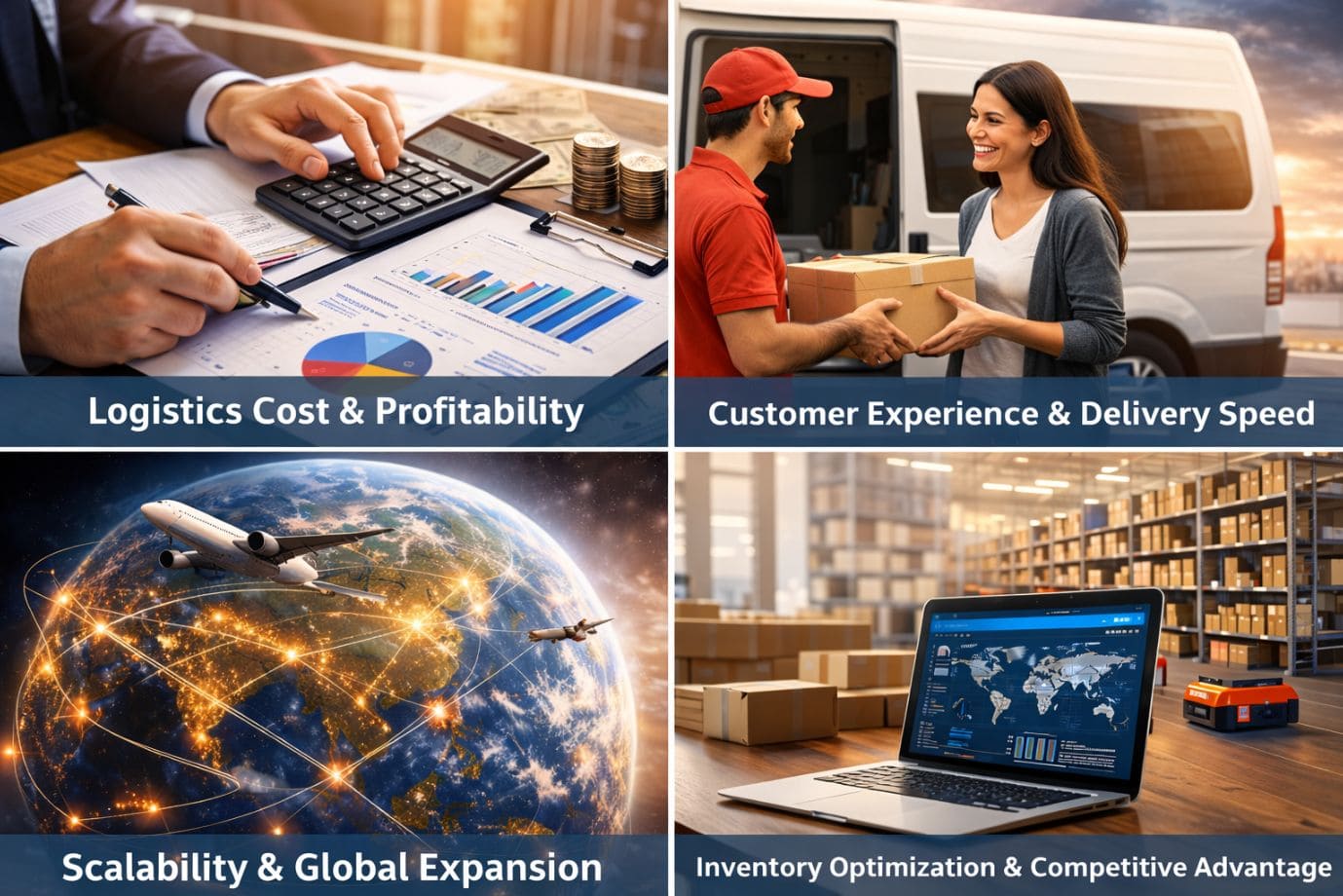
- Logistics Cost & Profitability: Under a basic 2PL logistics model, businesses often manage multiple vendors and negotiations internally, which can increase hidden administrative costs. Transitioning to 3PL or 4PL logistics can optimize freight consolidation, warehousing, and routing, significantly improving margins.
- Customer Experience & Delivery Speed: Modern customers expect faster, transparent deliveries. While 3PL and 4PL providers enhance fulfillment efficiency, 5PL integrates advanced technology to further streamline last-mile delivery and real-time tracking.
- Scalability & Global Expansion: As businesses grow, managing cross-border operations becomes complex. 3PL and 4PL logistics models offer structured expansion support, while 5PL enables digitally connected global networks.
- Inventory Optimization & Competitive Advantage: Strategic 4PL and 5PL logistics solutions improve forecasting, reduce excess inventory, and enhance supply chain visibility — turning logistics into a true competitive advantage rather than just a support function.
What is 2PL (Second Party Logistics)?
It refers to a traditional logistics model where a company outsources only the transportation function to an external service provider. In 2PL logistics, the provider owns and operates physical assets such as trucks, ships, or aircraft but does not manage the broader supply chain strategy.
- How It Works: Under the 2PL model, businesses directly contract transport companies to move goods from one location to another. The shipper remains responsible for warehousing, inventory planning, documentation, and coordination. The 2PL logistics provider simply executes the transportation task as agreed.
- Examples: Common examples of 2PL include trucking fleets, shipping lines, cargo airlines, and rail freight operators that specialize in asset-based transportation.
- When Businesses Use It: Companies typically use 2PL logistics when their operations are stable, localized, or manageable through internal supply chain teams.
- Advantages
- Direct control over logistics decisions
- Lower outsourcing costs compared to advanced models
- Simple contractual structure
- Limitations
- Limited strategic support
- High coordination burden
- Minimal technology integration
- Ideal For: It is best suited for small businesses or companies with strong in-house logistics teams that only require reliable transportation support rather than full supply chain management.
What is 3PL?
It refers to outsourcing a broader range of logistics functions to a specialized provider that manages multiple supply chain operations on behalf of a business. Unlike basic transport-focused models, third party logistics services extend beyond movement of goods and include integrated operational support.
- Services Offered: A 3PL provider typically handles:
- Warehousing – Storage, distribution center management, and cross-docking
- Transportation – Freight coordination and carrier management
- Order Fulfillment – Picking, packing, and last-mile delivery
- Inventory Management – Stock tracking, reporting, and replenishment support
- Benefits
- Reduced operational burden
- Improved scalability
- Access to logistics expertise and technology
- Risks
- Reduced direct control
- Dependency on service quality
- Difference Between 2PL and 3PL: While 2PL focuses only on transportation, 3PL offers end-to-end logistics services, covering storage, fulfillment, and inventory management — making it a more integrated logistics solution.
For detailed information, you can read our dedicated blog on 3rd Party Logistics.
What is 4PL (Fourth Party Logistics)?
It is an advanced outsourcing model where a company appoints a 4PL as a Lead Logistics Provider (LLP) to design, manage, and optimize its entire supply chain network. Unlike traditional logistics outsourcing, 4PL services operate at a strategic level, focusing on integration, performance improvement, and long-term supply chain transformation rather than just execution.
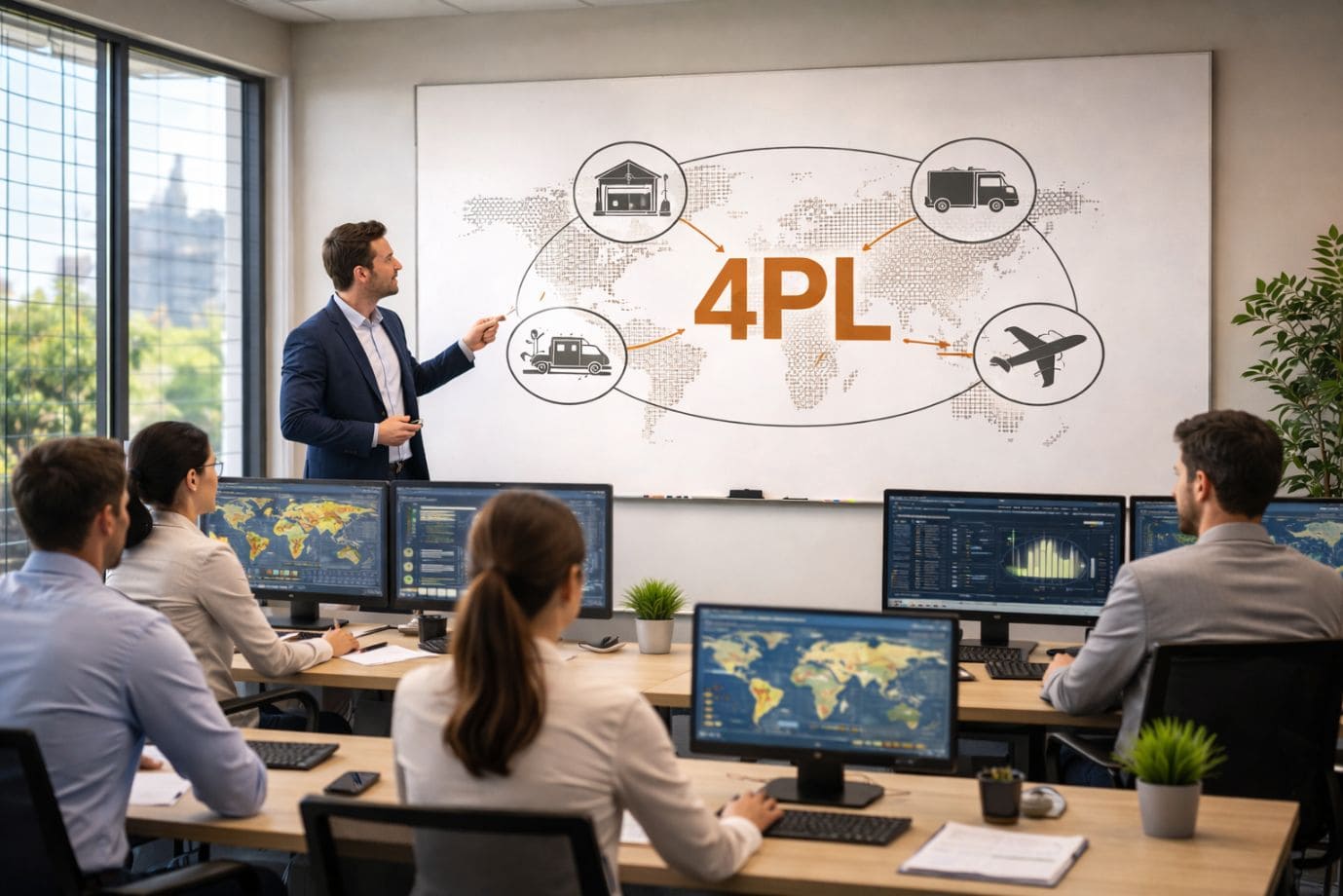
- Single Point of Contact: One of the defining features of 4PL logistics is that the provider acts as a single point of contact for all logistics activities. Instead of coordinating separately with transporters, warehouse operators, and freight agents, businesses communicate directly with their 4PL, which manages the entire ecosystem.
- Management of Multiple 3PLs: 4PL providers oversee and coordinate multiple 3PL partners, ensuring seamless collaboration across transportation, warehousing, customs clearance, and distribution networks. This centralized oversight reduces inefficiencies and improves accountability.
- Strategic Supply Chain Integration: Through network design, vendor selection, risk mitigation, and continuous improvement initiatives, 4PL services align logistics operations with overall business strategy.
- Technology & Analytics Driven: Modern 4PL logistics solutions leverage integrated IT systems, real-time visibility tools, and advanced analytics to support data-driven decision-making.
- Ideal For
- Large manufacturers
- Multi-country operations
- Businesses with complex supply chains
- Advantages
- End-to-end supply chain visibility
- Centralized coordination and control
- Strategic cost optimization
- Improved risk management
- Scalable and future-ready logistics structure
⮞ Difference between 3PL and 4PL Logistics
Many businesses struggle to clearly understand the difference between 3PL and 4PL logistics because both models involve outsourcing supply chain functions. At a surface level, 3PL and 4PL logistics may appear similar — both reduce internal workload and improve operational efficiency. However, the scope of responsibility, level of control, and strategic involvement differ significantly when comparing 3PL vs 4PL solutions.
- Scope of Services
- A 3PL focuses on executing specific logistics functions such as transportation, warehousing, and order fulfillment. These services handle operational tasks but typically do not redesign the supply chain structure.
- In contrast, 4PL logistics manages the entire supply chain ecosystem. It oversees multiple vendors, including various 3PL providers, and ensures end-to-end integration and performance optimization.
- Level of Control
- With a 3PL, the engagement is execution-driven. The provider performs assigned logistics tasks efficiently.
- With 4PL, the involvement is strategic. It integrates planning, network design, and long-term supply chain improvement initiatives.
- Relationship Structure
- In a 3PL arrangement, your company manages the service provider directly.
- In a 4PL model, it manages the complete logistics ecosystem on your behalf, including coordination of multiple partners.
- Technology & Analytics
- A 3PL typically uses logistics software for operational efficiency.
- A 4PL integrates systems across partners and provides advanced analytics, dashboards, and end-to-end visibility.
- Ideal Business Type
- 3PL: Growing companies needing execution support
- 4PL: Large, multi-national firms with complex supply chains
Understanding 3PL vs 4PL comes down to your business need. If you require support in doing logistics operations, third party logistics services are suitable. If you need expertise in designing, integrating, and optimizing your entire supply chain strategy, 4PL is the smarter long-term choice.
What is 5PL (Fifth Party Logistics)?
It represents the most advanced evolution of supply chain outsourcing. Unlike traditional models that focus on execution or integration, 5PL logistics operates at a network-wide strategic level, managing and optimizing entire supply ecosystems through technology-driven coordination. A 5PL provider does not just oversee logistics partners — it orchestrates interconnected supply networks for maximum efficiency and scalability.
- Tech-Driven, AI-Based Network Optimization: At the core of 5PL logistics is advanced technology. Artificial Intelligence (AI), predictive analytics, and automation tools are used to optimize demand forecasting, route planning, capacity allocation, and cost efficiency. A 5PL model continuously analyzes data across multiple channels to improve real-time decision-making.
- Focus on E-Commerce & Digital Ecosystems: It is particularly suited for e-commerce-driven and digitally integrated businesses where order volumes fluctuate rapidly. It supports omnichannel distribution, marketplace integration, and cross-border fulfillment through centralized digital control towers.
- Aggregation of Multiple Supply Networks: A 5PL provider aggregates multiple 3PLs, 4PLs, and freight partners into a unified, technology-enabled ecosystem.
- Blockchain, AI & Automation Integration: Modern 5PL logistics solutions incorporate blockchain for transparency, AI for predictive insights, and automation for operational speed.
- Ideal For
- Large digital commerce businesses
- Global operations
- Platform-based and technology-first enterprises
Operational excellence is not achieved through isolated quality efforts—it requires a systematic approach that connects process improvement with business goals. The 7 QC tools provide a practical framework to achieve this connection by enabling data-driven analysis, consistent execution, and continuous improvement. When used effectively, the 7 tools of quality control become essential enablers of long-term operational excellence rather than standalone quality techniques.
How to Choose the Right Logistics Model for Your Business
Selecting the right logistics structure requires aligning operational needs with long-term strategy. Whether you are evaluating 2PL, exploring third party logistics services, or considering advanced 4PL or 5PL, the decision must be based on clear business parameters.
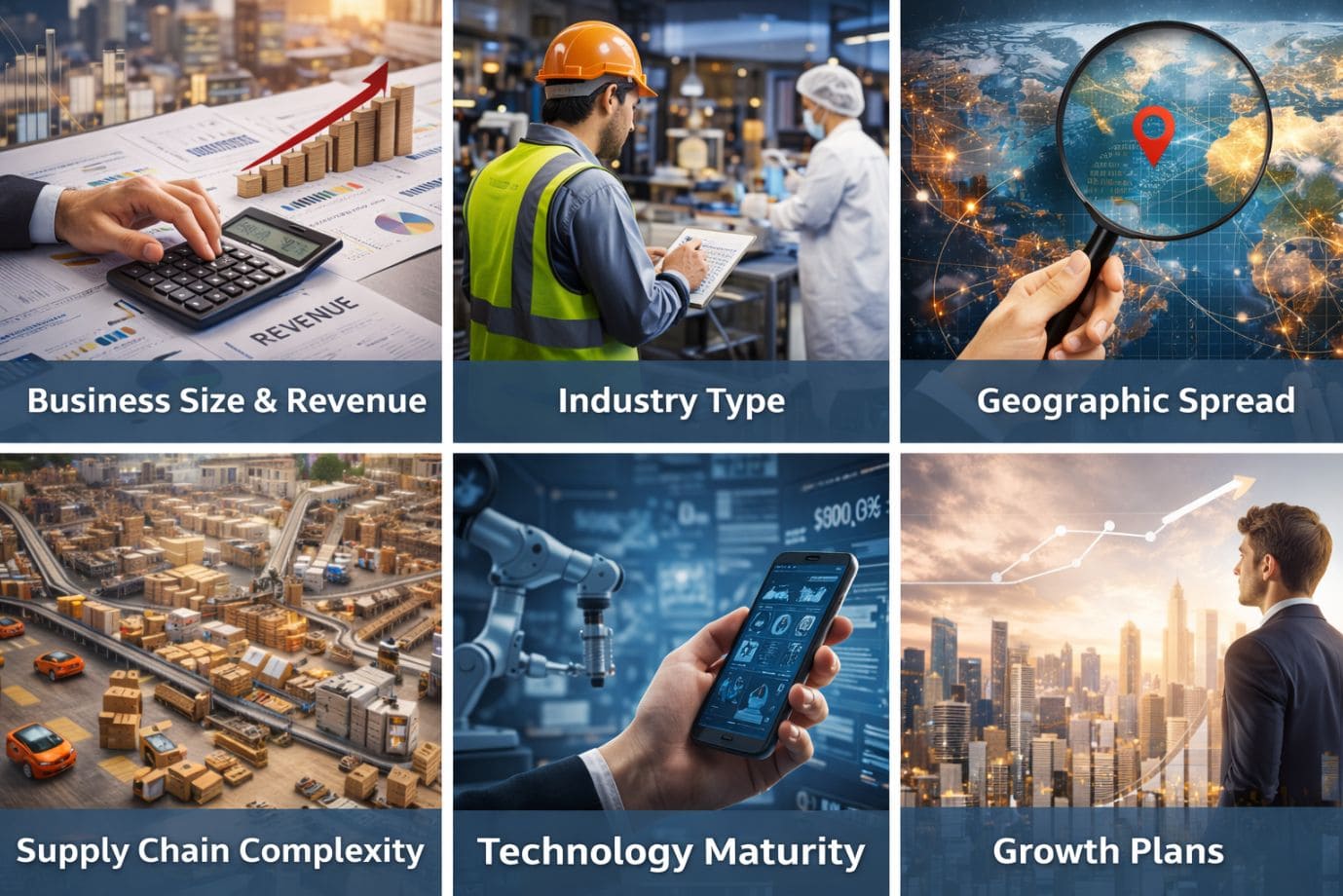
- Business Size & Revenue: Smaller firms with stable operations often rely on 2PL providers for transportation support. As revenue grows and operations expand, companies typically transition toward 3PL and 4PL logistics models for greater efficiency.
- Industry Type: Manufacturing companies may benefit from 3PL warehousing and distribution expertise, while exporters managing global freight often require strategic 4PL services. Digital commerce brands operating at scale may find 5PL more suitable.
- Geographic Spread: If operations are localized, 2PL logistics may be sufficient. Regional expansion often demands third party logistics services, whereas multi-country supply chains require experienced 4PL providers.
- Supply Chain Complexity: Complex vendor networks and multiple distribution channels favor 4PL, where integration and oversight are critical.
- Technology Maturity: Digitally advanced businesses with automation and AI-driven forecasting may benefit from 5PL logistics, which integrates technology across networks.
- Cost vs Control Preference: Companies wanting maximum control may remain with 2PL, while those seeking strategic optimization may prefer 3PL and 4PL
- Growth Plans: Future expansion should heavily influence the decision.
- Simple Decision Matrix
- Managing logistics internally → 2PL
- Scaling regionally → 3PL
- Operating across countries → 4PL
- Fully digital & global operations → 5PL
Choosing between these logistics ultimately depends on how strategically you want logistics to drive business growth.
Which Logistics Model Works Best by Industry?
Different industries require different levels of logistics sophistication. Choosing between these logistics depends largely on operational complexity, compliance needs, and growth ambitions.
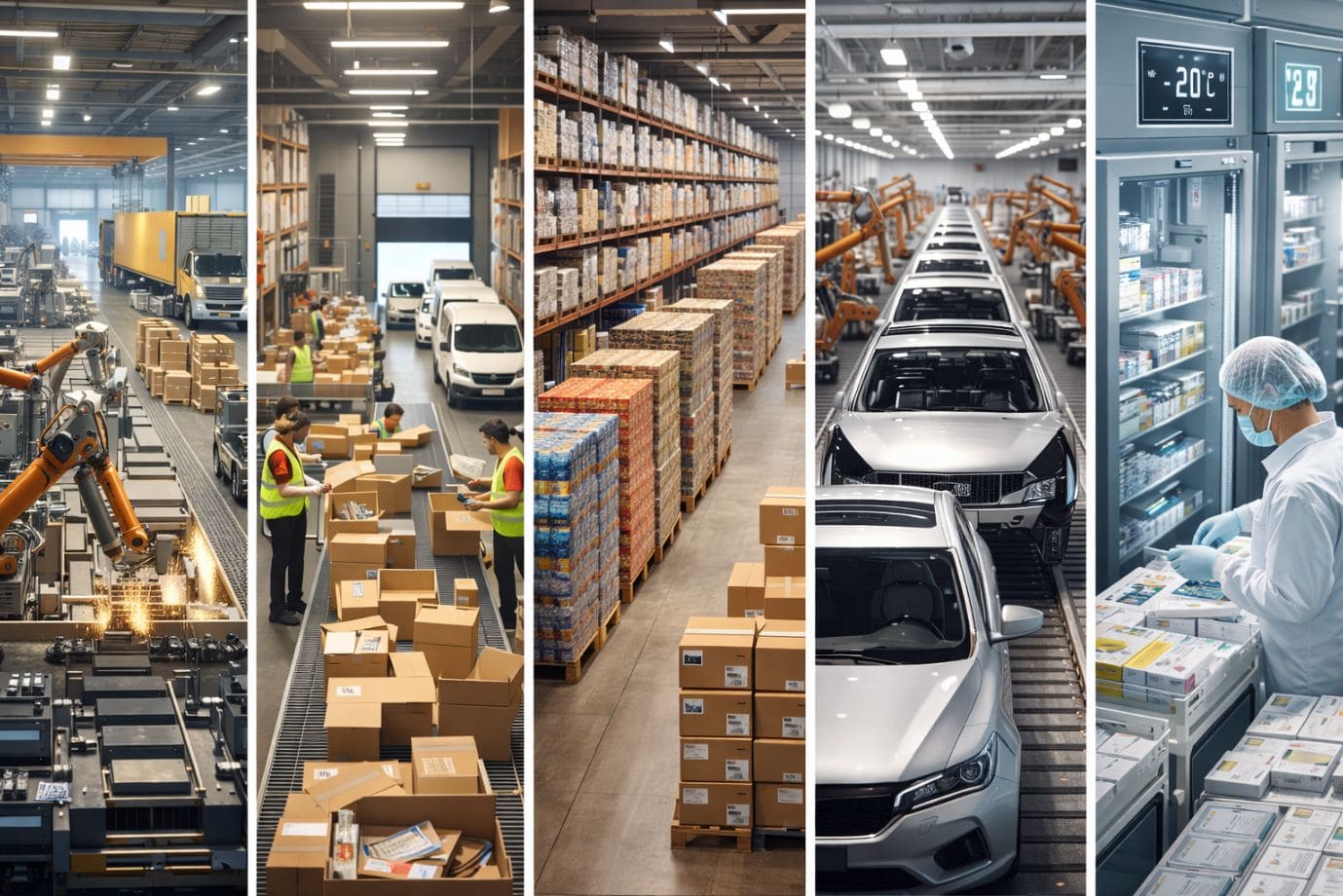
- Manufacturing: Manufacturers often benefit from 3PL solutions for warehousing and distribution efficiency. However, large-scale manufacturers with multi-plant or export operations may require 4PL logistics to integrate suppliers, distributors, and transport partners under a single strategic framework.
- E-commerce: Fast-moving e-commerce businesses rely heavily on 3PL providers for order fulfillment and last-mile delivery. As they scale globally and adopt automation, 5PL becomes ideal for managing omnichannel networks and digital demand forecasting.
- FMCG (Fast-Moving Consumer Goods): FMCG companies typically prefer 3PL models to ensure rapid distribution, inventory rotation, and retail replenishment across regions.
- Automotive: The automotive sector, with its complex supplier ecosystem and just-in-time requirements, is better suited for advanced 4PL logistics to ensure seamless coordination.
- Pharma: Pharmaceutical companies often choose 3PL providers with compliance capabilities, temperature-controlled storage, and regulatory expertise.
- Startups: Early-stage businesses usually begin with 2PL logistics for cost control and gradually transition to 3PL as operations expand.
Cost Comparison: Is Higher PL Always Better?
When comparing these logistics, many businesses assume that a higher PL level automatically means higher costs. However, the real question is not just cost — it is value, risk reduction, and long-term return on investment.
- 2PL logistics typically involves the lowest direct outsourcing cost because you are only paying for transportation. However, while 2PL appears economical, it places a heavy internal burden on your team for coordination, vendor management, and problem resolution — creating hidden administrative and opportunity costs.
- With 3PL, companies adopt a variable cost model. You pay for their services such as warehousing, fulfillment, and distribution based on usage. This reduces infrastructure investment but may introduce dependency risks if not managed properly.
- 4PL logistics is more of a strategic investment. It optimizes the entire supply chain, reduces inefficiencies, and mitigates operational risks through integration and oversight — often generating cost savings that offset service fees.
- At the highest level, 5PL involve technology-heavy ecosystems. While upfront investment may be higher, the long-term ROI through automation, predictive analytics, and network optimization can significantly outweigh the initial expense.
Future of Logistics: Digital, Data-Driven & Integrated
The future of logistics is no longer confined to transportation efficiency — it is becoming a digitally integrated, intelligence-driven ecosystem. Traditional 2PL logistics models that focus solely on asset-based transport are gradually evolving toward more connected and technology-enabled frameworks such as 3PL, 4PL and advanced 5PL logistics solutions.
- Artificial Intelligence (AI) and predictive analytics are transforming how demand forecasting, route optimization, and capacity planning are managed. Modern 4PL and 5PL providers use data-driven insights to anticipate disruptions and improve supply chain resilience. Real-time tracking systems now offer end-to-end shipment visibility, helping businesses move beyond reactive decision-making.
- Blockchain technology is enhancing transparency, traceability, and security across global supply networks, particularly within 5PL logistics At the same time, sustainability initiatives — including green warehousing, fuel-efficient transport, and carbon footprint tracking — are becoming essential components of 4PL logistics strategies.
- Integration with smart factories and Industry 4.0 systems further connects production planning with distribution networks. As businesses transition from basic 2PL structures to strategic 3PL, 4PL and 5PL models, logistics is no longer viewed as an operational expense but as a powerful driver of transformation and competitive advantage.
FAQs
A.2PL logistics refers to outsourcing only the transportation function to an asset-based provider such as a trucking company or shipping line. Businesses with stable, localized operations and strong internal supply chain teams often prefer 2PL logistics for cost control and direct operational oversight.
A.The primary difference between 3PL and 4PL logistics lies in scope and strategy. While 3PL focuses on executing logistics operations, 4PL manages and optimizes the entire supply chain ecosystem at a strategic level.
A.4PL providers act as a single point of contact, managing multiple logistics partners and aligning operations with overall business strategy. They focus on integration, performance improvement, and long-term optimization.
A.While 5PL logistics is highly beneficial for large digital commerce platforms, it is also suitable for global businesses requiring AI-driven forecasting, automation, and multi-network coordination.
A.4PL providers act as strategic coordinators, aligning transportation companies, warehouse operators, and freight agents under one integrated framework. They monitor KPIs, optimize routes, and ensure all partners work toward unified performance goals.
Conclusion
There is no “one size fits all” approach when it comes to choosing between 2PL, 3PL, 4PL or 5PL logistics. Each model serves a distinct purpose, and the right choice depends on your business stage, operational complexity, technology maturity, and long-term growth strategy. A company operating with basic transportation needs may function efficiently under 2PL logistics, while a scaling enterprise may require structured third party logistics services through a reliable partner.
As supply chains expand and become more complex, the discussion often shifts toward 3PL vs 4PL. Understanding the difference between 3PL and 4PL logistics is critical — while 3PL and 4PL logistics both involve outsourcing, 4PL bring strategic integration, visibility, and optimization at a much higher level. For digitally driven, global businesses, 5PL offers advanced network orchestration powered by automation and analytics.
Ultimately, logistics is no longer just a backend function — it is a competitive differentiator. The right structure can reduce costs, improve service levels, and enable faster market expansion. Businesses should periodically reassess their logistics strategy to ensure alignment with evolving market demands, technological advancements, and organizational growth objectives.
For more information, go to our Homepage.

