

Shop Floor Excellence
The manufacturing industry is evolving faster than ever before.
Today, businesses are under constant pressure to improve shop floor productivity while keeping costs under control and meeting growing customer expectations. Manufacturers are facing several challenges, including rising production costs, frequent machine breakdowns, quality defects, workforce skill shortages, delivery delays and intense global competition. In such a demanding environment, relying on traditional floor management practices is no longer enough to stay competitive.
To overcome these challenges, organizations are investing in smarter shop floor management practices supported by modern technologies such as a shop floor management system, shop floor control system and shop floor tracking system. These solutions provide real-time visibility into shop floor operations, helping managers monitor production, identify bottlenecks, reduce downtime and make faster, data-driven decisions. Alongside digital solutions, proven shopfloor management tools such as visual management, Lean Manufacturing and continuous improvement help create a more efficient and disciplined production environment. Effective shop floor control in manufacturing ensures that every process is aligned with quality, safety, delivery and productivity goals.
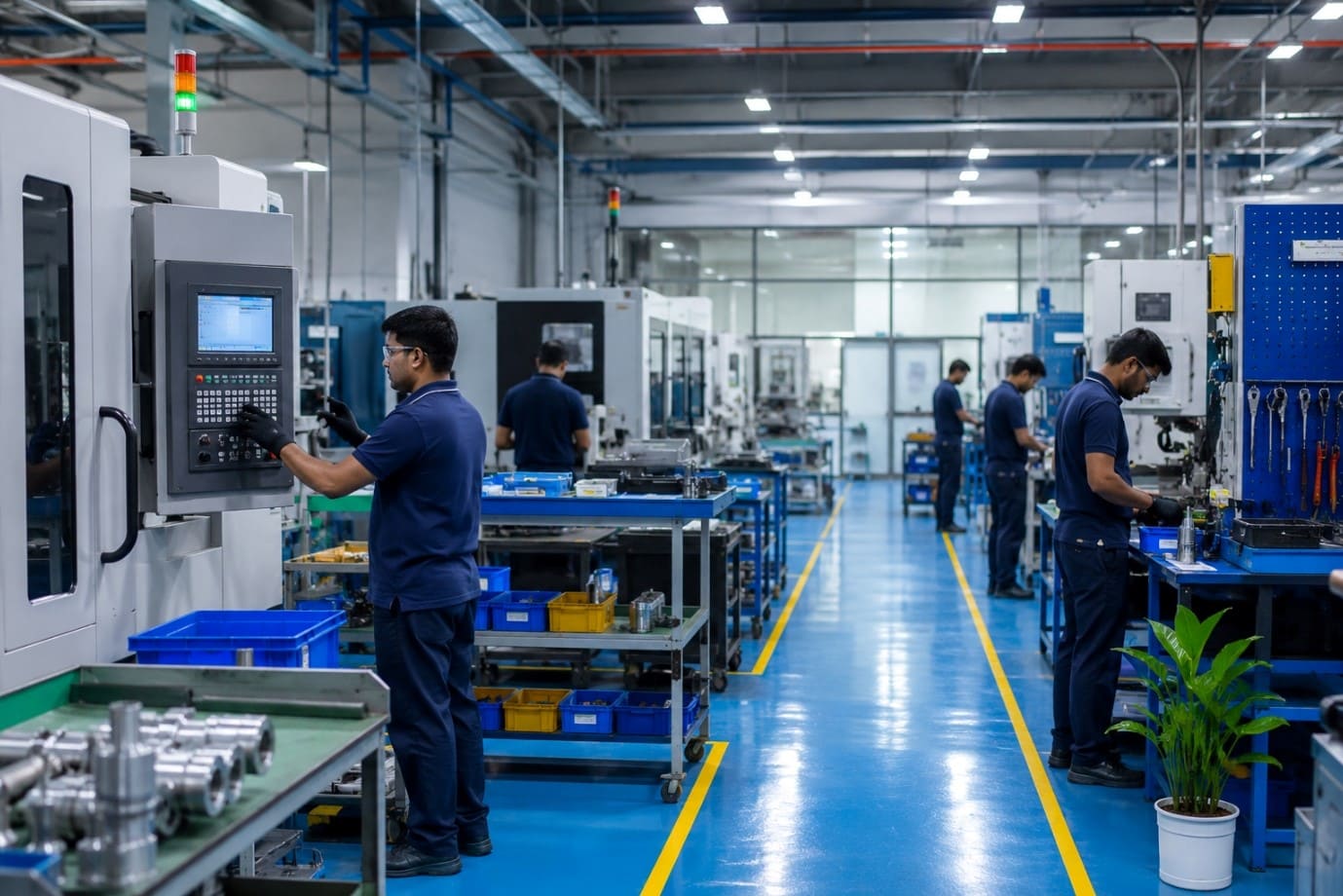
But one question remains: Why do some factories consistently outperform others despite operating in the same market?
The answer lies in Shop Floor Excellence, a structured approach that goes beyond day-to-day operations to build a culture of continuous improvement, accountability and operational discipline. By combining effective shop floor management, robust shop floor control and the right systems and practices, manufacturers can achieve sustainable growth and long-term success.
In this blog, we will explore what Shop Floor Excellence is, why it matters, its core pillars, implementation roadmap and how organizations can build a culture of sustainable operational excellence.
What is Shop Floor Excellence?
It is a strategic approach to managing and improving every activity that takes place on the production floor. It focuses on creating a workplace where people, processes and technology work together to achieve higher quality, better efficiency, improved safety and increased productivity. Unlike traditional shop floor management, which often concentrates on monitoring daily production, Shop Floor Excellence is about building a culture of continuous improvement that delivers sustainable business results.
Shop Floor Management vs. Shop Floor Excellence vs. Operational Excellence
Although these terms are often used interchangeably, they have different meanings.
- Shop Floor Management: focuses on the day-to-day coordination of production activities. It includes supervising operators, monitoring shop floor operations, managing resources, maintaining production schedules and ensuring smooth management at the operational level.
- Shop Floor Excellence: goes a step further. It strengthens shop floor level management by improving processes, empowering employees, standardizing work and driving continuous improvement to achieve consistent performance across safety, quality, delivery, cost and productivity.
- Operational Excellence: is the broader organizational strategy that extends beyond the production floor. It aligns every department, from procurement and supply chain to logistics, finance and customer service, to continuously improve business performance and deliver greater value to customers.
Shop Floor Excellence Is More than Supervision
Many people think Shop Floor Excellence is simply about supervising workers or monitoring production. In reality, it is a management philosophy that integrates leadership, efficient processes, skilled people, data-driven decision-making and continuous improvement. With the support of modern shopfloor management tools, organizations can strengthen shop floor control in manufacturing, reduce downtime, improve quality and increase operational efficiency. By using a reliable shop floor management system and shop floor tracking system, manufacturers can make informed decisions, enhance shop floor productivity and build a strong foundation for sustainable growth and long-term manufacturing success.
Why Shop Floor Excellence Matters in Modern Manufacturing
Modern manufacturing is more competitive and complex than ever before. Businesses must improve quality, reduce costs and respond quickly to changing market demands. Achieving these goals requires more than traditional shop floor management, it requires Shop Floor Excellence, where efficient operations, strong control and continuous improvement work together to drive business success.
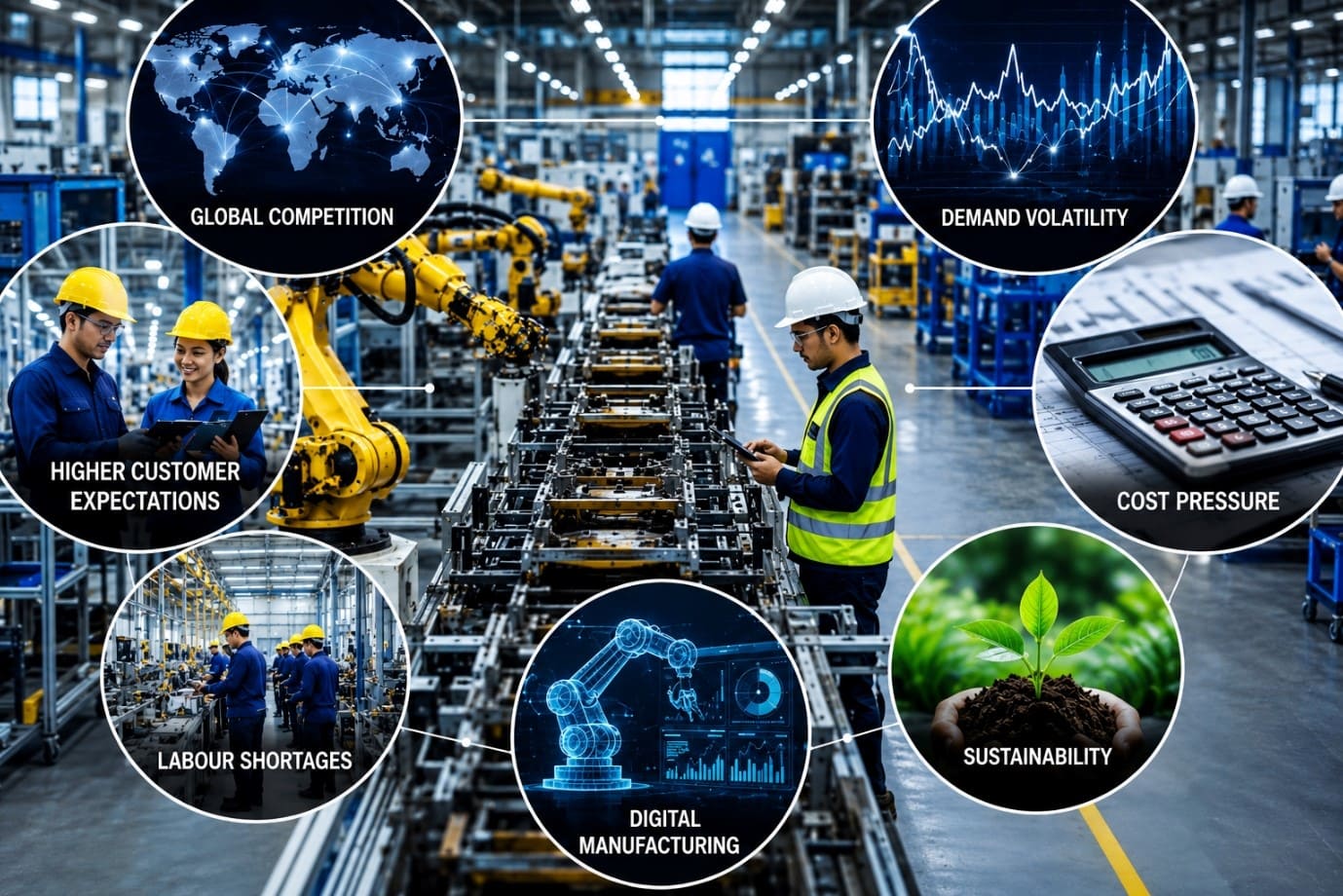
- Global Competition: Manufacturers compete with businesses worldwide, making efficiency and quality key differentiators. Effective shop floor control in manufacturing and the right management tools help reduce waste, improve quality and increase shop floor productivity, enabling companies to stay competitive.
- Demand Volatility: Changing customer demand often affects production schedules. A modern shop floor management system and tracking system provide real-time visibility, allowing manufacturers to adjust production plans quickly and maintain smooth shop floor operations.
- Higher Customer Expectations: Customers expect high-quality products, timely delivery and consistent performance. Strong shop floor level management help standardize processes, reduce defects and improve customer satisfaction.
- Cost Pressure: Rising material, labour and energy costs make operational efficiency essential. Better shop floor management and effective control help optimize resources, minimize waste and improve profitability.
- Labour Shortages: A shortage of skilled workers can affect production efficiency. Digital shopfloor management tools and a reliable system simplify workflows, improve workforce efficiency and reduce dependency on manual processes.
- Sustainability: Manufacturers are increasingly focused on reducing waste and energy consumption. Shop Floor Excellence encourages sustainable practices by improving resource utilization and minimizing environmental impact.
- Digital Manufacturing: Advanced technologies such as a shop floor control system provide real-time production data, helping managers make informed decisions and continuously improve productivity.
By embracing Shop Floor Excellence, manufacturers can overcome modern business challenges, improve operational performance and build a resilient, future-ready manufacturing organization.
The Five Pillars of Shop Floor Excellence
Building Shop Floor Excellence requires more than improving production output. It is achieved by strengthening five core pillars that help manufacturers improve productivity, enhance quality, reduce costs and create a safe and efficient workplace. Supported by effective shop floor management, modern shop floor control and digital management tools, these pillars form the foundation of sustainable manufacturing success.
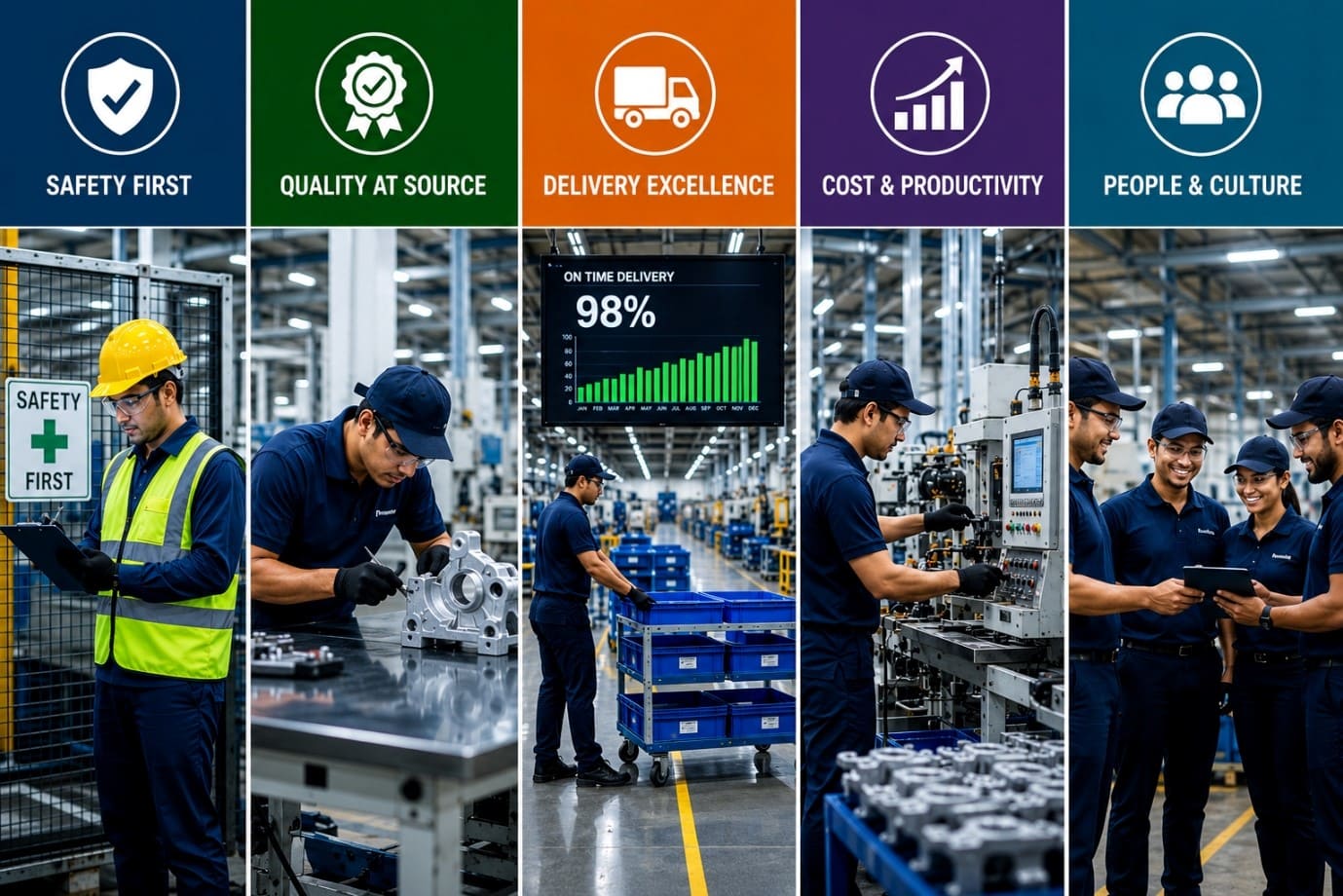
⮞ Safety First
Safety is the first priority in every manufacturing facility. A safe workplace protects employees and minimizes production disruptions. Effective shop floor management encourages safe work practices through regular risk assessments, near-miss reporting, visual safety standards and continuous employee awareness. A reliable shop floor management system also helps track safety incidents and ensure compliance, supporting the goal of zero accidents.
⮞ Quality at Source
Quality should be built into every production process instead of being inspected at the end. Strong shop floor control in manufacturing focuses on achieving Right First Time by following standard work procedures, preventing defects, performing Root Cause Analysis and implementing Poka-Yoke techniques. This approach reduces rework, improves customer satisfaction and strengthens overall shop floor operations.
⮞ Delivery Excellence
Meeting customer delivery commitments requires efficient planning and smooth production flow. Effective shop floor level management ensures proper production planning, schedule adherence and timely identification of bottlenecks. A shop floor tracking system provides real-time visibility into production status, enabling faster decisions and uninterrupted operations.
⮞ Cost & Productivity
Improving profitability depends on reducing waste and maximizing efficiency. Through better shop floor management, manufacturers can eliminate non-value-added activities, improve Overall Equipment Effectiveness (OEE), reduce cycle time, optimize inventory and improve energy efficiency. A modern shop floor control system provides real-time production data that supports continuous improvement and higher shop floor productivity.
⮞ People & Culture
People are the driving force behind Shop Floor Excellence. Empowering operators, developing leadership skills, maintaining a skill matrix and promoting daily accountability create a culture of ownership and continuous improvement. When supported by the right management system and collaborative leadership, employees become actively involved in improving processes and delivering long-term operational excellence.
Core Elements of a High-Performing Shop Floor
Achieving Shop Floor Excellence requires a combination of proven practices, disciplined execution, and the right technology. These core elements help improve shop floor productivity, strengthen shop floor management and ensure efficient shop floor operations.
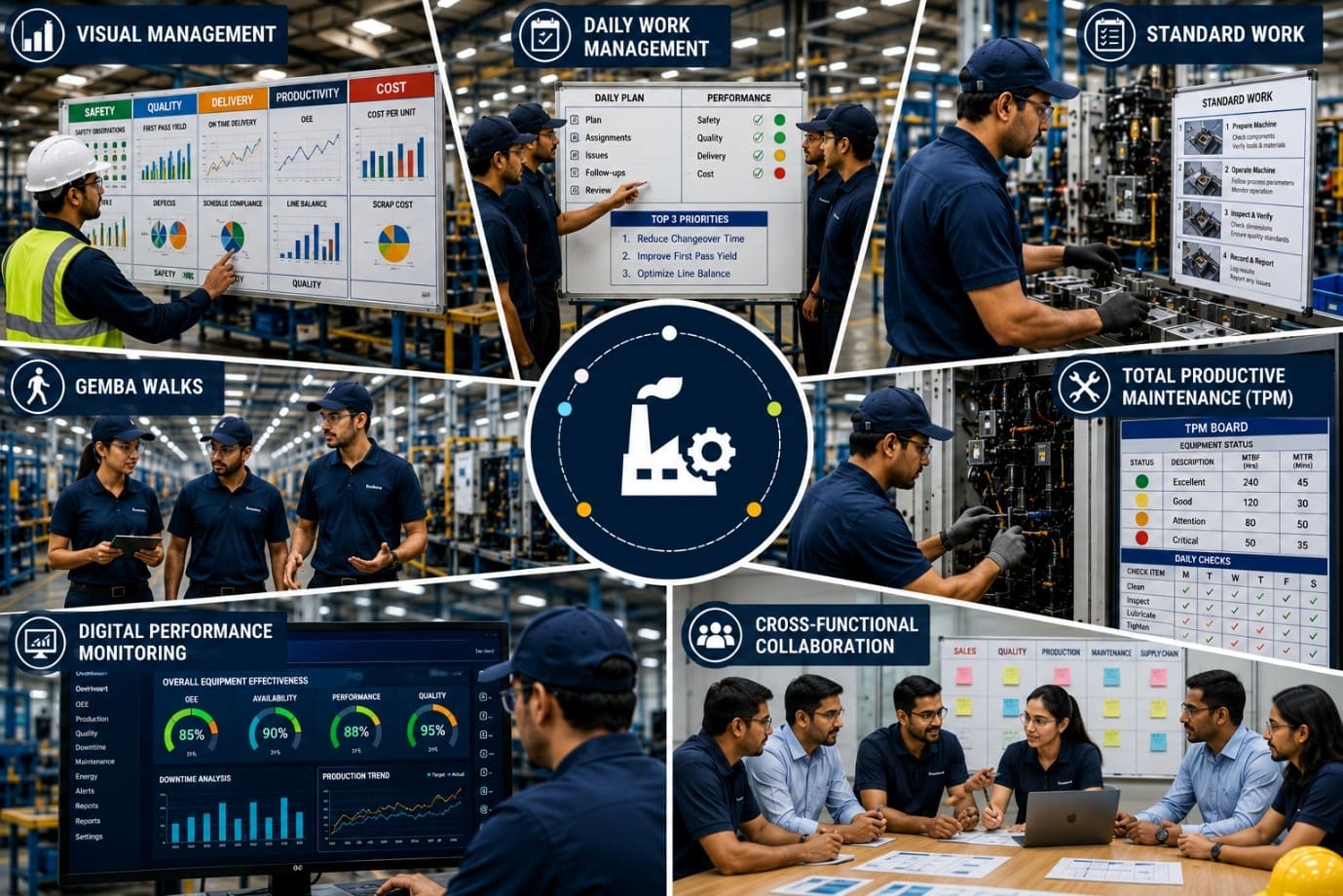
- Visual Management: Visual boards, color coding and performance displays make production information easy to understand. They improve control by enabling teams to identify issues quickly and take timely action.
- Daily Work Management: Daily meetings, production reviews, and KPI tracking keep everyone aligned. Effective shop floor level management ensures that problems are addressed before they affect production performance. More information can be seen in our comprehensive blog on Daily Work Management.
- Standard Work: Standardized work instructions ensure every task is performed consistently. This reduces errors, improves quality and supports better management across the production line.
- Gemba Walks: It encourage leaders to visit the production floor, observe shop floor operations, interact with employees and identify opportunities for continuous improvement.
- Total Productive Maintenance (TPM): It focuses on preventing equipment failures through regular maintenance. Combined with a reliable shop floor control system, it helps reduce downtime and improve machine efficiency. For more information, you can read our dedicated blog on Total Productive Maintenance (TPM).
- 5S: It creates an organized, clean and safe workplace. It is one of the most effective shopfloor management tools for improving efficiency and supporting Shop Floor Excellence.
- Kaizen: It promotes continuous improvement through small, consistent changes. Employee participation helps increase shop floor productivity while reducing waste and improving processes.
- Problem Solving: Techniques like Root Cause Analysis and the 5 Whys help eliminate recurring issues. Strong shop floor control in manufacturing focuses on solving problems permanently rather than treating symptoms. Read more about Root Cause Analysis.
- Digital Performance Monitoring: A modern shop floor management system and tracking system provide real-time production data, enabling faster decisions, better resource utilization and improved operational visibility.
- Cross-functional Collaboration: Successful manufacturing depends on teamwork between production, quality, maintenance, planning and supply chain. Strong collaboration improves decision-making, enhances shop floor management and drives long-term Shop Floor Excellence.
Shop Floor Excellence Tools Every Manufacturing Leader Should Know
Achieving Shop Floor Excellence requires the right combination of processes, people and proven improvement techniques. These shopfloor management tools help manufacturers strengthen shop floor management, improve shop floor control, optimize operations and increase productivity.
- 5S: 5S (Sort, Set in Order, Shine, Standardize and Sustain) creates a clean, organized and safe workplace. It improves floor management, reduces wasted time and helps employees work more efficiently. For detailed information, read our dedicated blog on 5S System.
- Kaizen: It focuses on continuous improvement through small, consistent changes. It encourages employees to identify opportunities for improvement, making Shop Floor Excellence a daily practice rather than a one-time initiative. Read more in our in-depth blog on Kaizen concept.
- Total Productive Maintenance (TPM): It aims to maximize equipment reliability through preventive maintenance and operator involvement. When supported by a control system, TPM reduces machine downtime and improves production efficiency.
- SMED: Single-Minute Exchange of Dies (SMED) reduces machine setup and changeover time. Faster changeovers increase production flexibility and improve shop floor productivity.
- Overall Equipment Effectiveness (OEE): It measures machine availability, performance and quality. It helps manufacturers identify production losses and improve shop floor control in manufacturing through data-driven decisions.
- Value Stream Mapping (VSM): It helps visualize the entire production process to identify waste, delays and bottlenecks. It enables better planning and more efficient operations. More information regarding it can be read in our comprehensive blog on Value Stream Mapping.
- PDCA: The Plan-Do-Check-Act (PDCA) cycle provides a structured approach to solving problems and continuously improving processes. It supports effective shop floor level management and long-term operational improvements. For more details, you can also go through our dedicated blog on Deming Cycle or PDCA.
- Fishbone Diagram: Also known as the Cause-and-Effect Diagram, it helps teams identify the root causes of quality or production problems instead of addressing only the symptoms.
- 5 Why Analysis: The 5 Why technique uncovers the real cause of a problem by repeatedly asking "Why?". It supports permanent solutions and strengthens shop floor control.
- Kanban: It is a visual scheduling system that controls material flow and inventory. It improves production planning and helps maintain smooth operations with minimal waste.
- Andon: It is a visual alert system that immediately signals production issues. It enables faster response from supervisors and improves communication across the production floor.
- Visual Boards: It display production targets, KPIs, safety information and improvement activities in real time. When integrated with a shop floor management system and tracking system, they provide better visibility, faster decision-making and support sustainable Shop Floor Excellence.
How to Implement Shop Floor Excellence: A Step-by-Step Roadmap
Implementing Shop Floor Excellence is not a one-time project but a continuous journey of improving people, processes and performance. By following a structured roadmap, manufacturers can strengthen shop floor management, improve shop floor control and achieve long-term operational success.
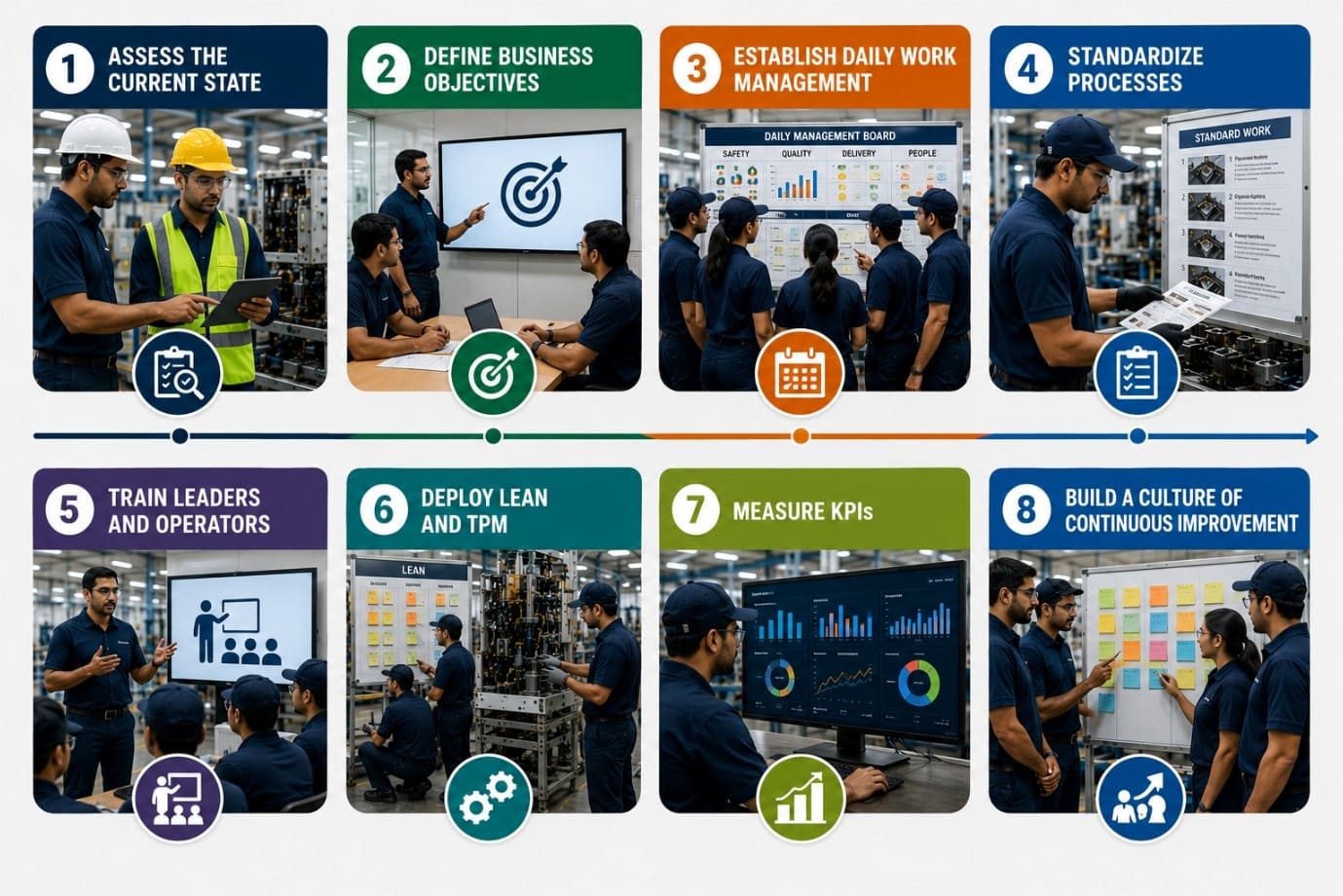
⮞ Step 1: Assess the Current State
Begin by evaluating your existing shop floor operations. Identify production bottlenecks, machine downtime, quality issues, safety risks and process inefficiencies. A detailed assessment helps establish a clear baseline for improvement.
⮞ Step 2: Define Business Objectives
Set measurable goals that align with your business strategy. Objectives may include improving shop floor productivity, reducing defects, increasing equipment utilization or enhancing delivery performance. Clear targets help every team focus on the same outcomes.
⮞ Step 3: Establish Daily Work Management
Implement structured daily meetings, visual performance boards and regular production reviews. Effective shop floor level management ensures that issues are identified early, corrective actions are taken quickly and production stays on track.
⮞ Step 4: Standardize Processes
Develop standard operating procedures (SOPs) and consistent work methods for all critical activities. Standardization improves floor management, reduces process variation and strengthens shop floor control in manufacturing by ensuring every task is performed correctly.
⮞ Step 5: Train Leaders and Operators
Equip supervisors and shop floor teams with the knowledge and skills needed to manage processes effectively. Regular training on quality, safety, Lean practices and the use of shopfloor management tools builds confidence and encourages employee ownership.
⮞ Step 6: Deploy Lean and TPM
Adopt Lean Manufacturing techniques to eliminate waste and implement Total Productive Maintenance (TPM) to improve equipment reliability. A modern shop floor control system can support these initiatives by providing real-time production data and improving decision-making.
⮞ Step 7: Measure KPIs
Track key performance indicators such as OEE, quality, downtime, productivity, safety and delivery. A shop floor tracking system enables real-time monitoring, helping managers make faster, data-driven decisions to improve productivity.
⮞ Step 8: Build a Culture of Continuous Improvement
Sustainable Shop Floor Excellence is achieved when continuous improvement becomes part of the organizational culture. Encourage employees to share ideas, solve problems collaboratively, and take ownership of improvements. By combining effective shop floor management, strong leadership, digital systems and continuous learning, manufacturers can create a high-performing production environment that delivers lasting business value.
The Role of Industry 4.0 in Shop Floor Excellence
Industry 4.0 is transforming modern manufacturing by connecting machines, people and data to create smarter and more efficient shop floor operations. While digital technologies improve decision-making and operational visibility, they are most effective when combined with strong shop floor management and disciplined processes.
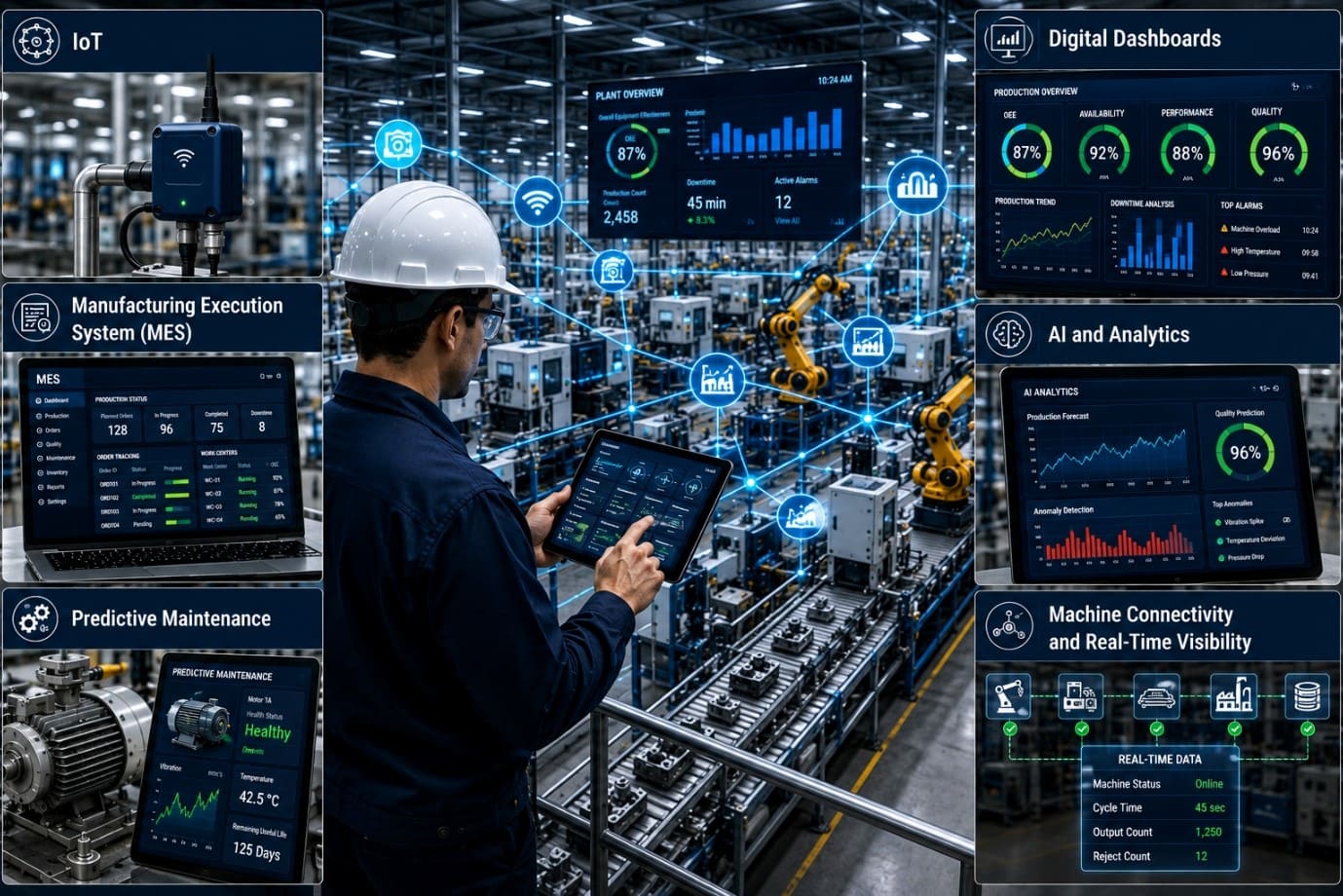
- IoT: The Internet of Things (IoT) connects machines and equipment to collect real-time production data. This improves shop floor control by helping manufacturers monitor machine performance and identify issues before they impact production.
- Digital Dashboards: IIt displays live production metrics, quality data and key performance indicators. They support better shop floor level management by giving supervisors instant visibility into daily operations and performance.
- Manufacturing Execution System (MES): It acts as a central shop floor management system, coordinating production activities, tracking work orders and improving shop floor control in manufacturing from start to finish.
- Predictive Maintenance: It uses machine data to identify potential equipment failures before they occur. When integrated with a shop floor control system, it helps reduce unplanned downtime and improve equipment reliability.
- AI and Analytics: Artificial Intelligence (AI) and advanced analytics help manufacturers identify production trends, predict quality issues and optimize processes. These insights contribute to higher productivity and smarter operational decisions.
- Machine Connectivity and Real-Time Visibility: A connected production environment, supported by a shop floor tracking system, provides real-time visibility into machine status, production progress and resource utilization. This enables faster responses to production challenges and improves overall floor management.
Although Industry 4.0 technologies provide powerful shopfloor management tools, they cannot replace strong leadership, standardized processes and employee engagement. Lasting Shop Floor Excellence is achieved when digital innovation is combined with disciplined management, continuous improvement and a culture focused on operational excellence.
Real Business Outcomes of Shop Floor Excellence
Organizations that consistently invest in Shop Floor Excellence often experience measurable improvements across their manufacturing operations. By combining effective shop floor management, robust shop floor control and the right shopfloor management tools, businesses create a more efficient, reliable and productive work environment.
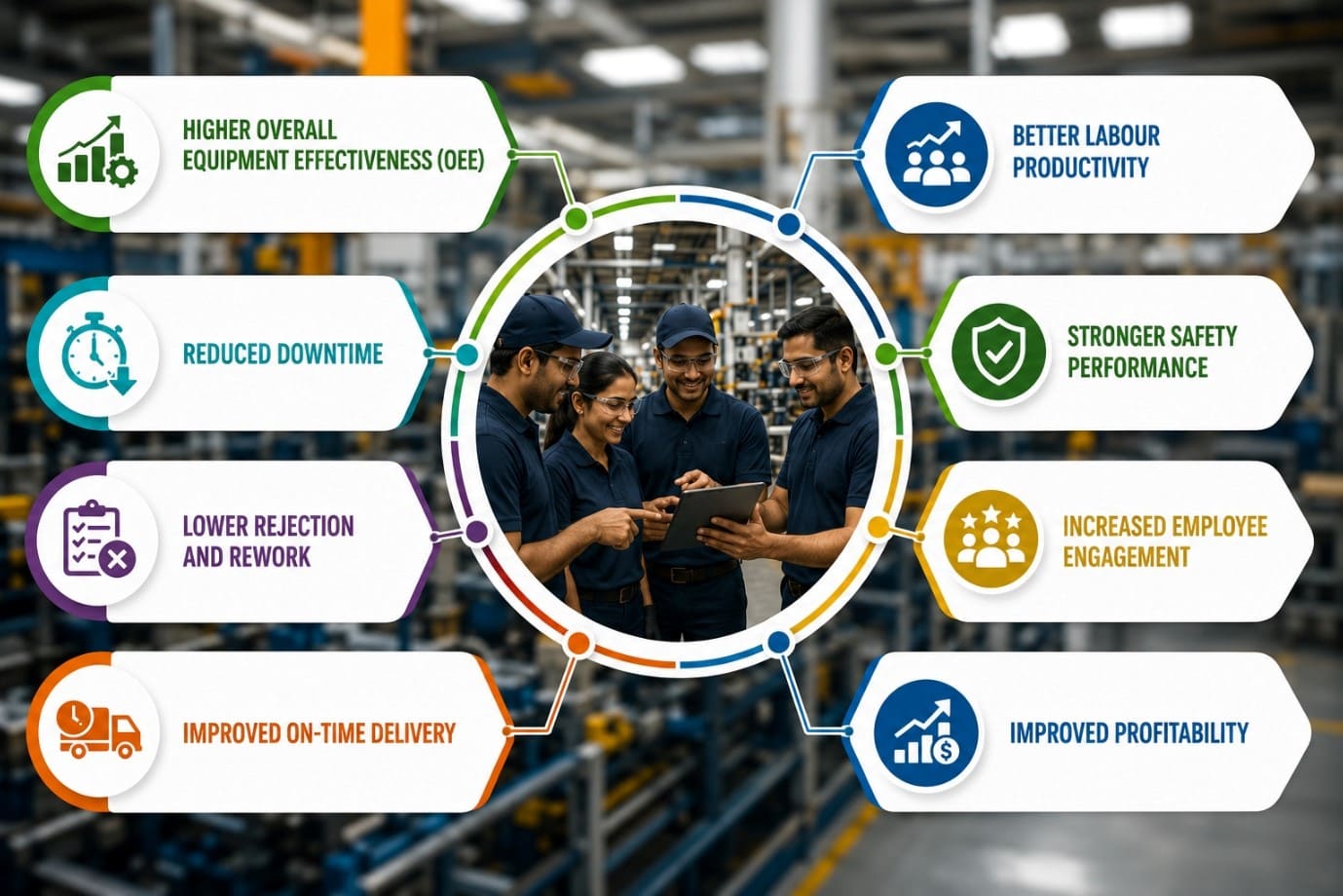
- Higher Overall Equipment Effectiveness (OEE): Better maintenance practices and standardized processes help improve Overall Equipment Effectiveness (OEE). Supported by a control system, manufacturers gain better visibility into equipment performance and reduce production losses.
- Reduced Downtime: Unplanned machine stoppages can significantly impact production. A reliable shop floor management system and tracking system enable real-time monitoring, allowing teams to identify issues quickly and minimize downtime.
- Lower Rejection and Rework: Effective shop floor control in manufacturing, combined with standard work and quality checks, helps reduce defects and rework. This improves product consistency while minimizing material waste.
- Improved On-Time Delivery: Efficient shop floor operations and better production planning enable manufacturers to meet delivery schedules more consistently. Improved coordination across teams helps ensure orders are completed on time.
- Better Labour Productivity: Clear processes, effective and strong shop floor level management allow employees to work more efficiently. Well-trained teams spend less time resolving problems and more time adding value, leading to higher shop floor productivity.
- Stronger Safety Performance: A disciplined approach to safety, supported by regular training and standardized procedures, creates a safer workplace and helps reduce operational disruptions.
- Increased Employee Engagement: When employees are encouraged to participate in problem-solving and continuous improvement, they develop a stronger sense of ownership and accountability, strengthening the culture of Shop Floor Excellence.
- Improved Profitability: Better quality, lower downtime, improved productivity, and efficient resource utilization contribute to stronger business performance. By integrating modern shop floor management practices with digital systems and continuous improvement, manufacturers can build a sustainable foundation for long-term growth and profitability.
Why Shop Floor Excellence Is a Journey, Not a Project
Many organizations treat Shop Floor Excellence as a short-term initiative with a fixed timeline. However, true excellence is not achieved through a one-time project, it is built through consistent effort, continuous learning and a long-term commitment to improvement. Sustainable results come from strengthening shop floor management, improving shop floor control and creating a culture where every employee contributes to operational success.
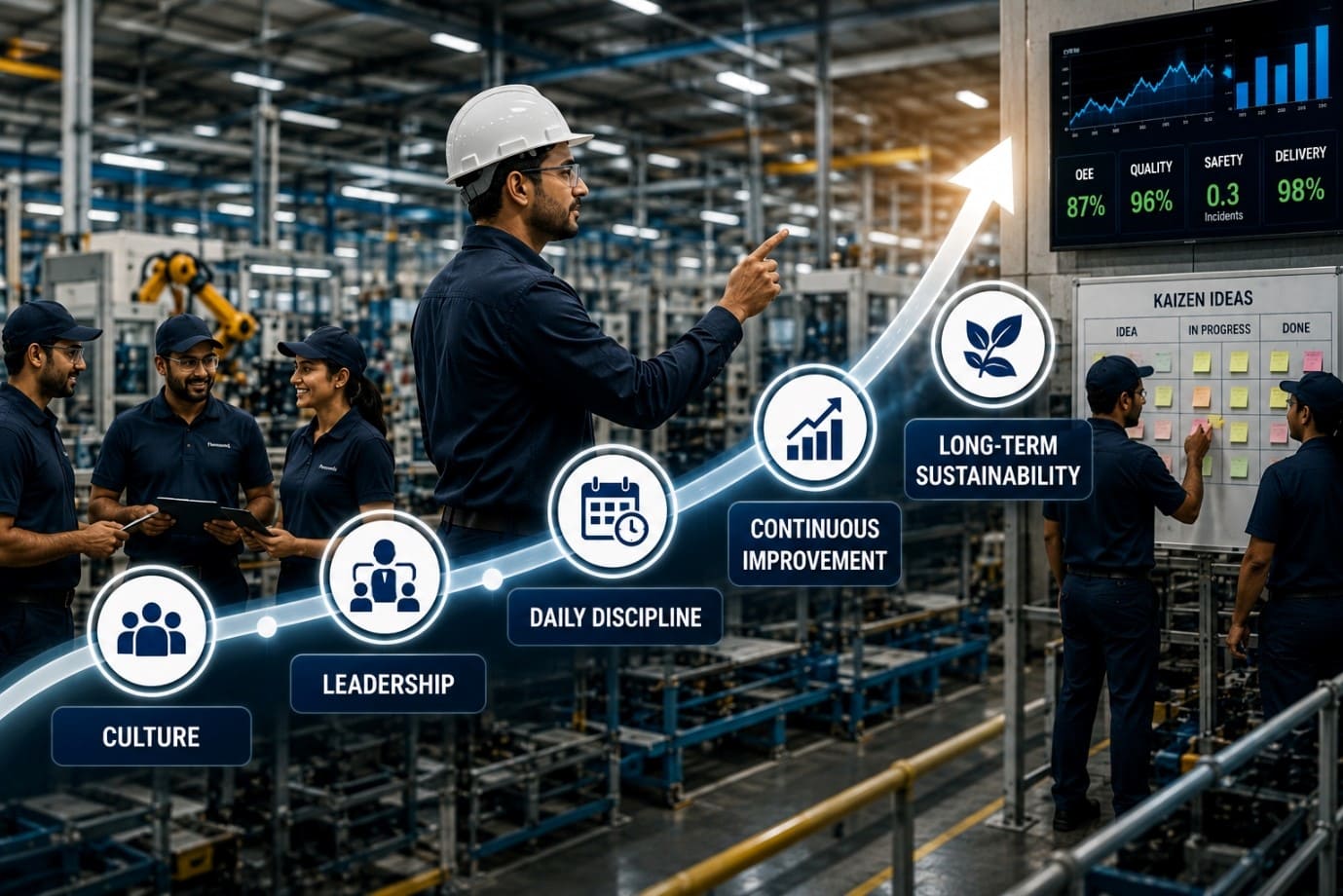
- Culture: A strong culture is the foundation of Shop Floor Excellence. When employees are encouraged to take ownership of shop floor operations, share ideas and solve problems together, continuous improvement becomes a part of everyday work rather than an occasional activity.
- Leadership: Successful transformation begins with committed leaders. Effective shop floor level management means leaders spend time on the production floor, support their teams, remove obstacles, and lead by example. Their involvement builds trust, accountability and motivation across the organization.
- Daily Discipline: Consistency is what drives lasting results. Following standard processes, conducting daily reviews and using shopfloor management tools and a tracking system help maintain operational discipline and improve productivity. Strong floor management ensures that small issues are resolved before they become major problems.
- Continuous Improvement: There is always room to improve. Regular reviews, employee suggestions and data from a shop floor control system help identify opportunities to enhance quality, efficiency and shop floor control in manufacturing. Small improvements made consistently lead to significant long-term gains.
- Long-Term Sustainability: The goal of Shop Floor Excellence is not just better performance today but sustained success for the future. By embedding effective shop floor management practices into daily operations, manufacturers can build resilient teams, adapt to changing business needs and achieve lasting growth, higher productivity and operational excellence.
FAQs
A. Shop Floor Excellence is a structured approach to improving manufacturing performance by optimizing people, processes, technology and operations. It focuses on enhancing quality, safety, productivity, cost efficiency and continuous improvement to achieve sustainable business growth.
A. Shop floor management focuses on supervising day-to-day production activities, while Shop Floor Excellence goes beyond daily operations by building a culture of continuous improvement, leadership and operational efficiency for long-term success.
A. Shop Floor Excellence helps manufacturers improve shop floor productivity, reduce waste, enhance product quality, increase equipment efficiency and strengthen competitiveness in an increasingly demanding manufacturing environment.
A. Key performance indicators include Overall Equipment Effectiveness (OEE), production output, defect rate, downtime, schedule adherence, on-time delivery, safety incidents and shop floor productivity to measure operational performance effectively.
A. Lean Manufacturing eliminates waste and improves process efficiency through continuous improvement. Combined with effective shop floor control in manufacturing, it helps organizations increase productivity, reduce costs and deliver greater customer value.
Conclusion
In today’s fast-changing manufacturing environment, long-term success begins with the production floor. Shop Floor Excellence is more than a set of improvement techniques, it is a strategic approach that helps organizations build efficient shop floor operations, strengthen management and create a culture of continuous improvement. When supported by effective shop floor control, disciplined processes and skilled teams, manufacturers are better equipped to meet customer expectations while improving overall business performance.
Sustainable results are achieved through a combination of capable leadership, standardized processes, employee engagement and data-driven decision-making. Modern technologies such as a shop floor management system, control system and tracking system provide real-time visibility into production activities, helping organizations make informed decisions and improve shop floor productivity. Along with proven shopfloor management tools, these practices enable manufacturers to reduce waste, improve quality, increase operational efficiency and strengthen shop floor control in manufacturing.
The journey towards Shop Floor Excellence does not happen overnight. It requires commitment, collaboration, and a willingness to improve every day. Organizations that embed these principles into their daily operations are better positioned to enhance productivity, product quality, delivery performance, workplace safety and long-term competitiveness in an increasingly demanding global market.
Now is the right time to evaluate your current manufacturing practices and identify opportunities for improvement. By adopting a structured approach to Shop Floor Excellence, businesses can create a stronger operational foundation, unlock sustainable growth and prepare their manufacturing operations for future challenges. Every improvement starts with a single step and that step begins on the shop floor.
For more information regarding our services, explore our Homepage.