Porter’s 5 Forces Analysis_cover

Porter’s 5 Forces Analysis

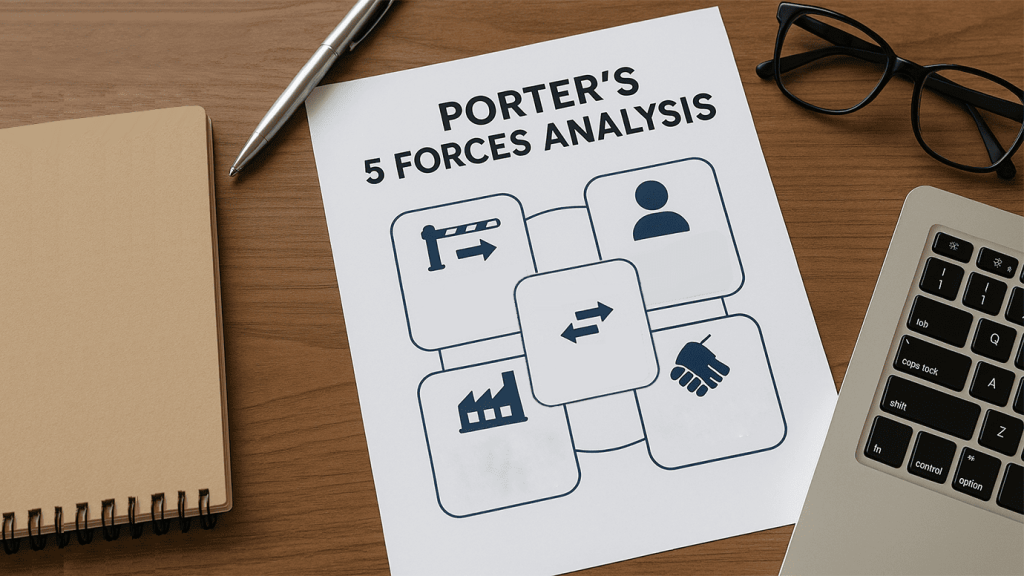
Porter’s 5 Forces Analysis   In today’s fast-changing competitive landscape, businesses face constant pressure from new technologies, shifting customer expectations, and aggressive industry rivals. To navigate this complexity, leaders must rely on structured strategic tools rather than assumptions or short-term reactions. Models like porter’s 5 forces help organizations understand what truly drives competition and profitability across industries. With markets becoming more interconnected and unpredictable, this level of clarity is no longer optional—it is essential. Strategic frameworks play a crucial role in ensuring long-term, sustainable growth. Instead of viewing competition only through direct rivals, businesses must evaluate the deeper forces shaping their industry’s structure. The porter’s five forces model allows decision-makers to examine supplier influence, buyer expectations, emerging substitutes, barriers to entry, and overall competitive rivalry. This kind of structured insight helps companies identify market gaps, anticipate threats, and build strategies that strengthen resilience and profitability. Whether a company is scaling operations, restructuring its business, or planning a new product launch, tools like 5 forces analysis offer a reliable foundation for strategic planning. The importance of such frameworks is even more pronounced in manufacturing, supply chain management, and industrial operations—sectors where competition is often intense and margins are tightly regulated. As India evolves into a global manufacturing powerhouse, organizations entering new sectors or optimizing their existing operations must understand the 5 forces of competition that shape their markets. Applying the porter’s 5 competitive forces model helps companies assess industry attractiveness, enhance operational efficiency, and make confident market-entry decisions. By leveraging the competitive five forces framework effectively, businesses can transform uncertainty into opportunity and position themselves for sustainable growth in an increasingly competitive global economy. What is Porter’s Five Forces Analysis? Porter’s 5 forces analysis is one of the most influential strategic tools used by businesses to understand the level of competition within an industry and evaluate its long-term profitability. Developed by Harvard professor Michael Porter, this model helps leaders break down and examine the external factors that shape competitive intensity. At its core, 5 forces analysis is designed to reveal how different market players—suppliers, buyers, new entrants, substitutes, and existing competitors—impact a company’s ability to succeed. By studying these forces, organizations gain a deeper understanding of both opportunities and risks within their business environment. Michael Porter created this framework to help companies move beyond simple competitor comparisons and adopt a broader, more comprehensive perspective. The goal behind porter’s 5 was to provide a structured method to analyze industry structure rather than focusing only on direct rivalry. As markets became more complex, Porter realized that profitability was influenced not just by competitors, but by powerful external forces. This led to the development of michael porter’s 5 forces analysis—a model now widely used across industries, from manufacturing to technology. The true value of porter’s five forces lies in its ability to assess industry attractiveness. By evaluating the 5 forces of competition, companies can identify which markets offer sustainable profitability and which ones pose long-term challenges. Whether a business is entering a new segment, planning expansion, or optimizing operations, these five forces framework provides insights that guide strategic decisions. Using these forces effectively enables organizations to understand where power lies and how to position themselves for competitive advantage. Why Porter’s 5 Forces Model Matters? The relevance of porter’s 5 forces has grown significantly in India’s rapidly evolving business ecosystem. With industries transforming at record speed, companies need structured frameworks like 5 forces analysis to stay competitive. Here’s why the model is especially important for Indian businesses today: Supports Decisions in a Fast-Changing Industrial Environment India is witnessing massive innovation across manufacturing, automotive, electronics, and supply chain sectors. Using porter’s five forces, companies can understand how technological shifts and new competitors impact profitability. The framework ensures leaders respond strategically, not reactively. Helps Evaluate New Market Opportunities Businesses considering expansion into new regions or product lines rely on these forces to judge market attractiveness. By examining all five forces, organizations can identify high-growth sectors and avoid markets with excessive competitive pressure. Essential for Restructuring and Turnaround Planning Companies undergoing transformation use porter’s 5 competitive forces to analyze their current position. It helps in identifying weaknesses in supply chain, pricing power, customer dependence, or operational challenges. This makes restructuring decisions more data-driven and effective. Reduces Risk in Strategic Investments The 5 forces of competition reveal hidden risks linked to supplier dominance, buyer bargaining power, or substitute products. Indian businesses can make safer, better-informed investment decisions through this analysis. Strengthens Long-Term Competitiveness By understanding these forces, companies can refine strategy, improve negotiation power, and build sustainable advantages. This is crucial as India becomes a global manufacturing and innovation hub. The Porter’s 5 Forces Explained The porter’s 5 forces framework remains one of the most widely used strategic tools in business analysis. By breaking down these forces that shape every industry, companies can understand the structural drivers of profitability, the intensity of competition, and the long-term viability of a market. Michael Porter’s 5 forces analysis helps leaders go beyond surface-level competition and examine all forces that influence their strategic decisions. Below is a comprehensive breakdown of each force and how it applies particularly to industries in India. Threat of New Entrants The threat of new entrants refers to how easy or difficult it is for new companies to enter an industry and compete with established players. Within the porter’s five forces model, this force is critical because a high likelihood of new entrants can reduce market share, drive down prices, and increase operational pressure. This measures how likely it is for new competitors to enter a market and disrupt existing structures. When entry barriers are low, industries experience more frequent disruption. What Impacts It Entry Barriers: Industries with significant entry barriers—such as high capital investment, technical expertise, brand loyalty, or strong distribution networks—experience lower competitive pressure. For example, heavy manufacturing, pharmaceuticals, and automotive sectors typically have high barriers. Economies of Scale: Established businesses benefit from large-scale operations, allowing them to reduce per-unit costs. When economies of scale are

Porter’s 5 Forces Analysis Read More »

High Performance Teams_cover

High Performance Teams

High Performance Teams In today’s hyper-competitive business landscape, organizations are under immense pressure to move faster, operate smarter, and deliver flawless execution. Markets shift rapidly, customer expectations evolve continuously, and operational complexity is higher than ever before. To thrive in this environment, companies must build agility, speed, and resilience into their core operations. This requires more than traditional structures—it requires high performing teams capable of consistently delivering excellence. Conventional hierarchical and function-based models often fall short because they create silos, slow down decision-making, and restrict collaboration. Such outdated systems make organizations reactive rather than proactive. This is why many companies today struggle to achieve the agility required to become truly high performing organizations. To remain competitive, businesses need teams that can adapt quickly, solve problems effectively, and take ownership of results. This is where high performance teams become the foundation of sustainable Operational Excellence. These teams demonstrate the attributes of high performing teams, such as accountability, trust, and cross-functional alignment. They reflect their characteristics by integrating disciplined execution with continuous improvement. Organizations that invest in creating high performance teams and adopt a strong team model gain the ability to innovate faster, reduce inefficiencies, and consistently deliver superior outcomes. Whether your goal is to build high performance teams, enhance high performing leaders, or strengthen organizational capability, understanding high performance teamwork is essential. Leading high performance teams is not just a management practice—it is a strategic advantage. As more companies embrace the high performing team qualities required for modern execution, the ability to apply a proven model becomes a decisive factor in long-term success. What Are High Performance Teams? These are cross-functional, value-stream–aligned groups that work collaboratively to deliver superior business outcomes. Unlike traditional teams structured around departments, high functioning teams are designed around the entire flow of value—ensuring every member contributes directly to customer-focused execution. This alignment is one of the key attributes of high performing teams, enabling them to act with agility, speed, and precision. How High Performance Teams Differ From Traditional Teams Shared Outcomes vs. Individual Tasks: Traditional teams often prioritize personal KPIs, leading to siloed efforts. In contrast, High performance teamwork revolves around collective goals. Team members take ownership of results together. This fosters stronger accountability and collaboration. Empowerment vs. Command-and-Control: Legacy organizational structures rely heavily on top-down leadership.However, high performing leaders: Provide autonomy and decision-making authority, Encourage innovation, Build trust—an essential high performing team trait. Daily Problem-Solving vs. Firefighting: Conventional teams react to problems after they escalate.Meanwhile, high performing teams practice: Daily reviews, Rapid issue resolution, Continuous improvement cycles—core characteristics of high functioning teams. A Model Built for End-to-End Accountability A strong high performance team model ensures that teams: Own the full value stream from start to finish, Maintain transparency and alignment, Stay focused on customer value. Organizations aiming to scale effectively must invest in creating high performance teams. By adopting a proven model, leaders can consistently build teams that elevate execution and drive long-term success for truly high performing organizations. Why High Performance Teams Matter Today In today’s rapidly evolving business landscape, organizations face unprecedented pressure to deliver value faster, better, and more efficiently. Customers expect immediate responses, flawless quality, and competitive pricing—all at once. To meet these demands, companies increasingly rely on high performance teams that can operate with agility, precision, and unity. These teams embody the attributes that make them indispensable in modern operations. Rising Customer Expectations: Faster, Better, Cheaper Customers today expect: Shorter delivery cycles Higher-quality products Lower costsTraditional structures cannot keep pace, but high functioning teams excel because they: Solve problems quickly Collaborate effectively Maintain high standards consistently Increasing Operational Complexity Across Sectors Globalization, digital transformation, and supply chain disruptions add layers of complexity.High performing teams address this by: Making faster decisions Adapting to change with minimal friction Leveraging shared expertise across functions These are core high performing team traits that help organizations stay stable in dynamic environments. Need for Seamless Collaboration Instead of Silos Siloed departments slow down execution and create inefficiencies. A strong high performance team model: Breaks silos Enhances transparency Enables cross-functional alignment Such qualities fuel more effective teamwork. Survival, Scalability, and Innovation In competitive markets, high performing organizations depend on leaders committed to build and lead them. These efforts support: Faster innovation Stronger resilience Consistent Operational Excellence (OPEX) Ultimately, creating high performance teams is a strategic necessity for long-term success. Core Attributes of High Performance TeamsCore Attributes of High Performance Teams High performance teams excel because they operate with structural clarity, behavioural discipline, and a shared commitment to value creation. Their distinctiveness lies in their attributes, which combine collaboration, accountability, and continuous improvement. Below are the core characteristics that differentiate high functioning teams from traditional workgroups. Cross-Functional & Value-Stream Aligned One of the strongest attributes of high performing teams is their alignment around the entire value stream rather than isolated functions.This matters because: It eliminates handoff delays Enhances problem-solving Ensures end-to-end ownership This is why organizations striving to build high performance teams prioritize cross-functional design—it accelerates flow and improves customer outcomes. Clarity of Purpose & Shared Mission High performing teams have absolute clarity on the “why.”A shared mission: Strengthens alignment Reduces conflicts Enhances intrinsic motivation This clarity is a defining trait that enables consistent execution. Empowerment & Decision Latitude A hallmark of the high performance team model is empowering team members to make decisions close to the point of action.This results in: Faster resolutions Increased accountability Higher confidence among team members Such empowerment is essential for leading high performance teams effectively. Disciplined Ways of Working (DWM) A hallmark of the high performance team model is empowering team members to make decisions close to the point of action.This results in: Faster resolutions Increased accountability Higher confidence among team members Such empowerment is essential for leading high performance teams effectively. Team-Level KPIs Unlike traditional teams, high performing organizations track KPIs at the team level. These include: Lead time Quality metrics Cross-functional issue closure SLA adherence These metrics embody the attributes of high performance teams by reinforcing shared accountability. Psychological

High Performance Teams Read More »

Call Now Button
× Book free consultation