


Project Management- A Complete Guide to Planning, Execution and Successful Business Outcomes
Every business has plans. A company may want to
launch a new product, enter a new market, implement new technology, improve its processes, reduce costs, set up a new facility or transform the way it operates. But having a good idea or a well-defined strategy is only the beginning. The real challenge is turning that strategy into action and achieving the expected results.

This is where project management becomes important.
In today’s fast-changing business environment, organizations are managing multiple initiatives at the same time, often with limited resources, tight deadlines, changing customer expectations and unexpected risks. Without a clear project management process, even a promising initiative can lose direction. Teams may work toward different priorities, costs can increase, deadlines can slip and important decisions may get delayed.
Effective project planning brings structure to this complexity. It helps organizations define what needs to be achieved, who is responsible, what resources are required, how the work will be scheduled and what risks need to be addressed. From resource management in project management and cost control to quality and stakeholder coordination, each element plays a role in successful execution.
The right approach may differ from project to project. Some organizations may benefit from agile project management when requirements change frequently, while others may need waterfall project management for projects with clearly defined stages and deliverables. The choice of project management methodologies, supported by suitable project management tools and software, should depend on the project’s objectives, complexity, and business environment.
Ultimately, the goal is not simply to complete a project. Good project management connects strategy, people, resources, timelines, risks and execution to deliver meaningful and measurable business outcomes.
What Is Project Management?
Project management is the structured process of turning a specific business goal or idea into a measurable result. It brings together people, resources, timelines, budgets and processes to ensure that work is planned properly and delivered as expected.
A successful project generally involves:
- Defining clear objectives, scope and deliverables
- Creating a practical project planning approach
- Managing people and resources through effective resource management in project management
- Coordinating timelines through project management and scheduling
- Controlling budgets through cost management in project management
- Identifying and addressing risks through risk management in project management
- Maintaining standards through quality management in project management
- Tracking progress, resolving issues and keeping stakeholders aligned
Project Management Is More than Scheduling
Project management is not simply about creating a project schedule. It covers the complete project management lifecycle, from understanding the initial business need and defining objectives to execution, monitoring and final closure. These stages of project management provide a structured path for moving from an idea to a successful outcome.
Different projects require different approaches. Agile project management can be useful when requirements change frequently, while waterfall project management may suit projects with clearly defined activities and deliverables. The right project management methodologies, supported by appropriate tools, should be selected according to the project’s needs.
In simple terms, a project is a temporary initiative, operations are ongoing business activities and project management is the discipline that helps plan and control that temporary initiative from start to finish.
Why Is Project Management Important for Businesses?
For businesses, a project is more than a list of tasks with a deadline. It often involves significant investment, multiple teams, changing priorities and expectations from leadership and customers. Effective project management provides the structure needed to turn business plans into measurable results.

- Aligns Projects with Business Strategy: Good project planning begins by asking a simple question: What business problem are we solving? This ensures that projects support strategic goals rather than consume resources without creating meaningful value.
- Makes Better Use of Resources: Projects bring together people, technology, equipment, capital and external partners. Strong resource management in project management helps ensure these resources are available at the right time and used efficiently.
- Controls Cost and Timelines: Clear milestones, realistic schedules and regular reviews improve project management and scheduling while supporting effective cost management. This helps reduce delays, budget overruns and avoidable rework.
- Identifies Risks Early: Every project has uncertainty. Applying risk management in project management allows teams to identify potential problems early, assess their impact and take preventive action before issues become costly.
- Improves Collaboration and Accountability: Projects often involve finance, operations, technology, procurement, HR, sales and leadership. A structured project management process creates clear ownership, communication and decision-making across functions.
- Gives Leaders Better Visibility: The right project management tools and reporting systems provide visibility into progress, risks, dependencies, resource requirements and expected outcomes. This enables leaders to make faster, better-informed decisions.
- Increases the Likelihood of Business Benefits: Completing a project on time and within budget does not necessarily mean it was successful. Effective project management keeps teams focused on the intended business outcome, whether that means improving productivity, reducing costs, increasing revenue, improving customer experience or strengthening operational performance.
Ultimately, the most important question is not simply “Was the project completed?” but “Did the project create the business value it was intended to create?” This outcome-focused approach turns project execution into meaningful and sustainable business impact.
Also Read: Business Management Consulting Firm
The Project Management Lifecycle: From Idea to Outcome
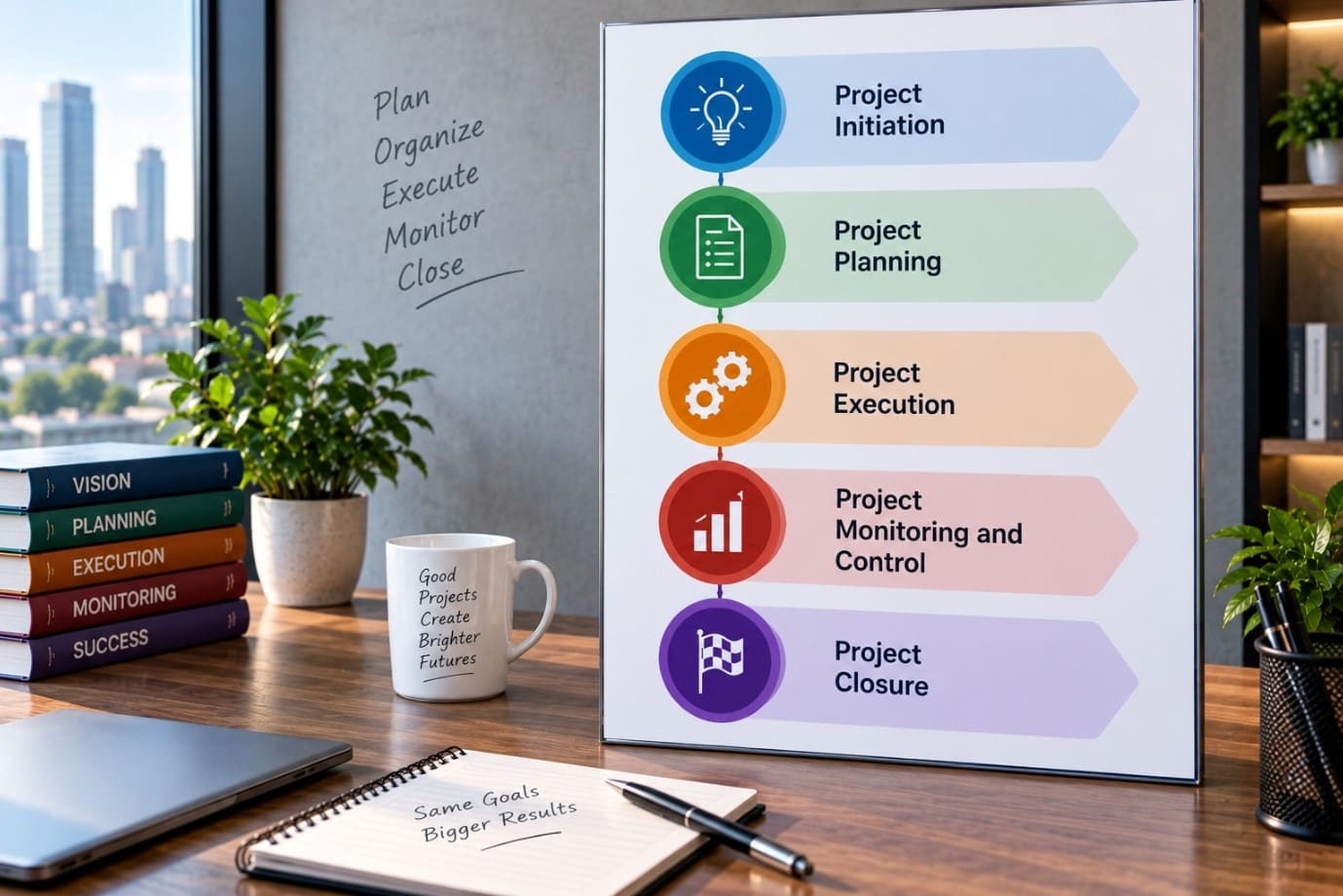
A successful project rarely happens by accident. It moves through a series of connected steps that help teams understand the objective, prepare the right plan, execute the work, track progress and finally hand over the completed outcome. This structured approach is known as the project management lifecycle.
While the exact stages of project management can vary depending on the project and the chosen methodology, most projects follow five broad phases.
⮞ Project Initiation
Every project should begin with a clear reason for being. During initiation, the organization defines the business problem, sets objectives, assesses feasibility, identifies key stakeholders and establishes the project’s broad scope.
A business case or project charter can provide a strong foundation by clarifying why the project matters, what it is expected to achieve and who will be responsible for its direction.
The principle is simple: don’t start execution before understanding why the project exists.
⮞ Project Planning
Once the direction is clear, project planning turns the objective into an actionable roadmap. Teams define the scope, break the work into activities, establish milestones, estimate costs, allocate resources, plan procurement and identify dependencies.
Planning also includes communication, risk and quality considerations. Effective resource management in project management ensures that the right people and capabilities are available when required, while cost management in project management helps keep spending aligned with the approved budget.
Good planning does not mean predicting everything. It means creating enough structure to make better decisions as the project develops.
⮞ Project Execution
Project execution is where plans are converted into action. Teams carry out assigned work, coordinate with suppliers and partners, resolve issues, manage changes and track deliverables while maintaining required quality standards.
For example, in a manufacturing transformation project, execution may involve changing a production layout, redesigning workflows, training employees, introducing new technology and stabilizing the improved process.
⮞ Project Monitoring and Control
Execution needs continuous oversight. Project monitoring tracks schedule, cost, scope, quality, risks, resources and deliverables, while project control ensures that deviations are identified and corrective action is taken.
KPIs, dashboards, milestone reviews, variance analysis and change control can give project leaders a clear view of what is happening.
The goal of monitoring is not simply to report what happened. It is to identify what needs to happen next.
⮞ Project Closure
The final stage is project closure. This includes completing deliverables, obtaining formal acceptance, closing financial and administrative activities, documenting lessons learned and handing the outcome over to the relevant operational teams.
Closure should not mean simply disbanding the project team. The organization should also review whether the solution has been adopted and whether the expected business benefits can be sustained.
Whether an organization uses agile project management, waterfall project management, or another project management methodology, a disciplined lifecycle helps connect planning with execution and ensures that projects remain focused on meaningful business outcomes.
Key Components of Effective Project Management
Effective project management is not about following a checklist or using the maximum number of tools. It is about creating the right structure to help people make decisions, manage resources, solve problems and stay focused on the outcome. The following components form the foundation of a strong project management process.
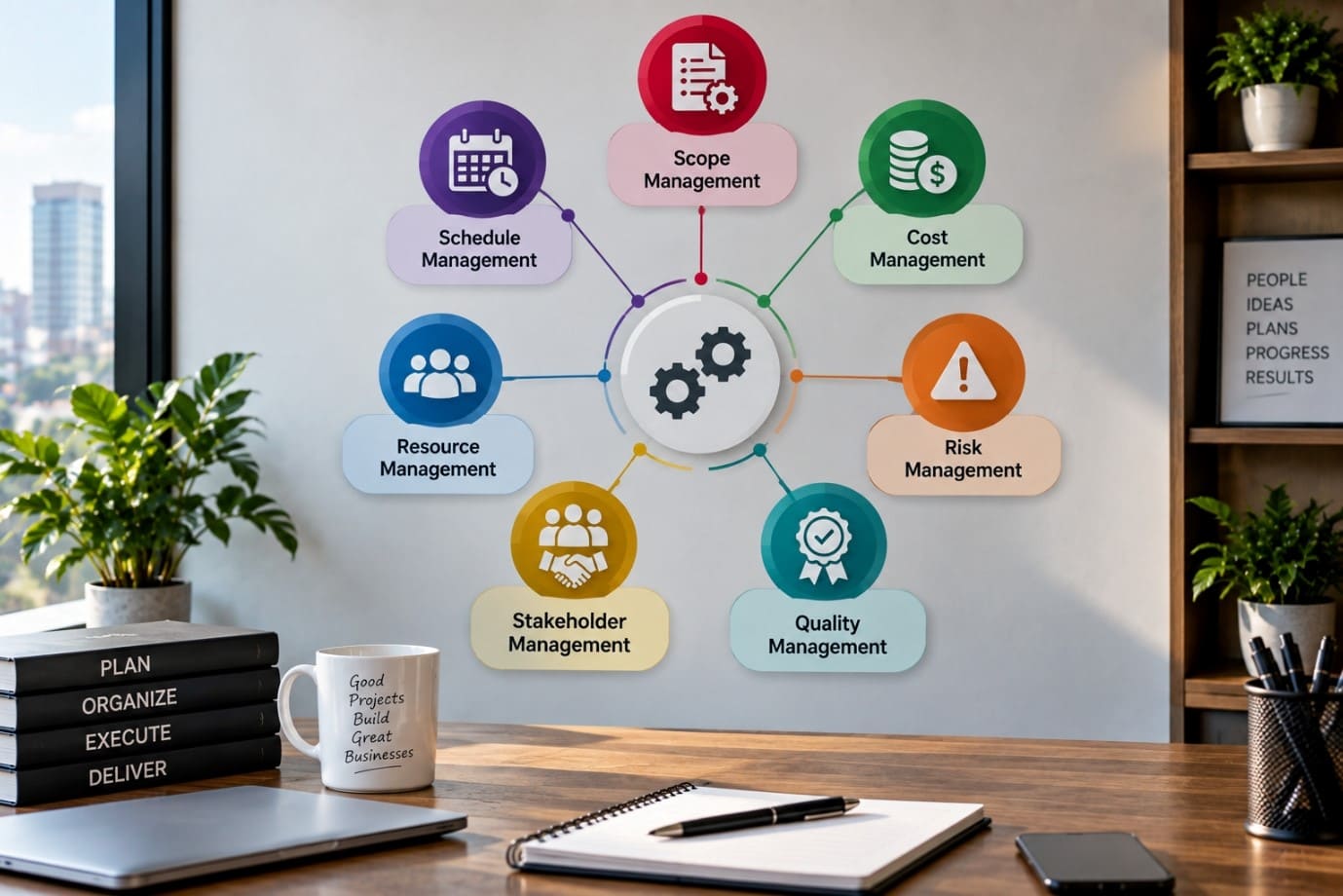
- Scope Management: A clear scope defines what the project will and will not deliver. It prevents confusion, uncontrolled changes and scope creep. When expectations are clear from the beginning, teams can focus their efforts on outcomes that matter to the business.
- Schedule Management: Effective project management and scheduling establishes realistic timelines, milestones, activities, and dependencies. A good schedule helps teams identify delays early and understand how one activity can affect the wider project and its expected results.
- Cost Management: Projects need financial discipline. Cost management in project management involves monitoring budgets, commitments, forecasts and variations. Keeping costs under control helps ensure that the investment made in a project remains justified by the value it is expected to create.
- Resource Management: People are often the most important project resource. Resource management in project management ensures that the right skills, equipment, technology and external support are available at the right time. This reduces bottlenecks and improves execution.
- Risk Management: Uncertainty exists in every project. Risk management in project management helps teams identify potential threats, assess their impact and prepare appropriate responses before they affect cost, timelines, quality or outcomes.
- Stakeholder Management: Projects often involve different teams, leaders, customers, suppliers and partners. Understanding their expectations and keeping them aligned improves decision-making and reduces resistance during project execution.
- Quality Management: Quality management in project management means building quality into the process rather than checking for problems only at the end. This reduces rework and improves the reliability of the final outcome.
- Communication and Governance: Clear communication and governance define who makes decisions, who owns deliverables, how progress is reported and when issues should be escalated. A well-designed project management system gives leadership the visibility needed for timely project control.
- Change Management: Even a well-planned project can face changing requirements. Change management helps employees and stakeholders understand, accept and adopt new processes, systems, or ways of working. This is critical because successful project closure should lead to sustained business improvement, not simply the completion of a project plan.
The right combination of these disciplines, supported by appropriate project management tools and software and a suitable framework, enables organizations to move from planning to execution while keeping business outcomes at the center.
Choosing the Right Project Management Methodology
There is no single project management methodology that works for every project. The right approach depends on the project’s objectives, complexity, uncertainty, stakeholders, timelines and operating environment. More importantly, the methodology should help the organization achieve the business outcome it expects from the project.
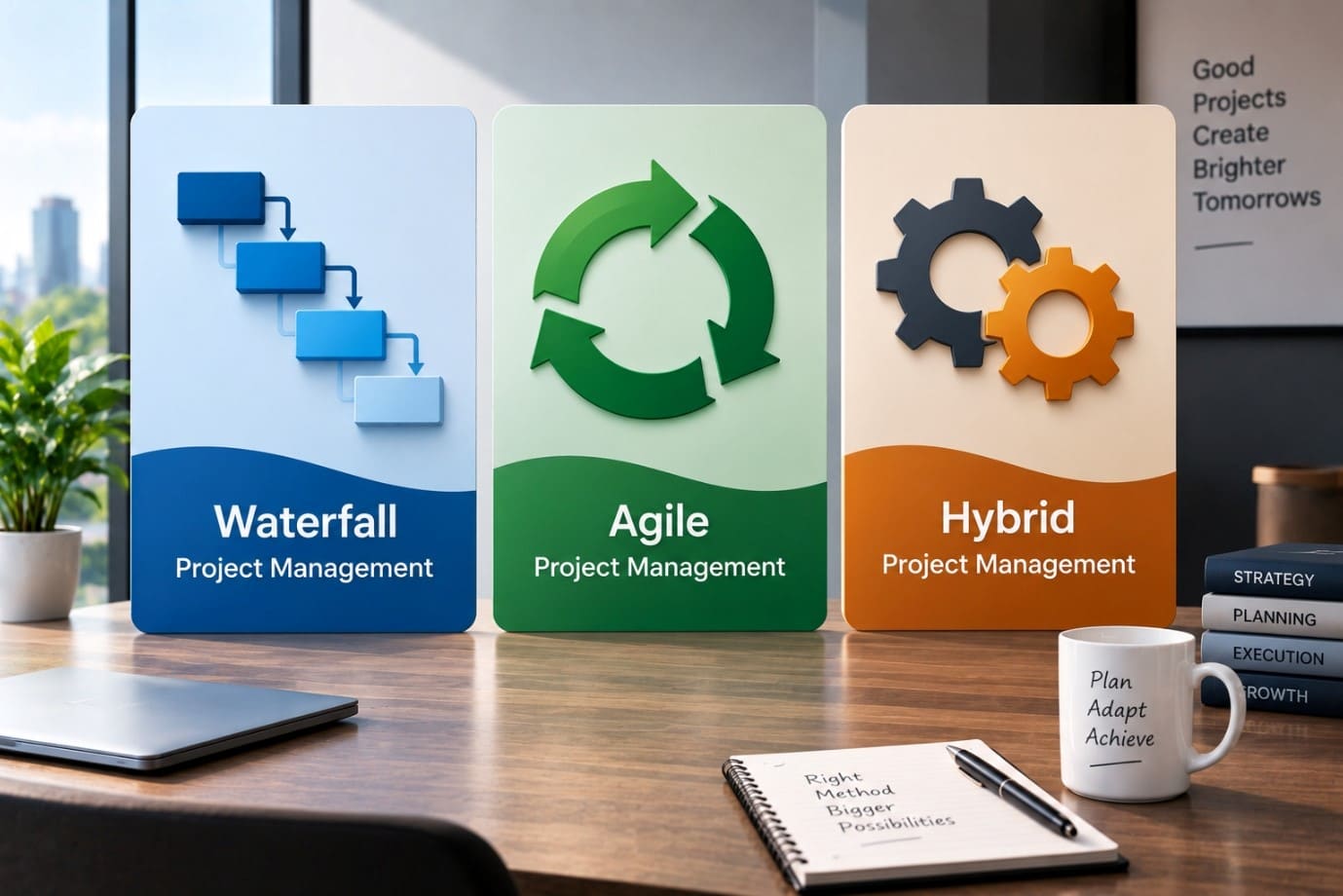
⮞ Predictive / Waterfall Project Management
It follows a structured sequence, with requirements, scope, activities and deliverables defined early. It works well when the project needs predictability and changes can be costly.
It is suitable when:
- Requirements and objectives are relatively stable
- Scope is clearly defined
- Activities must follow a specific sequence
- Regulatory or engineering requirements require detailed planning
- Changes could significantly affect cost or timelines
Infrastructure, construction, engineering and facility projects may benefit from this approach. The structured nature of Waterfall can improve cost predictability, schedule control, quality, compliance and delivery certainty when project requirements are well understood.
⮞ Agile Project Management
It uses shorter work cycles, regular reviews, and continuous feedback. It is useful when requirements may change or the final solution needs to evolve based on customer or user input.
It can be effective when:
- Requirements are evolving
- Customer feedback is important
- Uncertainty is high
- Iterative development is practical
Software, digital products and innovation projects are common examples. Agile can help organizations respond faster to changing needs, improve solutions through feedback, reduce the risk of building the wrong product and deliver usable results earlier.
You can also go through our dedicated blog on Product Planning and Management.
⮞ Hybrid Project Management
It combines predictive and adaptive practices. For example, an organization may use structured planning for budgets, major milestones, procurement and compliance while applying Agile practices to technology development or process improvement.
A hybrid approach can provide greater flexibility without losing overall control, making it useful for complex transformation initiatives where some aspects are predictable while others require continuous adaptation.
Ultimately, the best project management methodology is not the most fashionable one. It is the approach that gives the organization the right balance of control, flexibility, speed, quality and risk management to achieve its intended business results. The right project management tools and software can then support planning, collaboration, project monitoring and project control throughout execution.
Common Project Management Challenges
Even with a well-defined project management process, projects can face unexpected challenges. Delays, changing priorities, limited resources and communication gaps can quickly affect cost, quality and business outcomes. Understanding these challenges early allows project teams to address them before they become major problems.
- Unclear Objectives and Scope: When people are not clear about what a project is expected to achieve, everyone can start working toward a different goal. This makes project planning difficult and creates confusion during execution. The business impact can be significant: wasted effort, repeated work, delayed decisions and outcomes that do not solve the original business problem.
- Unrealistic Timelines: A deadline may look achievable in a presentation but prove difficult once dependencies, approvals, resources and unexpected issues are considered. Weak project management and scheduling can result in rushed work, missed milestones, higher costs and compromised quality.
- Poor Stakeholder Alignment: A project may involve senior leadership, finance, operations, technology, procurement, customers and external partners. If their expectations are not aligned, decisions can slow down and priorities can conflict. This directly affects project execution and can delay the business benefits the project was designed to deliver.
- Scope Creep: Projects often change as new requirements emerge. The problem begins when changes are accepted without understanding their impact on time, cost, resources and priorities. Without effective project control, scope creep can increase investment while gradually moving the project away from its original business objective.
- Resource Constraints: A project cannot move faster than its critical resources allow. Shortages of skilled people, equipment, technology or funding can create bottlenecks. Strong resource management in project management helps identify these constraints early and prevents avoidable delays and productivity losses.
- Weak Risk Management: Identifying risks on paper is not enough. Risk management in project management requires active ownership and timely action. When risks are ignored or addressed too late, they can become expensive issues affecting budgets, schedules, quality and customer commitments.
- Resistance to Change: Even when a project is technically completed, it may fail to create value if people do not adopt the new system, process or way of working. Effective change management is therefore essential to achieving sustainable results beyond project closure.
- Poor Decision-Making and Governance: When nobody is clearly accountable for decisions, issues can remain unresolved for weeks. A strong project management system, supported by regular project monitoring and clear governance, helps leaders identify problems early, make timely decisions and keep the project connected to its intended business outcome.
Best Practices for Successful Project Management
Successful project management is less about having a complicated process and more about creating clarity, accountability and discipline around the work. The following practices can help organizations improve project execution, manage uncertainty and stay focused on the results that matter.
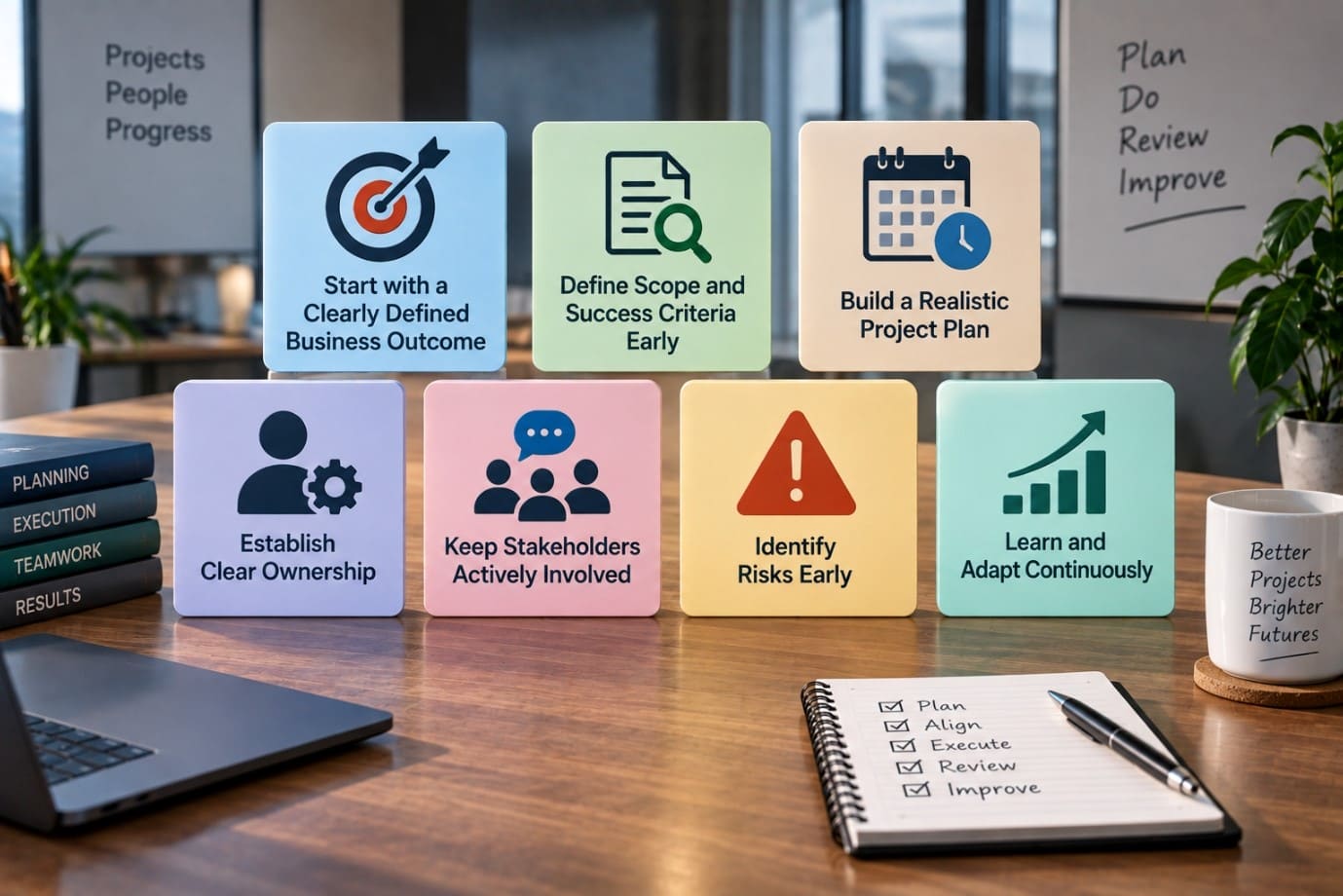
- Start with a Clearly Defined Business Outcome: Before listing activities, define what the project should achieve. Whether the goal is reducing costs, improving productivity, increasing revenue or improving customer experience, a clear outcome gives the entire team a common direction.
- Define Scope and Success Criteria Early: Clearly establish what is included, what is not and how success will be measured. This creates a strong foundation for project planning and helps prevent scope changes from quietly increasing cost or extending timelines.
- Build a Realistic Project Plan: A good plan considers dependencies, resources, risks, approvals and decision timelines, not just task completion dates. Effective project management and scheduling makes it easier to identify potential delays before they affect the final outcome.
- Establish Clear Ownership: Every important deliverable should have one accountable owner. Clear responsibility reduces confusion, speeds up decisions and strengthens accountability throughout the project management process.
- Keep Stakeholders Actively Involved: Regular and honest communication helps prevent surprises. Stakeholders should understand progress, key decisions, risks and changes so they can provide timely direction when required.
- Identify Risks Early: Strong risk management in project management means looking ahead rather than waiting for problems to appear. Prioritize risks based on their likelihood and potential impact, then assign clear ownership for mitigation.
- Track Meaningful KPIs: Project monitoring should focus on measures that show whether the project is moving toward its intended outcome. Too many metrics can create reporting work without improving decision-making.
- Create Effective Governance: A clear project management system should define decision rights, escalation paths, review mechanisms and accountability. This enables faster project control when issues arise.
- Manage Change Systematically: Changes are often necessary, but they should be assessed before approval. Consider their impact on scope, cost, schedule, resources, quality and expected benefits.
- Learn and Adapt Continuously: Regular reviews and lessons learned help teams improve during the project management lifecycle, not just after project closure. The strongest organizations treat every project as an opportunity to improve how they plan, execute and deliver business results.
How Project Management Supports Business Transformation
Business transformation rarely happens through one department or one initiative. Whether an organization is pursuing digital transformation, cost reduction, organizational restructuring, supply chain improvement, market expansion, technology implementation or manufacturing transformation, meaningful change usually involves multiple teams working toward a common goal.
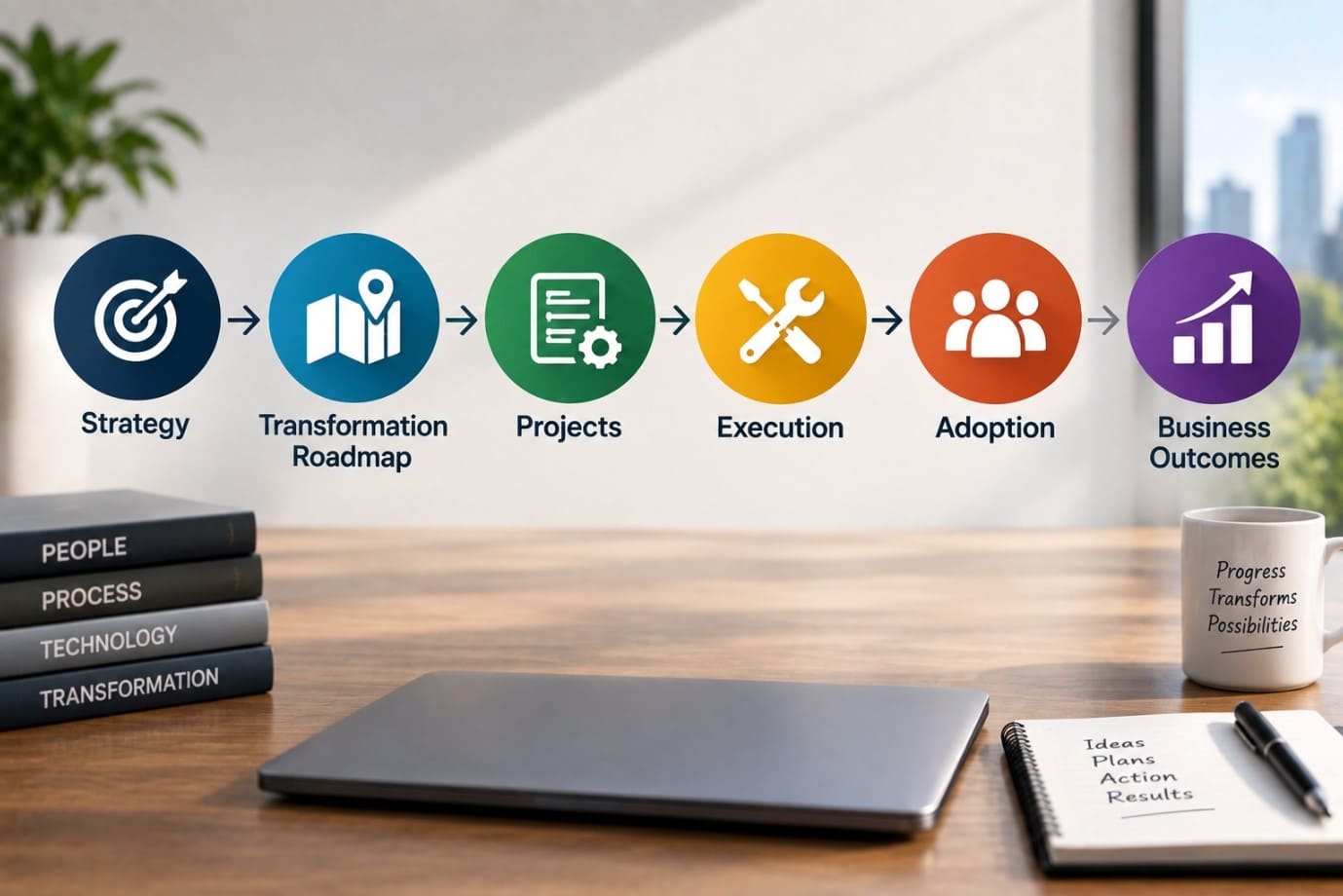
This is where effective project management becomes a critical link between strategy and execution.
Strategy → Transformation Roadmap → Projects → Execution → Adoption → Business Outcomes
A strategy may identify where the business needs to go, but projects are what turn that direction into action. Effective project planning translates strategic priorities into defined initiatives, responsibilities, timelines, resources and measurable outcomes. During project execution, teams coordinate activities, manage dependencies, address risks and make decisions that keep the transformation moving forward.
For example, a supply chain transformation may require changes in procurement, technology, inventory management, logistics and supplier relationships. Similarly, a new business setup may involve finance, operations, hiring, technology, facilities and regulatory requirements. Without a structured project management process, these interconnected activities can easily lose alignment.
Tools and technology can support project monitoring, reporting and project control, but successful transformation requires more than software. People need to understand the change, leaders need visibility and teams need clear accountability.
Ultimately, project management helps ensure that transformation initiatives do not remain as strategies or presentations. The objective is to move from plans to measurable business outcomes and to ensure those improvements continue after project closure.
When Should a Business Consider External Project Management Support?
Turning a transformation roadmap into measurable results can be challenging, especially when projects are complex or business-critical. While internal teams often have strong knowledge of the organization, some initiatives require additional experience, specialist capabilities or execution bandwidth. In such situations, project management consulting services can strengthen the existing team without replacing its ownership or decision-making responsibilities. External support can be particularly valuable when:
- The project is strategically important or has a significant impact on business performance.
- Internal teams lack the specialist expertise, experience or capacity required.
- Multiple departments, suppliers, partners or stakeholders need to work together.
- The initiative involves significant investment, tight timelines or complex dependencies.
- Transformation needs to happen alongside day-to-day business operations.
- Complex implementation challenges require stronger risk management in project management.
- Leadership needs independent visibility into project progress, costs, risks and decisions.
- Project execution has slowed, milestones are repeatedly missed or critical issues remain unresolved.
- The organization is establishing a new business, facility, plant or operating capability.
- A major transformation requires cross-functional expertise that is not readily available internally.
In these situations, external project management consultation should not be viewed simply as outsourcing project responsibility. The real value lies in adding experienced execution capability, an objective perspective, structured project planning and stronger governance to the existing team. With the right project management framework, project monitoring and project control, external specialists can work alongside internal leaders to solve execution challenges, manage risks and maintain alignment with strategic priorities. The objective is to help the organization execute better, make faster decisions, manage risks effectively and achieve the business outcome the project was created to deliver.
You can also read: Business Consulting Firms
FAQs
A. Project management is the process of planning, executing, monitoring and controlling a project to achieve a specific goal. It helps businesses manage scope, time, cost, resources, risks, quality and stakeholders while keeping the project aligned with its intended business outcome.
A. The project management lifecycle has five main stages: initiation, planning, execution, monitoring and control and closure. These stages help teams move systematically from defining a business need to delivering the project and reviewing its final results.
A. The main project management methodologies are Waterfall, Agile and Hybrid. Waterfall works well when requirements are stable, Agile suits projects where requirements can evolve and Hybrid combines structured and flexible approaches based on the project’s needs.
A. The key components of project management include scope, schedule, cost, resources, quality, risk, stakeholders, communication, governance and change management. Managing these areas together helps teams control project delivery while staying focused on the expected business outcome.
A. A business may consider project management consultation when it is undertaking a complex or high-value project, lacks specialist expertise, faces execution challenges or needs an independent perspective. External guidance can strengthen planning, governance, risk management, and delivery without removing internal ownership.
Conclusion
Project management is ultimately about turning intent into results. A business may have a strong strategy, ambitious goals and a well-defined transformation roadmap, but the real value is created when those plans are translated into disciplined action and measurable outcomes.
Effective project management brings together several elements that need to work as one:
Strategy + Planning + People + Resources + Governance + Risk Management + Execution + Continuous Improvement
From project planning and resource management in project management to risk management, cost, quality, stakeholder coordination and project execution, each element contributes to keeping the initiative aligned with its purpose. The right project management methodologies, processes, tools and governance structure can provide the visibility and control needed to make better decisions throughout the project management lifecycle.
But there is an important difference between delivering a project and delivering the outcome the business actually needs. A project may be completed on time and within budget, yet still fall short if it does not improve productivity, reduce costs, increase revenue, strengthen customer experience or deliver the intended strategic benefit.
This is why organizations undertaking complex transformation need more than project plans. They need disciplined execution, cross-functional alignment, proactive project monitoring and a clear focus on measurable outcomes.
With the right project management consulting services or project management consultation, organizations can strengthen their ability to turn complex initiatives into sustainable business improvements. The goal is not simply to finish projects, it is to make projects deliver meaningful value for the business.
For more information regarding our services, you can explore our Homepage.

