

Quality Assurance System- Why it Matters?
In today’s highly competitive and interconnected markets, quality assurance has evolved from a support activity into a core business necessity.
Customers now expect consistent quality, zero defects, faster deliveries, and complete transparency—regardless of whether products are manufactured locally or globally. This shift has made the assurance of quality a critical differentiator rather than a basic requirement.
The cost of poor quality is far higher than most organizations anticipate. Rework, scrap, warranty claims, production downtime, recalls, and long-term brand damage directly impact profitability and customer trust. When quality failures occur, reactive QA inspection alone is insufficient. Instead, organizations must focus on building robust systems that prevent defects at the source through a structured procedure for quality assurance.
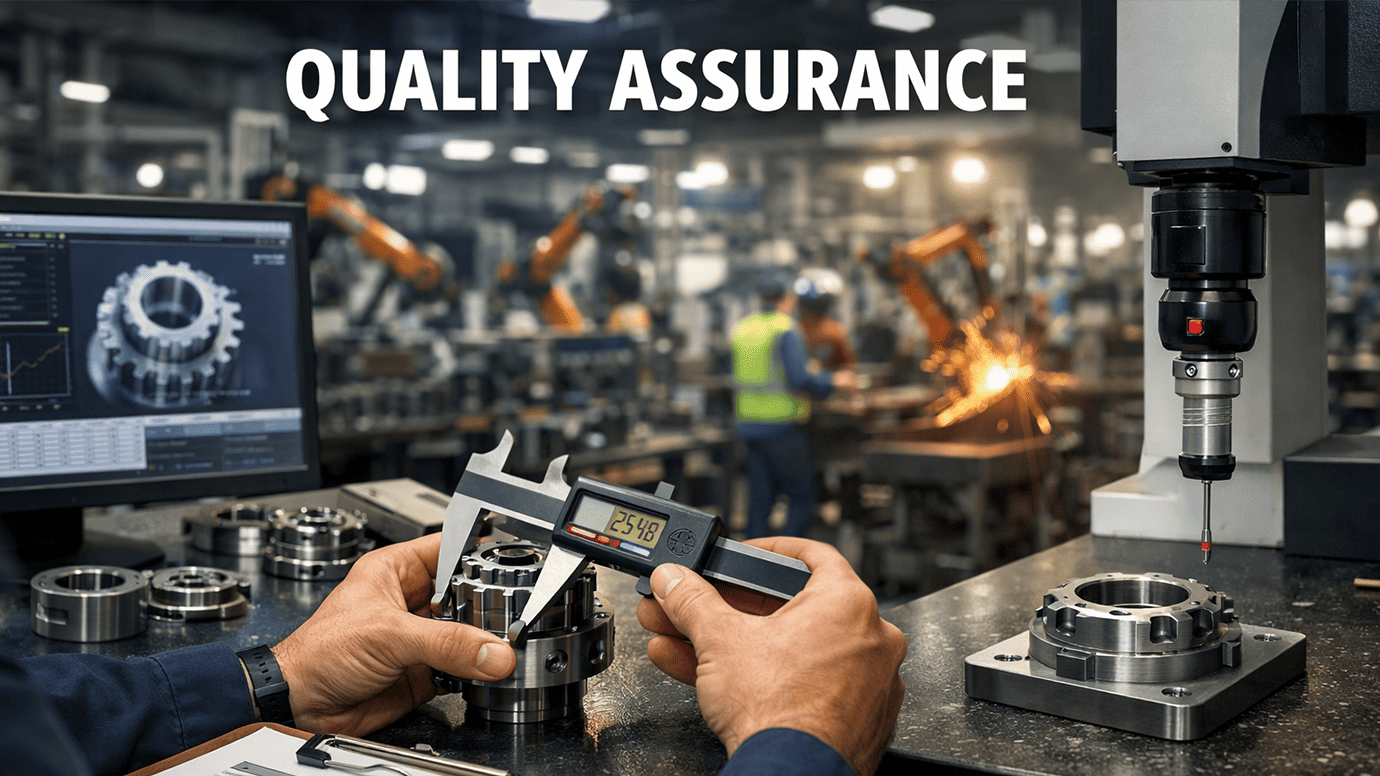
Modern manufacturing has moved away from inspection-driven approaches toward system-driven quality. This includes standardized workflows, risk-based thinking, continuous assessment, and alignment with proven quality assurance methodologies. Understanding the principles of quality assurance helps organizations embed quality into every stage of operations rather than treating it as an end-stage checkpoint.
Today, quality assurance is a strategic business function that spans operations, supply chains, and even in project management. The role of quality assurance now includes process governance, performance monitoring, and capability building through continuous training. A well-designed system enables consistency, scalability, and resilience—making quality assurance essential for long-term operational excellence and sustainable growth.
What Is Quality Assurance?
It is a structured and systematic approach focused on the assurance of quality by preventing defects rather than detecting them after production. In simple terms, quality assurance is the discipline of designing, implementing, and maintaining processes that ensure products and services consistently meet defined quality standards and customer expectations. Unlike reactive controls, it emphasizes building quality into every activity from the very beginning.
QA as a process-oriented and preventive approach:
At its core, it is a process-oriented and preventive approach. It relies on a clearly defined procedure, supported by proven methodologies and well-established principles such as standardization, risk prevention, and continuous improvement. A strong process ensures that errors are identified early through regular QA assessment, process audits, and performance reviews—long before they impact customers.
Role of QA across the product lifecycle:
The role of quality assurance spans the entire product and project lifecycle. From design and procurement to production, delivery, and even in project management, QA ensures alignment between requirements, processes, and outcomes. In manufacturing, this means consistent process control, supplier quality integration, and workforce capability development through structured quality assurance training.
QA vs inspection-centric thinking:
Unlike QA inspection, which focuses only on detecting defects in finished outputs, a comprehensive system focuses on prevention, consistency, and long-term reliability. This shift from inspection-centric thinking to system-driven quality enables organizations to scale efficiently while maintaining high standards of performance and customer trust.
Difference between Quality Assurance vs Quality Control (QA vs QC)
The comparison between QA and QC is one of the most searched and misunderstood topics in operational excellence. While both aim to deliver the assurance of quality, their focus, approach, and impact on business performance are fundamentally different. Understanding this distinction is critical for building a sustainable quality assurance system.
Focus:
- The focus of quality assurance is on designing and controlling processes using defined principles and standardized procedure.
- QC, on the other hand, concentrates on identifying non-conforming products through QA inspection and testing activities.
Timing:
- A robust QA process operates throughout the entire lifecycle—planning, design, execution, and review.
- QC activities typically occur at the end of production or at specific checkpoints, often after value has already been added.
Objective:
- The objective of quality assurance in manufacturing is defect prevention through structured QA assessment, process capability improvement, and continuous improvement.
- QC’s objective is defect detection and segregation.
Responsibility:
- The role of quality assurance extends across functions, including operations, supply chain, and even in project management.
- QC is usually confined to the quality department or inspection teams.
Tools:
- Quality assurance methods rely on audits, process mapping, training programs, and system controls supported by continuous training.
- QC relies mainly on inspections, measurements, and testing tools.
Organizations that rely only on QC often fail because defects are identified too late, leading to rework, delays, and higher costs. Without a preventive quality assurance system, businesses struggle to achieve consistency, scalability, and long-term competitiveness in today’s demanding markets.
Core Principles of an Effective Quality Assurance System
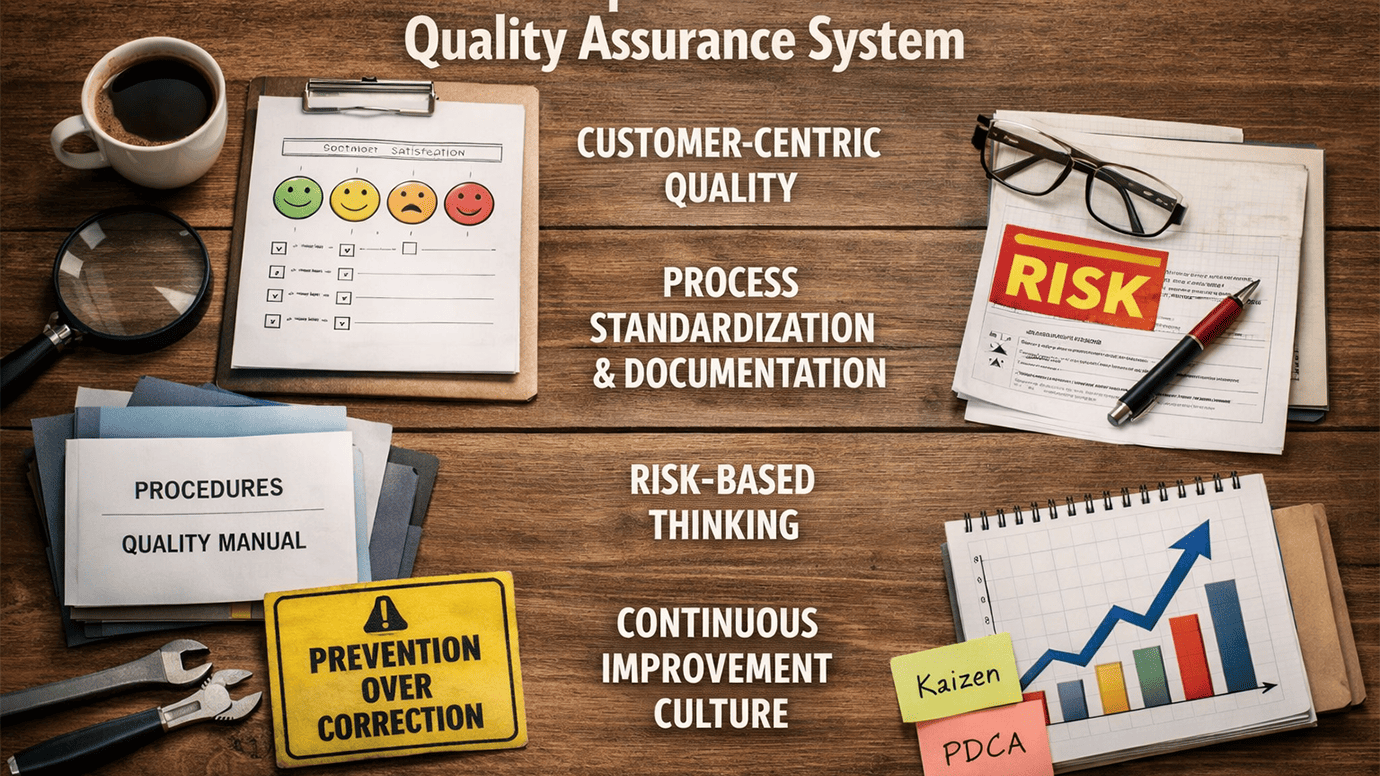
An effective quality assurance system is built on well-defined, practical, and scalable foundations that ensure consistent assurance of quality across operations. These foundations transform quality from a reactive activity into a proactive business discipline. In modern manufacturing environments, these principles guide how organizations design processes, manage risks, and continuously improve performance.
1. Customer-Centric Quality
At its core, quality assurance is about meeting and exceeding customer expectations. Every QA process must begin with a clear understanding of customer requirements—both explicit and implicit. On the shop floor, this means translating customer specifications into measurable process parameters and training teams to understand how their work impacts end-user satisfaction. The role is to ensure that customer requirements drive process design, execution, and performance evaluation.
2. Process Standardization and Documentation
Standardized and well-documented processes are essential for consistent quality outcomes. Clear work instructions, SOPs, and control plans reduce variation and dependency on individual skills. In manufacturing operations, documented QA inspection criteria and standardized workflows enable repeatability across shifts, machines, and locations, strengthening the overall assurance of quality.
3. Risk-Based Thinking
Risk-based thinking allows organizations to anticipate and prevent failures before they occur. Regular QA assessment helps identify process risks related to materials, machines, manpower, and methods. By proactively addressing these risks, manufacturers reduce defects, downtime, and rework on the shop floor.
4. Prevention Over Correction
A strong quality assurance approach prioritizes prevention rather than correction. Instead of relying heavily on QA inspection, organizations focus on process controls, mistake-proofing, and capability building through structured training. This principle aligns closely with Lean manufacturing and TPM philosophies, where eliminating root causes is more valuable than fixing outcomes.
5. Continuous Improvement Culture
Sustainable quality performance depends on a culture of continuous improvement. Regular reviews of the QA process, employee involvement, and data-driven problem-solving enable organizations to adapt and improve. When these principles are embedded into daily shop-floor practices and aligned with Lean and TPM, quality becomes an integral part of operational excellence rather than a standalone function.
Key Components of Quality Assurance in Manufacturing
A robust quality assurance framework in manufacturing is built on multiple interlinked components that work together to deliver consistent assurance of quality. Rather than relying on end-stage checks, an effective quality assurance system integrates people, processes, and data to prevent defects and improve operational performance. Below are the key components that define a successful QA approach in modern manufacturing.
Process Mapping & Standard Operating Procedures (SOPs)
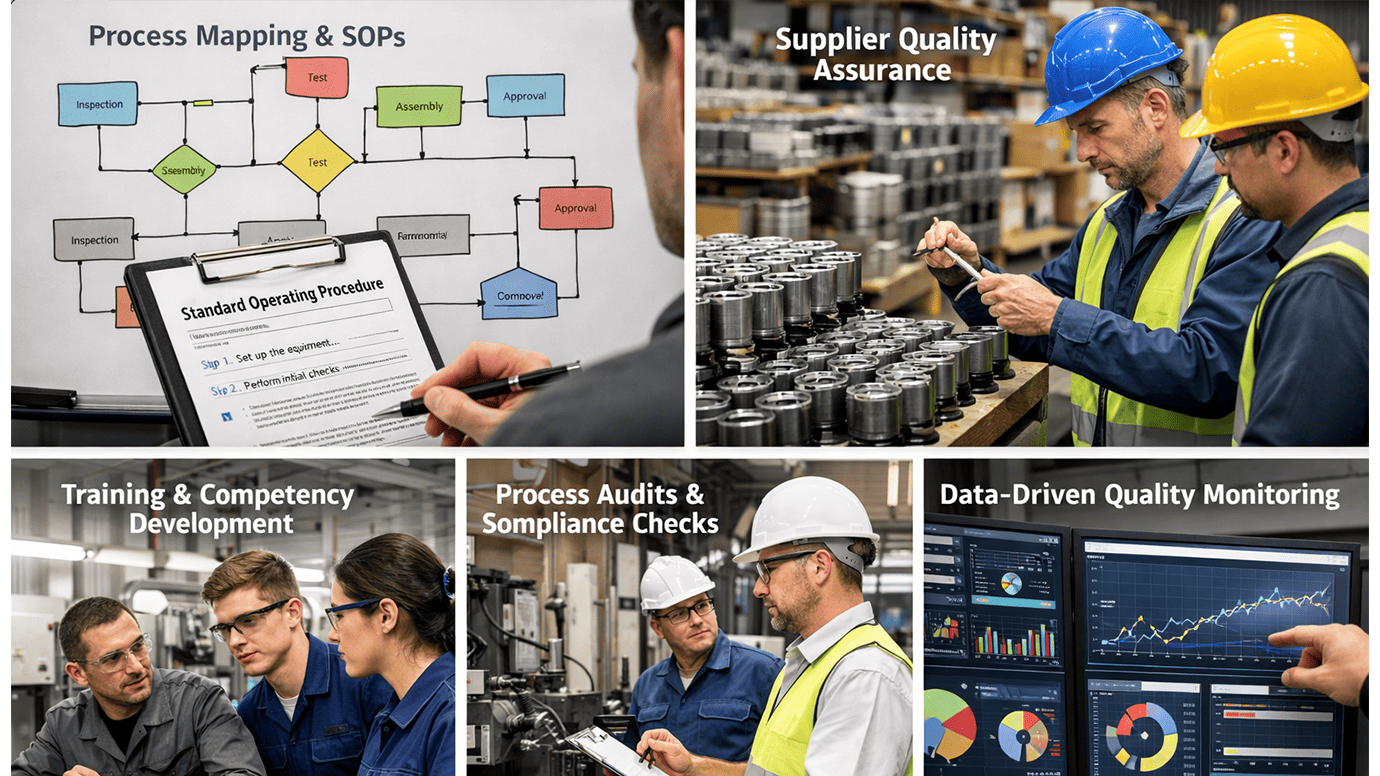
Clear process mapping is the foundation of any QA process. Documenting workflows, responsibilities, and control points helps eliminate ambiguity and variation. Well-defined SOPs form the core procedure for quality assurance, ensuring tasks are performed consistently across shifts, machines, and locations. This standardization supports key principles, such as repeatability and process control, while reducing dependency on individual skills. You can also read our dedicated blog on Standard Operating Procedures to know more about it in detail.
Supplier Quality Assurance
Supplier performance directly impacts product quality. Supplier audits, incoming material checks, and performance scorecards are essential quality assurance methods used to ensure suppliers meet defined standards. Through regular assessment of supplier processes, organizations reduce material defects, delays, and downstream quality issues, strengthening the overall assurance of quality across the value chain.
Training & Competency Development
People play a critical role in quality outcomes. Structured quality assurance training ensures employees understand quality standards, process requirements, and its role in their daily work. In manufacturing environments, competency development reduces human errors and supports the shift from reactive QA inspection to proactive process ownership.
Process Audits & Compliance Checks
Process audits verify whether defined standards and SOPs are followed in practice. These audits are a key element of the quality assurance system, enabling early detection of deviations through systematic QA assessment. In project management, audits also ensure timelines, deliverables, and quality objectives remain aligned throughout execution.
Data-Driven Quality Monitoring
Modern quality assurance relies on real-time data to identify trends, deviations, and improvement opportunities. Monitoring defect rates, process capability, and audit findings strengthens the QA process and supports informed decision-making. When data insights are embedded into daily reviews, quality assurance is transformed from a compliance function into a performance driver.
Together, these components create a preventive, scalable, and resilient system that aligns operational excellence with business objectives and long-term competitiveness.
Quality Assurance Standards & Frameworks
Globally recognized standards and frameworks play a critical role in strengthening quality assurance and delivering consistent quality across industries. In manufacturing and project-driven environments, these standards provide structured guidance for building a reliable and scalable quality assurance system. When applied correctly, they act as enablers of performance rather than bureaucratic checklists.
ISO 9001 and its role in QA systems
It is the most widely adopted standard for quality assurance in manufacturing and service operations. It defines the core principles of quality assurance, including customer focus, process orientation, risk-based thinking, and continuous improvement. ISO 9001 helps organizations establish a standardized procedure, ensuring consistency across processes, locations, and teams. Regular QA assessment and audits under this framework strengthen governance and operational discipline.
IATF 16949 (Automotive Relevance)
For the automotive sector, IATF 16949 sets higher expectations for defect prevention, supplier quality management, and process capability. This standard emphasizes advanced methodologies such as APQP, FMEA, and SPC, shifting the focus from reactive inspection to proactive risk mitigation. Its implementation reinforces the role of quality assurance across the entire supply chain, not just within the factory.
GMP (For regulated industries)
In regulated industries such as pharmaceuticals, food, and healthcare, Good Manufacturing Practices (GMP) are essential for compliance and patient safety. GMP frameworks ensure strict control over documentation, training, and validation, making quality assurance training a critical component of workforce competency and compliance readiness. For more information, you can go through our comprehensive blog on GMP Practices.
Six Sigma & Lean Quality integration
Complementing formal standards, Six Sigma and Lean Quality approaches enhance the QA process by reducing variation, eliminating waste, and improving process capability. These frameworks integrate seamlessly with quality assurance in project management, enabling structured problem-solving and data-driven decision-making.
Ultimately, quality assurance is most effective when standards are treated as performance enablers. When embedded into daily operations, they transform the quality assurance system into a driver of efficiency, reliability, and long-term business excellence.
Role of Quality Assurance in Operational Excellence
Operational excellence is achieved when organizations consistently deliver high performance across productivity, cost, quality, and delivery. In this context, quality assurance plays a foundational role by ensuring process stability, consistency, and continuous improvement. Far beyond end-stage checks, it is a system-driven approach that embeds the assurance of quality into everyday operations, enabling sustainable and scalable excellence.
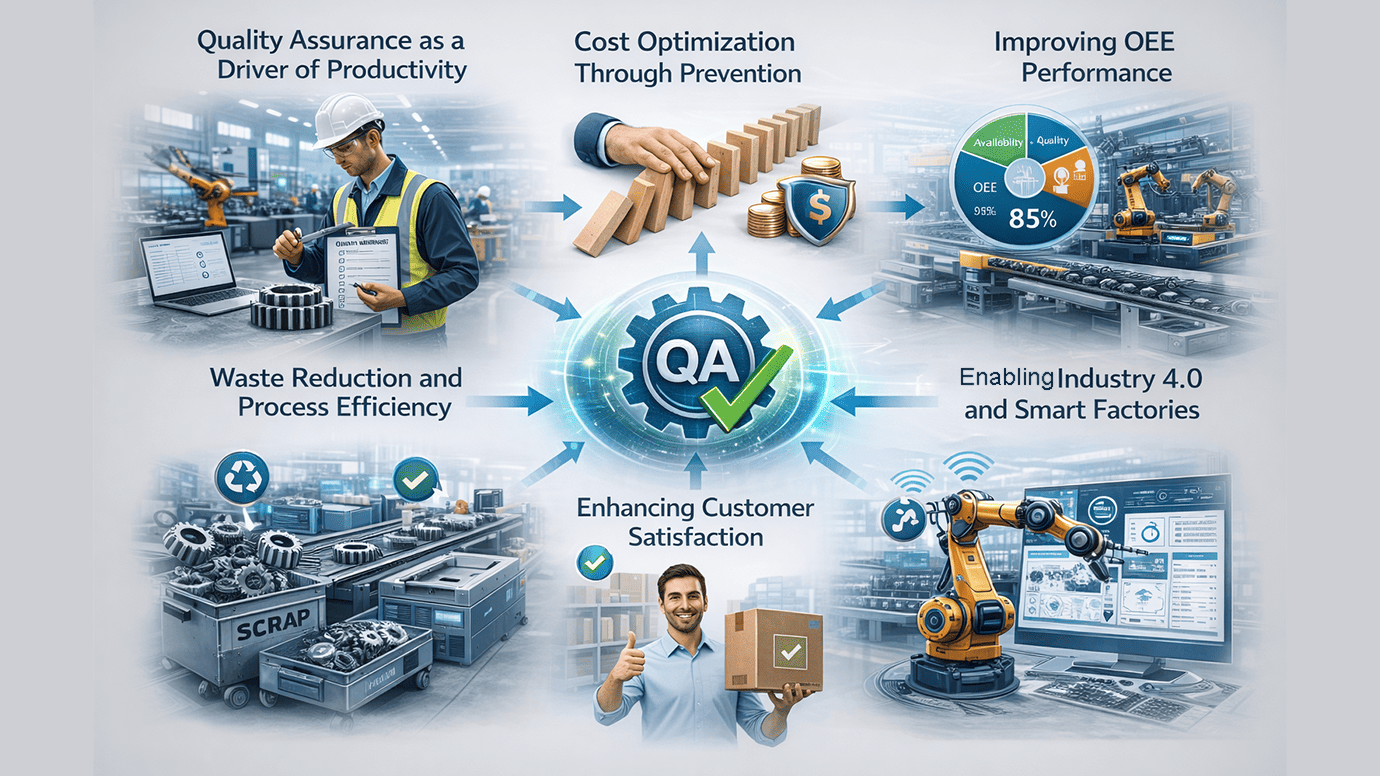
- Quality Assurance as a Driver of Productivity: A strong quality assurance system improves productivity by reducing process variability and unplanned disruptions. Clearly defined and standardized QA process workflows help operators perform tasks correctly the first time. Regular assessment identifies inefficiencies early, minimizing rework and ensuring smoother production flow across shop floors.
- Cost Optimization Through Prevention: The role of quality assurance is critical in lowering the cost of poor quality. By focusing on prevention rather than excessive inspection, organizations reduce scrap, rework, warranty claims, and downtime. Applying proven methodologies aligned with the principles of quality assurance helps control costs while improving overall operational reliability.
- Improving OEE Performance: In manufacturing, consistent process controls directly support Overall Equipment Effectiveness (OEE). Stable quality processes reduce quality-related stoppages and speed losses. When defects are prevented at the source through an effective QA process, equipment utilization improves, resulting in higher availability and performance.
- Waste Reduction and Process Efficiency: Effective quality assurance supports waste reduction by eliminating non-value-added activities. Standardization, root-cause analysis, and structured training help teams identify and remove sources of scrap, rework, and overprocessing, aligning closely with Lean manufacturing objectives.
- Enhancing Customer Satisfaction: Consistent quality output leads to reliable delivery and improved customer trust. Whether in operations or in project management, structured quality systems ensure commitments are met without last-minute corrections, strengthening long-term customer relationships.
- Enabling Industry 4.0 and Smart Factories: In smart manufacturing environments, QA integrates digital tools, real-time monitoring, and data analytics into the quality assurance system. This enables proactive decision-making, faster response to deviations, and sustained operational excellence in increasingly complex and automated production ecosystems.
Also Read: Industry 4.0 vs Industry 5.0
Common Quality Assurance Challenges in Indian Manufacturing
Indian manufacturing organizations operate in a highly dynamic environment shaped by rapid expansion, diverse skill levels, and complex supply chains. While the importance of quality assurance is widely recognized, many organizations struggle to achieve consistent assurance of quality due to structural, operational, and cultural challenges. Addressing these issues requires a strong system supported by disciplined execution and leadership commitment.
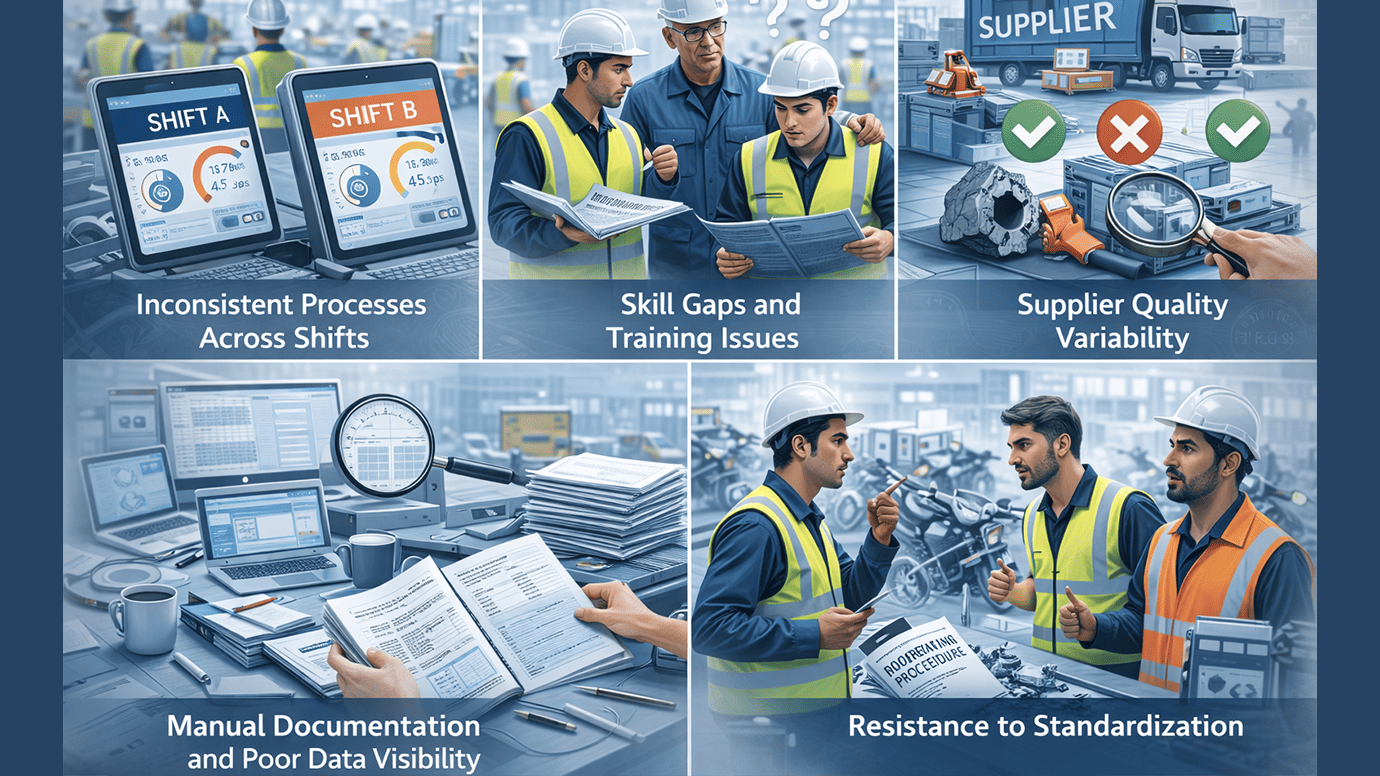
- Inconsistent Processes Across Shifts: One of the most frequent challenges in quality assurance in manufacturing is variation in processes between shifts. Differences in operator practices, undocumented work methods, and unclear procedure result in inconsistent output. When a standardized QA process is missing, organizations are forced to rely on reactive inspection, increasing rework and delivery delays.
- Skill Gaps and Training Issues: Limited technical skills and inadequate training weaken the effectiveness of quality systems. Many employees lack a clear understanding of quality standards, control methods, and the broader role of quality assurance. As a result, QA is often viewed as an inspection activity rather than a preventive discipline embedded in daily work.
- Supplier Quality Variability: Supplier-related issues significantly impact the assurance of quality. Inconsistent raw materials and components arise from insufficient supplier audits and weak QA assessment Without structured supplier-focused methodologies, defects enter production early, increasing costs and operational instability.
- Manual Documentation and Poor Data Visibility: Heavy reliance on manual documentation limits the effectiveness of the quality assurance system. Paper-based records delay analysis, obscure trends, and slow corrective actions. This challenge also affects quality assurance in project management, where timely data is essential for maintaining quality and schedule alignment.
- Resistance to Standardization: Cultural resistance to standardized processes remains a major barrier. Employees often perceive standards as restrictive rather than enabling, overlooking the principles of quality assurance. Overcoming this mindset is critical to building consistent, scalable, and sustainable quality performance across manufacturing operations.
Best Practices for Building a Robust Quality Assurance System
Building a resilient and scalable quality assurance system requires more than adopting tools or certifications. It demands disciplined execution, cultural alignment, and a strong focus on delivering consistent assurance of quality. The following best practices help organizations strengthen quality assurance in manufacturing and achieve long-term operational excellence.
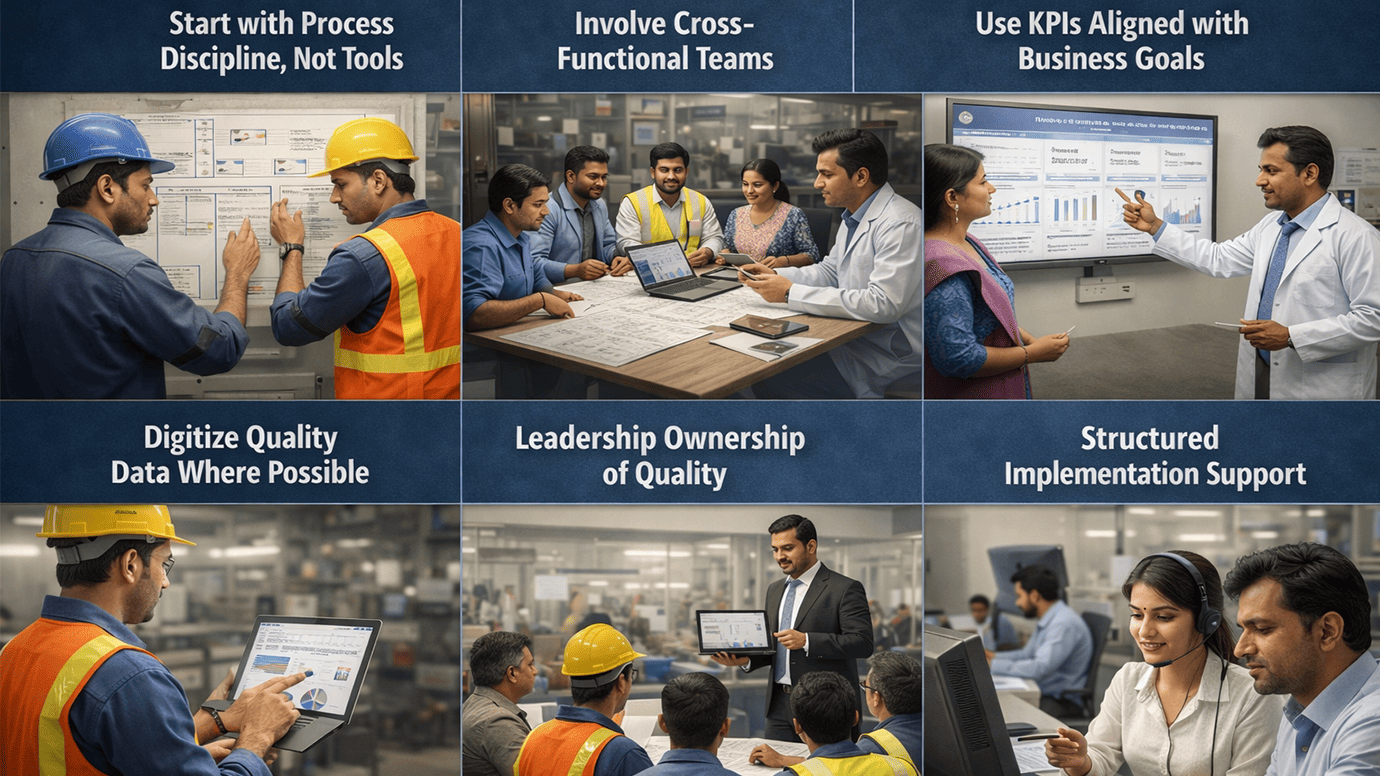
- Start with Process Discipline, Not Tools: Effective quality assurance begins with stable and well-defined processes. Before implementing digital tools or advanced techniques, organizations must establish a clear procedure, supported by standardized workflows and controls. A disciplined QA process ensures consistency and reduces dependence on excessive QA inspection, enabling quality to be built into operations rather than checked at the end.
- Involve Cross-Functional Teams: Quality outcomes are influenced by multiple functions, including operations, procurement, engineering, and logistics. Involving cross-functional teams strengthens the role of quality assurance by embedding ownership across the organization. This approach aligns quality objectives with execution and reinforces its principles throughout the value chain.
- Use KPIs Aligned with Business Goals: Quality metrics should directly support business performance. Defect rates, rework costs, and process capability indicators must be linked to productivity, delivery, and customer satisfaction. Regular QA assessment using relevant KPIs transforms quality assurance is from a compliance requirement into a performance driver.
- Digitize Quality Data Where Possible: Digitization enhances visibility and decision-making within the quality assurance system. Digital dashboards, real-time monitoring, and automated data collection improve the effectiveness of quality assurance methodologies and support faster corrective actions. This is particularly valuable in project management, where timely insights are essential.
- Leadership Ownership of Quality: Sustainable quality performance requires leadership commitment. When leaders actively support quality assurance training, process adherence, and continuous improvement, quality becomes a shared responsibility rather than a departmental task.
- Structured Implementation Support: While best practices provide direction, successful execution often requires structured implementation support. Expert guidance helps organizations design, deploy, and sustain an effective QA system, accelerating results and ensuring measurable business impact.
How Quality Assurance Drives Long-Term Business Value
Long-term business success depends on the ability to deliver consistent performance while adapting to changing market demands. In this context, quality assurance serves as a strategic foundation that strengthens processes, reduces risk, and ensures reliable assurance of quality. A mature QA system enables organizations to move beyond short-term fixes and build sustainable value across operations.
- Lower Cost of Poor Quality: One of the most tangible benefits of effective quality assurance is the reduction in the cost of poor quality. A structured process, supported by regular assessment and a clearly defined procedure minimizes scrap, rework, and warranty claims. By focusing on prevention rather than excessive QA inspection, organizations improve margins and operational efficiency.
- Stronger Customer Trust: Consistent quality performance directly influences customer confidence. When quality assurance is embedded into daily operations, products meet specifications reliably and deliveries become more predictable. Ongoing training ensures teams understand quality expectations, reinforcing the role of quality assurance in maintaining long-term customer relationships.
- Faster and Safer Scalability: Business expansion requires repeatable and controlled processes. A robust system, guided by proven quality assurance methodologies and its principles allows organizations to scale operations, launch new products, or enter new markets without compromising quality.
- Compliance Readiness: Strong quality systems support regulatory and customer compliance. Regular audits, documentation, and assessment simplify audits and ensure readiness across operations and in project management, reducing compliance-related risks.
- Sustainable Operational Excellence: Ultimately, QA enables continuous improvement by aligning people, processes, and data. Through disciplined execution and prevention-focused thinking, quality assurance becomes a long-term driver of stable performance and sustainable operational excellence.
FAQs
A. Quality assurance is a structured approach to ensuring consistent assurance of quality across processes, products, and services. It is important because it focuses on defect prevention through a well-defined process, helping organizations reduce costs, improve customer satisfaction, and achieve long-term operational stability.
A. The difference between QA and QC lies in their approach. QA vs QC can be summarized as prevention versus detection. Quality assurance focuses on building quality into processes, while quality control relies on QA inspection to identify defects after production. Both are important, but QA provides a more sustainable impact. To know about QC, you can read our detailed blog on Quality Control.
A. The core principles of quality assurance include customer focus, process standardization, risk-based thinking, prevention over correction, and continuous improvement. These principles guide organizations in designing a reliable system that delivers consistent results.
A. The role of quality assurance in manufacturing is to ensure process consistency, reduce variability, and improve performance. It helps control defects at the source through structured assessment and standardized workflows, leading to higher productivity and lower costs.
A. A procedure for quality assurance defines the steps, responsibilities, and controls required to maintain quality standards. It forms the backbone of an effective system, ensuring that processes are followed consistently and measured through regular assessment.
A. By focusing on prevention rather than late-stage inspection, quality assurance reduces scrap, rework, downtime, and warranty claims. A proactive system ensures issues are addressed early, significantly lowering the overall cost of poor quality.
A. Quality assurance training equips employees with the knowledge to follow standards, understand process controls, and take ownership of quality. Trained teams strengthen the assurance of quality by executing the process correctly and consistently.
A. Quality assurance in project management ensures that project deliverables meet defined quality, cost, and timeline objectives. Through structured reviews, audits, and assessment, projects remain aligned with requirements and stakeholder expectations.
A. Organizations can build a strong quality assurance system by focusing on process discipline, leadership commitment, continuous improvement, and data-driven decision-making. When it is embedded into culture and operations, it enables scalable growth and long-term competitiveness.
A. Common quality assurance methodologies include ISO 9001, Six Sigma, Lean Quality, and sector-specific frameworks like IATF 16949. These methodologies strengthen the QA process by promoting standardization, risk reduction, and continuous improvement. You can read our comprehensive blog on Six Sigma Concept.
Conclusion
In an increasingly competitive and quality-conscious business environment, quality assurance has emerged as a true strategic advantage rather than a supporting function. Achieving consistent assurance of quality requires more than inspections or certifications—it demands a holistic approach that combines mindset, systems, and leadership commitment. When organizations recognize that quality assurance is everyone’s responsibility, quality becomes embedded into daily decision-making and execution.
A strong quality assurance system is built on disciplined processes, clearly defined procedure and the consistent application of proven methodologies. These elements enable organizations to move beyond reactive QA inspection and adopt preventive, process-driven QA process controls. Regular assessment ensures early identification of risks and continuous improvement, reinforcing the principles of quality assurance across functions.
Leadership plays a critical role in shaping quality culture. By investing in quality assurance training and reinforcing its role at every level, leaders ensure that quality objectives align with business goals. This alignment is especially important in manufacturing, where process stability directly impacts productivity, cost, and delivery performance. Similarly, quality assurance in project management ensures predictable outcomes and sustained stakeholder confidence.
Ultimately, long-term competitiveness depends on the ability to deliver consistent quality at scale. Organizations that invest strategically in QA build resilient operations capable of adapting to market changes, regulatory demands, and customer expectations. By treating quality assurance as a strategic enabler, businesses position themselves for sustainable growth, operational excellence, and enduring customer trust.
For detailed information regarding our services for different sectors, you can explore our Homepage.

