

Risk Management- Essential Strategies to Protect Your Business and Drive Growth
In today’s fast-evolving industrial landscape, businesses face increasing uncertainty, making risk management more critical than ever.
Studies suggest that over 60% of manufacturing disruptions can be prevented with a structured approach to managing risks, yet many organizations still operate reactively instead of proactively. From unexpected supply chain disruptions and evolving regulatory changes to sudden technology failures and unpredictable market volatility, companies are constantly exposed to challenges that can disrupt operations and impact long-term growth.
This is where a well-defined risk management process becomes essential. Businesses must move beyond treating risks as isolated incidents and instead adopt a systematic approach to identifying, assessing and mitigating potential threats. Whether it involves financial uncertainty, operational inefficiencies or compliance challenges, understanding business risk in all its forms is the key to building resilience.

With multiple types of risk management strategies available, organizations now have the ability to not only respond to disruptions but also focus on avoiding risk through proactive planning and data-driven insights. This shift from reactive to strategic thinking is what separates resilient businesses from vulnerable ones.
Risk management is no longer optional, it’s a strategic necessity.
In this blog, we’ll explore how businesses can implement effective frameworks, minimize uncertainty, and turn risks into opportunities for sustainable growth.
What is Risk Management?
At its core, risk management is a structured approach to identifying, analyzing and addressing potential threats that could impact an organization’s objectives. It involves a continuous process that enables businesses to anticipate challenges and implement effective risk handling strategies. Rather than reacting to problems after they occur, modern organizations focus on proactive risk mitigation to ensure stability, efficiency and long-term growth.
Key Components of Risk Management
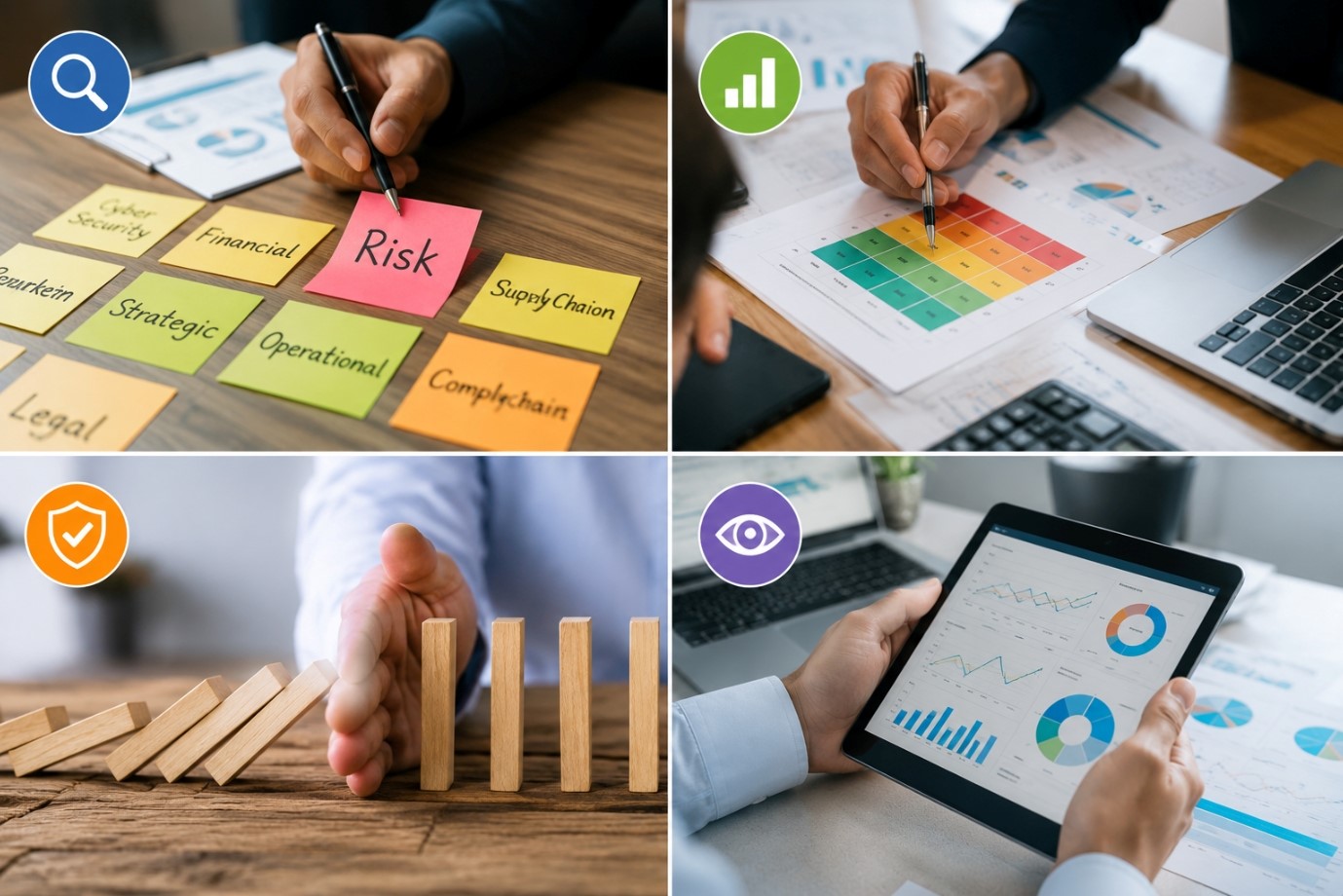
An effective risk management process typically includes:
- Risk Identification: Recognizing potential sources of business risk
- Risk Analysis: Evaluating the likelihood and impact of each risk
- Risk Mitigation: Implementing strategies for avoiding risk or minimizing its effects
- Monitoring & Review: Continuously tracking risks and adapting strategies
Enterprise Risk Management (ERM)
To manage risks holistically, organizations adopt enterprise risk management (ERM), an integrated framework that aligns risk strategies across all departments. ERM ensures that risks are not handled in isolation but are addressed collectively to strengthen resilience and improve decision making.
In essence, risk management is not just about protection, it’s about enabling smarter, more confident business growth.
Why Risk Management is Critical in Manufacturing
In the manufacturing sector, the margin for error is extremely small, making risk management essential for survival and growth. Unlike other industries, manufacturing operations are deeply interconnected, any disruption in one area can ripple across the entire value chain. This is why a structured risk management process is crucial to identify vulnerabilities and implement timely strategies.
- High Dependency on Supply Chains: Manufacturers rely heavily on global and local suppliers, making them highly vulnerable to supply chain risk. Delays in raw materials, logistics disruptions or vendor failures can halt production entirely, leading to significant business risk and revenue loss.
- Equipment Failures = Huge Losses: Unplanned machine downtime is a major operational risk. Without proper management, even a few hours of downtime can result in missed deadlines, increased costs and reduced efficiency, directly impacting financial risk and profitability.
- Workforce Safety Risks: Manufacturing environments involve physical labour and machinery, increasing exposure to accidents and compliance risk. Failure to ensure safety not only affects employees but can also lead to legal penalties and operational shutdowns.
- Global Competition & Financial Pressure: In a competitive global market, inefficiencies quickly translate into losses. Poor financial risk management can weaken a company’s ability to compete, especially when dealing with fluctuating costs and demand.
- Real-World Impact: Consider a factory facing a sudden supplier delay. Production stops for two days, orders are delayed and clients shift to competitors. This single disruption escalates into a major financial risk, highlighting how critical proactive planning and avoiding risk truly are.
Small inefficiencies → big financial risks.
By adopting advanced frameworks and understanding the types of risk management, manufacturers can build resilience, reduce uncertainty and ensure consistent operational performance.
Types of Risks in Industrial Businesses
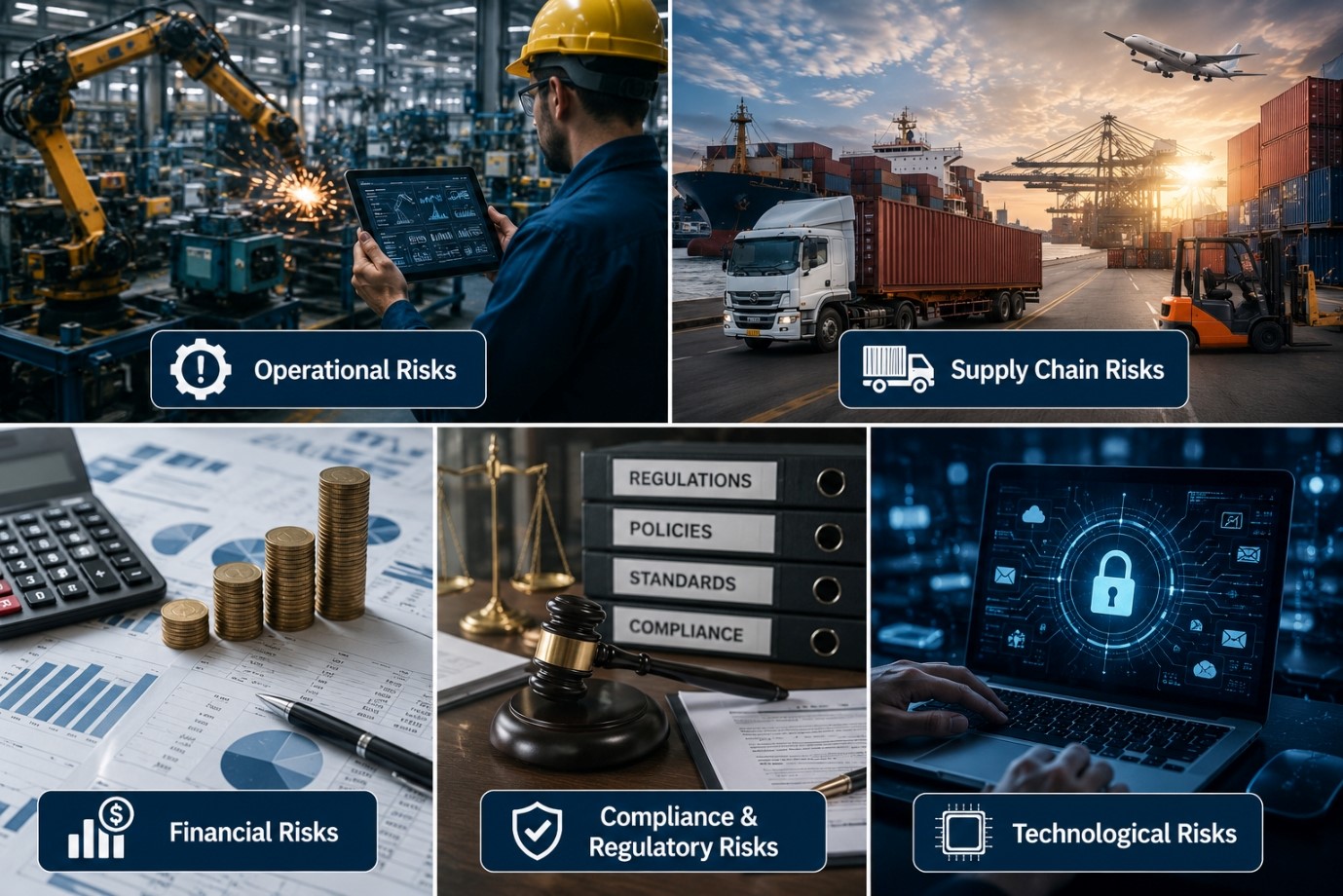
In today’s dynamic industrial landscape, understanding the different types of risk management is crucial for building a resilient and future ready organization. A well-structured process allows businesses to identify potential threats, implement effective risk handling and ensure timely mitigation. Each category of risk requires a focused approach within a broader framework.
⮞ Operational Risks
It arises from internal inefficiencies, system failures or human errors that disrupt day-to-day activities. Effective operational risk management ensures smooth production by minimizing downtime, improving processes and optimizing resource utilization. Poorly managed operations can quickly escalate into serious business risk, affecting both productivity and profitability.
Example: A critical machine breakdown stops production for several hours, delaying deliveries and increasing operational costs.
⮞ Supply Chain Risks
It refers to disruptions in sourcing, procurement or logistics that affect the flow of materials and finished goods. Since manufacturing heavily depends on timely inputs, even minor delays can create major bottlenecks. Proper risk handling and proactive planning are essential to avoid risk in supply chain networks.
Example: A key supplier fails to deliver raw materials on time, forcing the factory to halt production and miss client deadlines.
⮞ Financial Risks
It involves uncertainties related to costs, revenue and market conditions. Through effective management, businesses can implement financial risk control measures to protect profitability and ensure stability. Strong financial risk management practices are vital to manage fluctuations and sustain long-term growth.
Example: Sudden increases in raw material prices significantly reduce profit margins, impacting overall financial performance.
⮞ Compliance & Regulatory Risks
It arises when businesses fail to adhere to laws, regulations or industry standards. Within enterprise risk assessment, this risk is critical as non-compliance can lead to penalties, legal issues and reputational damage. Managing business and risk in this area requires continuous monitoring of policy changes and regulatory requirements.
Example: A company fails to meet updated environmental regulations, resulting in fines and temporary shutdown of operations.
⮞ Technological Risks
Technological advancements bring efficiency but also introduce new vulnerabilities. Risks such as cybersecurity threats or system failures can disrupt operations significantly. Integrating these concerns into the overall risk management strategy ensures better preparedness and resilience.
Example: A cyberattack compromises production systems, causing data loss and halting automated processes for several days.
By addressing each of these risks individually within a comprehensive risk management framework, businesses can strengthen their ability to respond to uncertainties, reduce exposure and build a more secure and sustainable operational model.
Risk Management Process (Step-by-Step)
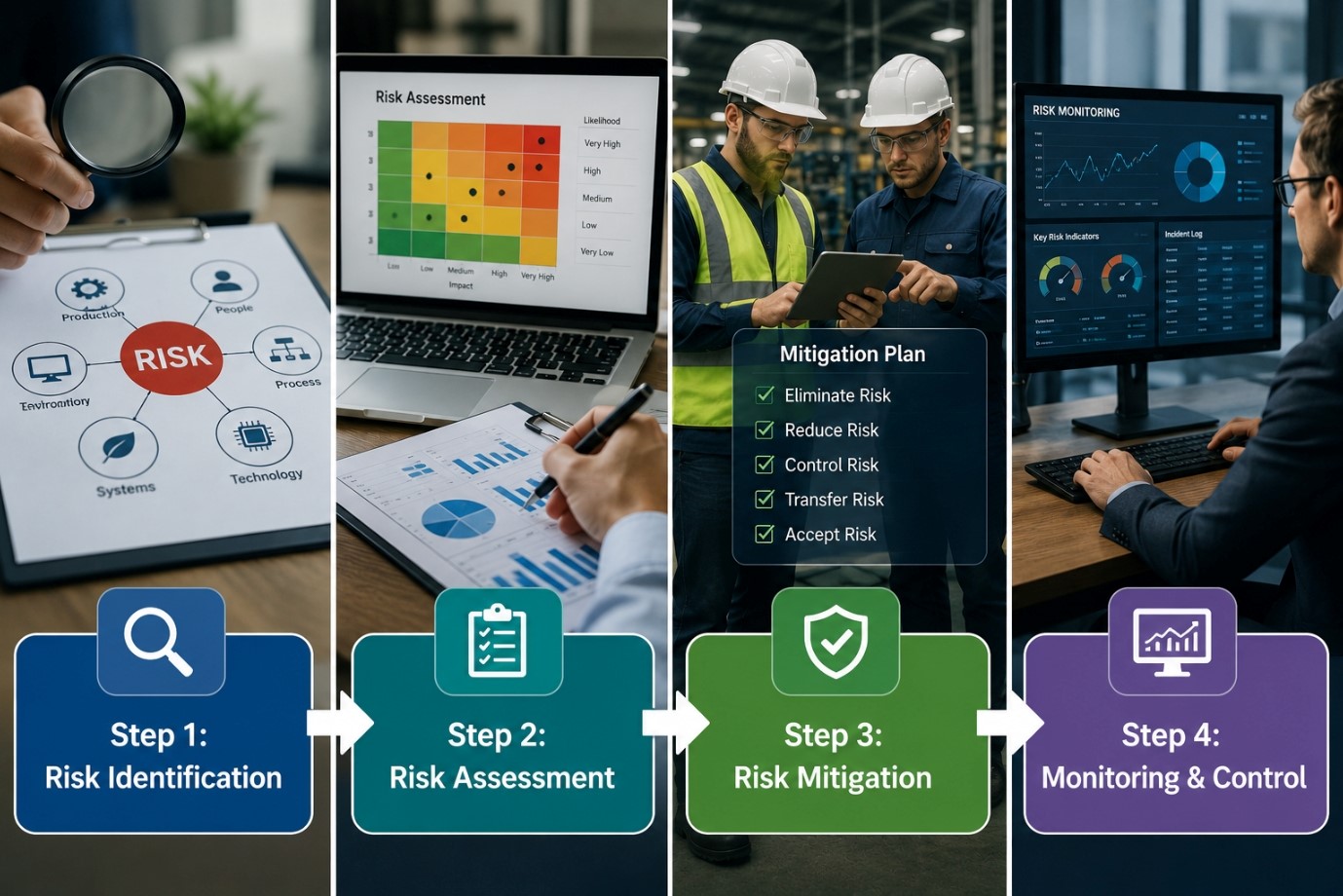
A well-defined process is essential for identifying, evaluating and addressing uncertainties that can impact business performance. By integrating structured risk management practices into daily operations, organizations can strengthen risk handling, improve decision-making and reduce exposure to business risk across all functions. This step-by-step approach forms the backbone of effective risk management.
⮞ Step 1: Risk Identification
The first step in the risk management process involves identifying potential risks that could affect operations, finances or compliance. This is achieved through internal audits, data analysis and process evaluations. Early identification helps businesses recognize critical areas such as operational, supply chain and compliance risk, enabling proactive planning and better control.
⮞ Step 2: Risk Assessment
After identifying risks, the next step is enterprise risk assessment, where each risk is evaluated based on its likelihood and potential impact. This prioritization helps organizations allocate resources efficiently and align strategies with broader finance and risk management objectives. Understanding the severity of each risk or operational challenge is the key to effective planning.
⮞ Step 3: Risk Mitigation
In this phase, organizations implement targeted strategies to manage identified risks. This may involve avoiding risk, reducing its likelihood or transferring it through structured mechanisms. Strong control, improved operational processes and strategic planning are critical to minimizing exposure and ensuring stability.
⮞ Step 4: Monitoring & Control
Risk management is not a one-time activity but a continuous process. Ongoing monitoring and control ensure that risks are tracked, evaluated and updated regularly. This strengthens alignment between business and risk strategies and supports long-term resilience across various types of risk management.
⮞ Simple Framework: Risk Matrix
A widely used tool in risk management is the Risk Matrix, which classifies risks based on:
- Probability: The likelihood of occurrence
- Impact: The severity of consequences
This framework helps organizations prioritize high impact, high-probability risks, enabling more effective handling and optimized resource allocation.
By following this structured risk management process, businesses can proactively manage uncertainties, enhance operational efficiency and build a strong foundation for sustainable and scalable growth.
Modern Risk Management Strategies
In today’s rapidly evolving industrial landscape, adopting modern risk management strategies is essential for staying competitive and resilient. Traditional approaches are no longer sufficient, businesses must embrace proactive and integrated methods of risk handling that not only minimize threats but also unlock operational efficiency.
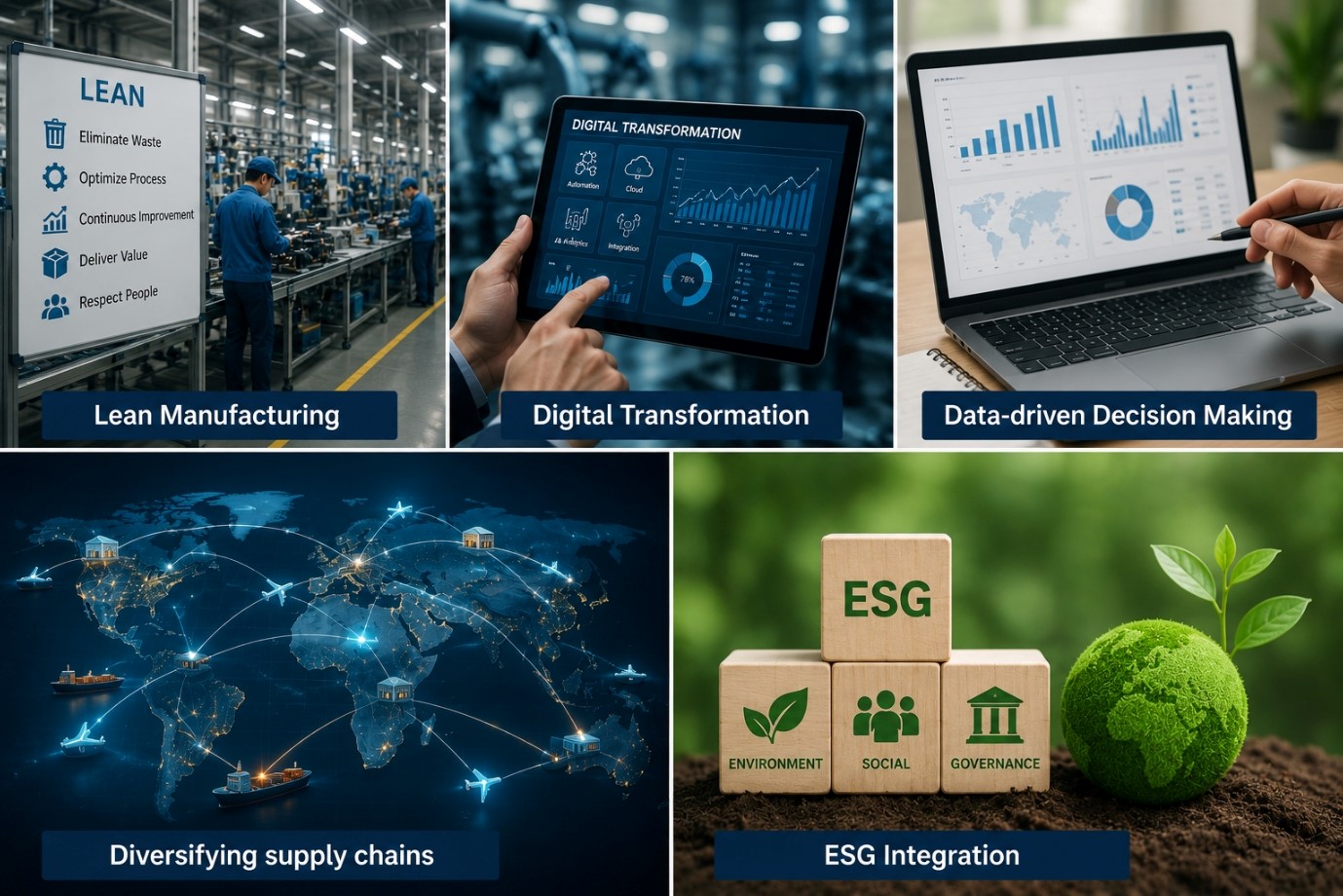
- Lean Manufacturing: One of the most effective strategies is lean manufacturing, which focuses on eliminating waste and improving process efficiency. By streamlining operations, companies can significantly reduce errors, downtime and inefficiencies, key contributors to operational risks. This approach directly supports risk mitigation by addressing issues at their root. You can also go through our dedicated blog on Integrating Lean Management with Industry 4.0.
- Digital Transformation: Another critical advancement is digital transformation. Technologies such as IoT, AI and predictive analytics enable real-time monitoring and predictive maintenance, helping businesses detect potential failures before they occur. This shift from reactive to predictive systems plays a vital role in avoiding risk and ensuring uninterrupted operations.
- Data-driven Decision Making: Additionally, data-driven decision making has become a cornerstone of modern risk management. By leveraging accurate data insights, organizations can anticipate trends, assess vulnerabilities and make informed strategic decisions.
- Diversifying supply chains: It is also crucial. Relying on a single vendor increases exposure, whereas a diversified network enhances flexibility and strengthens overall risk handling capabilities.
- ESG Integration: Finally, integrating ESG (Environmental, Social, Governance) principles ensures long-term sustainability and compliance, reducing reputational and regulatory risks.
Leading consulting firms implement integrated risk frameworks that combine these strategies to deliver measurable results, ensuring businesses are not just protected but also positioned for growth.
Role of Technology in Risk Management
Technology has become a powerful enabler of modern risk management, allowing businesses to move from reactive responses to proactive and predictive risk handling. With the integration of advanced tools and digital systems, organizations can identify potential threats early, implement timely risk mitigation, and significantly improve their ability to avoid risk.
- AI and predictive analytics: One of the most impactful advancements is the use of Artificial Intelligence (AI) and predictive analytics. These technologies analyze historical and real-time data to forecast potential failures and operational disruptions. Instead of waiting for issues to occur, businesses can anticipate and address them in advance.
- IoT in manufacturing: The adoption of IoT (Internet of Things) in manufacturing further strengthens risk management by connecting machines, sensors and systems. This enables seamless data collection and enhances visibility across operations.
- Real-time monitoring: Combined with real-time monitoring, organizations can track performance continuously and detect anomalies instantly, ensuring faster and more effective risk handling.
- ERP Systems: Additionally, ERP (Enterprise Resource Planning) systems play a crucial role by integrating data across departments such as finance, operations and supply chain. This unified view supports better decision-making and strengthens overall risk mitigation strategies.
For example, predictive analytics can identify patterns in machine performance and predict equipment failure before it happens, allowing businesses to take preventive action and avoid costly downtime.
By leveraging these technologies, companies can build a smarter, more resilient approach to risk management, ensuring efficiency, stability and long-term growth.
Common Mistakes Businesses Make
Despite the growing importance of risk management, many businesses still fall into common traps that increase their exposure to uncertainty.
- Reactive instead of Proactive: One of the biggest mistakes is adopting a reactive approach to risk handling, addressing problems only after they occur rather than anticipating them. This often leads to higher costs, operational disruptions and missed opportunities for effective risk mitigation.
- Ignoring Small Risks: Another critical oversight is ignoring small risks. What may seem minor initially can escalate into significant challenges if left unmanaged. Failing to focus on these early warning signs reduces the chances of avoiding risk and weakens overall business resilience.
- Lack of Structured Frameworks: Additionally, many organizations lack structured frameworks for risk management. Without a defined system, risk identification and mitigation become inconsistent and ineffective. This fragmented approach limits the organization’s ability to respond strategically.
- No Expert Consultation: Lastly, the absence of expert consultation can hinder growth. Experienced professionals bring proven methodologies and industry insights that enhance risk handling and ensure comprehensive mitigation of risk.
Businesses that address these gaps proactively are better positioned to minimize uncertainties and build a strong foundation for sustainable success.
Benefits of Effective Risk Management
Implementing a robust risk management framework provides businesses with a strong foundation to operate efficiently and grow sustainably.
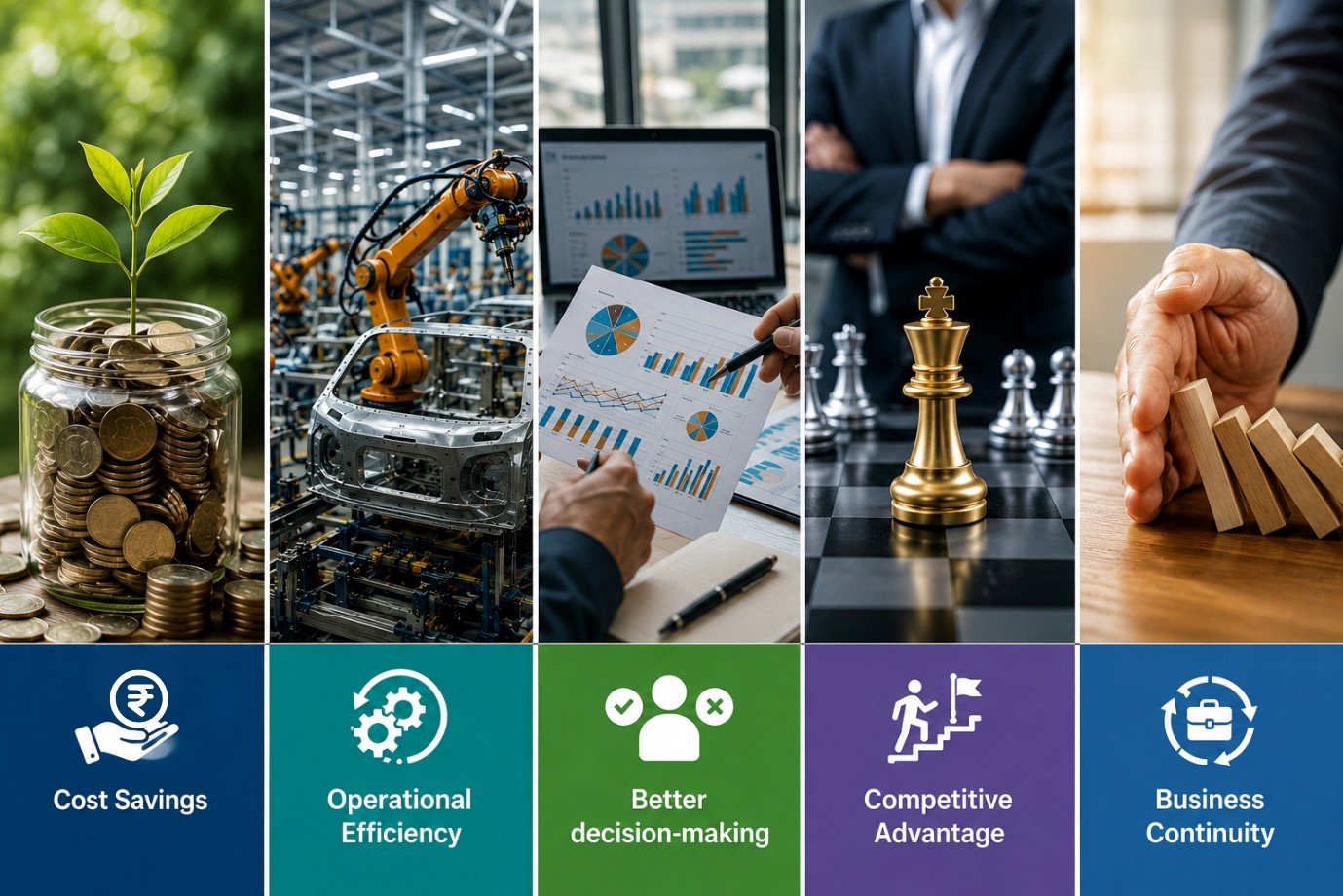
- Cost Savings: One of the most immediate advantages is cost savings. By identifying potential threats early and applying effective risk mitigation strategies, organizations can prevent costly disruptions, reduce downtime and avoid unnecessary expenses.
- Operational Efficiency: Another key benefit is improved operational efficiency. Structured risk handling ensures that processes run smoothly with minimal interruptions. When risks are proactively managed, businesses can optimize resources, streamline workflows and maintain consistent productivity levels.
- Better decision-making: Effective risk management also enhances decision-making. With clear insights into potential risks and their impact, leaders can make informed, data-driven choices. This reduces uncertainty and enables businesses to act with confidence, especially in dynamic market conditions.
- Competitive Advantage: Moreover, organizations that prioritize avoiding risk gain a significant competitive advantage. They are better prepared to handle disruptions, adapt to changes and maintain stability when competitors may struggle.
- Business Continuity: Finally, strong risk mitigation practices ensure business continuity. Whether facing operational challenges, market fluctuations, or external disruptions, companies with a proactive approach to risk handling can sustain operations and recover quickly.
In essence, effective risk management is not just about protection, it is a strategic tool for driving efficiency, resilience and long-term success.
FAQs
A. Risk management is the process of identifying, analyzing and addressing potential threats that can impact business operations. It is important because it helps organizations minimize losses, improve decision-making and ensure long-term stability.
A. A risk management process involves identifying risks, assessing their impact, implementing strategies and continuously monitoring them. This structured approach ensures businesses can proactively manage uncertainties.
A. The types of risk management include operational, financial, strategic and compliance risk management. Each type focuses on different areas of business to reduce vulnerabilities and improve resilience.
A. Operational risk management helps identify inefficiencies and potential disruptions in processes, allowing businesses to streamline operations, reduce downtime and enhance productivity.
A. Financial risk management is essential to control uncertainties related to costs, investments, and market fluctuations. It helps businesses maintain profitability and make informed financial decisions.
A. Risk mitigation involves taking steps to reduce the impact or likelihood of risks. It plays a key role in preventing disruptions, lowering costs and ensuring smooth business operations.
Conclusion
In today’s dynamic and unpredictable business landscape, risk management has evolved from a defensive practice into a powerful growth enabler. Organizations that adopt a structured process are better equipped to identify potential threats, strengthen risk handling and implement effective strategies across all levels of operations. From managing operational risk through efficient systems to addressing financial risk with strong management and risk control, businesses can create a stable and resilient foundation.
A comprehensive approach that includes enterprise risk management and it’s continuous assessment ensures that risks such as supply chain risk, compliance risk and broader business risk are not handled in isolation but as part of an integrated strategy. This alignment enables smarter decision-making and long-term sustainability. Additionally, adopting various types of risk management allows organizations to tailor strategies based on specific challenges, whether operational, financial or strategic.
In today’s volatile environment, businesses cannot afford to rely on reactive measures. Proactive planning, strong finance and risk management, and a focus on avoiding risk are essential to staying competitive.
Ultimately, effective risk management is not just about minimizing losses, it is about unlocking opportunities, improving efficiency and driving sustainable growth in an increasingly complex world.
For more information, go to our Homepage.