

Business Process Management
Every successful business is built on efficient processes.
Yet, many organizations unknowingly lose time, money and productivity because of fragmented workflows, manual operations and inconsistent procedures. As competition intensifies and customer expectations continue to rise, business process management has become an essential strategy for organizations seeking operational excellence. By combining effective process management with continuous process optimisation, businesses can eliminate inefficiencies, improve collaboration and create scalable systems that support sustainable growth.
When business processes are poorly designed or inadequately managed, the consequences extend far beyond operational delays. Inefficient workflows often lead to duplicated efforts, communication gaps, higher operational costs, slower response times and inconsistent product or service quality. They also hinder the decision making process in management, making it difficult for leaders to respond quickly to changing market conditions and evolving customer demands. Conducting a thorough analysis helps organizations identify bottlenecks, uncover improvement opportunities and implement data-driven solutions that enhance overall performance.

Rather than treating process improvement as a one-time initiative, business process management provides a structured framework for continuously designing, monitoring, optimizing and improving organizational workflows. Whether it’s streamlining manufacturing operations, automating repetitive tasks, or improving cross-functional collaboration, BPM enables businesses to operate more efficiently while reducing costs and increasing productivity.
In this comprehensive blog, you’ll learn the fundamentals of business process management, understand it’s life cycle, explore the different types of it and discover practical strategies for optimizing business processes to achieve long-term operational excellence and business growth.
What is Business Process Management (BPM)?
It is a systematic approach to designing, analysing, executing, monitoring and continuously improving organizational workflows to achieve greater efficiency and business performance. Unlike one-time improvement initiatives, business process management focuses on continuously managing business processes to ensure they align with organizational goals, customer expectations and changing market conditions. It combines process analysis, automation, performance monitoring and optimisation to eliminate inefficiencies, reduce operational costs and improve productivity. Modern organizations also leverage advanced business process management tools to automate repetitive tasks, standardize workflows and gain real-time insights for better operational control. By optimizing processes, businesses can improve quality, enhance collaboration and strengthen the decision making process, ultimately creating a more agile and competitive organization.
Business Process Management vs Traditional Process Improvement
Although both approaches aim to improve organizational performance, they differ significantly in their scope, methodology and long-term impact. Understanding these differences helps businesses choose the right strategy for achieving sustainable operational excellence.
- Business Process Management: It is a continuous approach to manage business processes. It combines process analysis, automation and tools to improve workflows, support process optimisation and enhance the decision making process for long-term business success.
- Traditional Process Improvement: It focuses on solving individual process issues rather than improving the entire workflow. It is usually reactive and project-based, with limited monitoring or automation. Unlike business process management, it does not emphasize continuously optimizing processes or driving ongoing operational excellence.
Key Benefits of Business Process Management
Implementing business process management is more than just improving workflows, it is about building an organization that is efficient, agile and prepared for long-term growth. By systematically managing business processes, businesses can eliminate inefficiencies, improve collaboration and create a culture of continuous process optimisation. Below are some of the most significant benefits organizations can achieve.
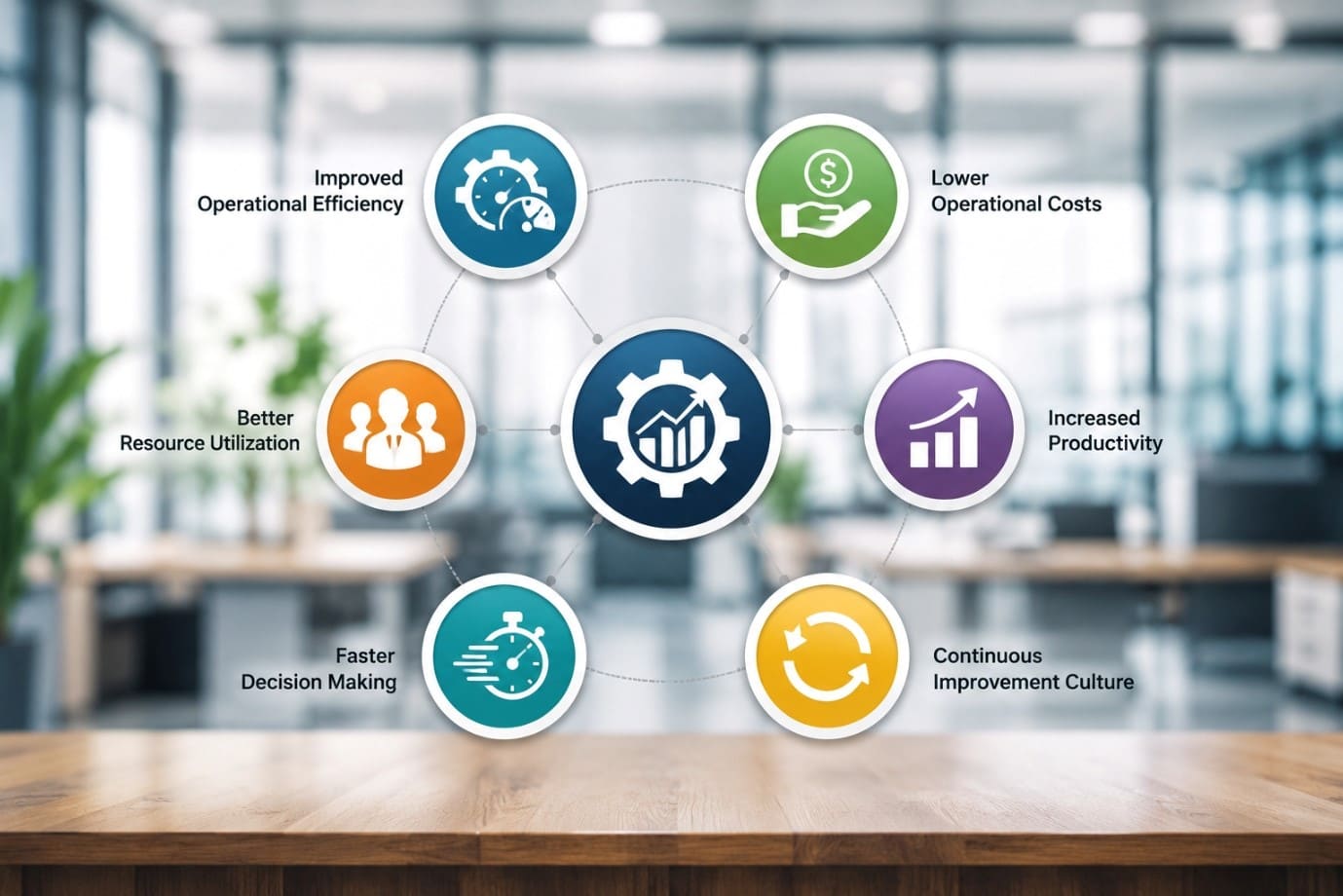
- Improved Operational Efficiency: A well-structured business process management workflow eliminates redundant activities, reduces delays and streamlines operations, enabling teams to work faster and more effectively.
- Lower Operational Costs: By identifying process inefficiencies through analysis, organizations can reduce waste, minimize rework and lower operating expenses without compromising quality.
- Better Resource Utilization: Business process management helps allocate people, equipment and resources more effectively, ensuring every asset contributes to maximum business value.
- Increased Productivity: By optimizing business processes and automating repetitive tasks with business process management tools, employees can focus on strategic and value-added activities, resulting in higher productivity.
- Faster Decision Making: Accurate process data and real-time insights strengthen the decision making process, enabling leaders to make informed decisions quickly and confidently.
- Higher Product Quality: Standardized workflows reduce process variations and human errors, resulting in consistent product quality and improved customer confidence.
- Improved Customer Satisfaction: Efficient processes lead to faster deliveries, better service quality and quicker issue resolution, creating a more positive customer experience and fostering long-term loyalty.
- Regulatory Compliance: Clearly documented processes and standardized procedures help organizations comply with industry regulations, quality standards and internal governance requirements while reducing operational risks.
- Business Scalability: As organizations grow, business process management provides a flexible framework for expanding operations without disrupting existing workflows. Following the business process management life cycle ensures that new processes remain efficient and scalable.
- Continuous Improvement Culture: One of the greatest strengths of business process management is its focus on continuous improvement. Regular performance reviews, employee feedback and ongoing analysis encourage organizations to continuously refine operations, embrace innovation and sustain long-term business success.
Core Components of Business Process Management
Successful business process management is built on a series of interconnected components that help organizations streamline operations, improve efficiency and achieve continuous process optimisation. Each stage plays a vital role in managing business processes, ensuring that workflows remain aligned with business goals and customer expectations.
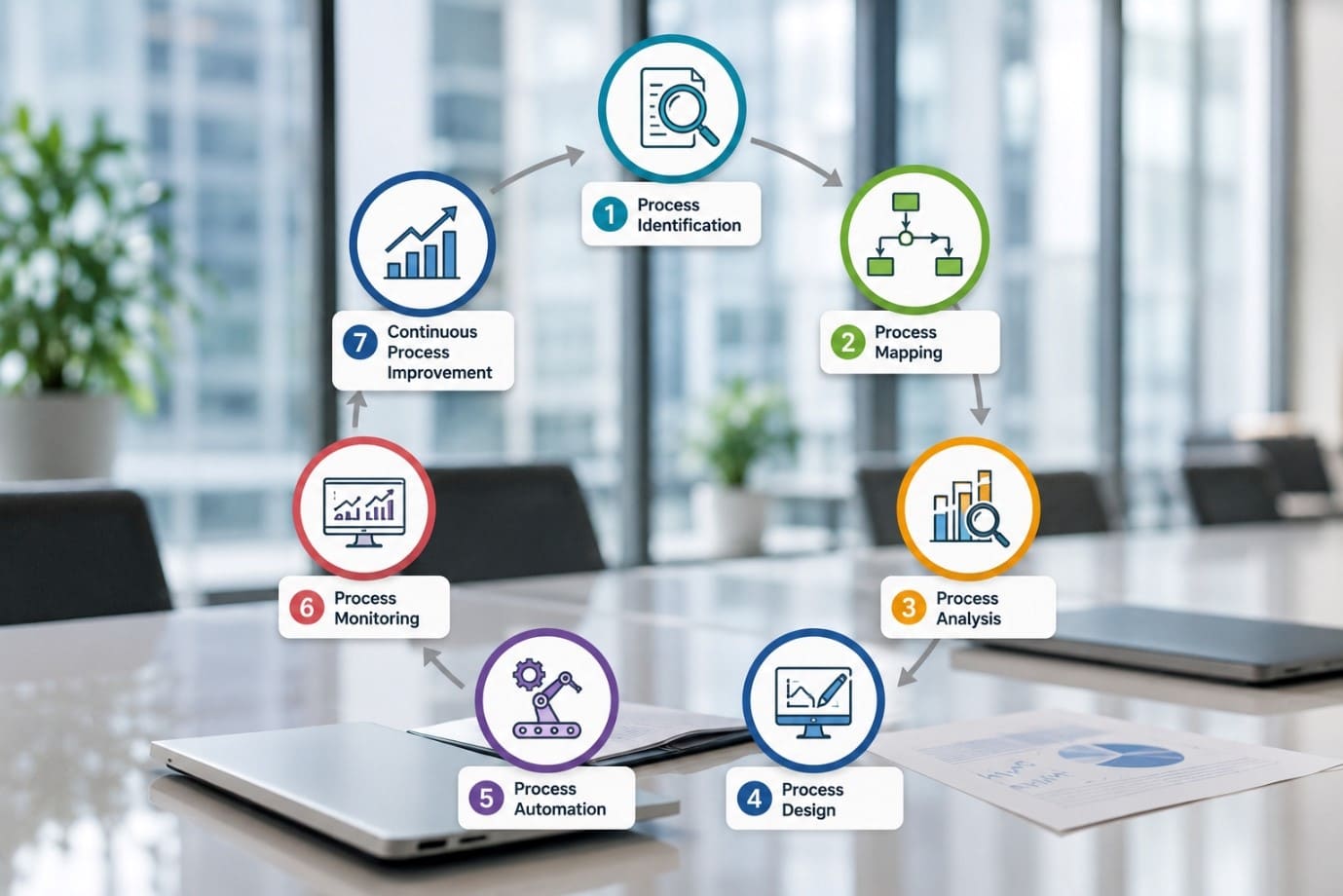
- Process Identification: The first step is identifying the critical business processes that directly impact organizational performance. This includes recognizing workflows across departments, such as procurement, production, sales, customer service or even the outbound process in warehouse, to determine where improvements are needed.
- Process Mapping: Once identified, processes are visually documented to understand every task, responsibility and decision point. A well-defined business process management workflow provides greater transparency and helps teams identify inefficiencies before implementing changes.
- Process Analysis: Through detailed business process analysis, organizations evaluate process performance, identify bottlenecks, uncover root causes of delays and determine opportunities for optimizing business processes while supporting better decision making.
- Process Design: Based on the analysis, workflows are redesigned to eliminate unnecessary steps, improve coordination and create standardized procedures that enhance operational efficiency and consistency.
- Process Automation: Modern business process management tools automate repetitive and time-consuming tasks, reducing manual intervention, minimizing errors and allowing employees to focus on more strategic responsibilities.
- Process Monitoring: Continuous monitoring helps businesses track key performance indicators (KPIs), measure process effectiveness and identify deviations in real time. This ensures that workflows continue to perform as expected.
- Continuous Process Improvement: Business process management is an ongoing journey rather than a one-time project. Regular reviews, performance analysis and employee feedback help organizations continuously refine workflows, embrace innovation and drive long-term operational excellence through continuous process optimisation.
Business Process Management Lifecycle
The business process management life cycle provides a structured framework for continuously improving organizational workflows. Instead of treating process improvement as a one-time initiative, business process management follows a cyclical approach that enables businesses to adapt, innovate and achieve operational excellence. Each stage of the lifecycle contributes to more effective managing business processes and supports long-term process optimisation.
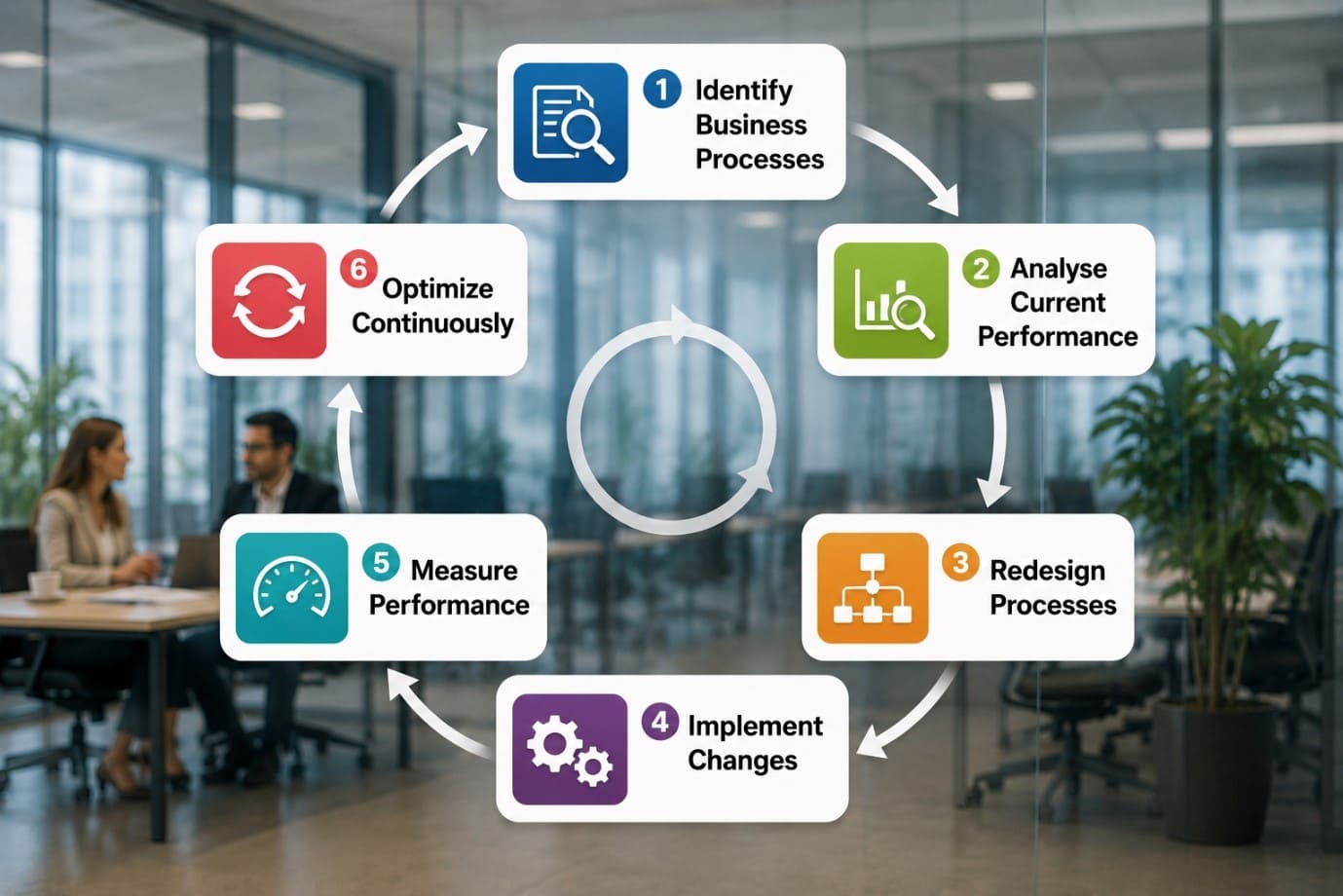
Simple Flow Representation:
Identify Business Processes → Analyse Current Performance → Redesign Processes → Implement Changes → Measure Performance → Optimize Continuously → Repeat
- Identify Business Processes: The first phase involves identifying the critical processes that drive business operations. Organizations define key workflows, prioritize high-impact areas and establish clear objectives for improvement within the overall business process management workflow.
- Analyse Current Performance: The next step is conducting a detailed business process analysis to evaluate existing workflows. This helps identify bottlenecks, inefficiencies and improvement opportunities while providing valuable insights for the decision making process in management.
- Redesign Processes: Based on the findings, organizations redesign workflows to eliminate unnecessary activities, simplify operations and improve collaboration. The goal is to create more efficient processes focused on optimizing business processes.
- Implement Changes: Once the redesigned processes are finalized, they are implemented across the organization. Modern business process management tools help automate workflows, standardize operations and ensure smooth adoption with minimal disruption.
- Process Automation: Modern business process management tools automate repetitive and time-consuming tasks, reducing manual intervention, minimizing errors and allowing employees to focus on more strategic responsibilities.
- Measure Performance: After implementation, businesses monitor key performance indicators (KPIs) to evaluate process effectiveness. Measuring outcomes helps determine whether the desired improvements have been achieved.
- Optimize Continuously: The final stage emphasizes continuous improvement. Regular reviews, performance monitoring and employee feedback enable organizations to refine workflows, strengthen business process management and sustain long-term operational success through ongoing process optimisation.
Common Business Process Challenges Organizations Face
Even successful organizations encounter operational challenges that affect efficiency, profitability and customer satisfaction. Without effective business process management, these issues can grow over time, making managing business processes increasingly difficult. Recognizing these common obstacles is the first step toward implementing successful process optimisation and achieving sustainable business growth.
- Manual Workflows: Manual processes consume valuable time, increase dependency on paperwork and raise the risk of human errors. Adopting business process management tools helps automate repetitive tasks and improve operational efficiency.
- Process Duplication: When multiple teams unknowingly perform the same tasks, organizations experience wasted effort and higher operational costs. A well-defined business process management workflow eliminates duplication by clearly defining roles and responsibilities.
- Lack of Visibility: Without proper process tracking, managers struggle to monitor workflow performance or identify bottlenecks. Conducting regular analysis of business processes provides valuable insights that support better operational control and the decision making process in management.
- Poor Communication: Ineffective communication between departments often results in misunderstandings, project delays and inconsistent execution. Standardized workflows improve collaboration and information sharing across teams.
- Delayed Approvals: Lengthy approval cycles slow down projects, procurement and customer responses. Streamlined workflows and automation accelerate approvals while improving accountability.
- Data Silos: When business data is stored across disconnected systems, collaboration becomes difficult. Integrated business process management enables departments to access accurate information and work more efficiently.
- Inconsistent Procedures: Different teams following different methods often produce inconsistent results. Standardized processes ensure uniform quality and simplify optimizing business processes across the organization.
- High Operating Costs: Inefficient workflows, duplicated efforts, and process delays contribute to unnecessary expenses. One of the key benefits of business process management is reducing these costs through continuous improvement.
- Quality Issues: Poorly managed processes increase the likelihood of defects, rework and customer complaints. Following the business process management life cycle helps maintain consistent quality throughout every stage of operations, including critical functions such as the outbound process in warehouse.
- Employee Resistance to Change: Employees may hesitate to adopt new processes without proper guidance. Providing business process management training and selecting the appropriate type of business process management helps teams embrace change, improve adoption and contribute to long-term operational excellence.
How Business Process Management Improves Manufacturing Operations
Manufacturing success depends on well-coordinated processes that connect every stage of production. By implementing business process management, manufacturers can streamline operations, reduce inefficiencies and improve collaboration across departments. A structured approach to managing business processes not only increases productivity but also supports long-term process optimisation and sustainable business growth.

- Production Planning: Effective production planning ensures that machines, materials and manpower are available when needed. Through process analysis, manufacturers can create realistic production schedules, minimize downtime, balance workloads and improve overall production efficiency. For more information, you can read our detailed blog on Product Planning and Management.
- Inventory Management: Efficient inventory management prevents overstocking and stock shortages while improving inventory accuracy. A standardized business process management workflow helps businesses maintain optimal inventory levels, reduce carrying costs and ensure uninterrupted production. You can find the detailed information in our comprehensive blog on Inventory Supply Chain Management.
- Supply Chain Coordination: A connected supply chain enables seamless communication between suppliers, production teams, warehouses and logistics partners. Business process management improves coordination, reduces delays and ensures materials and finished goods move efficiently throughout the supply chain.
- Procurement: Optimized procurement processes simplify vendor selection, purchase approvals and material sourcing. This reduces procurement cycle times, improves supplier performance and helps organizations control purchasing costs.
- Quality Management: Standardized quality control procedures help detect defects early, reduce rework and maintain product consistency. Reliable process data also strengthens the decision making process in management, allowing leaders to resolve quality issues proactively.
- Maintenance Planning: Planned preventive maintenance supported by business process management tools minimizes unexpected equipment failures, reduces production interruptions and improves the lifespan of manufacturing assets.
- Warehouse Operations: Well-defined warehouse processes improve inventory movement, storage and dispatch activities. Optimizing the outbound process in warehouse ensures faster order fulfilment, accurate shipments and better inventory visibility.
- Customer Order Fulfilment: An integrated workflow enables faster order processing, efficient production scheduling and timely deliveries. This improves customer satisfaction while strengthening reliability and business reputation.
- Lean Manufacturing Integration: Lean Manufacturing and business process management work together to eliminate waste and improve operational efficiency. By optimizing business processes, following the business process management life cycle, investing in business process management training and adopting the right type, manufacturers can unlock its long-term benefits and build a culture of continuous improvement.
Business Process Management Methodologies
Modern organizations rely on proven methodologies to improve efficiency, reduce waste and achieve operational excellence. While each methodology has its own focus, business process management acts as the foundation that connects them through a structured approach to managing business processes. By combining these methodologies with continuous process optimisation, organizations can build standardized, scalable and high-performing operations.
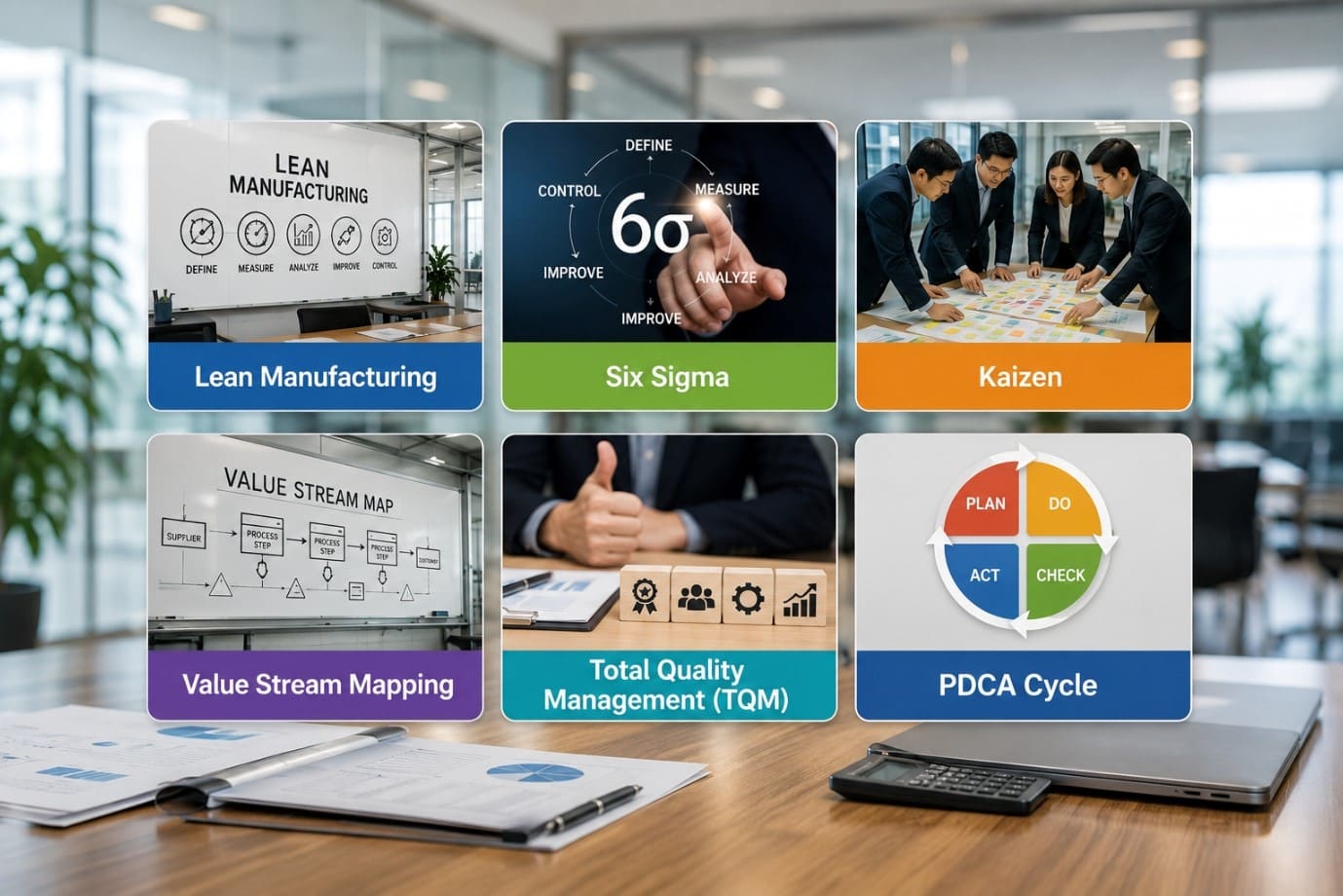
- Lean Manufacturing: It focuses on eliminating non-value-added activities and maximizing customer value. When integrated with business process management, Lean helps organizations streamline workflows, reduce waste and create a more efficient workflow. You can also go through our dedicated blog on Integrating Lean Manufacturing with Industry 4.0.
- Six Sigma: It aims to reduce process variation and defects using data-driven techniques. Through detailed analysis, organizations can identify root causes of inefficiencies, improve quality and strengthen the decision making process in management. For more information, you can read our detailed blog on Six Sigma concept.
- Kaizen: It promotes continuous, incremental improvements involving employees at every level. Supported by the business process management life cycle, Kaizen encourages regular process reviews and continuous optimizing processes for long-term operational excellence. For detailed information, read our comprehensive blog on Kaizen concept.
- Value Stream Mapping: It provides a visual representation of every step in a process, helping organizations identify bottlenecks and unnecessary activities. It complements business process management by improving process visibility and enabling more effective workflow redesign. You can go through our in-depth blog on Value Stream Mapping.
- Total Quality Management (TQM): It emphasizes organization-wide quality improvement and customer satisfaction. Standardized processes, supported by business process management tools, help maintain consistent quality while reducing errors across manufacturing and service operations, including the outbound process in warehouse. For more details, you can read our blog on Total Quality Management(TQM).
- PDCA Cycle: It provides a structured framework for testing and implementing improvements. It aligns perfectly with business process management by supporting continuous monitoring, evaluation and process optimisation. Also read our comprehensive blog on PDCA cycle or Deming cycle.
Together, these methodologies enhance the benefits of business process management by creating a culture of continuous improvement. Combined with effective training and the right type of business process management, they enable organizations to improve efficiency, reduce costs and achieve sustainable business growth.
Business Process Management Tools and Technologies
Technology has become a key enabler of successful business process management. Modern organizations rely on advanced business process management tools to automate workflows, improve visibility and make data-driven decisions. By integrating the right technologies, businesses can simplify managing processes, accelerate process optimisation and build a more efficient and scalable operation.
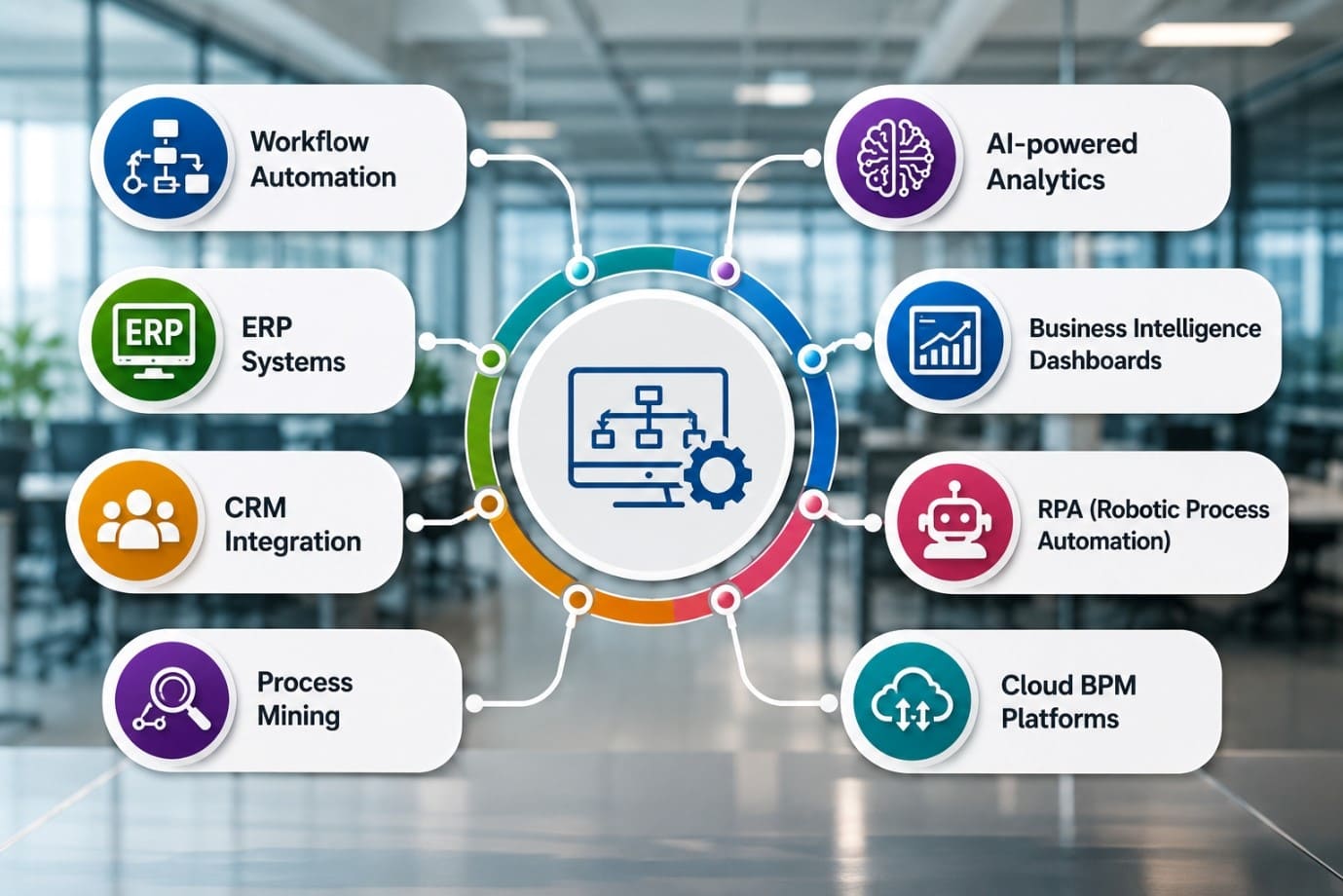
- Workflow Automation: It eliminates repetitive manual tasks by automatically routing approvals, notifications and work assignments. This creates a more efficient workflow, reducing delays and improving overall productivity.
- ERP Systems: These systems connect departments such as finance, procurement, inventory, production and sales through a centralized platform. This improves collaboration and supports more effective decision making process in management.
- CRM Integration: These systems integrate customer data with operational processes, enabling businesses to deliver personalized service, improve communication and respond to customer needs more efficiently.
- Process Mining: It uses system-generated data to uncover how processes actually operate. Combined with business process analysis, it helps organizations identify bottlenecks, detect inefficiencies and discover opportunities for optimizing business processes.
- AI-powered Analytics: Artificial Intelligence analyses large volumes of operational data to predict trends, identify risks and recommend improvements. These insights help organizations make faster and more informed business decisions.
- Business Intelligence Dashboards: These provide real-time visibility into key performance indicators (KPIs), allowing managers to monitor operations, evaluate performance and support every stage of the business process management life cycle.
- RPA (Robotic Process Automation): It automates repetitive, rule-based tasks such as invoice processing, data entry and inventory updates. It reduces human errors while improving efficiency across operations, including the outbound process in warehouse.
- Cloud BPM Platforms: These platforms provide flexibility, scalability and remote accessibility, making it easier to implement different types of business process management across multiple locations. Combined with effective training, these technologies maximize the benefits of business process management and help organizations continuously improve their operations.
Best Practices for Successful Business Process Management Implementation
Implementing business process management successfully requires more than introducing new workflows or technologies. It demands a strategic approach that aligns people, processes and technology with organizational objectives. By following these best practices, businesses can maximize the benefits of business process management and build a culture of continuous improvement.
- Align BPM with Business Goals: Every business process management initiative should support the organization's strategic goals. Clearly defined objectives help prioritize improvement efforts and ensure measurable business outcomes.
- Map Existing Processes First: Before making changes, document and understand current workflows through business process analysis. Mapping existing processes helps identify bottlenecks, eliminate redundancies and create a stronger workflow.
- Involve Stakeholders: Successful management of business processes requires collaboration across departments. Engaging employees, managers and leadership ensures better adoption and practical process improvements.
- Standardize Workflows: Creating standardized procedures improves consistency, reduces errors and makes operations easier to manage across multiple teams and locations.
- Measure Everything: Track process performance using relevant KPIs to evaluate efficiency, quality and productivity. Reliable data supports better decision making process in management and continuous improvement.
- Leverage Technology: Implement modern business process management tools to automate repetitive tasks, improve visibility and accelerate process optimisation across the organization.
- Train Employees: Providing regular training equips employees with the skills needed to adopt new workflows, use digital tools effectively and embrace change confidently.
- Encourage Continuous Improvement: Follow the business process management life cycle by regularly collecting feedback, reviewing performance and optimizing business processes instead of treating improvement as a one-time project.
- Monitor KPIs Regularly: Continuously monitor operational metrics across all business functions, including critical areas such as the outbound process in warehouse, to identify improvement opportunities and maintain consistent performance.
- Review and Optimize Frequently: Business requirements evolve over time, making regular process reviews essential. Selecting the right types of business process management and refining workflows ensures long-term efficiency, scalability and operational excellence.
Why Partner with Business Process Management Consultants?
Implementing business process management successfully requires the right expertise, strategic planning and industry knowledge. While organizations understand their operations, experienced consultants bring an objective perspective and proven methodologies that accelerate results. By partnering with experts, businesses can overcome operational challenges, improve efficiency and maximize the long-term benefits of business process management.
- Expert Process Assessment: Consultants perform in-depth business process analysis to evaluate existing workflows, identify bottlenecks and uncover improvement opportunities. Their expertise helps organizations build a more effective business process management workflow.
- Industry Best Practices: Experienced consultants apply proven methodologies, advanced tools and right types of business process management to deliver practical, industry-specific solutions that drive measurable results.
- Faster Implementation: With structured planning and a well-defined business process management life cycle, consultants ensure faster implementation while minimizing disruptions to daily operations.
- Cost Savings: By continuously optimizing business processes, consultants eliminate inefficiencies, reduce waste, improve resource utilization and lower operating costs across the organization, including critical functions like the outbound process in warehouse.
- Reduced Business Risks: Standardized processes, data-driven insights and improved decision making process in management help organizations reduce operational risks, maintain compliance and adapt more effectively to changing business conditions.
- Sustainable Operational Excellence: Beyond implementation, consultants support managing business processes through continuous monitoring, performance reviews and business process management training. This empowers employees, encourages continuous improvement and helps organizations sustain operational excellence and long-term business growth.
Also Read: Advanced Business Management Services
FAQs
A. The business process management life cycle typically includes process identification, business process analysis, process redesign, implementation, performance monitoring and continuous improvement. Following these stages ensures sustainable optimization of business processes across the organization.
A. Business process management enhances manufacturing by improving production planning, inventory control, quality management and the outbound process in warehouse. It helps manufacturers streamline operations, reduce waste and improve overall efficiency.
A. Almost every industry can benefit from business process management, including manufacturing, healthcare, retail, logistics, banking, IT and telecommunications. Different types of business process management can be tailored to meet the specific operational needs of each industry.
A. Business process management training equips employees with the knowledge and skills needed for effectively managing business processes, adopting new technologies and supporting continuous process improvement. Well-trained teams play a vital role in ensuring successful BPM implementation and long-term business success.
A. By optimizing business processes, organizations eliminate redundant activities, reduce process delays, improve resource allocation and minimize rework. This leads to lower operational costs while maintaining high-quality products and services.
Conclusion
In an increasingly competitive and fast-changing business environment, business process management is no longer a choice, it is a strategic necessity for organizations striving to achieve operational excellence and sustainable growth. Businesses that focus on managing business processes through a structured and data-driven approach are better equipped to eliminate inefficiencies, improve collaboration and respond quickly to evolving customer and market demands. By leveraging business process analysis, implementing modern management tools and following a structured life cycle, organizations can create streamlined workflows that deliver measurable and lasting results.
Continuous process optimisation is the key to building resilient and future-ready businesses. From production planning and procurement to customer service and the outbound process in warehouse, every process presents an opportunity for improvement. Organizations that invest in optimizing business processes benefit from higher productivity, lower operating costs, improved product quality, faster decision making process in management and greater customer satisfaction. Furthermore, adopting the right type of business process management and investing in training empowers employees to embrace innovation and drive continuous improvement across the organization.
Ultimately, the long-term benefits of business process management extend far beyond operational efficiency. It creates a standardized workflow that supports scalability, strengthens business resilience and provides a lasting competitive advantage.
If your organization is looking to assess existing processes, eliminate operational bottlenecks or accelerate business transformation, partnering with experienced BPM consultants can make a significant difference. Expert guidance can help you identify improvement opportunities, implement best practices and build efficient processes that support long-term operational excellence and business success.
For more information, you can explore our Homepage.