

Inventory Supply Chain Management
In today's fast-evolving business landscape, managing
the flow of materials, products, and information across global networks has become increasingly challenging. As supply chains grow more interconnected and customer expectations continue to rise, businesses must focus on effective inventory supply chain management to maintain operational efficiency and competitiveness. Modern inventory SCM goes beyond simply tracking stock levels, it involves strategically aligning procurement, production, warehousing and distribution activities to ensure seamless operations. A well-planned inventory supply chain strategy enables organizations to respond quickly to market fluctuations, reduce disruptions and maintain a steady flow of goods across the entire value chain.
For manufacturing and industrial organizations, inventory is often one of the largest components of working capital and a critical factor influencing profitability. Excess inventory can lead to higher storage costs, capital lock-up, and inventory obsolescence, while inadequate stock levels can cause production stoppages, delayed deliveries, and lost revenue opportunities. This makes inventory management in supply chain management a crucial business function. By integrating inventory and supply chain management practices, companies can achieve the optimal balance between stock availability and cost control. Effective supply chain inventory management ensures that the right materials and products are available when needed without carrying unnecessary inventory costs.

As businesses continue to navigate supply chain uncertainties, the importance of data-driven inventory planning and optimization has never been greater. Organizations that invest in robust inventory supply chain management practices can improve cash flow, enhance customer satisfaction, increase supply chain visibility, and strengthen operational resilience. In this blog, we will explore the key concepts of inventory SCM, common inventory challenges, proven optimization strategies, emerging technologies, and industry best practices that help businesses build agile, efficient, and future-ready supply chains.
What is Inventory Supply Chain Management?
Inventory supply chain management refers to the strategic process of planning, controlling, tracking and optimizing inventory throughout the entire supply chain. It ensures that the right materials, components and finished products are available at the right place and time while minimizing operational costs. Effective inventory SCM integrates procurement, production, warehousing, transportation and distribution activities to maintain a smooth flow of goods from suppliers to end customers.
At its core, inventory management in supply chain management focuses on balancing inventory availability with business efficiency. Since inventory moves through multiple stages before reaching the customer, businesses must adopt a coordinated approach to inventory and supply chain management to avoid stock shortages, excess inventory and operational disruptions.
The flow of inventory across the supply chain typically includes:
- Procurement of raw materials from suppliers
- Storage and inventory planning at warehouses
- Movement of materials into production facilities
- Conversion into finished goods
- Distribution to customers and end users
This integrated approach to supply chain inventory management helps organizations improve visibility, reduce waste and enhance responsiveness to market demand.
Role of Inventory in Supply Chain Performance
Inventory serves as the backbone of every manufacturing and distribution operation. Different types of inventory play unique roles in supporting an efficient inventory supply chain:
- Raw Materials: Essential inputs required for manufacturing processes.
- Work-in-Progress (WIP): Semi-finished products moving through production stages.
- Finished Goods: Completed products ready for customer delivery.
- Spare Parts and Maintenance Inventory: Critical components used to maintain equipment reliability and minimize downtime.
Managing these inventory categories effectively is a key objective of successful inventory supply chain management.
Why Inventory Management Matters
Strong supply chain inventory management directly impacts overall business performance by:
- Improving customer service levels through product availability
- Ensuring uninterrupted production and operational continuity
- Reducing carrying, storage and procurement costs
- Optimizing working capital utilization
- Increasing profitability and return on investment
- Strengthening supply chain resilience during disruptions
As supply chains become increasingly complex, organizations that prioritize inventory management in supply chain management gain a significant competitive advantage through greater efficiency, cost control and customer satisfaction.
Key Components of Inventory Supply Chain Management
Successful inventory supply chain management relies on several interconnected processes that ensure inventory is available when needed while minimizing costs and operational risks. By integrating these key components, organizations can strengthen inventory and supply chain management, improve efficiency and maintain better control over inventory movement across the value chain.
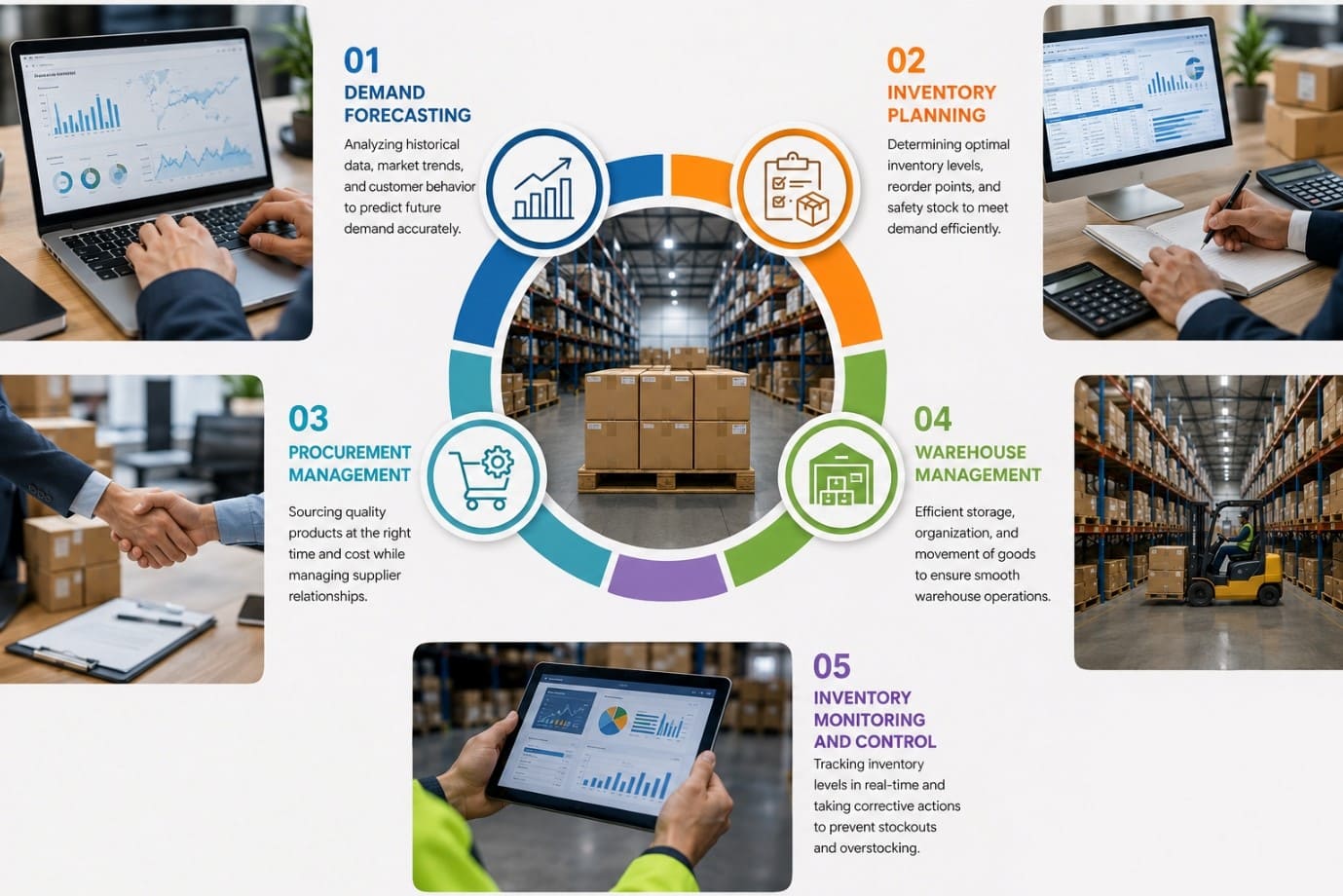
⮞ Demand Forecasting
It is the foundation of effective inventory SCM. It involves predicting future customer demand using historical sales data, consumption patterns, seasonal fluctuations and market trends. Accurate forecasting enables businesses to align production and procurement activities with actual demand, reducing the risk of overstocking or stockouts. Strong forecasting practices are essential for effective supply chain inventory management and long-term operational stability. You can also go through our dedicated blog on Demand Planning in Supply Chain Management.
⮞ Inventory Planning
It focuses on determining optimal stock levels to meet business requirements without carrying excess inventory. It includes:
- Establishing safety stock levels to handle demand variability
- Defining reorder points for timely replenishment
- Balancing inventory availability with carrying costs
- Managing different types of inventory across the supply chain
Effective planning strengthens both inventory and supply chain performance while supporting uninterrupted operations.
⮞ Procurement Management
Procurement plays a vital role in inventory management in supply chain management by ensuring materials are sourced efficiently and delivered on time. Key activities include:
- Supplier coordination and collaboration
- Lead time management
- Vendor performance evaluation
- Strategic sourcing decisions
Efficient procurement helps improve supply chain and inventory control while reducing supply disruptions.
⮞ Warehouse Management
It ensures inventory is stored, tracked and handled efficiently. Important functions include:
- Storage optimization
- Inventory visibility
- Material handling efficiency
- Space utilization improvement
A well-managed warehouse enhances the overall performance of the inventory supply chain.
⮞ Inventory Monitoring and Control
Continuous monitoring is critical for maintaining accurate inventory records and operational efficiency. Businesses use:
- Cycle counting programs
- Regular stock audits
- Inventory tracking systems
- Real-time reporting tools
These practices improve and strengthen inventory and supply chain management and provide better visibility for informed decision-making across the entire supply chain.
Types of Inventory in Supply Chain Management
Understanding the different types of inventory is essential for effective inventory supply chain management. Each inventory category serves a specific purpose within the supply chain and directly impacts production efficiency, customer satisfaction and overall business performance. A well-structured approach to inventory management in supply chain management helps organizations maintain optimal stock levels while improving operational agility and cost control.
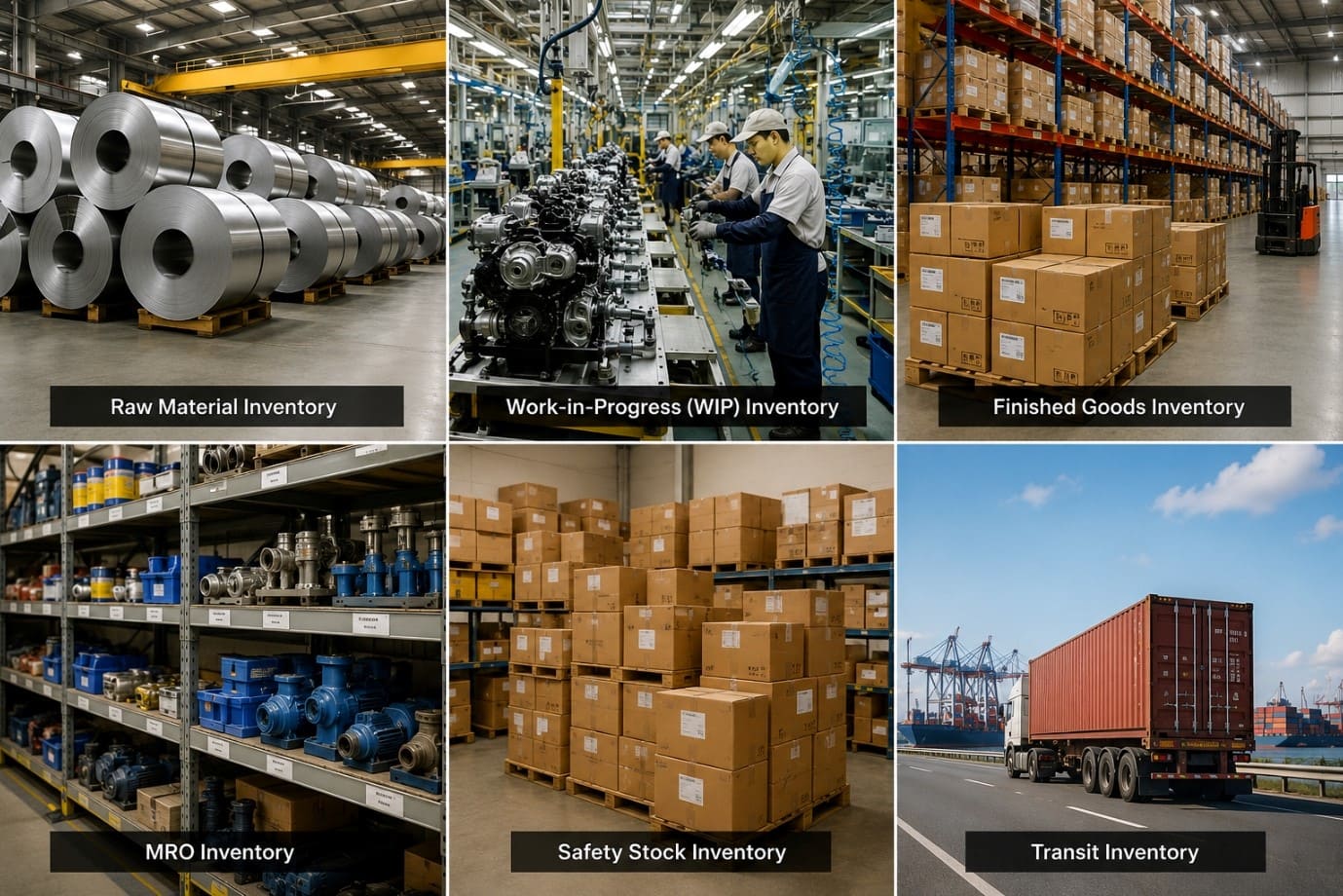
⮞ Raw Material Inventory
Raw material inventory consists of the basic materials, components, and parts required for manufacturing products. These items are sourced from suppliers and stored until they enter the production process.
- Business Impact:
- Ensures uninterrupted production operations
- Reduces the risk of material shortages
- Supports efficient procurement planning
⮞ Work-in-Progress (WIP) Inventory
It includes partially completed products that are moving through various stages of production but are not yet ready for sale.
- Business Impact:
- Reflects production efficiency
- Helps identify manufacturing bottlenecks
- Improves workflow management within the inventory supply chain
⮞ Finished Goods Inventory
It refers to completed products that are ready for distribution, sale or shipment to customers.
- Business Impact:
- Improves order fulfillment speed
- Enhances customer satisfaction
- Supports demand responsiveness and effective supply chain inventory management
⮞ MRO Inventory (Maintenance, Repair and Operations)
It includes spare parts, tools, lubricants, safety equipment and maintenance supplies used to support business operations and equipment reliability.
- Business Impact:
- Minimizes equipment downtime
- Improves asset performance
- Strengthens operational continuity and supply chain and inventory control
⮞ Safety Stock Inventory
It acts as a buffer inventory maintained to protect against unexpected demand spikes, supply delays or forecasting inaccuracies.
- Business Impact:
- Prevents stockouts
- Improves service levels
- Enhances resilience in inventory and supply chain management
⮞ Transit Inventory
It refers to goods that are currently being transported between suppliers, warehouses, manufacturing facilities or customers.
- Business Impact:
- Maintains supply chain flow
- Supports production and distribution schedules
- Improves visibility across the inventory and supply chain
Effective management of these types of inventory is critical for successful inventory SCM. By optimizing each inventory category, organizations can improve inventory supply chain management, enhance operational efficiency, reduce costs and create a more responsive and resilient supply chain network.
Also Read: Types of Supply Chain Management
Common Inventory Supply Chain Challenges Faced by Manufacturers
Despite advancements in technology and planning tools, manufacturers continue to face several challenges in managing inventory efficiently. Poor visibility, unpredictable demand and supply uncertainties can significantly impact operational performance and profitability. Effective inventory supply chain management requires businesses to proactively address these challenges to maintain a resilient and cost-efficient operation. Without strong inventory management in supply chain management practices, organizations risk increased costs, production delays and reduced customer satisfaction.
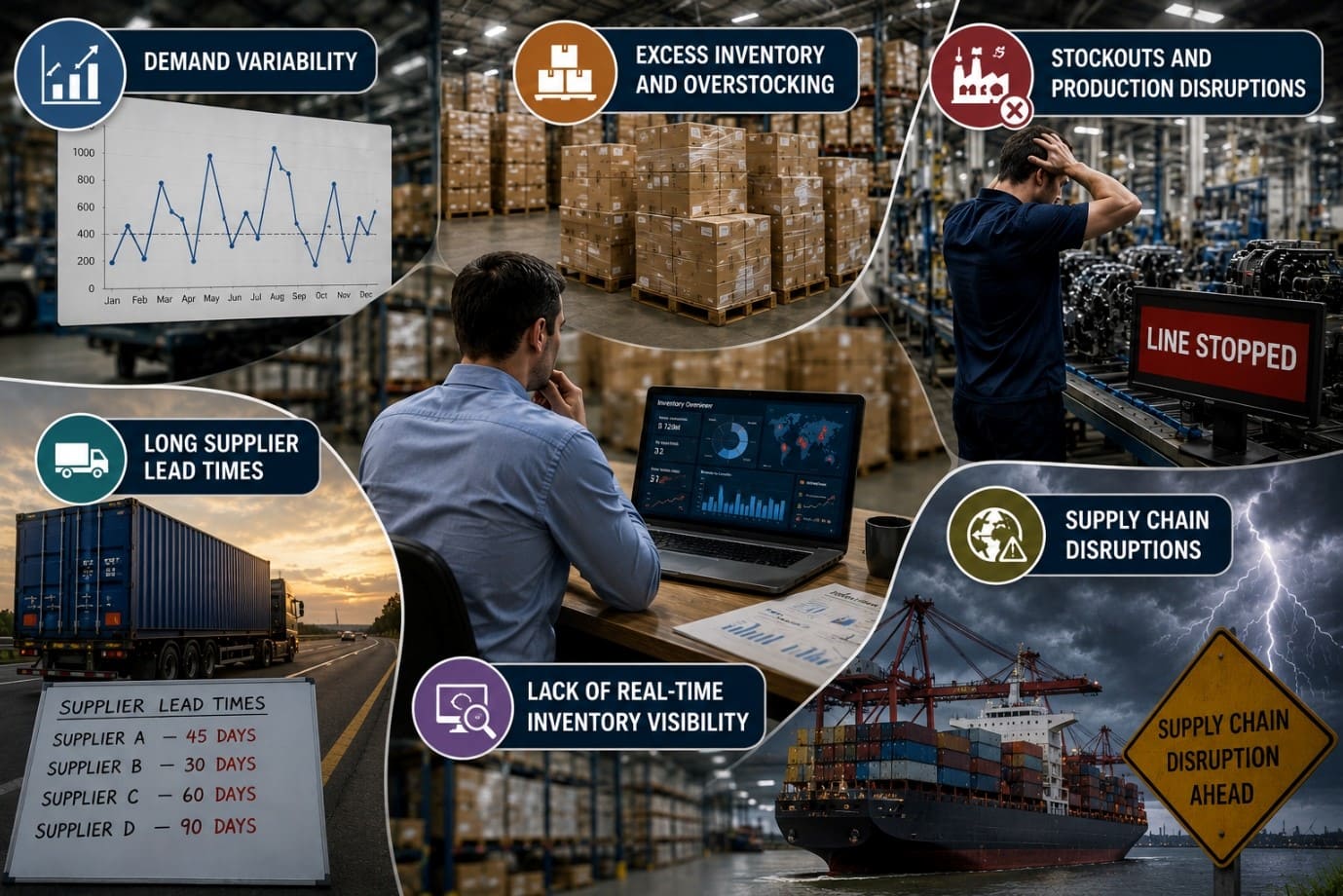
⮞ Demand Variability
Customer demand is rarely constant. Seasonal trends, changing market conditions and shifting consumer preferences can make demand forecasting difficult.
- Impact:
- Inventory imbalances
- Increased carrying costs
- Reduced forecast accuracy
- Challenges in supply chain inventory management
⮞ Excess Inventory and Overstocking
Many organizations maintain excessive inventory to avoid shortages. However, overstocking often leads to unnecessary storage expenses and capital being tied up in non-moving stock.
- Impact:
- Higher warehousing costs
- Increased risk of obsolescence
- Reduced cash flow
- Inefficiencies in inventory and supply chain management
⮞ Stockouts and Production Disruptions
Insufficient inventory can halt production lines and delay customer deliveries. This challenge is particularly critical when managing different types of inventory required for manufacturing operations.
- Impact:
- Lost sales opportunities
- Production downtime
- Lower customer satisfaction
- Weakened inventory supply chain performance
⮞ Long Supplier Lead Times
Extended lead times can create uncertainty in procurement and replenishment planning. Delayed deliveries often affect production schedules and inventory availability.
- Impact:
- Increased safety stock requirements
- Reduced planning flexibility
- Greater pressure on supply chain and inventory control
⮞ Lack of Real-Time Inventory Visibility
Many businesses struggle with fragmented systems and inaccurate inventory data. Limited visibility makes it difficult to track inventory movement across the inventory and supply chain network.
- Impact:
- Poor decision-making
- Inventory inaccuracies
- Delayed response to demand changes
⮞ Supply Chain Disruptions
Global events, transportation issues, raw material shortages and geopolitical uncertainties can severely impact inventory availability and supply continuity.
- Impact:
- Procurement delays
- Increased operational risk
- Higher inventory costs
- Greater complexity in inventory SCM
To overcome these challenges, manufacturers must adopt data-driven inventory supply chain management strategies that improve visibility, forecasting accuracy and operational agility. A proactive approach to inventory and supply chain management enables businesses to minimize risks, optimize inventory levels and maintain a competitive advantage in an increasingly dynamic marketplace.
Benefits of Effective Inventory Supply Chain Management
In an increasingly competitive and demand-driven market, businesses must ensure that inventory is managed strategically across every stage of the supply chain. Effective inventory supply chain management helps organizations maintain optimal stock levels, improve operational efficiency and reduce unnecessary costs. By aligning inventory strategies with broader business objectives, companies can create a more agile and responsive inventory supply chain that supports long-term growth and profitability. Strong inventory management in supply chain management also enables businesses to improve customer satisfaction while maintaining better control over working capital and resources.

⮞ Reduced Inventory Carrying Costs
One of the primary advantages of effective supply chain inventory management is the reduction of inventory carrying costs. Excess inventory often results in higher expenses related to warehousing, insurance, storage, handling and inventory depreciation. By accurately managing different types of inventory, businesses can maintain optimal stock levels and eliminate unnecessary inventory accumulation. This not only reduces operational expenses but also improves overall inventory efficiency.
⮞ Improved Cash Flow
Inventory represents a significant investment for most manufacturing and industrial organizations. When businesses hold excessive stock, a large portion of working capital remains tied up in inventory. Effective inventory and supply chain management helps companies optimize inventory levels, freeing up capital that can be invested in business expansion, technology upgrades or process improvements. Improved cash flow enhances financial stability and supports sustainable growth.
⮞ Better Customer Service Levels
Customer satisfaction depends heavily on product availability and timely deliveries. A well-managed inventory supply chain ensures that the right products are available at the right time, reducing the risk of stockouts and delayed shipments. Through efficient inventory SCM, organizations can improve order fulfillment rates, strengthen customer relationships and build a reputation for reliability in the marketplace.
⮞ Higher Production Efficiency
Manufacturing operations rely on the continuous availability of raw materials, components, spare parts and other critical resources. Effective inventory management in supply chain management ensures that production teams have access to the materials they need without interruption. This reduces downtime, minimizes production bottlenecks and improves overall operational productivity. As a result, businesses can achieve higher output levels while maintaining quality standards.
⮞ Reduced Waste and Obsolescence
Poor inventory planning often leads to excess stock, expired materials and obsolete products. Effective inventory and supply chain strategies help businesses align inventory levels with actual demand patterns, reducing the likelihood of overstocking. By improving inventory accuracy and demand forecasting, organizations can minimize waste, reduce write-offs and maximize the value of their inventory investments.
⮞ Enhanced Supply Chain Resilience
Modern supply chains face numerous risks, including supplier delays, transportation disruptions, market fluctuations and unexpected global events. Strong supply chain and inventory control practices provide greater visibility and flexibility, enabling businesses to respond quickly to changing conditions. By implementing robust inventory supply chain management processes, organizations can strengthen resilience, reduce operational risks and maintain business continuity even during periods of uncertainty.
Ultimately, businesses that prioritize inventory supply chain management gain a significant competitive advantage. By optimizing various types of inventory, improving inventory and supply chain management practices, organizations can achieve lower costs, higher efficiency, stronger customer satisfaction and long-term operational excellence.
Inventory Optimization Strategies for Modern Businesses
In today’s dynamic business environment, maintaining the right inventory levels is critical for operational success. Effective inventory supply chain management requires organizations to adopt strategic inventory optimization techniques that improve availability, reduce costs and enhance efficiency. By leveraging data-driven approaches and modern inventory practices, businesses can strengthen supply chain inventory management, improve responsiveness to market changes and achieve better inventory control.
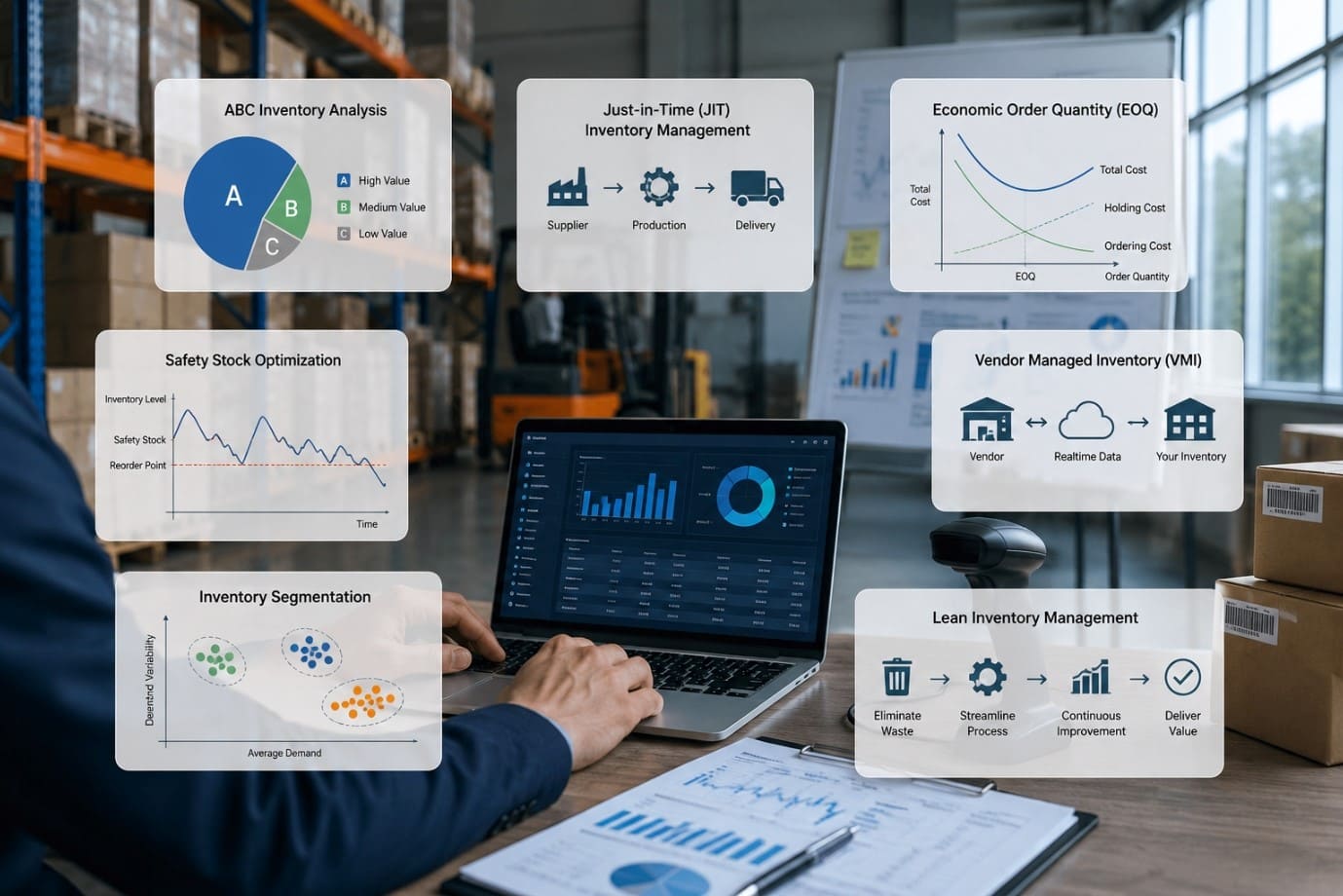
⮞ ABC Inventory Analysis
It is one of the most widely used inventory classification techniques in inventory SCM. It categorizes inventory based on value and importance to the business.
- A Items: High-value items that contribute significantly to revenue but represent a small portion of total inventory. These require close monitoring and strict control.
- B Items: Moderate-value items that require balanced management and regular review.
- C Items: Low-value items that account for a large volume of inventory but have a relatively low financial impact.
This method helps businesses prioritize resources and optimize different types of inventory more effectively.
⮞ Just-in-Time (JIT) Inventory Management
It focuses on receiving materials only when they are needed for production. This approach minimizes excess inventory and storage costs while improving operational efficiency.
- Benefits:
- Lower inventory carrying costs
- Improved cash flow
- Reduced waste
- Limitations:
- Dependence on supplier reliability
- Increased vulnerability to supply disruptions
- Limited flexibility during demand spikes
⮞ Economic Order Quantity (EOQ)
It is a mathematical model used in inventory management in supply chain management to determine the optimal order quantity that minimizes total inventory costs. EOQ helps businesses balance ordering costs with inventory holding costs, leading to more efficient inventory replenishment decisions.
⮞ Safety Stock Optimization
It acts as a buffer against demand fluctuations and supply uncertainties. Optimizing safety stock levels ensures that businesses maintain adequate inventory without overstocking. Effective safety stock planning improves service levels while supporting efficient inventory and supply chain management.
⮞ Vendor Managed Inventory (VMI)
It is a collaborative approach where suppliers monitor and replenish inventory on behalf of their customers. This strategy improves inventory visibility, strengthens supplier relationships and reduces administrative workload. VMI is increasingly becoming an important component of modern inventory supply chain strategies.
⮞ Inventory Segmentation
It involves categorizing products based on demand patterns, profitability, criticality or operational importance. By segmenting inventory, businesses can apply customized replenishment and control strategies for different types of inventory, resulting in more effective resource allocation and improved decision-making.
⮞ Lean Inventory Management
It focuses on eliminating waste throughout the inventory and supply chain while maximizing efficiency and value creation. The goal is to reduce excess inventory, minimize non-value-added activities and streamline inventory flows across operations. Organizations that adopt lean principles can improve productivity, lower costs and strengthen overall inventory supply chain management performance.
By implementing these optimization strategies, businesses can enhance inventory management in supply chain management, improve efficiency and achieve greater visibility, profitability and operational excellence across the entire supply chain network.
The Role of Technology in Inventory Supply Chain Management
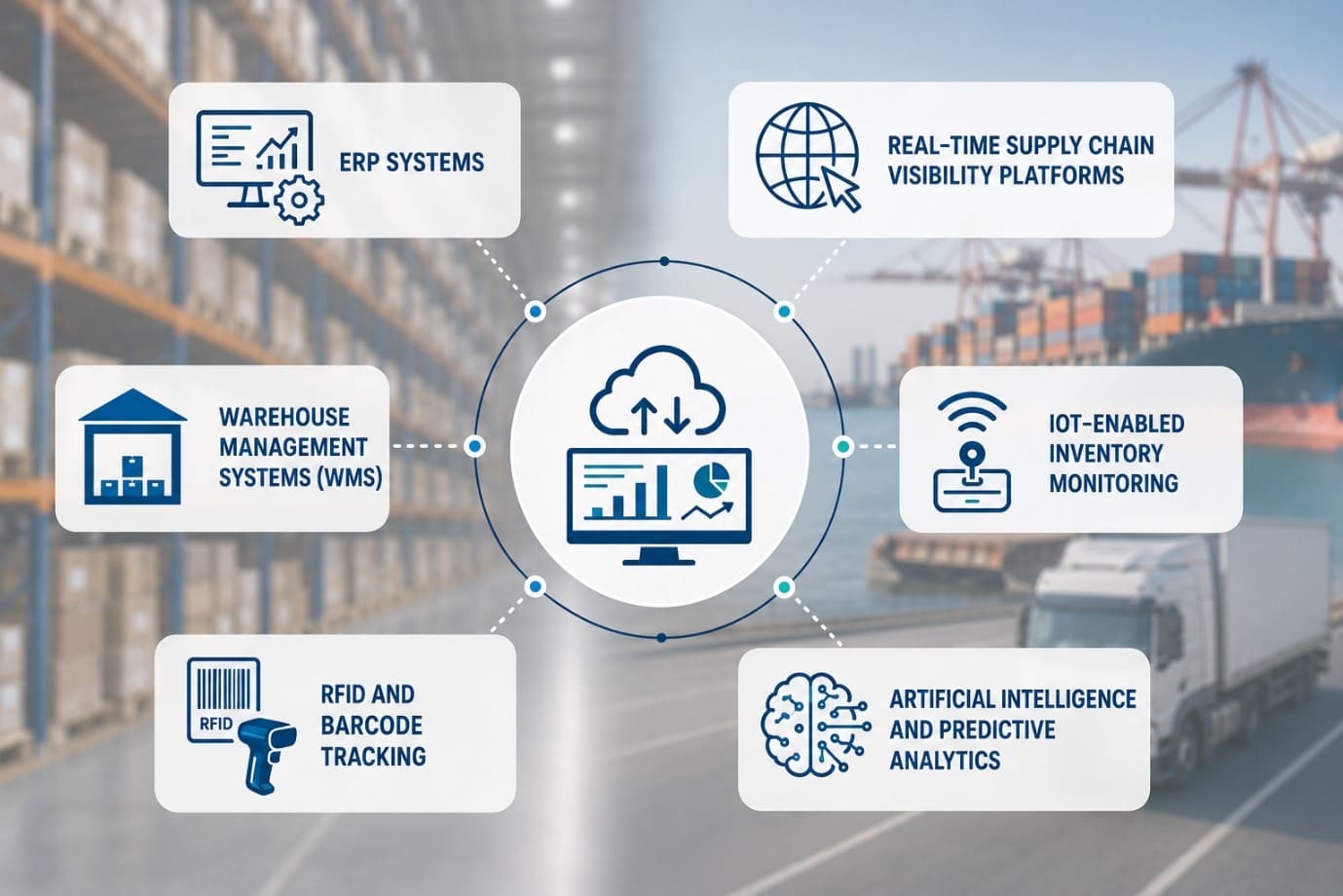
As supply chains become increasingly complex, technology has emerged as a critical enabler of effective inventory supply chain management. Traditional inventory practices that rely on manual processes and disconnected systems often struggle to keep pace with today’s dynamic business environment. Modern digital solutions provide greater visibility, automation and data-driven decision-making, helping organizations optimize supply chain inventory management and improve operational performance. With the rise of Industry 4.0, businesses are leveraging advanced technologies to transform inventory and supply chain management into a more agile, intelligent and connected ecosystem.
⮞ ERP Systems
It serves as the central platform for managing inventory, procurement, production, finance and logistics activities. By integrating data across departments, ERP systems improve inventory accuracy, streamline workflows, and enhance inventory management in supply chain management. Businesses can gain real-time insights into inventory levels, demand forecasts and procurement requirements, leading to better planning and decision-making.
⮞ Warehouse Management Systems (WMS)
It helps organizations optimize warehouse operations by improving inventory tracking, storage utilization and material movement. These systems enhance inventory visibility and support efficient management of various types of inventory, reducing errors and improving order fulfillment performance.
⮞ RFID and Barcode Tracking
These enable accurate and automated inventory identification and tracking. These tools provide real-time data on inventory movement throughout the inventory supply chain, helping businesses reduce manual errors, improve stock accuracy and strengthen supply chain and inventory control.
⮞ IoT-Enabled Inventory Monitoring
It allows businesses to monitor inventory conditions and movements through connected sensors and smart devices. IoT-enabled systems provide real-time information on inventory location, storage conditions and equipment performance, enhancing visibility across the entire inventory and supply chain network.
⮞ Artificial Intelligence and Predictive Analytics
These are transforming modern inventory SCM by enabling more accurate demand forecasting and inventory optimization. These technologies analyze historical data, customer behaviour and market trends to predict future demand patterns. As a result, businesses can reduce excess inventory, prevent stockouts and improve overall inventory supply chain management efficiency.
⮞ Real-Time Supply Chain Visibility Platforms
These provide end-to-end transparency across procurement, production, warehousing and distribution operations. These platforms enable businesses to track inventory in transit, monitor supplier performance and respond quickly to disruptions. Improved visibility strengthens inventory and supply chain management by supporting proactive decision-making and risk mitigation.
⮞ Industry 4.0 and the Future of Inventory Management
Industry 4.0 is reshaping the future of inventory supply chain management through the integration of automation, artificial intelligence, IoT, cloud computing and advanced analytics. Smart factories and connected supply chains allow businesses to make faster, more informed decisions while improving efficiency and reducing operational costs. Organizations that embrace digital transformation can significantly enhance inventory management in supply chain management and build a more resilient and competitive supply chain ecosystem for the future. You can also go through our dedicated blog on Integrating Lean Management with Industry 4.0.
Best Practices for Inventory Supply Chain Management
Achieving excellence in inventory supply chain management requires more than maintaining stock levels, it demands a strategic approach that aligns inventory operations with business goals. By adopting proven best practices, organizations can improve efficiency, reduce costs and strengthen overall inventory and supply chain management performance. The following practices help businesses optimize their inventory supply chain while enhancing operational agility and customer satisfaction.
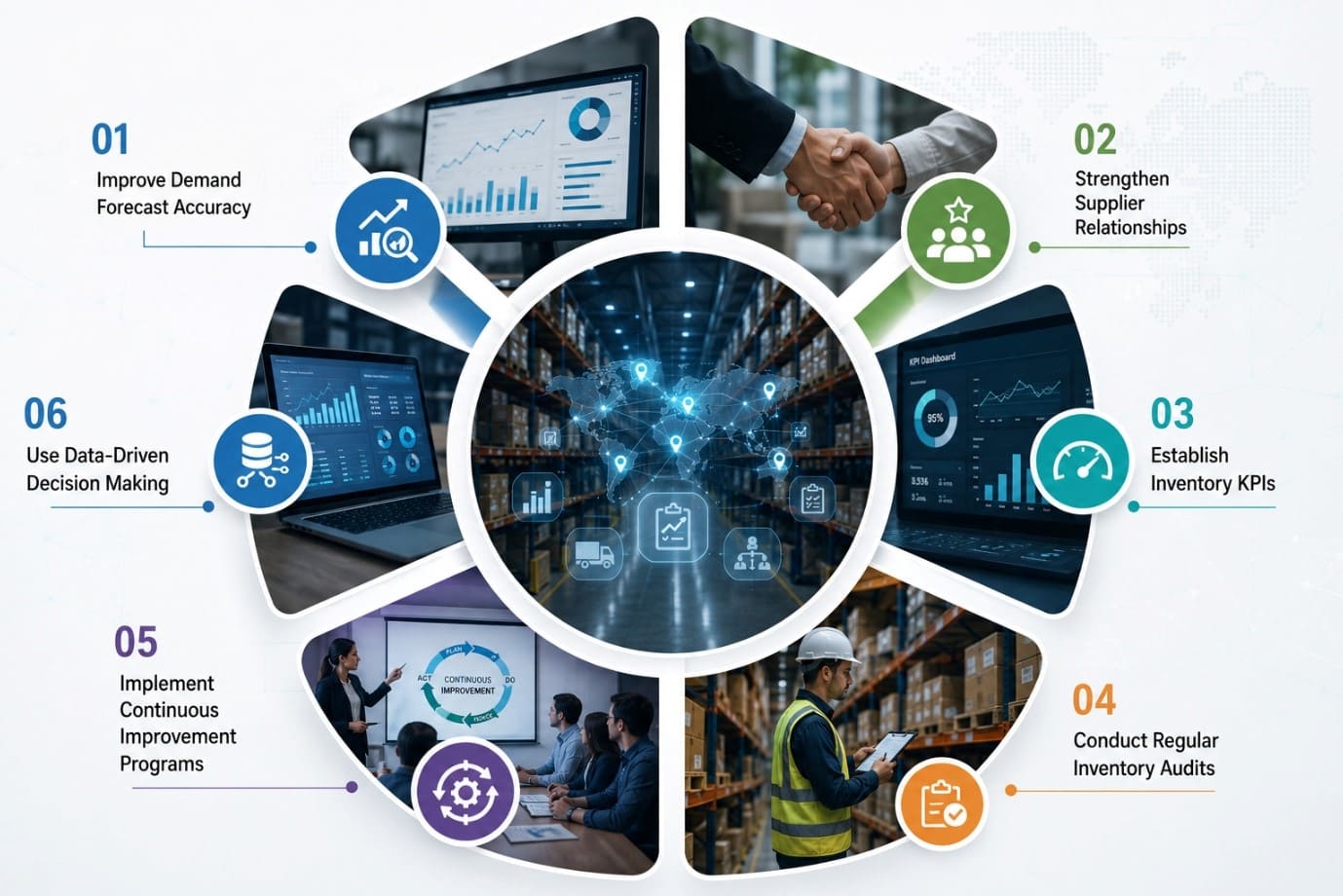
- Improve Demand Forecast Accuracy: Accurate demand forecasting is the foundation of effective inventory management in supply chain management. Businesses should leverage historical sales data, market trends, customer behaviour insights and predictive analytics to anticipate future demand. Better forecasting reduces excess inventory, minimizes stockouts and improves overall supply chain inventory management efficiency.
- Strengthen Supplier Relationships: Strong supplier partnerships contribute significantly to reliable inventory replenishment and operational stability. Regular communication, performance monitoring and collaborative planning can help reduce lead times, improve delivery reliability and strengthen supply chain and inventory control across the organization.
- Establish Inventory KPIs: Measuring performance through key inventory metrics enables businesses to identify improvement opportunities and make informed decisions. Important KPIs include:
- Inventory Turnover: Measures how efficiently inventory is sold and replenished.
- Fill Rate: Evaluates the percentage of customer demand fulfilled immediately.
- Stockout Rate: Tracks the frequency of inventory shortages.
- Carrying Cost: Assesses the total cost of holding inventory.
These metrics help optimize different types of inventory and improve overall inventory SCM performance.
- Conduct Regular Inventory Audits: Periodic inventory audits and cycle counts ensure inventory accuracy and help identify discrepancies, shrinkage or process inefficiencies. Accurate inventory records are essential for maintaining effective inventory and supply chain operations.
- Implement Continuous Improvement Programs: Organizations should regularly review inventory processes and adopt continuous improvement methodologies such as Lean, Kaizen and operational excellence initiatives. These practices help eliminate waste and enhance inventory supply chain management performance over time. You can read our in-depth blog on Kaizen concept.
- Use Data-Driven Decision Making: Modern businesses rely on real-time data and analytics to optimize inventory strategies. Data-driven decision-making improves visibility, enhances forecasting accuracy and supports proactive inventory and supply chain management, resulting in more resilient and efficient supply chain operations.
How Manufacturing Companies Can Build a Resilient Inventory Strategy
In today’s volatile business environment, manufacturers must develop resilient inventory strategies that can withstand disruptions while maintaining operational efficiency. Effective inventory supply chain management enables organizations to balance customer demand, production requirements and cost control, creating a more responsive and sustainable supply chain.
- Balancing Cost and Availability: One of the biggest challenges in inventory supply chain management is maintaining the right balance between inventory availability and carrying costs. Manufacturers must optimize different types of inventory to ensure materials and products are available when needed without locking excessive capital in stock. Achieving this balance is essential for effective supply chain inventory management.
- Building Supply Chain Agility: An agile inventory supply chain allows businesses to respond quickly to demand fluctuations, supply shortages, and changing market conditions. Flexible inventory policies, accurate forecasting and responsive replenishment systems help organizations adapt to uncertainty while maintaining service levels.
- Risk Mitigation Planning: Proactive risk management is a critical component of inventory and supply chain management. Manufacturers should identify potential risks such as supplier disruptions, transportation delays, demand volatility and develop contingency plans to minimize operational impact. For detailed information, you can read our comprehensive blog on Risk Management.
- Multi-Supplier Strategy: Relying on a single supplier can increase supply chain vulnerability. A multi-supplier approach improves sourcing flexibility, reduces dependency risks, and strengthens overall supply chain and inventory control, ensuring greater supply continuity during disruptions.
- Digital Transformation for Inventory Excellence: Modern technologies such as ERP systems, advanced analytics, IoT and Industry 4.0 solutions are transforming inventory SCM. Digital tools provide real-time visibility across the inventory and supply chain, enabling better decision-making, enhanced forecasting accuracy and stronger inventory supply chain management performance. By embracing digital transformation, manufacturers can build resilient, data-driven supply chains capable of sustaining long-term operational excellence.
FAQs
A. Inventory supply chain management refers to the process of planning, controlling, tracking and optimizing inventory throughout the supply chain. It ensures that raw materials, work-in-progress inventory and finished goods are available when needed while minimizing inventory carrying costs. Effective inventory supply chain management helps businesses improve operational efficiency, reduce waste and enhance customer satisfaction. For more details, you can also read our comprehensive blog on Operational Supply Chain Management.
A. Inventory management in supply chain management is important because it helps businesses maintain optimal inventory levels while avoiding stockouts and excess inventory. By improving inventory visibility and planning, organizations can reduce costs, improve production continuity and strengthen overall supply chain performance.
A. The major types of inventory include raw material inventory, work-in-progress (WIP) inventory, finished goods inventory, MRO (Maintenance, Repair and Operations) inventory, safety stock inventory and transit inventory. Managing these types of inventory effectively is essential for successful supply chain inventory management and business profitability.
Inventory SCM improves operational efficiency by ensuring that the right inventory is available at the right time and location. Effective inventory and supply chain management reduces production delays, minimizes inventory waste, improves inventory turnover and enables better utilization of resources across the supply chain.
A. Modern inventory and supply chain management relies on technologies such as ERP systems, Warehouse Management Systems (WMS), RFID tracking, IoT-enabled monitoring, Artificial Intelligence (AI) and predictive analytics. These technologies improve visibility, forecasting accuracy and overall supply chain and inventory control.
Conclusion
To conclude, effective inventory supply chain management is a critical success factor for modern manufacturing and industrial businesses. As supply chains become more complex and customer expectations continue to rise, organizations must move beyond traditional inventory practices and adopt a strategic approach to managing inventory across the entire value chain. Inventory is not simply a cost center, it is a valuable business asset that directly impacts cash flow, production efficiency, customer satisfaction and overall profitability.
Successful inventory management in supply chain management requires organizations to maintain the right balance between inventory availability and inventory costs. Holding too much inventory can increase storage and carrying expenses, while insufficient inventory can result in stockouts, production delays and lost sales opportunities. By implementing effective supply chain inventory management practices and optimizing various types of inventory, businesses can improve operational performance while maximizing the return on their inventory investments.
Technology-driven solutions are also transforming modern inventory SCM. Advanced ERP systems, predictive analytics, IoT-enabled monitoring and real-time visibility platforms are helping organizations strengthen inventory and supply chain management capabilities through better forecasting, improved decision-making and enhanced operational visibility. Combined with continuous improvement initiatives and strong supply chain and inventory control processes, these technologies enable businesses to build a more resilient and agile inventory supply chain.
Ultimately, organizations that prioritize inventory and supply chain excellence are better positioned to navigate market uncertainties, supply disruptions and evolving customer demands. Organizations that effectively manage inventory across their inventory supply chain can significantly improve profitability, operational efficiency and customer satisfaction. By adopting data-driven inventory strategies and modern supply chain practices, businesses can build resilient operations that thrive in today’s competitive manufacturing environment.
For more information, explore our Homepage.

