

Kanban System in Manufacturing
In manufacturing, even a well-managed factory
can face challenges such as excess inventory in one area, material shortages in another, unexpected production delays and confusion about what needs to be produced next. These issues often arise when production schedules and material replenishment are not aligned with actual demand. The kanban system offers a practical way to address these challenges by connecting production activities with real-time material requirements, helping businesses reduce waste, control inventory and improve operational efficiency.

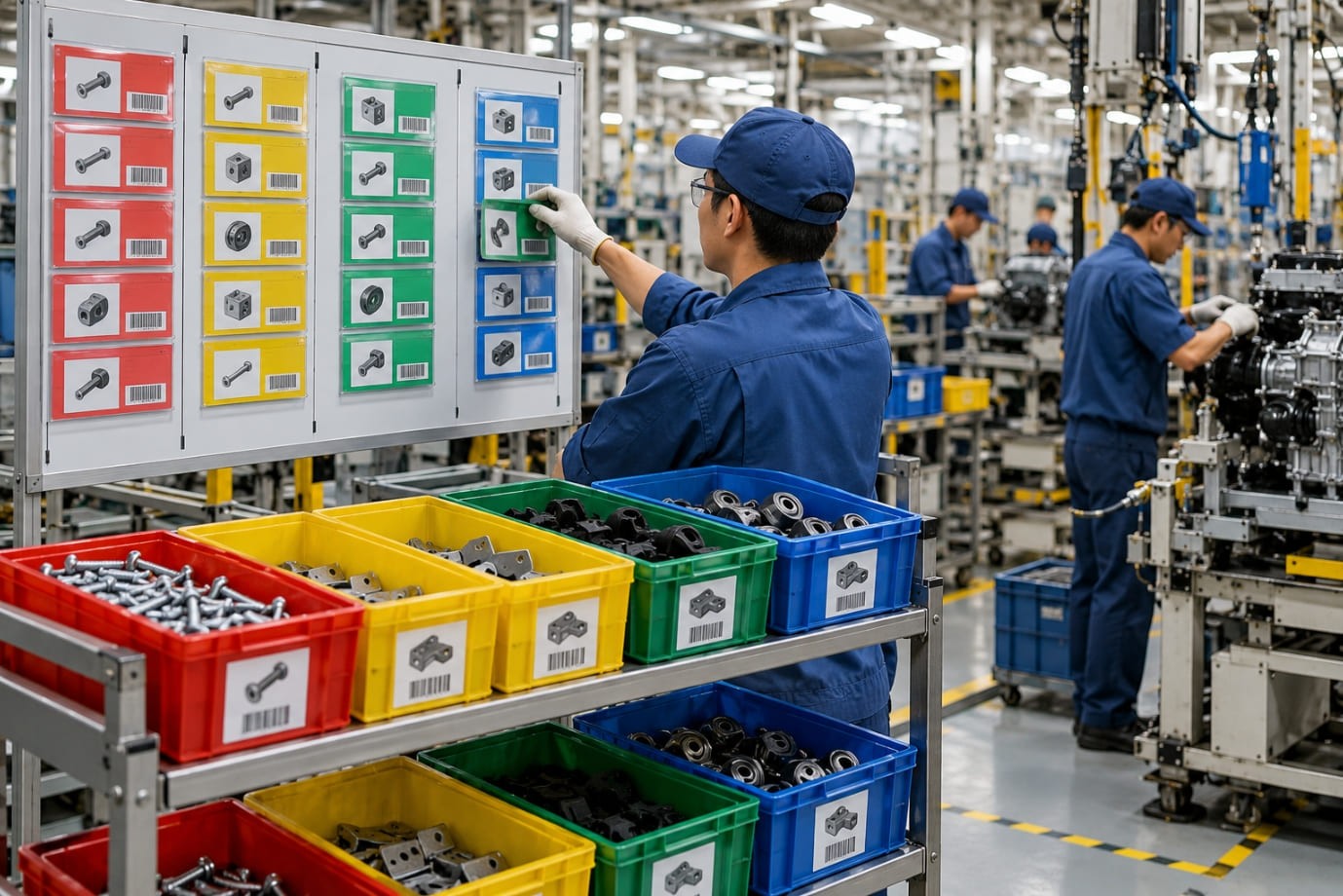
Kanban is a visual method used to manage the movement of materials and control production based on actual consumption. Rather than producing goods simply because forecasts suggest demand, the system uses signals to indicate when materials need to be replenished or when production should begin. This makes the kanban system in manufacturing an effective approach to improving coordination between production lines, warehouses and suppliers.
At its core, the kanban pull system connects upstream production with downstream requirements. This relationship between Kanban and pull system helps prevent unnecessary production, maintain appropriate inventory levels and create a smoother flow across operations. When supported by clear rules and consistent monitoring, the kanban process helps teams identify shortages, manage work-in-progress, and respond more effectively to changing requirements.
The kanban framework also supports essential Kanban principles, including visual management, controlled work-in-progress and continuous improvement. These practices make it valuable for businesses seeking to strengthen their system for inventory management and achieve more predictable production outcomes.
In this blog, we will explore the kanban concept, how the system works, its different types and the key benefits of it. We will also cover practical steps for Kanban implementation, including how to approach setting it up and calculating the appropriate number of Kanban signals for manufacturing operations.
What Is a Kanban System?
A Kanban system is a visual method used to control production and manage material movement based on actual demand. The word “Kanban” comes from Japanese and means “signboard” or “visual signal.” In manufacturing, these signals indicate when to produce items, replenish materials or move components between processes. The goal is to ensure the right materials are available at the right time and in the right quantity. The kanban concept uses cards, containers, labels or digital messages to authorize production or replenishment. Unlike a simple visual board, this system in manufacturing follows defined rules that control when work begins and how much material is supplied. This helps maintain a steady Kanban flow, prevent overproduction and reduce excess inventory.
⮞ Origin of Kanban in Lean Manufacturing
Kanban became widely known through the Toyota Production System (TPS), where it was developed to coordinate production and material movement. It supports lean manufacturing by reducing waste, improving workflow and making material requirements visible across the factory. For detailed information regarding Lean, you can go through our dedicated blog on Lean Manufacturing System.
⮞ Kanban and Just-in-Time Manufacturing
The kanban system supports Just-in-Time (JIT) manufacturing by allowing actual downstream consumption to trigger upstream production or replenishment. This connection between Kanban and pull system helps businesses produce or supply only what is needed, when it is needed and in the required quantity. This system for inventory management can therefore help control work-in-progress and improve material availability.
By following Kanban principles such as visual control, clear operating rules and continuous improvement, manufacturers can realize the benefits of Kanban. These principles also provide a foundation for effective implementation of kanban and a more efficient process.
How Does a Kanban System Work in Manufacturing?
A Kanban system in manufacturing connects production and material replenishment to actual consumption. Instead of producing goods based only on forecasts, the system uses visual signals to indicate when materials are needed. This creates a controlled Kanban flow, helping factories maintain the right balance between production demand and available inventory.
⮞ The Basic Kanban Workflow
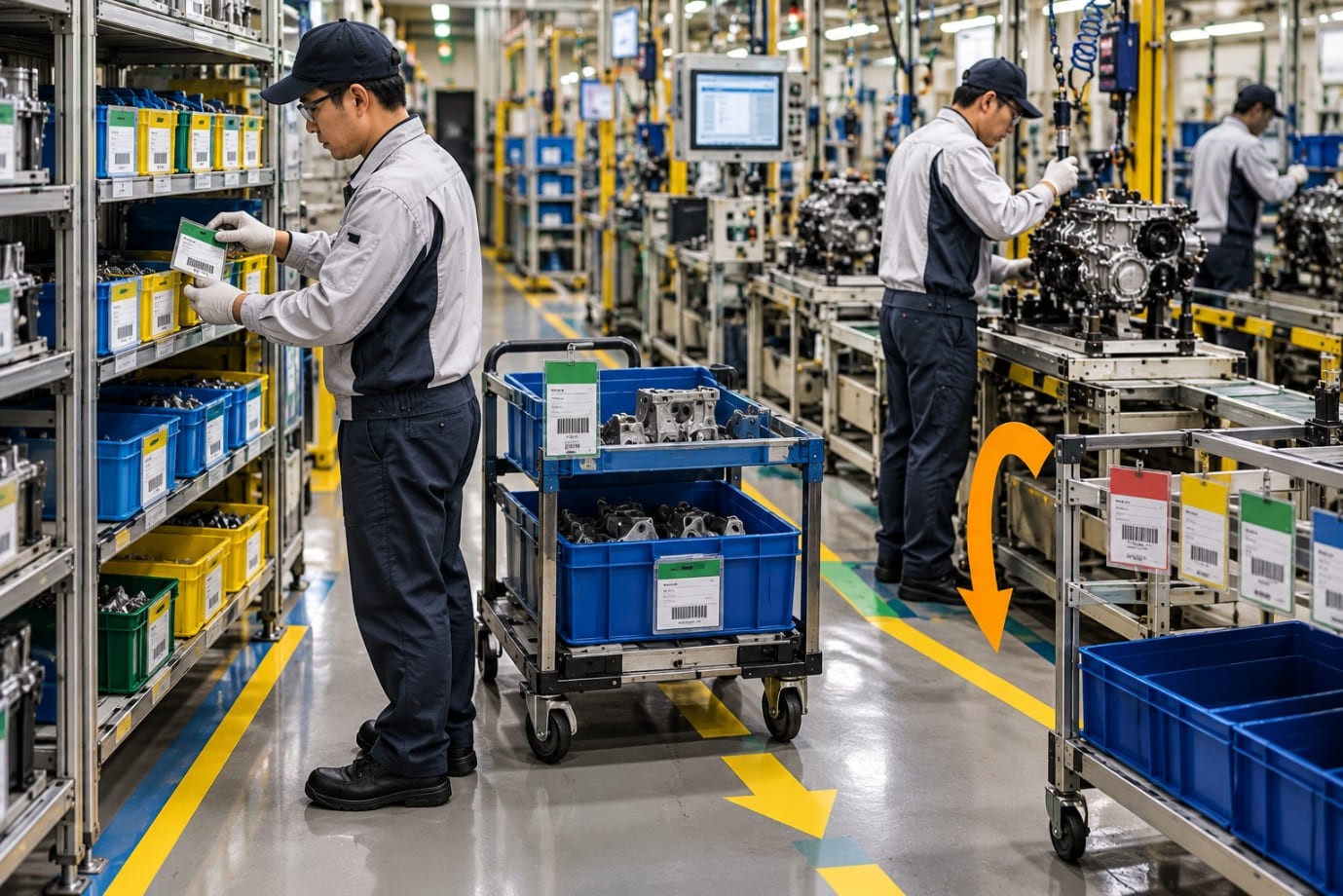
The kanban process follows four steps: consumption, signal generation, replenishment and signal return. When a downstream process uses materials, kanban cards or another visual signal inform the upstream process that replenishment is required. Once the materials are supplied, the signal returns to the available pool for reuse. This cycle ensures production responds to actual requirements.
⮞ Key Components of a Kanban System
A practical Kanban framework includes Kanban cards, bins or containers, replenishment points, inventory buffers and visual signals. Cards communicate what needs replenishing and in what quantity, while containers standardize material handling. Inventory buffers provide limited protection against supply variations, helping maintain production continuity.
Example: Consider an automotive assembly line that uses bolts stored in containers of 20. When operators empty a container, they send its Kanban card to the stores team. This signal requests another container of 20 bolts. Replenishment follows established rules, helping prevent shortages without accumulating unnecessary inventory.
⮞ Push vs. Pull Production
In a traditional push system, production relies mainly on forecasts and planned schedules, which can lead to excess inventory. In contrast, the kanban pull system triggers production or replenishment when the downstream process needs materials. This connection between Kanban and pull system helps control overproduction and improve inventory management.
By following Kanban principles, manufacturers can achieve its benefits, including better coordination and improved material availability. Effective implementation and carefully setting up the system with clear operating rules help create a more reliable and efficient production process.
Types of Kanban System
Different types of Kanban system help manufacturers control production, manage material movement and coordinate replenishment. The right approach depends on how materials move through the factory and how supplies are received. In manufacturing, these systems work together to maintain a smooth flow and support efficient inventory control.
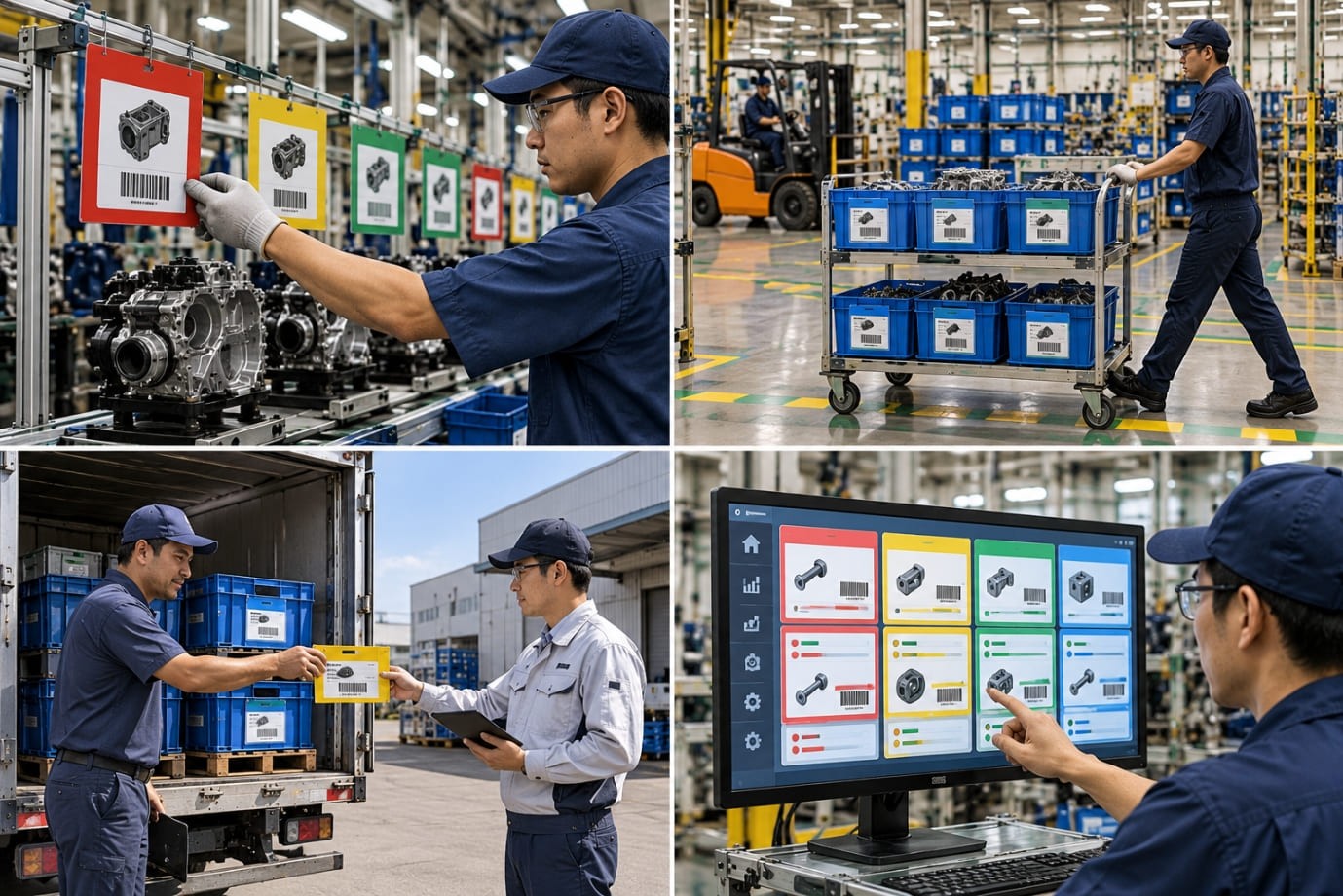
- Production Kanban: A production Kanban authorizes an upstream process to manufacture a specific quantity of items. When a downstream process consumes materials, the signal tells the preceding workstation to produce replacements. This helps prevent overproduction and keeps output aligned with actual demand. Production Kanban is especially useful in a pull system, where production is triggered by consumption rather than forecasts alone.
- Withdrawal or Conveyance kanban: A withdrawal or conveyance kanban authorizes materials to be moved from one location to another, such as from a warehouse to an assembly line. The signal specifies which materials are required and in what quantity. Using Kanban cards for material movement helps workers replenish supplies on time and reduces unnecessary handling and excess stock.
- Supplier Kanban: A supplier Kanban sends a replenishment signal to an external supplier when components are needed. It helps coordinate deliveries with actual consumption and supports better communication between manufacturers and suppliers. When implemented effectively, it strengthens the kanban system for inventory management and helps reduce the risk of material shortages.
- Electronic Kanban: (e-Kanban) An electronic Kanban uses digital signals, barcode scanners or integrated software to communicate replenishment requirements. It improves visibility, reduces manual communication and helps teams track material movement more efficiently.
These types support the same concept but serve different purposes within the kanban framework. Understanding their roles helps businesses make informed decisions about implementation and setting up a kanban system that suits their production needs.
Benefits of the Kanban System in Manufacturing
A Kanban system in manufacturing helps businesses connect production with actual demand, control inventory, and improve the movement of materials across the factory. By using clear signals and defined replenishment rules, manufacturers can identify problems earlier and make better use of available resources. The benefits of Kanban depend on how well the system is designed, implemented and maintained.
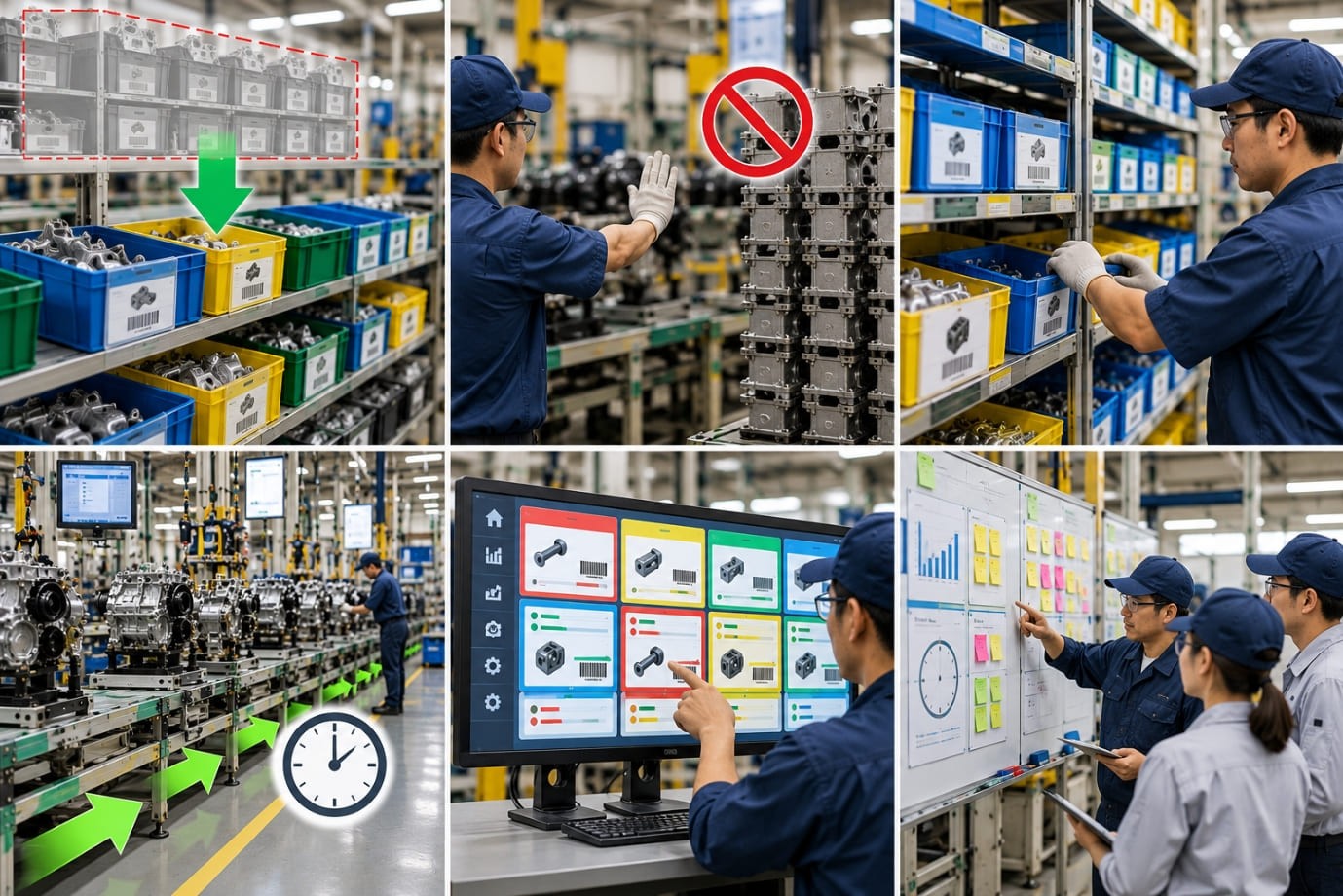
- Reduced Work-in-Progress Inventory: Excess work-in-progress (WIP) inventory takes up space, ties up working capital, and can hide production problems. A Kanban system for inventory management uses replenishment signals and WIP limits to prevent materials from accumulating unnecessarily between workstations. Manufacturers can monitor WIP levels and inventory turnover to understand whether inventory is being managed effectively.
- Lower Risk of Overproduction: Producing more items than required can increase storage costs and create unnecessary handling. A Kanban pull system authorizes production based on downstream consumption rather than forecasts alone. This helps align output with actual requirements and can reduce excess stock.
- Improved Material Availability: Material shortages can interrupt production and delay customer orders. Kanban cards, clear replenishment points and defined quantities help teams recognize when supplies need to be restored. Tracking material shortages and replenishment adherence helps assess whether the system is keeping essential components available.
- Better Production Flow and Shorter Lead Times: Excess WIP and waiting time can slow production. By controlling work between processes, kanban flow makes bottlenecks easier to identify and address. Manufacturers can track production lead time and schedule adherence to evaluate improvements.
- Improved Coordination and Visibility: A shared Kanban framework helps operators, planners, stores teams, and suppliers understand material requirements. e-kanban can further improve visibility by communicating replenishment needs digitally.
- Stronger Continuous Improvement: Repeated shortages, delays and missed replenishments can reveal deeper process weaknesses. Reviewing these issues helps teams identify root causes and improve operating rules over time.
With effective implementation, manufacturers can strengthen inventory control, production reliability and on-time delivery. However, results depend on demand stability, supplier reliability, process discipline and continuous monitoring.
How to Implement a Kanban System Step by Step
Successful implementation requires more than introducing cards or visual boards on the shop floor. It involves understanding material flow, setting clear replenishment rules, and ensuring that production responds to actual demand. A well-planned kanban system in manufacturing can help control inventory, reduce delays and improve coordination between production teams, stores and suppliers.
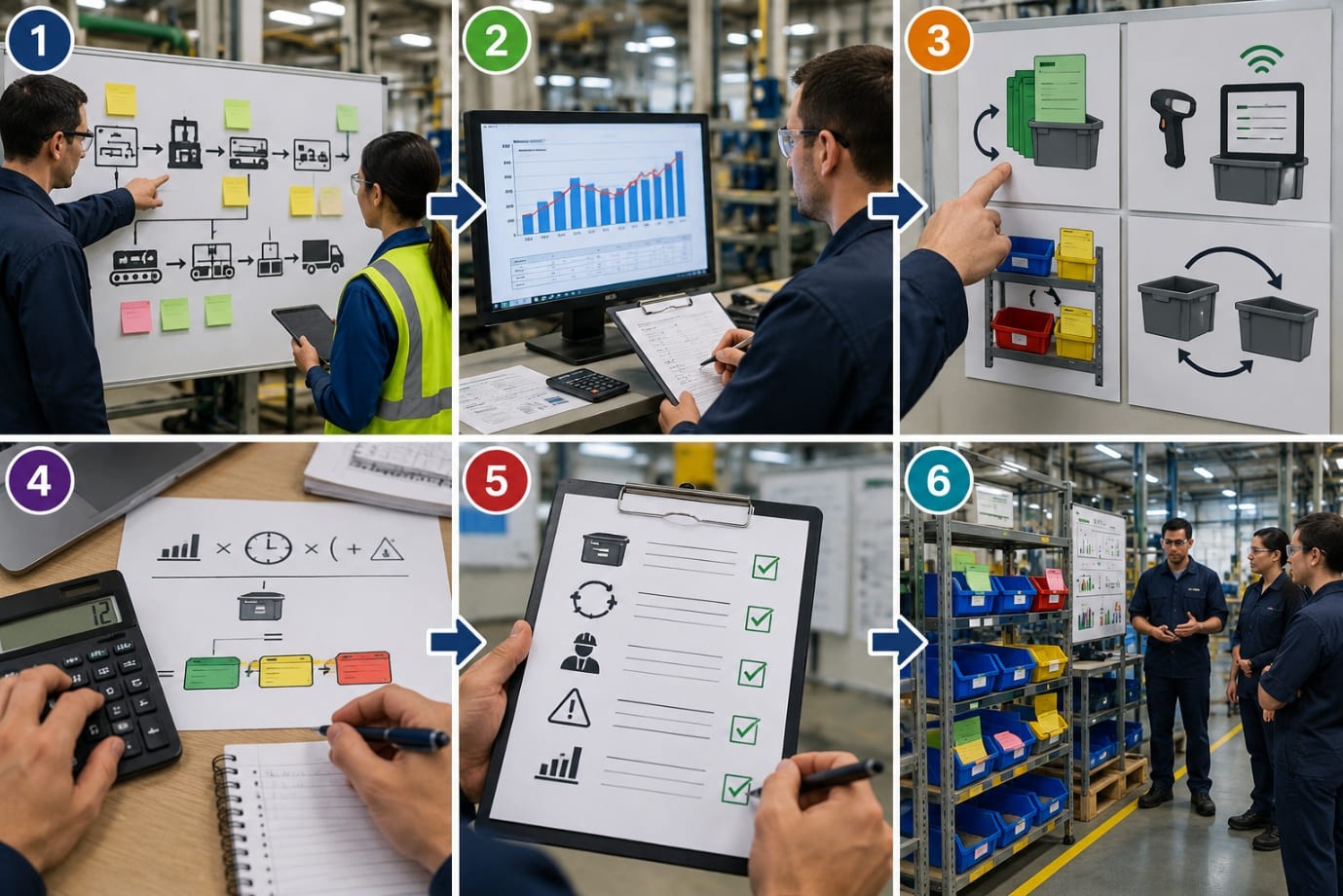
⮞ Step 1: Map the Current Production and Material Flow
Start by examining how materials move from storage to production and between workstations. Identify where excess inventory builds up, where shortages occur and which processes cause delays. This gives you a clear starting point for setting up a Kanban system.
⮞ Step 2: Measure Demand and Replenishment Lead Time
Record how many components are consumed daily and how long replenishment takes. Include internal production time, supplier delivery time and normal variations. Accurate data helps determine suitable inventory levels and prevents frequent shortages.
⮞ Step 3: Select the Right Kanban Method
Choose a method that suits your operations. Kanban cards and containers may work well for simple shop-floor processes, while electronic Kanban can improve tracking across larger facilities. Where external suppliers are involved, a supplier Kanban may help coordinate replenishment.
⮞ Step 4: Calculate the Number of Kanban Signals
Estimate the number of containers or signals needed using demand, replenishment lead time, container capacity and an appropriate safety allowance. The calculation should reflect actual operating conditions and will be explained in the next section.
⮞ Step 5: Define Clear Operating Rules
Specify who responds to each signal, where materials should be delivered, and how delays or shortages are reported. Clear rules help employees follow the kanban process consistently.
⮞ Step 6: Start with a Pilot Area
Begin with a stable production line or frequently used components, such as standard nuts, bolts or fasteners. Test the kanban pull system in this limited area, resolve problems and expand only when the process is working reliably.
⮞ Step 7: Track Performance and Improve
Monitor work-in-progress (WIP), stockouts, inventory levels, replenishment adherence and lead times. Review the results regularly and adjust quantities as demand changes.
Practical tip: Start small, train employees and review the results before expanding. Kanban may require additional safeguards for items with unpredictable demand, unreliable suppliers or long lead times. Effective kanban implementation depends on stable processes, accurate data and continuous improvement.
How to Calculate Kanban Quantity
Calculating the right number of containers is an important step in Kanban implementation. Too few containers can cause material shortages, while too many can increase inventory costs. In a Kanban system in manufacturing, the required quantity depends on demand, replenishment lead time, container capacity and a suitable safety allowance.
A commonly used Kanban quantity formula is:
N= [D*L(1+S)]/C
Where:
- N = Number of Kanban containers or signals
- D = Average demand per day
- L = Replenishment lead time in days
- S = Safety allowance expressed as a decimal
- C = Quantity of components per container
Example: Suppose a production line consumes 100 components daily. Replenishment takes 0.5 day, the safety allowance is 10% (0.10) and each container holds 20 components.
N= (100*0.5*1.10)/20= 2.75
Rounding up gives 3 containers as a starting estimate.
This calculation helps the kanban system maintain a steady Kanban flow without holding unnecessary stock. However, the result must be checked against demand variations, supplier reliability and service requirements. A safety allowance should not replace efforts to fix recurring delays. Regular reviews help keep the kanban system aligned with actual operating conditions.
Common Challenges & Best Practices for Implementing Kanban System
Although a Kanban system can improve inventory control and production flow, its success depends on consistent execution. During the implementation, manufacturers may face challenges that affect the process and reduce its effectiveness.
Common mistakes include setting inventory limits without measuring actual consumption, using outdated demand or lead-time data and ignoring supplier reliability. If supplier Kanban signals are delayed or cards are not followed correctly, material shortages can interrupt production. Expanding the system before a pilot is stable can create confusion, while introducing e-Kanban without fixing existing process problems may simply digitize inefficiencies.
To achieve the benefits of Kanban, manufacturers should follow these best practices:
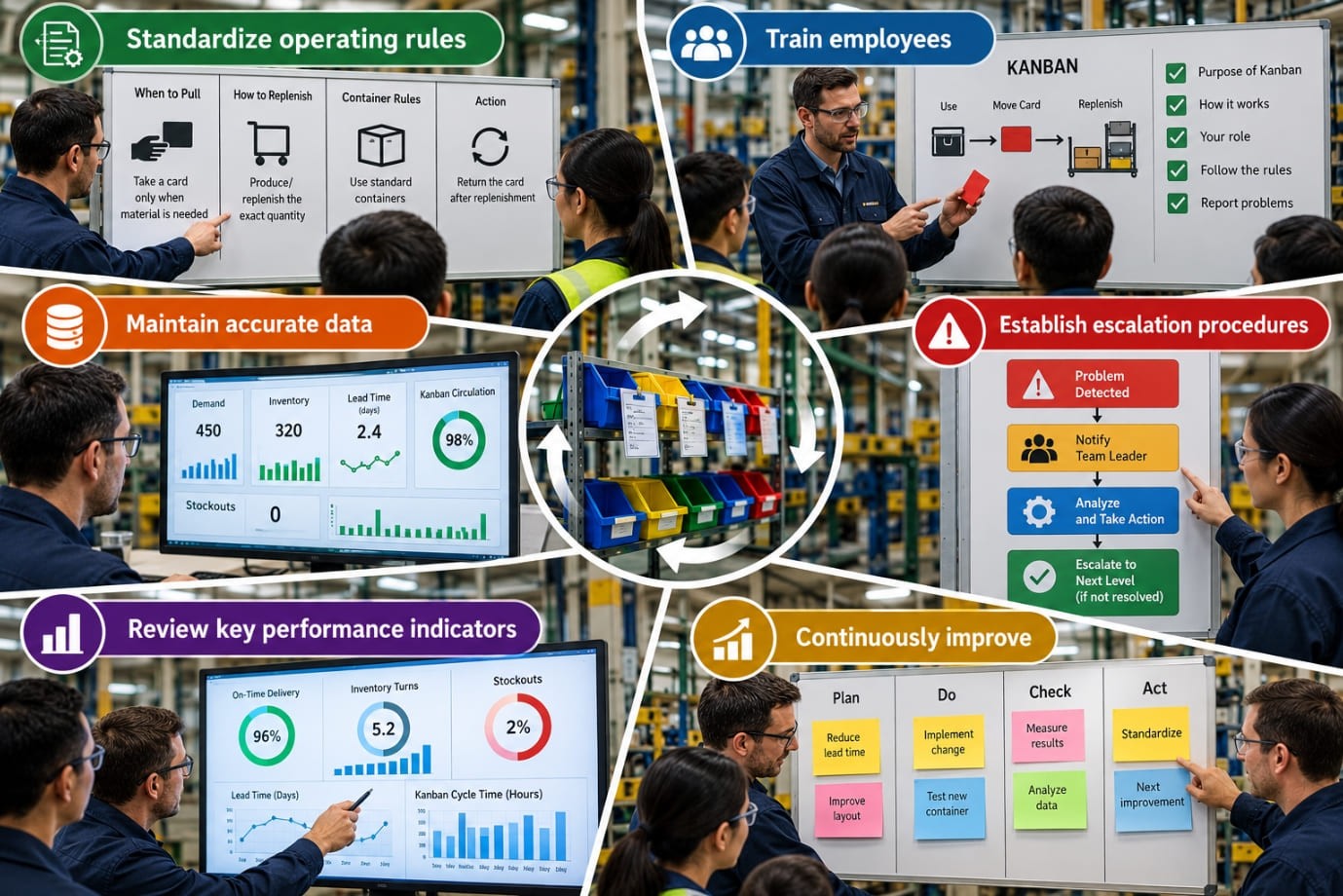
- Standardize operating rules: Define clear replenishment quantities, responsibilities and signal-handling procedures.
- Train employees: Ensure everyone understands the kanban principles and follows the same process.
- Maintain accurate data: Update consumption rates, inventory levels and replenishment lead times regularly.
- Establish escalation procedures: Define how teams should respond to shortages, supplier delays, and missed signals.
- Review key performance indicators (KPIs): Monitor work-in-progress, stockouts, lead times and replenishment adherence.
- Continuously improve: Review problems, identify root causes and adjust the kanban framework as operating conditions change.
A well-managed Kanban system in manufacturing requires regular monitoring and teamwork. By addressing problems early and improving processes continuously, businesses can maintain a more reliable kanban flow and achieve better operational control.
FAQs
A. A Kanban system in manufacturing is a visual production control method that uses signals, such as cards, containers or digital alerts, to trigger production or material replenishment based on actual demand. It helps control inventory and maintain a steady workflow.
A. A Kanban system for inventory management replenishes materials based on actual consumption rather than producing or ordering excess stock. By setting clear limits on inventory and work-in-progress, it helps reduce overproduction, unnecessary storage and excess materials.
A. No. Kanban system in manufacturing works best when demand is reasonably predictable, replenishment is reliable and processes are stable. Businesses with highly variable demand, long supply lead times or frequent disruptions may need safety stock or a hybrid inventory control approach.
A. The main benefits of Kanban include lower work-in-progress inventory, reduced overproduction, better material availability, improved workflow visibility and shorter lead times. Results depend on accurate demand data, reliable replenishment and consistent use of the system.
A. The kanban process begins when materials are consumed or a defined stock level is reached. A signal then triggers replenishment or production. Once the required quantity is restored, the signal returns to the process for reuse.
A. Kanban cards communicate when to produce, move or replenish materials. They typically contain details such as the part number, quantity, source, destination and replenishment instructions, helping teams coordinate material movement and production activities.
A. A push system releases production based mainly on forecasts or schedules, while a Kanban pull system triggers production or replenishment in response to actual consumption or downstream demand. This helps control inventory and reduce the risk of overproduction.
A. Kanban implementation starts with mapping material flow, measuring demand and replenishment lead times, and selecting suitable signals. Next, calculate inventory limits, define responsibilities, train employees and test the system in a pilot area before expanding based on performance.
Conclusion
In today’s competitive manufacturing environment, managing production efficiently requires more than following schedules or maintaining large inventory buffers. The kanban system provides a practical way to connect production and material replenishment with actual demand. By using clear signals to guide when materials should be produced, moved or replenished, businesses can improve material visibility, control work-in-progress (WIP) and reduce unnecessary inventory.
A well-designed Kanban system in manufacturing helps maintain a steady flow while ensuring materials are available when needed. Whether a business uses production, supplier or electronic kanban, the goal is to coordinate activities across the supply chain and prevent avoidable delays. The relationship between kanban and pull system also helps teams respond to actual consumption rather than producing excess stock based only on forecasts.
However, achieving the full benefits of Kanban requires more than introducing Kanban cards or digital tools. Successful Kanban implementation depends on accurate demand data, reliable replenishment, employee involvement, clearly defined responsibilities and continuous improvement. By following kanban principles and reviewing key performance indicators regularly, manufacturers can identify problems early and make informed decisions.
For businesses considering setting up a Kanban system, starting with a small pilot and expanding based on measured results can make the transition more manageable. With the right framework and consistent execution, Kanban system can support better inventory control, smoother production and sustainable operational performance.
Looking to improve production flow and inventory management? Sugoya India can help your business identify operational gaps and explore practical manufacturing improvement strategies tailored to its needs.
For more information regarding our services, you can explore our Homepage.

