

Operational Supply Chain Management
In today’s hyper-connected global economy,
businesses are navigating an increasingly complex web of suppliers, manufacturers, distributors, and customers. The modern operations & supply chain ecosystem is no longer linear—it is dynamic, data-driven, and highly sensitive to disruptions. From geopolitical uncertainties to fluctuating customer demand, organizations are facing unprecedented pressure to maintain efficiency while controlling costs. These challenges have made operational supply chain management a critical priority for companies aiming to stay competitive.
Delays in procurement, rising logistics costs, and unpredictable demand patterns can significantly impact profitability. Without a strong approach to operations and supply chain management, businesses often struggle with inefficiencies, excess inventory, or stockouts. This is where the integration of operational supply chain management becomes essential—ensuring that every stage, from sourcing to delivery, is aligned and optimized.

Effective operations and supply management enables organizations to streamline processes, improve visibility, and respond proactively to market changes. By focusing on operational supply chain management, companies can build resilient systems that reduce waste and enhance productivity. Moreover, a well-defined supply chain management strategy planning and operation framework empowers decision-makers to drive sustainable growth while maintaining operational excellence.
In this blog, we’ll explore how businesses can optimize their operational supply chain management practices to improve efficiency, reduce costs, and achieve long-term success.
What is Operations Supply Chain Management
It refers to the day-to-day execution of activities across the operations & supply chain, including sourcing, production, inventory handling, and distribution. In simple terms, it is how businesses ensure that products move efficiently from suppliers to customers. From a technical standpoint, operational supply chain management is a core part of operations and supply chain management, focusing on coordinating processes, data, and resources in real time to achieve efficiency, cost control, and service reliability.
⮞ Strategic vs Operational Supply Chain Management
There is a clear distinction between long-term planning and daily execution. Supply chain management strategy planning and operation focuses on high-level decisions such as network design, supplier partnerships, and capacity planning. In contrast, operation chain management deals with short-term, execution-driven activities like production scheduling, inventory replenishment, and logistics coordination. While strategy sets the direction, supply chain management in operations management ensures those plans are effectively implemented on the ground. For more information, you can also go through our dedicated blog on Strategic Supply Chain Management.
⮞ Role in Day-to-Day Business Functioning
In daily operations, operations and supply management plays a vital role in maintaining business continuity and efficiency. It ensures that raw materials are available when needed, production runs smoothly, and products are delivered on time. Strong operations and supply chain management helps organizations reduce delays, avoid excess inventory, and respond quickly to demand fluctuations, ultimately improving overall performance and customer satisfaction.
While operational focuses on execution, different types of supply chain management models define how businesses structure and manage these processes based on their industry and goals. For detailed information, you can read our blog on Types of Supply Chain Management.
Key Components of Operational Supply Chain Management
An effective operational supply chain management framework is built on several interconnected components that ensure smooth functioning across the entire operations & supply chain. Each element plays a crucial role in improving efficiency, reducing costs, and enhancing responsiveness.
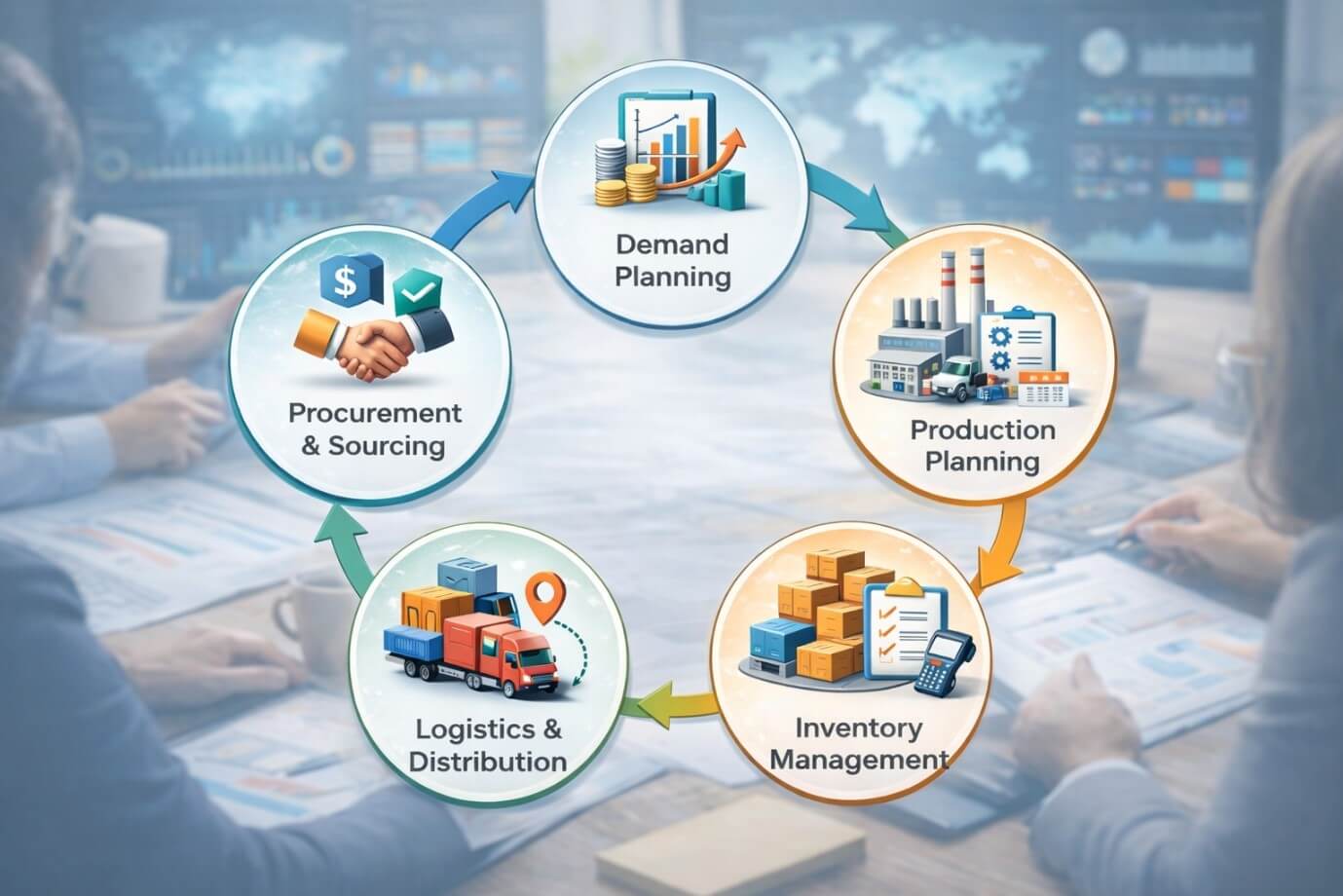
⮞ Demand Planning
Accurate demand forecasting is the foundation of operations and supply chain management. By analyzing historical data, market trends, and customer behaviour, businesses can predict demand more effectively. This helps in aligning production and inventory levels, which is essential for strong operational supply chain management. For detailed information, you can read our dedicated blog on Demand Planning in Supply Chain Management.
⮞ Procurement & Sourcing
Efficient supplier selection and cost management are key aspects of operations and supply management. Organizations must build reliable vendor networks, negotiate better pricing, and ensure timely procurement of raw materials. Strategic sourcing also supports long-term supply chain management strategy planning and operation.
⮞ Production Planning
In operation chain management, production planning focuses on scheduling and optimizing capacity utilization. It ensures that manufacturing processes run smoothly without bottlenecks, enabling businesses to meet demand on time while minimizing waste. For more information, you can read our dedicated blog on Product Planning and Management.
⮞ Inventory Management
Managing inventory effectively is critical in operational supply chain management. Businesses must strike a balance between overstocking and stockouts to reduce holding costs and avoid disruptions. This is a core function within operational supply chain management. You can also go through our in-depth blog on Inventory Management in Supply Chain Management for comprehensive information.
⮞ Logistics & Distribution
Transportation and delivery optimization are essential for seamless operations & supply chain. Efficient logistics ensure timely delivery, lower transportation costs, and improved customer satisfaction, strengthening overall operations and supply management performance.
Common Challenges in Operational Supply Chain Management
Many manufacturing businesses struggle with maintaining efficiency across their operations & supply chain, especially in an environment where uncertainty has become the norm. Despite having structured systems, several challenges continue to impact the effectiveness of operational supply chain management.
⮞ Demand Unpredictability
One of the biggest pain points is demand unpredictability. Sudden fluctuations in customer demand make it difficult for companies to plan production and inventory accurately. This directly affects operations and supply chain management, often leading to either excess stock or missed sales opportunities.
⮞ Supply disruptions
This is another major challenge in operational supply chain management. Delays from suppliers, geopolitical issues, or raw material shortages can halt production and impact delivery timelines. Without strong contingency planning, even minor disruptions can create significant operational setbacks.
⮞ Poor visibility
Poor visibility across the operations & supply chain further complicates decision-making. When businesses lack real-time insights into inventory, shipments, or supplier performance, it becomes difficult to respond quickly. This weakens the effectiveness of operational supply chain management and reduces overall agility.
⮞ Inefficient processes
These also continue to burden many organizations. Manual workflows, lack of automation, and fragmented systems slow down operations, making operations and supply management less responsive and more error-prone.
⮞ High Logistics Cost
Additionally, rising transportation and fuel costs contribute to high logistics expenses, directly impacting profitability. Without a strong supply chain management strategy planning and operation, businesses struggle to optimize routes and reduce costs, ultimately affecting the performance of their systems. If confused about the logistics services, you can read our dedicated blog on Which Logistics Model is Right for Your Business- 2PL, 3PL, 4PL or 5PL.
Benefits of Effective Operational Supply Chain Management
Implementing a strong operational supply chain management system delivers measurable benefits across the entire operations & supply chain, directly impacting business performance and competitiveness. Companies that invest in optimizing their processes often gain a significant edge in today’s fast-paced market.
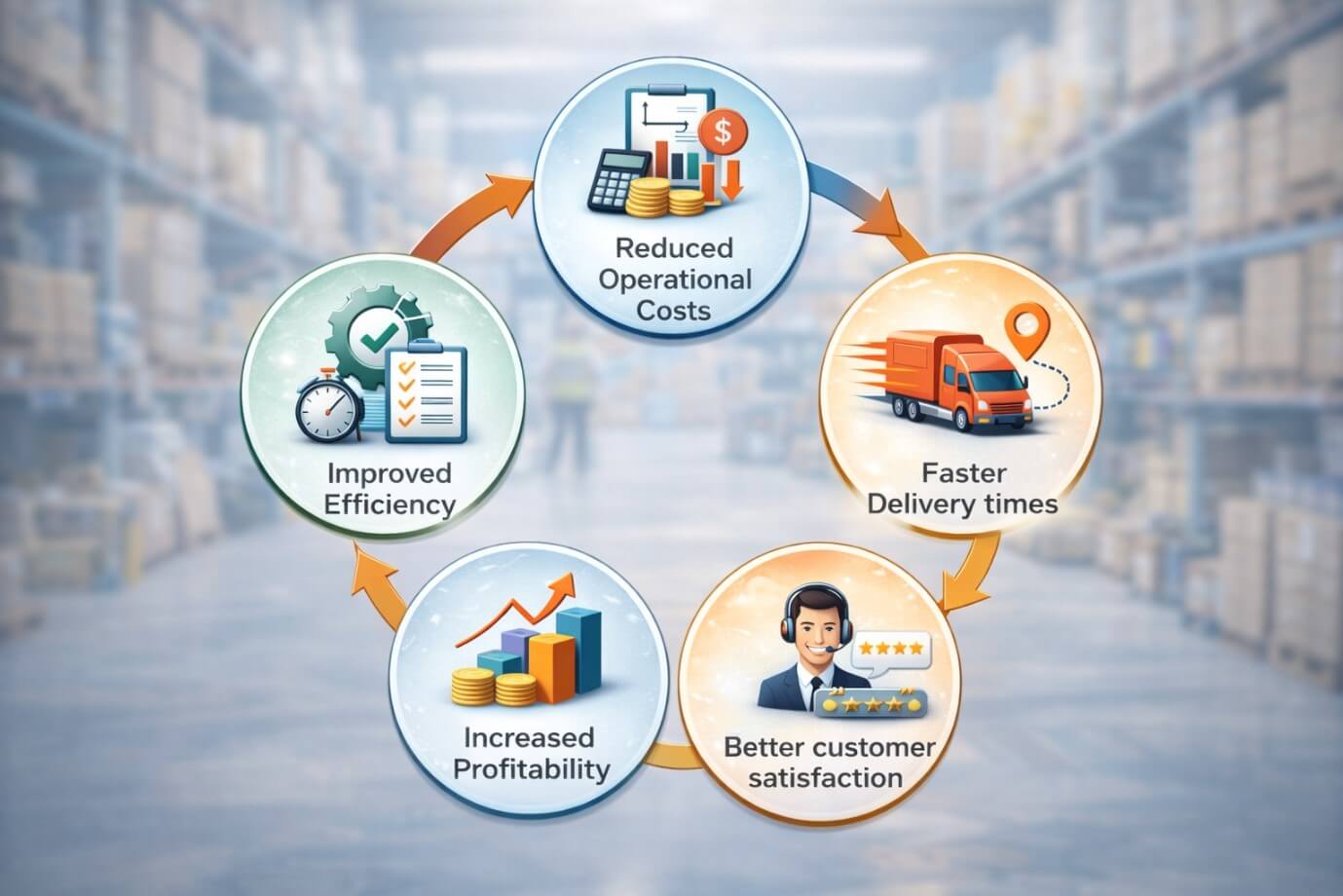
⮞ Reduced Operational Costs
One of the most immediate advantages is reduced operational costs. By improving coordination within operations and supply chain management, businesses can minimize waste, lower inventory holding costs, and reduce inefficiencies. Companies implementing optimized supply chains see noticeable cost savings through better resource utilization and streamlined workflows.
⮞ Improved Efficiency
It is another key outcome. With well-aligned operations and supply management processes, organizations can eliminate bottlenecks and ensure smoother production cycles. This enhances the effectiveness of operational supply chain management, enabling faster decision-making and better use of capacity.
⮞ Faster Delivery times
It also becomes achievable with efficient operational supply chain management. When procurement, production, and logistics are synchronized, businesses can respond quickly to customer demands. Companies implementing optimized supply chains see improved on-time delivery rates, which strengthens their market reputation.
⮞ Better customer satisfaction
It naturally follows. A responsive operations & supply chain ensures product availability, consistent quality, and timely deliveries. This builds trust and long-term customer relationships.
⮞ Increased Profitability
Ultimately, all these benefits contribute to increased profitability. A well-executed supply chain management strategy planning and operation not only reduces costs but also enhances revenue opportunities, making it a critical driver of sustainable business growth.
Strategies to Improve Operational Supply Chain Management
Improving operational supply chain management requires a combination of smart planning, technology adoption, and process optimization across the entire operations & supply chain. Here’s how you can start implementing practical strategies to drive better results:

⮞ Implement Lean Manufacturing
Lean principles help eliminate waste and improve efficiency within operational supply chain management. By identifying non-value-added activities and streamlining workflows, businesses can reduce costs and enhance productivity across their processes.
⮞ Use Data & Analytics
Leveraging data is critical for modern operations and supply management. Advanced analytics enable accurate demand forecasting, performance tracking, and better decision-making. Strong data integration strengthens operational supply chain management, allowing businesses to respond proactively to changes.
⮞ Adopt Industry 4.0 Technologies
Technologies such as IoT, AI, and automation are transforming the operations & supply chain landscape. These tools improve real-time monitoring, predictive maintenance, and process automation, making operational supply chain management more agile and efficient.
⮞ Improve Supplier Collaboration
Building strong relationships with suppliers enhances reliability and reduces risks. Effective collaboration within operations and supply chain management ensures better communication, improved lead times, and stronger alignment with supply chain management strategy planning and operation goals.
⮞ Optimize Inventory Systems
Implementing techniques like Just-in-Time (JIT) helps maintain optimal inventory levels. This reduces holding costs while ensuring availability, strengthening overall operations and supply management efficiency.
⮞ Enhance Supply Chain Visibility
Real-time tracking and transparent systems are essential for effective operational supply chain management. Improved visibility across the operations & supply chain enables faster decision-making, reduces disruptions, and enhances overall performance.
Operational Supply Chain Management in Manufacturing
In the manufacturing sector, operational supply chain management plays a critical role in ensuring seamless coordination across the entire operations & supply chain. Unlike service industries, manufacturing businesses face factory-specific challenges such as machine downtime, fluctuating raw material availability, production bottlenecks, and strict delivery timelines. These challenges make effective operations and supply chain management essential for maintaining consistency and competitiveness.
- At the core of manufacturing efficiency lies the ability to synchronize every stage of the process. Supply chain management in operations management ensures that raw materials are procured on time, production schedules are optimized, and finished goods are delivered without delays. Strong operations and supply management helps minimize idle time, reduce waste, and improve capacity utilization within factories.
- For example, a typical manufacturing flow begins with raw material sourcing, followed by production, and ends with distribution to customers. Any disruption in this chain can impact the entire system. Efficient operation chain management ensures that each stage is aligned, enabling smooth transitions from procurement to final delivery.
- Additionally, integrating supply chain management strategy planning and operation with real-time factory operations allows businesses to respond quickly to demand changes and operational issues. This alignment enhances productivity, reduces costs, and strengthens the overall performance of operational supply chain management in manufacturing environments.
Future Trends in Operational Supply Chain Management
The future of operational supply chain management is being shaped by rapid technological advancements and evolving business priorities across the operations & supply chain. Organizations are increasingly adopting innovative solutions to enhance efficiency, resilience, and sustainability.

⮞ AI-driven supply chains
One of the most transformative trends is the rise of AI-driven supply chains. Artificial intelligence is enabling smarter decision-making within operations and supply chain management by improving demand forecasting, optimizing routes, and predicting disruptions. This strengthens supply chain management in operations, allowing businesses to operate with greater precision and agility.
⮞ Automation and robotics
These are also redefining operations and supply management. From automated warehouses to robotic process automation in manufacturing, these technologies reduce manual errors, increase speed, and enhance productivity across operation chain management.
⮞ Sustainable Supply Chains (ESG)
Sustainability is becoming a key focus, with companies integrating ESG (Environmental, Social, and Governance) principles into their operations & supply chain strategies. A forward-looking supply chain management strategy planning and operation approach now includes reducing carbon footprints, optimizing resource usage, and building ethical supply networks. Detailed information can be seen in our dedicated blog on Sustainable Supply Chain Management.
⮞ Digital Twins
Another emerging trend is the use of digital twins—virtual replicas of supply chain systems. These allow businesses to simulate scenarios, identify inefficiencies, and optimize performance in real time. As these innovations continue to evolve, operational supply chain management will become more intelligent, connected, and future-ready.
FAQs
A. Operational supply chain management refers to the day-to-day coordination of activities such as procurement, production, inventory, and logistics to ensure smooth business operations and timely delivery of products.
A. Operations and supply chain management is essential because it helps businesses improve efficiency, reduce costs, and ensure that products are delivered to customers on time while maintaining quality standards.
A. Operational supply chain management helps in cost optimization by reducing waste, improving inventory control, and streamlining logistics and procurement processes.
A. Operations and supply chain management improves decision-making by providing better visibility into processes, enabling data-driven insights, and helping businesses respond quickly to changes in demand and supply.
A. Businesses can improve operations and supply management by adopting data-driven decision-making, automating workflows, and optimizing inventory and logistics systems for better efficiency.
A. Businesses can improve logistics efficiency by optimizing transportation, managing inventory effectively, and streamlining warehouse operations. Many also partner with Third-Party Logistics providers to handle warehousing, transportation, and order fulfillment, helping reduce costs and improve delivery performance. Learn more in our dedicated blog on 3PL (Third-Party Logistics).
Conclusion
In today’s competitive and rapidly evolving business environment, achieving operational efficiency is no longer optional—it is a necessity. A well-structured operational supply chain management system enables organizations to streamline processes, reduce inefficiencies, and respond effectively to market demands. By strengthening their operations & supply chain, businesses can ensure smoother workflows, better coordination, and improved overall performance.
Effective operations and supply chain management goes beyond managing day-to-day activities; it creates a strong foundation for long-term growth. When integrated properly, supply chain management in operations management ensures that every function—from procurement to production and distribution—works in alignment. This not only enhances efficiency but also minimizes risks and operational disruptions.
Moreover, focusing on operations and supply management allows companies to build agile and resilient systems. With optimized management, businesses can adapt quickly to demand fluctuations, supply challenges, and changing market conditions. A robust supply chain management strategy planning and operation approach further strengthens decision-making and ensures sustainable growth.
Ultimately, organizations that invest in improving their operations & supply chain gain a significant competitive advantage. They are better positioned to reduce costs, deliver faster, and meet customer expectations consistently. In a landscape where efficiency defines success, operational supply chain management becomes a key driver of profitability, scalability, and long-term business excellence.
For more information, go to our Homepage.