

Demand Planning in Supply Chain Management
Over 60% of supply chain inefficiencies
stem from poor demand planning in supply chain management, making it one of the most critical functions for modern businesses. In today’s highly volatile and competitive environment, organizations can no longer rely on guesswork or outdated methods.
Accurate demand forecasting in supply chain management has become essential to ensure operational efficiency, cost control, and customer satisfaction. As markets shift rapidly due to changing consumer behavior, global disruptions, and technological advancements, supply chain demand planning plays a pivotal role in aligning production, inventory, and distribution strategies. Companies that fail to prioritize demand management in supply chain management often face serious challenges such as unpredictable demand fluctuations, excessive inventory leading to overstocking, or lost sales due to stockouts. These issues not only increase costs but also weaken overall business performance.
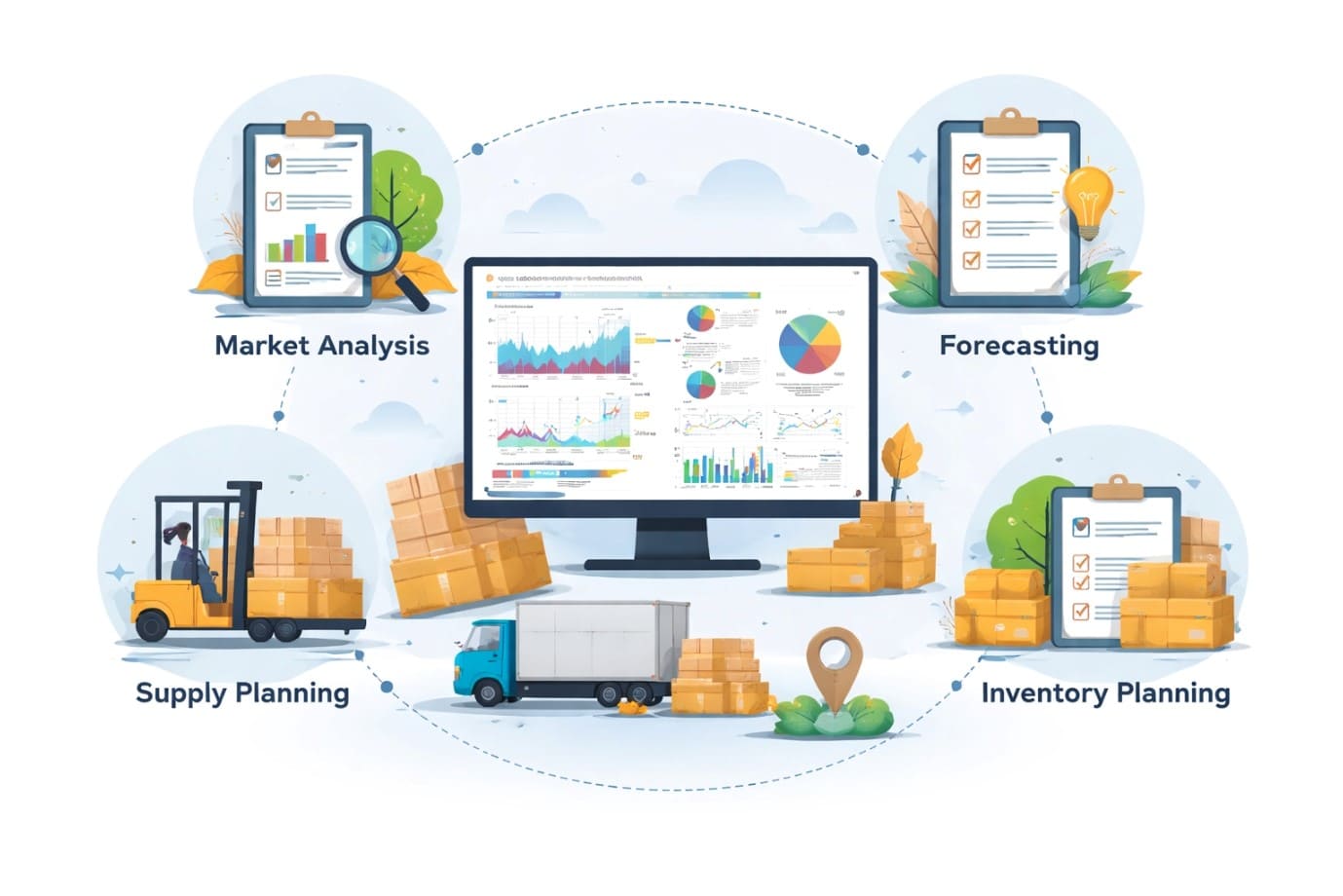
Effective demand planning and forecasting in supply chain management enables organizations to anticipate customer needs, optimize inventory levels, and improve decision-making across departments. The growing importance of demand forecasting techniques in supply chain highlights the need for data-driven strategies and integrated systems. Moreover, the role of demand forecasting in supply chain is expanding as businesses strive to balance supply with demand while enhancing agility.
Understanding demand and supply in a supply chain is no longer optional—it is a strategic necessity for sustainable growth. This blog will help you understand supply chain and demand planning, its process, and how to implement it effectively.
What is Demand Planning?
It is a strategic process that enables businesses to predict future customer demand and align their operations accordingly. In simple terms, demand planning in supply chain management ensures that the right products are available at the right time, in the right quantity, and at the right place. It combines data analysis, market insights, and business intelligence to create accurate forecasts and support efficient decision-making.
At its core, supply chain and demand planning helps organizations balance supply with demand, minimizing waste while maximizing service levels. It plays a crucial role in improving inventory management, production scheduling, and overall supply chain performance.
Demand Planning vs Demand Forecasting in Supply Chain Management
While often used interchangeably, demand planning and forecasting are not the same:
- Demand Planning
- A broader process that includes forecasting, data analysis, collaboration, and execution
- Focuses on aligning business operations with predicted demand
By following these best practices, organizations can strengthen their demand forecasting in supply chain, improve efficiency, and create a more agile and responsive supply chain ecosystem.
- Demand Forecasting
- A subset of demand planning
- Involves predicting future demand using historical data and statistical models
In short, demand forecasting in supply chain management provides the estimates, while demand planning turns those estimates into actionable strategies.
⮞ Why Demand Planning Matters
Effective demand planning in supply chain management is essential because it:
- Reduces inventory costs and prevents overstocking
- Minimizes stockouts and improves customer satisfaction
- Enhances coordination across departments
- Strengthens overall demand planning and forecasting capabilities
By integrating demand planning into business operations, organizations can build a more responsive, efficient, and resilient supply chain.
You can also go through: Strategic Supply Chain Management
Importance of Demand Planning in Supply Chain Management
In today’s dynamic business environment, demand planning in supply chain management is no longer just a supporting function—it is a strategic driver of operational success. Effective supply chain demand planning enables organizations to anticipate market needs, align resources, and respond proactively to changes, ultimately improving overall business performance.
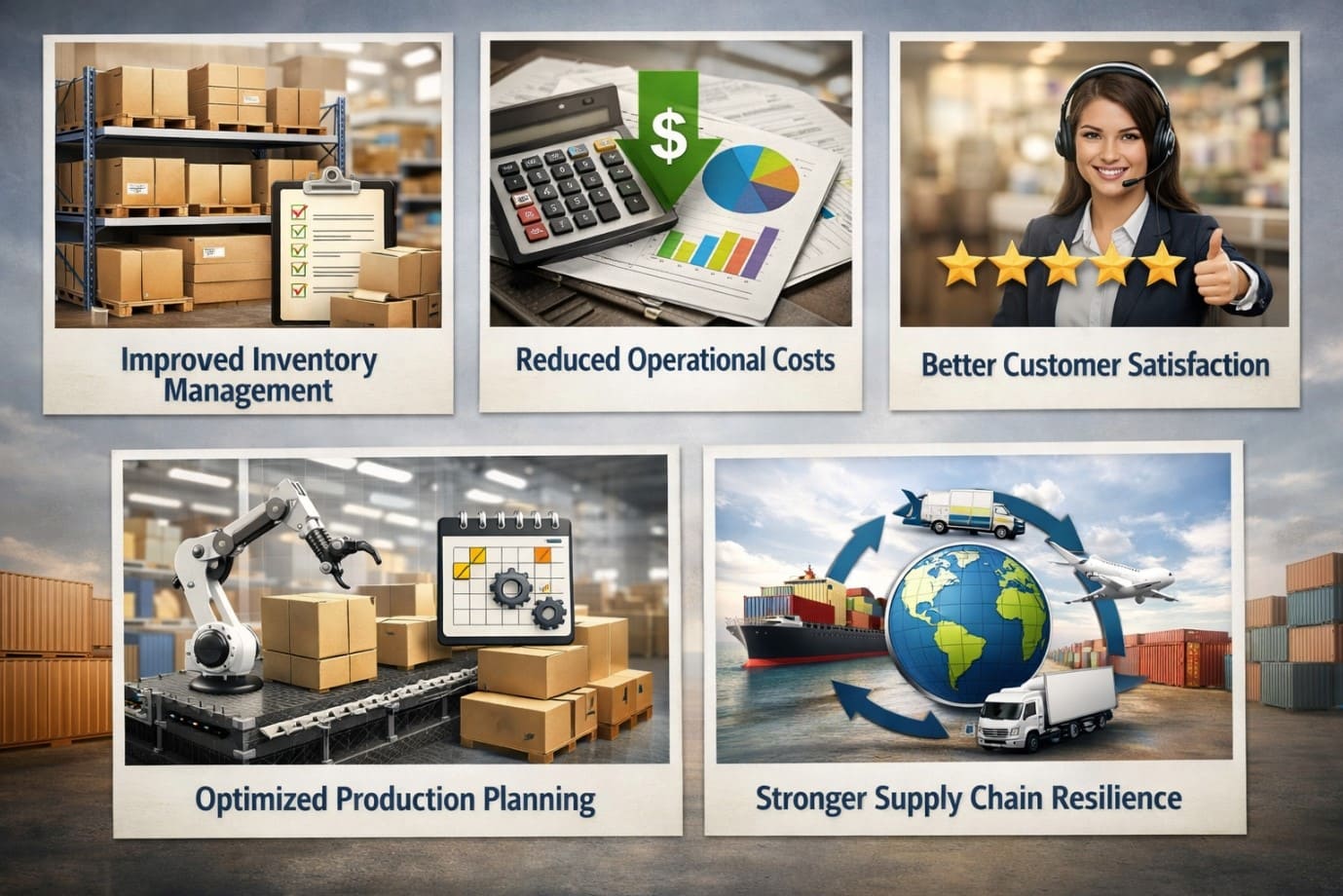
Key Benefits of Demand Planning
- Improved Inventory Management: With accurate demand planning, businesses can maintain optimal inventory levels, avoiding excess stock and reducing the risk of shortages. This ensures smoother operations and better cash flow management. For more details, you can go through our in-depth blog on Inventory Supply Chain Management.
- Reduced Operational Costs: Efficient supply chain and demand planning minimizes unnecessary storage, transportation, and production costs. By aligning supply with actual demand, companies can significantly cut down waste and inefficiencies.
- Better Customer Satisfaction: Meeting customer expectations consistently is critical. Strong demand planning in supply chain management helps ensure product availability, timely deliveries, and improved service levels, leading to higher customer loyalty.
- Optimized Production Planning: With reliable supply chain demand planning, manufacturers can streamline production schedules, reduce downtime, and improve resource utilization, resulting in increased productivity. For extensive information, read our comprehensive blog on Product Planning and Management.
- Stronger Supply Chain Resilience: A well-structured demand planning approach enables businesses to adapt quickly to market fluctuations, disruptions, and seasonal changes, making the supply chain more agile and resilient.
By integrating supply chain and demand planning into core business strategies, organizations can achieve greater efficiency, cost savings, and long-term competitive advantage.
Also Read: Types of Supply Chain Management
Demand Planning Process in Supply Chain Management (Step-by-Step)
An effective demand planning in supply chain management process requires a structured and data-driven approach. Organizations that excel in supply chain demand planning follow a systematic workflow to ensure accuracy, agility, and alignment across functions. Below is a step-by-step breakdown of the process of demand planning in supply chain management:
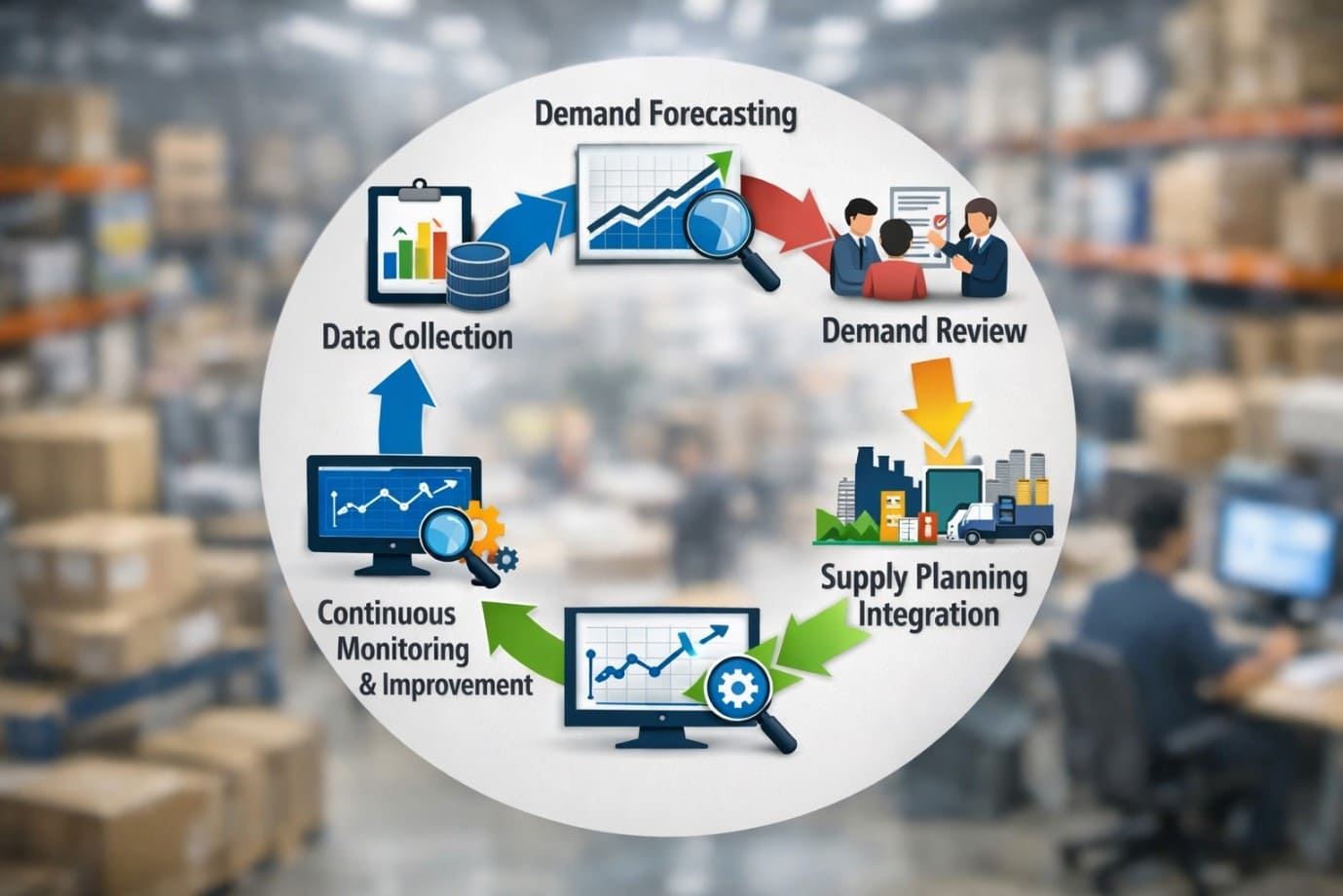
⮞ Data Collection
The foundation of successful demand planning lies in gathering accurate and relevant data.
- Historical Sales Data: Analyze past sales patterns to identify trends and seasonality
- Market Trends: Consider external factors such as economic shifts, customer behavior, and industry dynamics
Strong data inputs are critical for improving demand planning in supply chain management accuracy.
⮞ Demand Forecasting
This step focuses on predicting future demand using advanced tools and methodologies.
- Statistical Models: Time series analysis, regression models
- AI/ML Tools: Predictive analytics for real-time insights
Modern demand forecasting techniques in supply chain enhance precision and scalability. The role of demand forecasting in supply chain becomes crucial here, as it drives all downstream planning activities.
⮞ Demand Review
Once forecasts are generated, they must be validated through cross-functional collaboration.
- Align inputs from sales, marketing, finance, and operations
- Ensure consensus across teams
This step strengthens demand management in supply chain by reducing silos and improving decision-making.
⮞ Supply Planning Integration
Forecasted demand must be aligned with operational capabilities.
- Coordinate with production teams for manufacturing schedules
- Sync with procurement for raw material availability
Effective demand planning in supply chain management ensures seamless execution and avoids mismatches between demand and supply.
⮞ Continuous Monitoring & Improvement
Demand planning is not a one-time activity—it requires constant refinement.
- Track forecast accuracy and performance metrics
- Adjust forecasts based on real-time data and market changes
Continuous improvement is key to optimizing SCM demand planning and strengthening overall efficiency.
By following this structured approach, businesses can enhance demand management in supply chain, improve responsiveness, and build a resilient, data-driven supply chain ecosystem.
Key Demand Forecasting Methods in Supply Chain Management
Accurate forecasting is the backbone of effective demand planning in supply chain management. Organizations rely on a mix of traditional and advanced techniques to improve accuracy and support better decision-making. Choosing the right method depends on data availability, market conditions, and business objectives within supply chain demand planning.
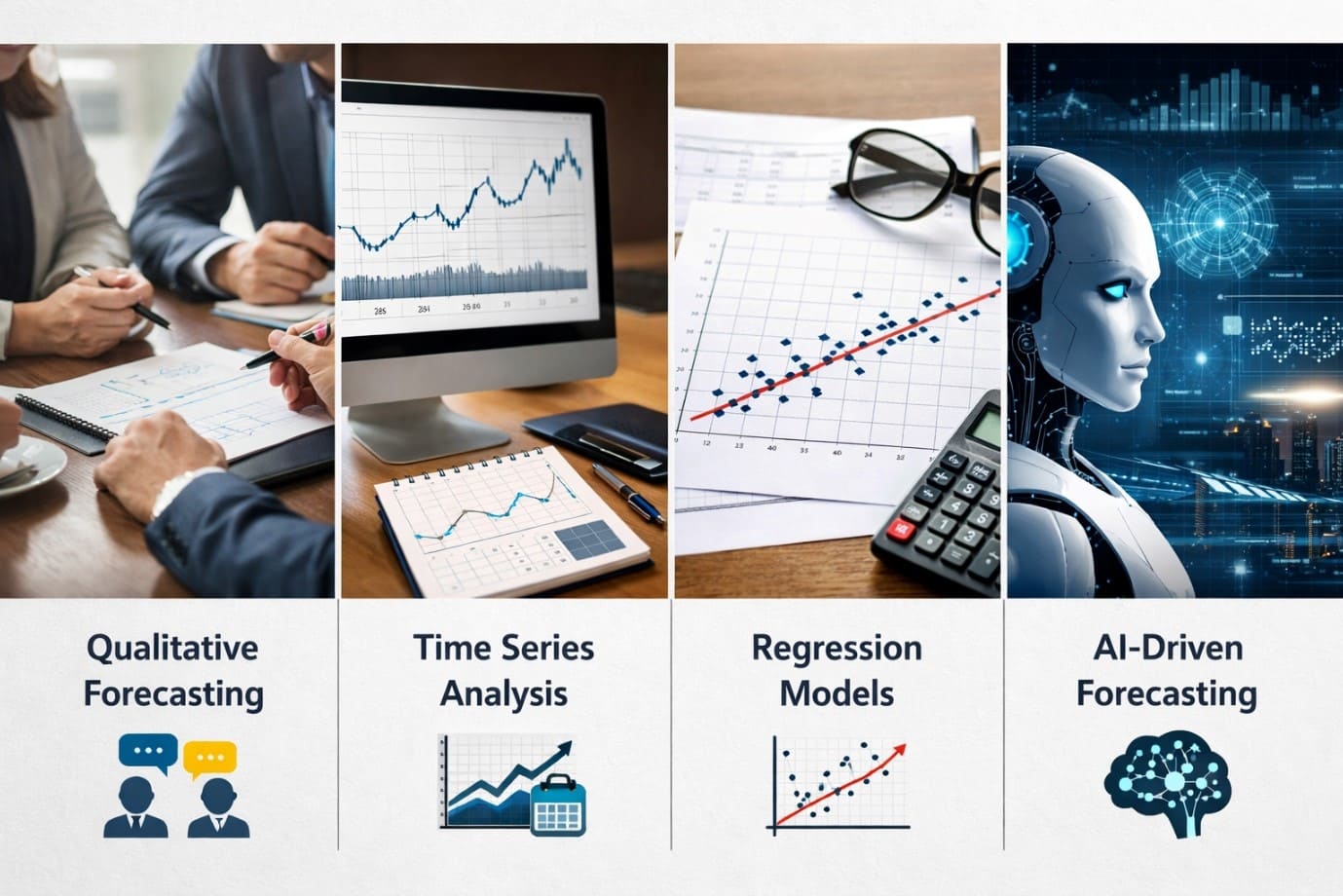
⮞ Qualitative Forecasting
Qualitative forecasting is primarily used when there is little to no historical data available, such as during new product launches or when entering uncertain markets. This approach relies on expert opinions, market research, and industry experience to estimate demand. It plays an important role in demand management, especially when data-driven models are not feasible. While it offers flexibility and strategic insights, its subjective nature can limit accuracy and consistency in demand forecasting in supply chain.
⮞ Time Series Analysis
Time series analysis is one of the most widely used methods in demand forecasting in supply chain management, particularly when historical data is available and demand patterns are relatively stable. It uses past data to identify trends, seasonality, and recurring patterns, making it highly effective for routine forecasting. This method strengthens the role of demand forecasting in supply chain by enabling data-driven decisions. However, it may not perform well in highly volatile markets where past trends do not reflect future demand accurately.
⮞ Regression Models
Regression models are used when demand is influenced by multiple variables such as pricing, promotions, economic conditions, or external factors. These models help businesses understand the relationship between demand and influencing factors, making them valuable for advanced planning and forecasting. While regression provides deeper analytical insights and supports better demand planning in a supply chain management, it requires high-quality data and technical expertise, which can be a limitation for some organizations.
⮞ AI-Driven Forecasting
AI-driven forecasting is transforming modern scm demand planning by leveraging machine learning and predictive analytics to process large datasets and generate highly accurate forecasts. This method is best suited for complex supply chains where real-time decision-making is critical. It enhances demand planning and forecasting by enabling continuous learning and adaptation to changing market conditions. Although it significantly improves efficiency and accuracy in supply chain and demand planning, it requires substantial investment in technology and skilled resources.
By combining these methods, businesses can strengthen demand management in supply chain, improve forecasting accuracy, and build a more agile and resilient supply chain.
Role of Technology in Demand Planning in Supply Chain Management
Technology has become a game-changer in modern demand planning in supply chain management, enabling organizations to move from reactive decision-making to proactive, data-driven strategies. With increasing complexity in global markets, digital tools are essential for improving accuracy in demand forecasting in supply chain management and enhancing overall efficiency.

⮞ AI & Machine Learning
Artificial Intelligence (AI) and Machine Learning (ML) are transforming demand forecasting techniques in supply chain by analyzing vast datasets, identifying hidden patterns, and generating highly accurate forecasts. These technologies enhance the role of demand forecasting in supply chain by enabling predictive capabilities and continuous learning, which significantly improves outcomes.
⮞ ERP Systems
Enterprise Resource Planning (ERP) systems play a critical role in integrating various business functions, making them essential for effective scm demand planning. By centralizing data across departments, ERP systems support seamless demand management in supply chain management and ensure better coordination between sales, production, and procurement.
⮞ Advanced Analytics
Advanced analytics tools provide deeper insights into customer behavior, market trends, and operational performance. These insights strengthen demand management in supply chain by enabling more informed decision-making and improving accuracy in demand forecasting. This is crucial for optimizing demand planning in supply chain management.
⮞ Real-Time Dashboards
Real-time dashboards offer visibility into key metrics, allowing businesses to monitor performance and adjust forecasts instantly. This enhances agility in supply chain and demand planning and supports faster responses to market changes.
With the rise of Industry 4.0, organizations are increasingly adopting digital solutions to build predictive supply chains. By leveraging technology, businesses can elevate demand planning and forecasting in supply chain management, improve efficiency, and create a more resilient and responsive supply chain ecosystem.
Common Challenges in Demand Planning
Despite its importance, many organizations struggle to implement effective demand planning in supply chain management due to several operational and strategic challenges. These issues often limit the accuracy of demand forecasting and reduce the overall efficiency of supply chain demand planning.
- Data Silos: One of the biggest barriers to successful demand planning is fragmented data across departments. When sales, operations, and procurement teams work in isolation, it disrupts demand management in supply chain management and leads to inconsistent forecasts.
- Inaccurate Forecasts: Poor data quality and outdated models often result in unreliable predictions. Ineffective demand forecasting techniques in supply chain can negatively impact inventory levels and production schedules, weakening it’s role in supply chain management.
- Poor Cross-Team Collaboration: Lack of coordination between departments creates misalignment in supply chain and demand planning. Without integrated communication, businesses struggle with planning demand and supply in a supply chain, leading to inefficiencies and delays.
- Market Volatility: Rapid changes in customer demand, economic conditions, and global disruptions make forecasting more complex. Traditional approaches to demand forecasting in supply chain often fail to adapt to these dynamic conditions.
- Lack of Skilled Resources: Effective scm demand planning requires expertise in analytics, forecasting tools, and supply chain strategies. A shortage of skilled professionals can limit the effectiveness of demand planning and forecasting in supply chain management.
Why Traditional Methods Fail Today
Traditional forecasting methods rely heavily on historical data and static models, which are no longer sufficient in today’s fast-changing environment. Modern demand management in supply chain requires real-time insights, advanced analytics, and agile systems to stay competitive.
Addressing these challenges is essential for building a robust demand planning and forecasting framework and achieving a more responsive, data-driven supply chain.
Best Practices for Effective Demand Planning in Supply Chain Management
To build a resilient and efficient supply chain, organizations must adopt proven strategies for demand planning in supply chain management. Implementing the right practices not only improves forecast accuracy but also strengthens overall operational performance.
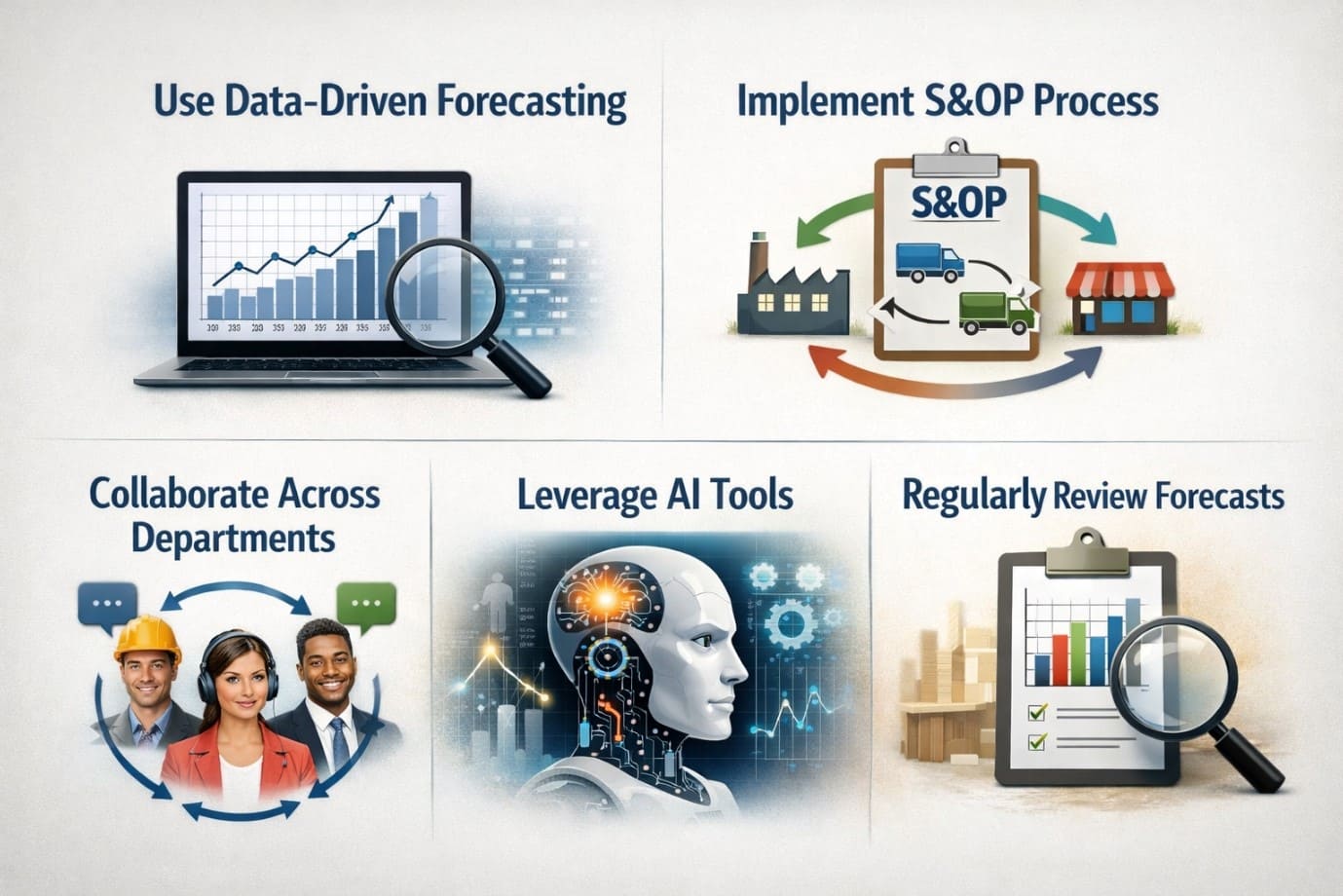
- Use Data-Driven Forecasting: Relying on data rather than intuition is critical for modern demand planning. Leveraging advanced techniques in supply chain helps organizations generate accurate predictions based on historical data, market trends, and real-time inputs. This significantly enhances the role of demand forecasting in supply chain.
- Implement S&OP Process: Sales and Operations Planning (S&OP) is essential for aligning business functions. It integrates sales, finance, and operations to improve demand management in supply chain management. A strong S&OP framework ensures better coordination in planning demand and supply in a supply chain.
- Collaborate Across Departments: Effective supply chain and demand planning requires seamless collaboration between teams. Breaking down silos improves communication and strengthens demand management in supply chain, leading to more accurate and reliable forecasts.
- Leverage AI Tools: Adopting AI and automation enhances scm demand planning by enabling faster and more precise forecasting. These tools optimize demand planning and forecasting in supply chain management and improve responsiveness to market changes.
- Regularly Review Forecasts: Continuous monitoring and refinement are key to successful demand planning and forecasting. Regularly updating forecasts based on new data ensures accuracy in demand forecasting and supports better decision-making.
By following these best practices, organizations can strengthen their demand forecasting in supply chain, improve efficiency, and create a more agile and responsive supply chain ecosystem.
Future Trends in Demand Planning
The future of demand planning in supply chain management is being reshaped by advanced technologies and intelligent systems. As businesses strive for greater agility, supply chain and demand planning is evolving from reactive forecasting to predictive and autonomous decision-making.
AI-driven supply chains are enabling smarter demand planning by leveraging machine learning to anticipate demand patterns with high accuracy. Real-time demand sensing is another emerging trend, allowing organizations to respond instantly to market changes and improve demand planning in supply chain management.
Additionally, digital twins—virtual replicas of supply chains—are helping businesses simulate scenarios and optimize strategies before execution. Autonomous planning systems are further enhancing efficiency by reducing human intervention and enabling faster, data-driven decisions.
These innovations are set to transform demand planning in supply chain management, making supply chains more resilient, responsive, and future-ready.
FAQs
A. Demand planning in supply chain management is the process of forecasting customer demand and aligning production, inventory, and distribution to meet that demand efficiently. It helps businesses reduce costs and improve service levels.
A. The role of demand forecasting in supply chain is crucial as it helps organizations predict future demand, enabling better decision-making, optimized inventory, and improved customer satisfaction.
A. Supply chain and demand planning involves data collection, forecasting, demand review, supply alignment, and continuous monitoring to ensure smooth and efficient operations.
A. Demand planning and forecasting in supply chain management differ in scope—forecasting predicts future demand, while planning uses those predictions to align business operations and strategies.
A. Popular demand forecasting techniques in supply chain include qualitative forecasting, time series analysis, regression models, and AI-driven forecasting methods.
A. Effective demand management in supply chain management helps businesses optimize inventory levels, reduce waste, and avoid unnecessary production and storage costs.
Conclusion
In an increasingly complex and fast-paced business environment, demand planning in supply chain management has become a critical capability for organizations aiming to stay competitive. Throughout this blog, we explored how effective demand planning helps businesses accurately anticipate customer needs, optimize inventory, and align operations with market demand. From understanding the fundamentals to implementing advanced strategies and technologies, it is clear that strong demand planning and forecasting is the backbone of a resilient supply chain.
By integrating data-driven insights, adopting modern tools, and improving cross-functional collaboration, companies can enhance supply chain and demand planning and achieve greater operational efficiency. Moreover, mastering demand planning in supply chain allows businesses to minimize risks such as overstocking, stockouts, and production inefficiencies while maximizing customer satisfaction and profitability.
However, achieving excellence requires more than just tools—it demands the right strategy, expertise, and continuous improvement. Organizations that invest in refining their demand planning and forecasting processes are better positioned to respond to market changes and drive sustainable growth.
If your business is looking to strengthen its demand planning capabilities and build a future-ready supply chain, partnering with experienced experts can make all the difference. Now is the time to transform your supply chain into a strategic advantage.
For more information, go to our Homepage.