

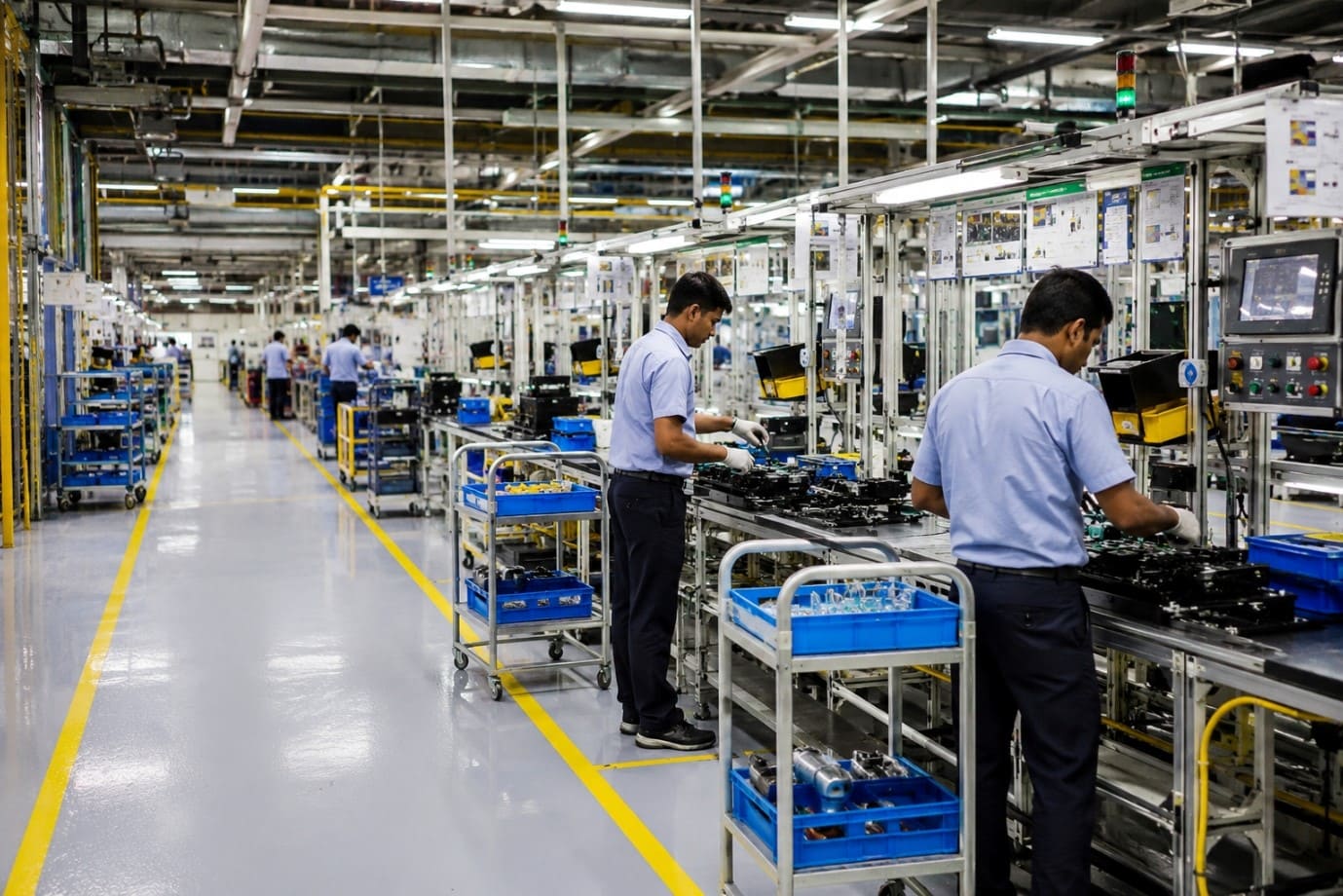
Lean Manufacturing System

Manufacturing businesses today are expected

to do more than simply produce good products. Customers want better quality, faster delivery, competitive prices and consistent service. At the same time, manufacturers are facing rising operating costs, pressure on margins, labour and productivity challenges, excess inventory, capacity constraints and increasing supply-chain uncertainty. The pressure to adopt digital technologies is also growing, making it important for companies to improve their processes before investing heavily in technology.

Lean Manufacturing System

This is where lean manufacturing becomes valuable. Rather than being limited to a set of shop-floor tools, lean manufacturing is a practical management and operating philosophy focused on creating greater customer value while reducing activities that consume time, money, materials or effort without adding value.

A well-designed lean manufacturing system brings people, processes, machines, materials and information together to create a smoother and more efficient flow of work. It encourages organizations to identify waste, solve problems at their root, standardize processes and continuously look for better ways of working.

The goal is not simply to reduce costs or make employees work harder. Lean productivity comes from improving the way the entire system operates, reducing unnecessary movement, waiting, defects, excess inventory, downtime and other forms of waste.

However, Lean is not a one-time project. Companies that want to implement lean manufacturing successfully need to make continuous improvement part of their everyday culture and management system.

What Is Lean Manufacturing?

Lean Manufacturing is a systematic approach to improving manufacturing operations by creating maximum customer value while using fewer resources and eliminating activities that do not add value. In simple terms, it means finding better ways to make products with less waste, less waiting, fewer defects, lower inventory and smoother processes.

At the heart of a lean manufacturing system is the distinction between value-added and non-value-added activities. A value-added activity directly contributes to what the customer is willing to pay for, while non-value-added activities consume time, space, labour or materials without improving the product. Lean focuses on identifying and removing these sources of waste while maintaining quality and safety.

A strong lean approach also creates flow, where materials, information and work move smoothly through each stage of production. A pull system helps production respond to actual customer demand instead of producing more than necessary. Standardized processes provide a consistent way of working, while employee involvement encourages people closest to the process to identify problems and suggest improvements.

Lean Is Not Simply Cost Cutting

Cost cutting often focuses on reducing expenses or resources. Lean manufacturing, on the other hand, focuses on improving the entire system so that fewer resources are needed to deliver the same or greater customer value. This is the foundation of lean productivity.

The principles of lean manufacturing encourage continuous improvement rather than one-time savings. Organizations that implement lean manufacturing successfully build a culture where employees continuously identify problems, improve processes and sustain better performance over time.

The Five Principles of Lean Manufacturing

The principles of lean manufacturing provide a simple framework for improving how a manufacturing business creates and delivers value. Rather than applying lean tools randomly, these principles help organizations understand what customers need, identify waste, improve process flow and build a culture of continuous improvement. When followed consistently, they can become the foundation of an effective lean manufacturing system.
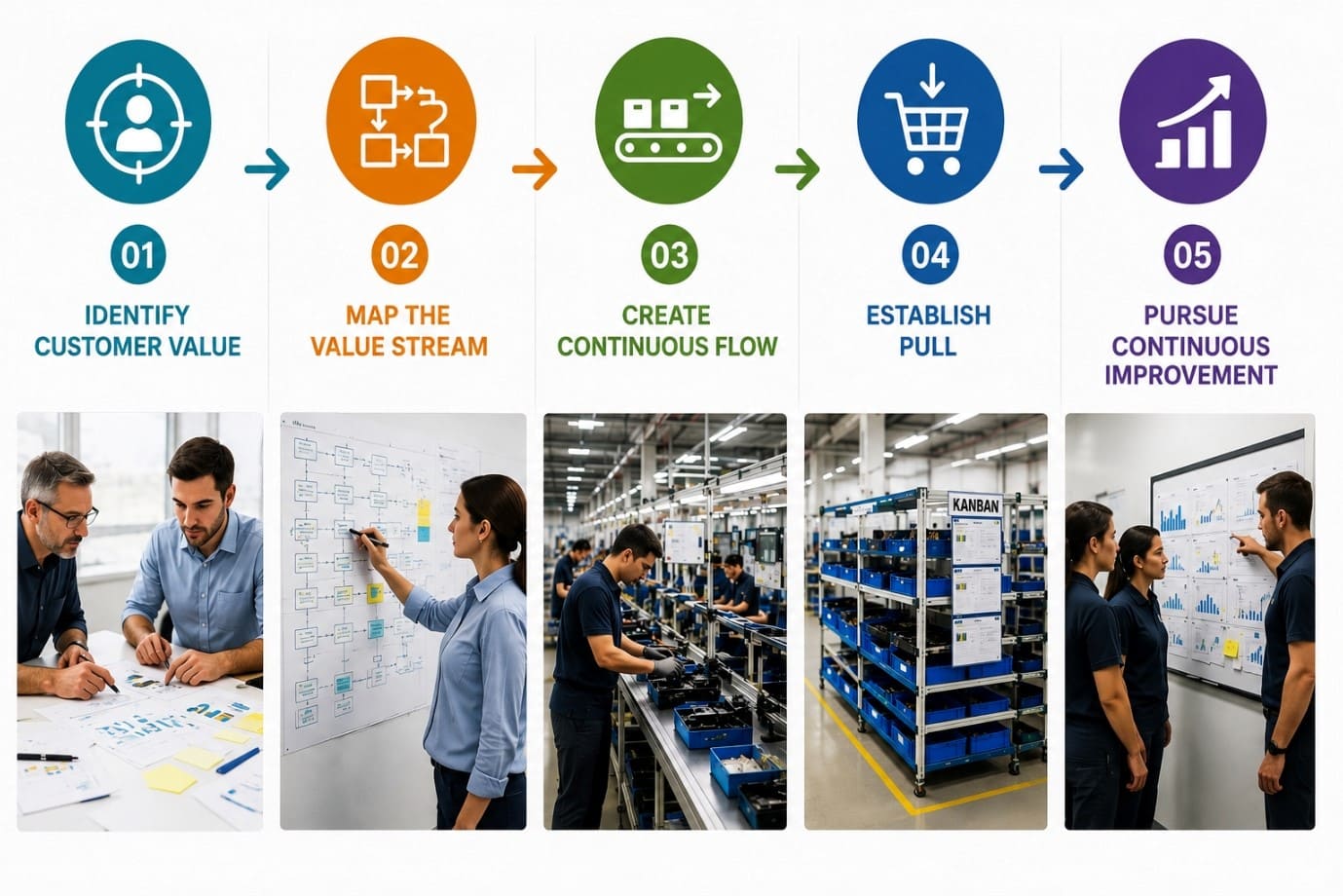
The Five Principles of Lean Manufacturing

The 8 Wastes of Lean Manufacturing

The goal of lean manufacturing is not simply to increase production speed. It is about improving the entire lean manufacturing process by identifying activities that consume time, money, materials, space or employee effort without creating customer value. These activities are known as lean manufacturing waste. Some are visible, while others are hidden within everyday processes.
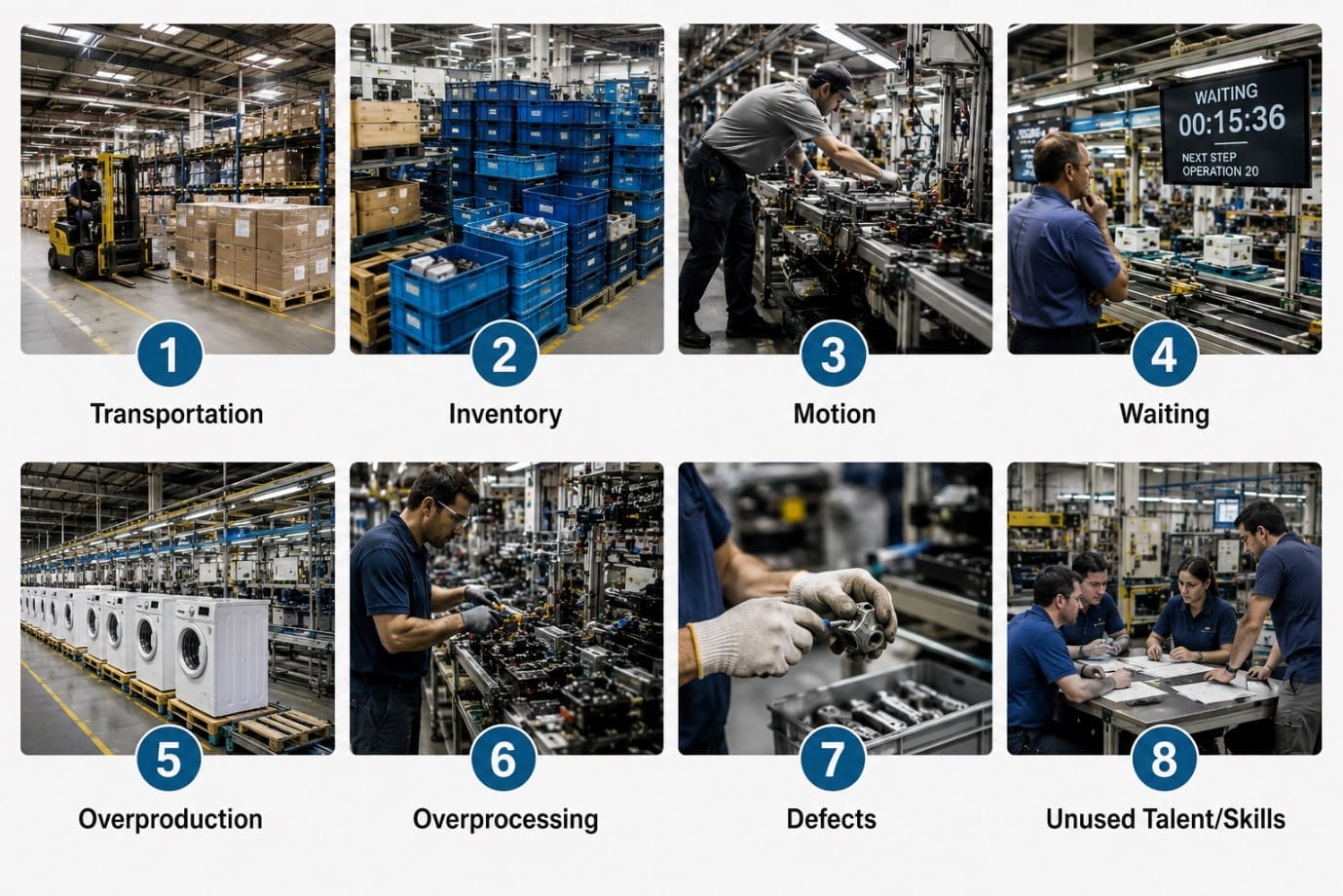
The 8 Wastes of Lean Manufacturing

The TIMWOODS framework provides a practical way to identify the 8 wastes of lean manufacturing on the shop floor. More importantly, these wastes should not be viewed in isolation because one problem can often create several others.

Waste

Practical Manufacturing Example

Transportation

Components are moved repeatedly between production, inspection and storage because of an inefficient layout.

Inventory

Excess raw material or WIP accumulates because production is not aligned with demand.

Motion

Operators repeatedly walk, reach, search or leave their workstation to collect tools or materials.

Waiting

Production stops while employees wait for materials, machine availability, inspection, approvals or information.

Overproduction

Products are manufactured earlier or in larger quantities than the customer or next process requires.

Overprocessing

Extra machining, inspection, handling or processing is performed without increasing customer value.

Defects

Quality problems result in scrap, rejection, rework, additional inspection and production delays.

Unused Talent/Skills

Employees’ ideas, technical knowledge and problem-solving abilities are not effectively used for improvement.

For example- Consider an automotive component plant where a batch moves from machining to temporary storage because the next process is unavailable. The movement creates transportation, while the stored components create inventory. When production resumes, operators spend time locating and moving the batch, creating motion. The components then wait for inspection, adding waiting. If inspection identifies a dimensional issue, the batch requires correction, creating defects and additional overprocessing.

If the batch was produced before it was actually required simply to keep the machine running, the factory has also created overproduction. If operators had already noticed the recurring problem but their suggestions were not captured, unused talent becomes another source of waste.

This shows why effective lean manufacturing tools should address the complete process rather than individual problems. Tools such as 5S Lean Manufacturing, Value Stream Mapping, Kaizen, standardized work and root-cause analysis can help teams identify where waste originates and prevent it from recurring.

Key Lean Manufacturing Tools and Techniques

A successful lean manufacturing approach does not depend on using every tool available. The right tool should be selected based on the problem a business is trying to solve. Together, these tools help reduce waste, improve process flow, involve employees and create a more reliable lean manufacturing system.

These tools support the principles of lean manufacturing, but they should not be treated as isolated activities. The real benefits of lean manufacturing come when organizations connect the right tools to actual business problems, measure results and continuously improve. This practical approach is essential when companies implement lean manufacturing as a long-term operating philosophy rather than simply conducting individual improvement initiatives.

Benefits of Lean Manufacturing

The benefits of lean manufacturing extend beyond simply reducing waste. When lean becomes part of a complete manufacturing system, it can improve productivity, quality, cost efficiency, delivery performance and customer satisfaction. The key is to connect the right improvement methods with real business problems and measure their impact over time.
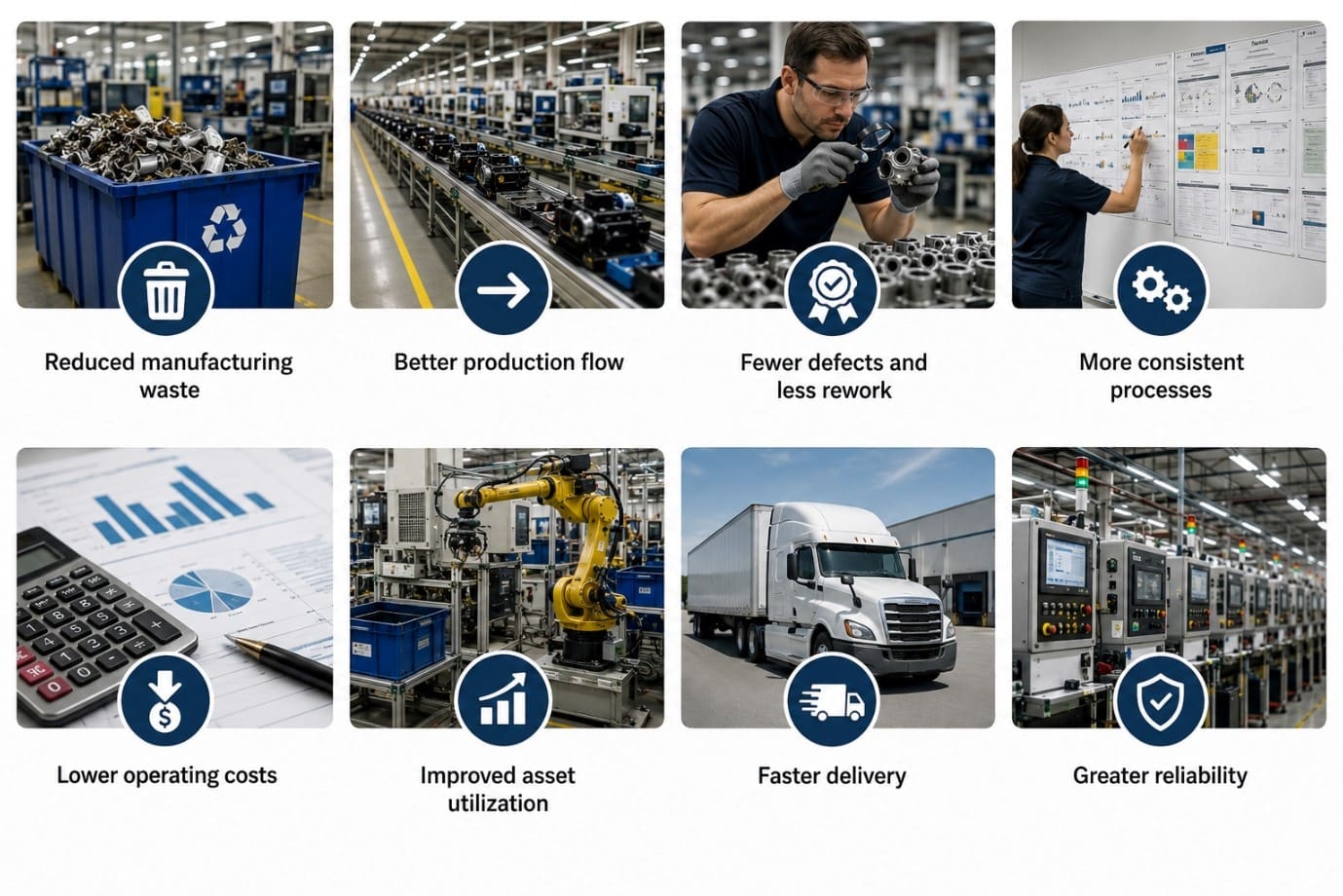
Benefits of Lean Manufacturing

⮞ Operational Benefits

⮞ Quality Benefits

⮞ Financial Benefits

⮞ Customer Benefits

Together, these outcomes demonstrate why the benefits of Lean manufacturing are broader than cost reduction. Organizations that apply the principles of lean manufacturing consistently can build more efficient, responsive and sustainable operations.

How to Implement Lean Manufacturing

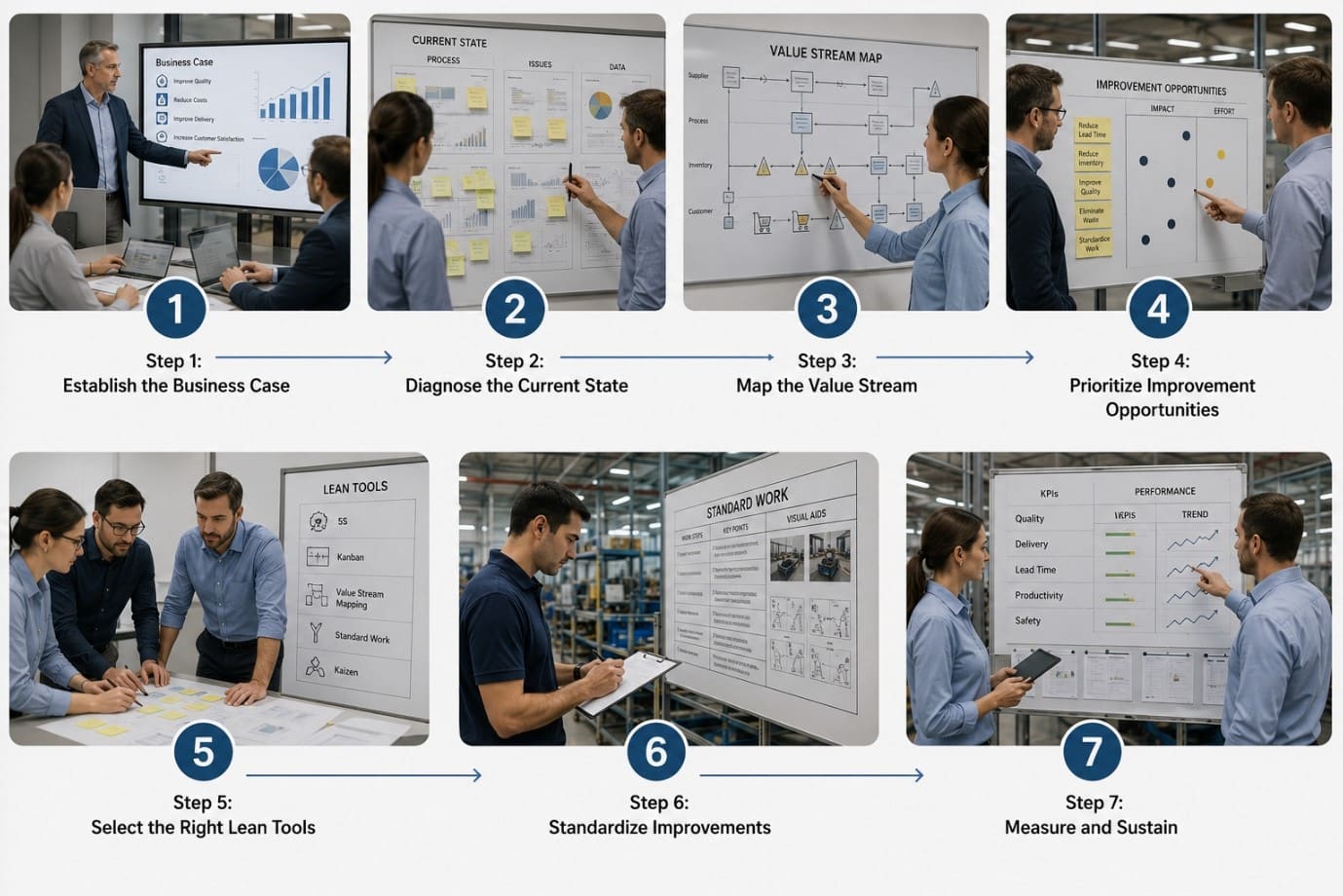
Knowing the principles of lean manufacturing is only the beginning. The real value comes from applying them to actual business and shop-floor problems. To implement lean manufacturing successfully, companies need a structured approach that connects operational goals with practical improvements. The following roadmap can help organizations build a stronger lean manufacturing system without treating lean as a collection of isolated tools
How to Implement Lean Manufacturing

⮞ Step 1: Establish the Business Case

Start by clearly identifying why lean is needed. Is the business facing high operating costs, low productivity, excess inventory, poor quality, long lead times or capacity constraints? Define the problem using measurable data and establish a baseline. This creates a clear direction for the improvement program and makes it easier to measure the benefits of lean manufacturing later.

⮞ Step 2: Diagnose the Current State

Go to the shop floor and study how work actually happens instead of relying only on reports. Examine process flow, cycle time, takt time, WIP, inventory, machine downtime, quality losses and bottlenecks. Observe where people, materials and information are waiting or moving unnecessarily. This practical assessment helps identify lean manufacturing waste and reveals the real causes behind poor lean productivity.

⮞ Step 3: Map the Value Stream

Use VSM Lean manufacturing to create a current-state view of the complete material and information flow. Identify delays, excess inventory, bottlenecks, rework and unnecessary process steps. The team can then develop a future-state map showing how the lean manufacturing process should work.

⮞ Step 4: Prioritize Improvement Opportunities

Do not try to change the entire factory at once. Rank improvement opportunities using Impact × Feasibility × Urgency. Start with areas where a focused intervention can deliver measurable results and create confidence for wider implementation.

⮞ Step 5: Select the Right Lean Tools

Choose tools according to the problem rather than applying every tool everywhere.

⮞ Step 6: Standardize Improvements

Once an improvement delivers the desired result, make it the new standard. Document the process, train employees, establish clear work instructions and ensure supervisors regularly check adherence. Standardization prevents improvements from disappearing when people, products or production conditions change.

⮞ Step 7: Measure and Sustain

Track relevant KPIs such as productivity, OEE, lead time, inventory, defects, downtime and on-time delivery. Daily management routines can help teams identify deviations quickly and take corrective action.

A sustainable lean manufacturing system continuously identifies the 8 wastes of lean manufacturing, solves their root causes and improves the way work is performed. The objective is not a one-time lean project, but a culture of continuous improvement that delivers measurable and lasting performance.

Lean Manufacturing KPIs to Track

A lean manufacturing program should be measured by real operational results, not by the number of Lean activities completed. Completing 5S audits, conducting Kaizen events or preparing a VSM Lean manufacturing map does not automatically make a factory Lean. A strong lean manufacturing system uses relevant KPIs to measure whether processes are actually becoming faster, more reliable and less wasteful.

Key lean manufacturing KPIs include:

These KPIs help teams identify problems, understand root causes, and sustain improvement. Lean productivity should ultimately result in better quality, shorter lead times, lower inventory and improved customer service.

Lean Manufacturing and Industry 4.0

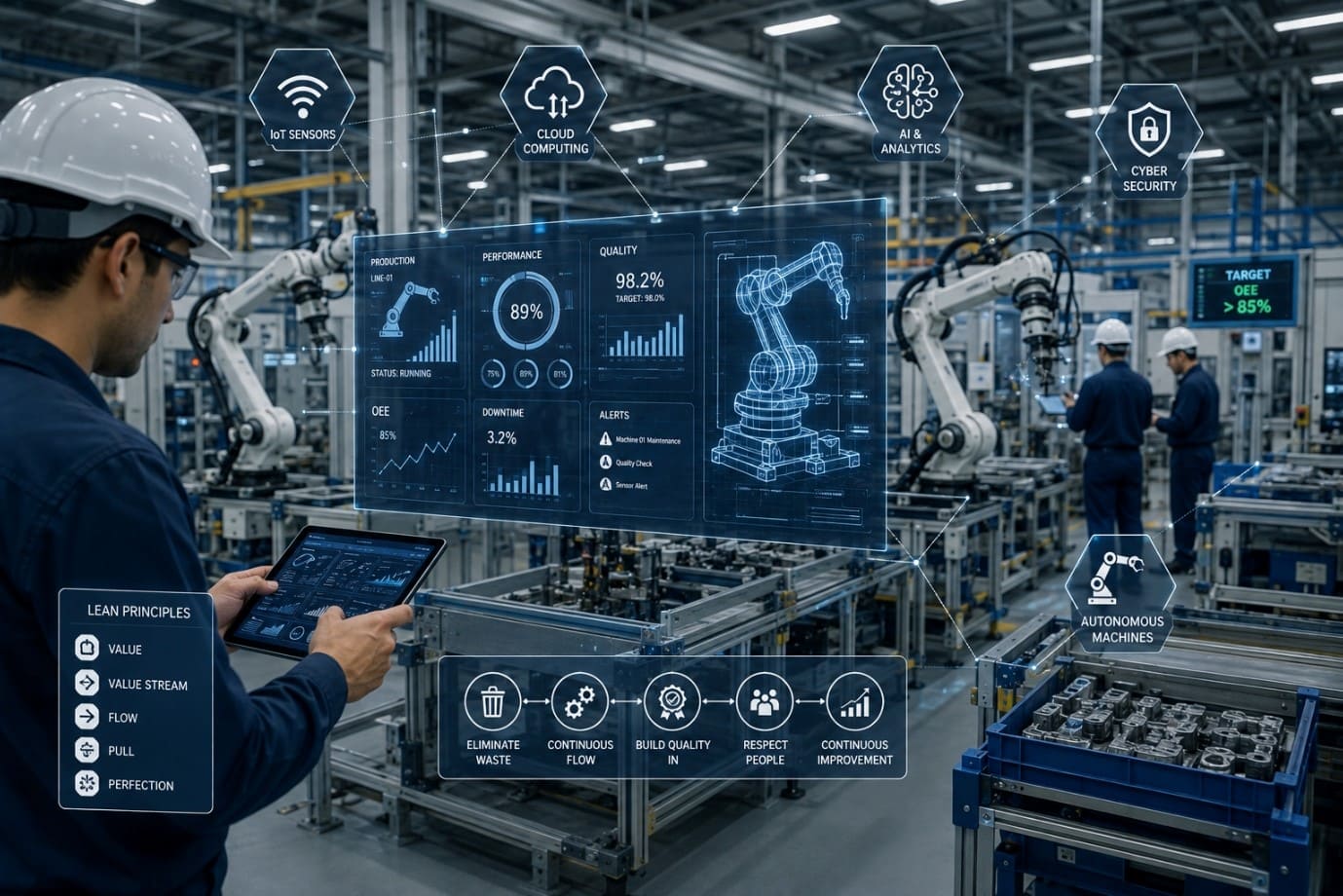
Lean manufacturing and Industry 4.0 can work together to create faster, smarter, and more responsive manufacturing operations. Lean helps an organization understand what needs to be improved, while digital technologies help teams monitor, control and optimize those processes with greater speed and accuracy.
Lean Manufacturing and Industry 4.0

A well-developed lean manufacturing system can use Industry 4.0 technologies such as:

However, technology should support Lean, not replace it. The principles of lean manufacturing should come first. If a process contains unnecessary movement, waiting, excess inventory or other lean manufacturing waste, simply adding sensors or software will not solve the underlying problem. You can also go through our in-depth blog on Integrating Lean Management with Industry 4.0.

Don't Digitize Waste

A poor process made digital is still a poor process. Before organizations implement lean manufacturing technologies, they should follow a practical sequence:

Understand → Simplify → Standardize → Improve → Digitize → Continuously Optimize

When lean provides the foundation and Industry 4.0 provides better visibility and control, manufacturers can strengthen lean productivity, improve decision-making and achieve more sustainable operational performance.

Common Challenges to Implement Lean Manufacturing

Although the benefits of lean manufacturing can be significant, organizations often face challenges when they implement lean manufacturing. Understanding these challenges early can make the transformation more practical and sustainable.

Lean Manufacturing in the Modern Indian Manufacturing Environment

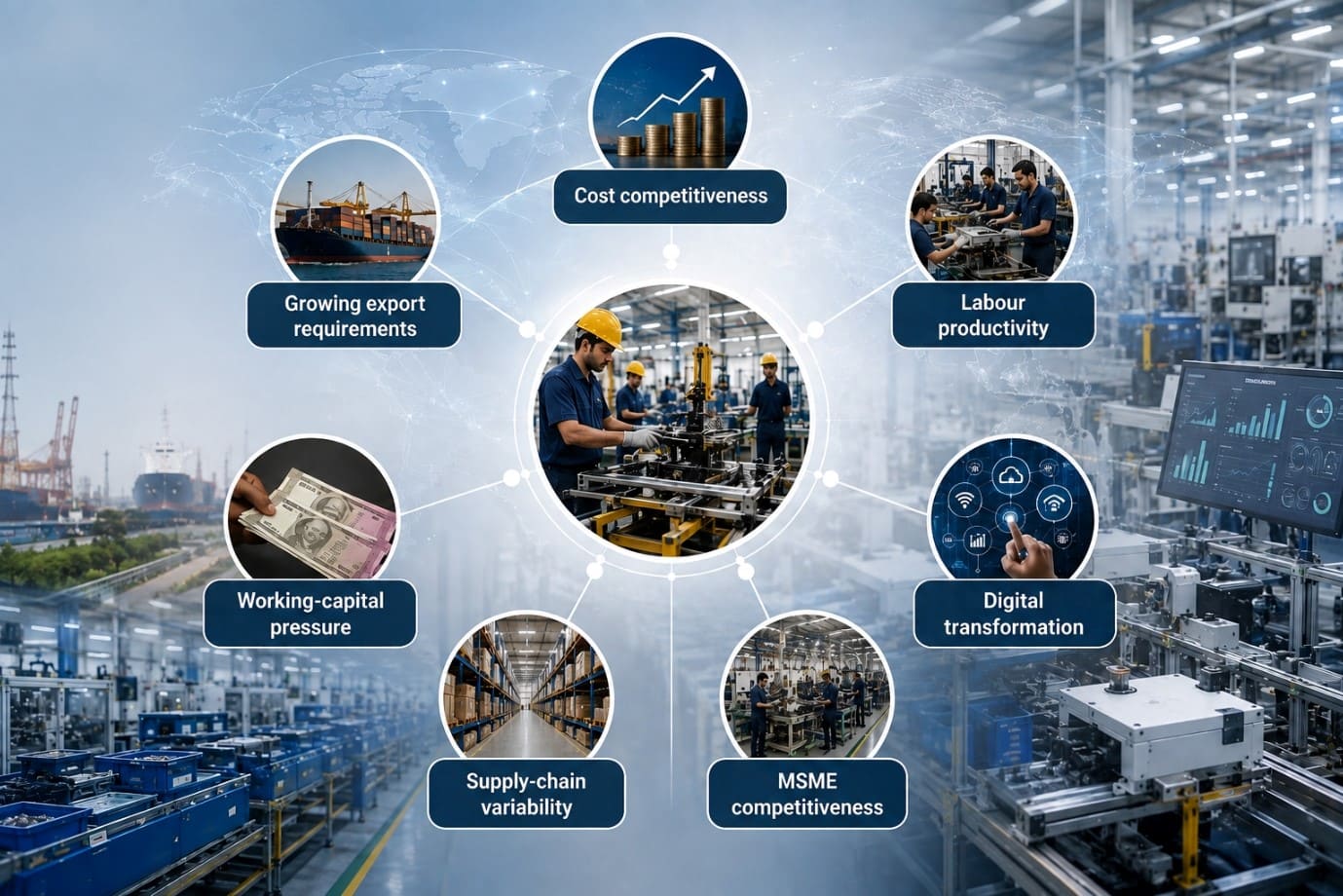
For Indian manufacturers, lean manufacturing is becoming an increasingly practical approach to improving efficiency, quality and competitiveness. Businesses need to manage costs carefully while also meeting changing customer expectations, shorter delivery timelines and higher quality standards. At the same time, manufacturers are dealing with challenges across production, supply chains, workforce productivity and capacity utilization.
Lean Manufacturing in the Modern Indian Manufacturing Environment

Some of the key areas that require attention include:

A practical lean manufacturing system helps organizations examine these challenges systematically rather than treating them as isolated issues. For example, VSM Lean Manufacturing can help identify delays and bottlenecks, while 5S Lean Manufacturing can improve workplace organization and efficiency. Similarly, TPM Lean Manufacturing can support better equipment reliability and Kaizen Lean Manufacturing can encourage employees to contribute to ongoing improvements.

The most important part is choosing the right approach for the specific business problem. By following the principles of lean manufacturing and focusing on customer value, waste reduction, quality and flow, Indian manufacturers can build more productive and responsive operations.

FAQs

A. A lean manufacturing system is an organized way of managing production so that materials, information, people and equipment work together efficiently. It combines standardized processes, waste reduction, continuous improvement, visual management and employee involvement to improve overall operational performance.

A. Lean productivity means improving output and performance by removing activities that do not create value rather than simply asking employees to work faster. It focuses on improving processes, reducing downtime, eliminating bottlenecks and making better use of available people, machines, materials and time.

A. TIMWOODS is a simple way to remember the major categories of waste in Lean Manufacturing: Transportation, Inventory, Motion, Waiting, Overproduction, Overprocessing, Defects and Skills or unused talent. It helps manufacturing teams identify waste during shop-floor observations and process improvement activities.

A. The 8 wastes of lean manufacturing are transportation, inventory, motion, waiting, overproduction, overprocessing, defects and unused talent or skills. These wastes consume resources without creating customer value and can reduce productivity, increase costs and create delays within the manufacturing process.

A. Yes. Lean Manufacturing can provide the process foundation, while Industry 4.0 technologies can improve visibility and decision-making. Digital OEE, IoT sensors, real-time dashboards, predictive maintenance and automated data collection can strengthen an already-improved process. The key is to improve the process before digitizing it.

Conclusion

Lean manufacturing should not be treated as a short-term cost reduction exercise or a project that ends after a few improvement activities. Sustainable Lean performance comes from making improvement part of the way an organization manages its daily operations. The real journey begins with understanding customer value, identifying lean manufacturing waste, improving flow, establishing pull and continuously finding better ways to work.

A company may begin with 5S Lean Manufacturing to improve workplace organization or use VSM Lean Manufacturing to understand where time and resources are being lost. Another organization may focus on TPM Lean Manufacturing to improve equipment reliability or use SMED Lean Manufacturing to reduce changeover time. These initiatives can deliver valuable results, but they are only starting points.

The principles of lean manufacturing become truly effective when improvements are connected to everyday management. Teams should regularly review performance, identify problems, understand root causes and take corrective action. Kaizen Lean Manufacturing supports this culture by encouraging employees to contribute ideas and make small improvements continuously.

A mature lean manufacturing system also uses the right lean manufacturing tools based on actual business needs. Whether the focus is inventory, quality, productivity, lead time or equipment performance, improvement should be driven by measurable outcomes rather than simply completing Lean activities.

Ultimately, the benefits of lean manufacturing come from consistency. Organizations that implement lean manufacturing as a long-term culture can improve lean productivity, strengthen quality, reduce waste, improve responsiveness and create more sustainable performance.

Lean is therefore not about reaching a final destination. It is a continuous journey of understanding → improving → standardizing → measuring → learning → improving again.

For more information, go to our Homepage.

Leave a Comment

Your email address will not be published. Required fields are marked *

Call Now Button
× Book free consultation